
Find honest answers before you buy a pellet stove in Cherry Valley.
Pellet heat is uncommon in this corner of Winnebago County, but it's not off the table. See where it actually fits, and get matched with a local dealer who will tell you the truth.
Every Project Starts From One of These Five Situations
Here, pellet stoves are the exception here, not the rule.
Cherry Valley is a small village of under 3,000 people just east of Rockford, sitting in climate zone 5A with a long, demanding heating season and average winter lows around 14°F. That's a genuinely cold winter—cold enough that heat matters. But most Cherry Valley homes handle that cold with natural gas furnaces and electric service from Commonwealth Edison or Rock Energy Cooperative, not a hopper full of wood pellets. Pellet appliances simply aren't the default choice in this village the way they are in more rural, off-grid corners of the Midwest.
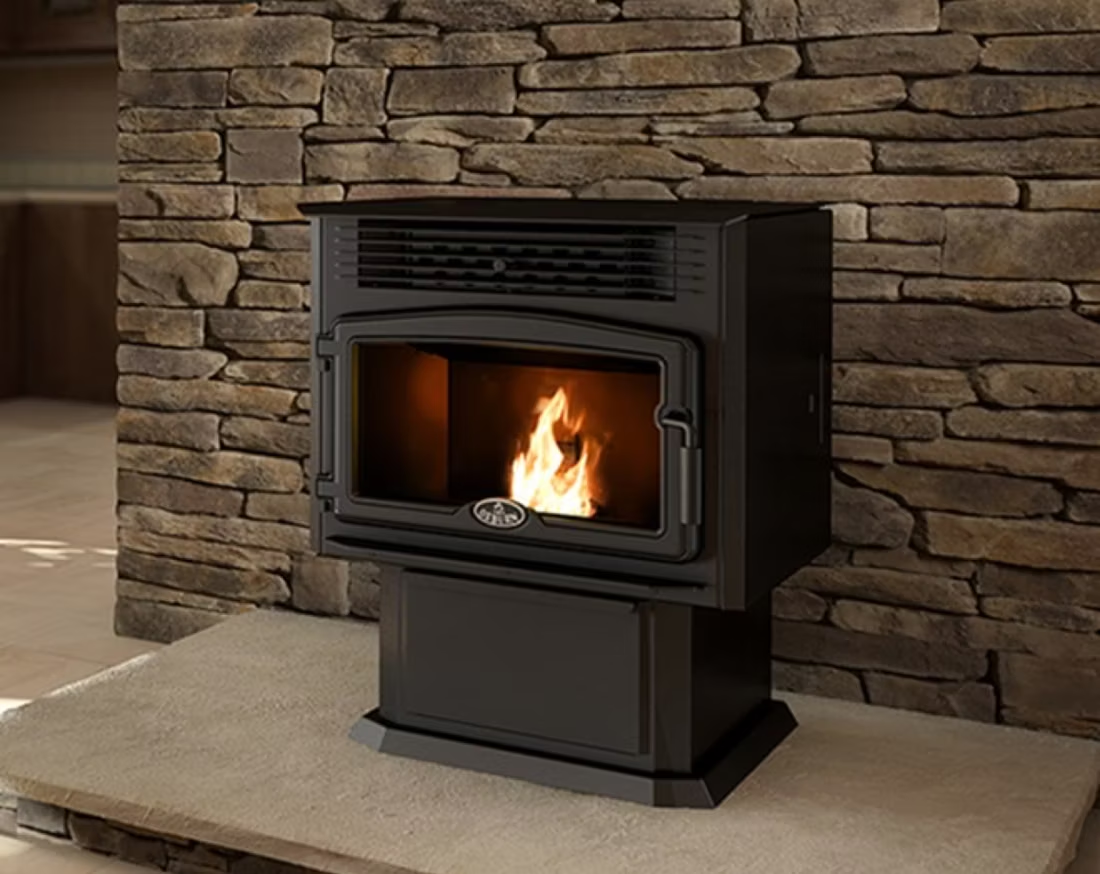
That doesn't mean pellet heat has no place here. A handful of Cherry Valley homeowners install pellet stoves as supplemental heat for a garage, a finished basement, or a room that a central furnace never quite reaches—and pellet fuel itself is easy to source regionally through brands like Indeck Energy Services, Lignetics, and Somerset Pellet Fuel. If you're one of the homeowners for whom pellet still makes sense, the value of working with a real local dealer goes up, not down, precisely because it's a less common install—you want someone who's actually done a few of them, not a big-box employee reading a spec sheet.
Three steps. No salesperson until you're ready.
Tell us about your project
Your zip code, your situation, and the fuel you're leaning toward—or let the answers point you to one.
See what's actually available
The brands dealers within 100 miles genuinely carry—real options, never a catalog mirage.
Get your dealer & Project Guide
A trusted local dealer, plus the free Project Guide & Parts List that names every component of the job.
Frequently Asked Questions
Are pellet stoves actually common in Cherry Valley?
No—and it's worth saying plainly rather than pretending otherwise. Most homes in Cherry Valley and the surrounding Winnebago County area heat with natural gas furnaces or electric service through ComEd or Rock Energy Cooperative. Pellet stoves show up occasionally as supplemental heat in a basement, garage, or add-on room, but they're not a mainstream choice here the way they are in more rural or off-grid parts of the Midwest. If you're considering one, you're making a deliberate choice rather than following the local default—which is fine, but it's a different conversation with a dealer than 'everyone on my street has one.'
What does a pellet stove installation typically cost?
Nationally, a pellet stove installation—unit, venting, and labor—typically runs $3,000 to $6,000, with the wide range driven mostly by whether you're venting through an existing chimney chase, cutting a new wall penetration, or converting an existing wood-burning fireplace with an insert. Because pellet installs are uncommon in Cherry Valley specifically, it's worth getting more than one quote from a dealer who actually stocks pellet units rather than one who mainly sells gas—the venting hardware and hopper placement details matter more than they do on a routine gas insert job.
Where does pellet fuel come from if I install a stove here?
You won't have trouble finding bags. Regional pellet fuel brands including Indeck Energy Services, Lignetics, and Somerset Pellet Fuel supply the greater Rockford and northern Illinois market, and most hardware stores and farm supply retailers in the area carry at least one of them seasonally. The bigger practical question in Cherry Valley is storage—pellet stoves need dry, ton-plus storage space for a full winter's supply, which is a bigger ask on a smaller village lot than it would be on a rural acreage.
Why does gas seem to be the default heating upgrade in Cherry Valley instead of pellet?
Gas fuel relevance is flagged as standard for Cherry Valley, and it shows—natural gas infrastructure is well established through the village and greater Rockford area, and gas fireplace inserts plug into that existing service with none of the fuel-storage or hopper-loading commitment a pellet stove requires. For most homeowners weighing a heating upgrade here, gas wins on convenience alone. Pellet tends to get chosen instead only when gas service isn't run to a specific building—a detached garage or outbuilding, for example—or when someone specifically wants the look and feel of a real flame with less hands-on work than cordwood.
Is electric heat a better fit than pellet for a Cherry Valley home?
For most primary living spaces, yes, mainly because it's simpler. Residential electric rates through Commonwealth Edison and Rock Energy Cooperative in this area run in the 13–14.5 cents per kWh range, which makes electric fireplaces and zone heaters a reasonable low-commitment option for supplemental warmth—no venting, no fuel storage, plug it in and go. Pellet stoves cost more upfront and require you to manage a fuel supply, but they produce real, sustained heat output that an electric unit can't match, and they'll keep running through a power outage if you choose a model with a battery backup option. It comes down to whether you want simplicity or heat output.
Do I need a permit for a pellet stove install in Cherry Valley?
Most likely, yes. New venting installations that penetrate a wall or roof typically require a building permit through Winnebago County or the applicable local building department, and any hearth clearance or venting work should meet the manufacturer's listed specifications and current mechanical code. Because pellet installs are infrequent in this area, it's worth confirming permit requirements directly with your dealer before work starts—they'll have handled the process before even if it isn't a weekly occurrence for the local permitting office.
What size pellet stove would I need for a Cherry Valley home?
With a long, demanding heating season and average winter lows near 14°F, this isn't a mild climate—a stove sized only for occasional use will get outrun on the coldest January nights. As a general guide, small pellet stoves (rated for 500–1,000 sq ft) work for a single room or garage, while medium units (1,000–1,800 sq ft) can supplement a larger open living area. Given how uncommon pellet installs are locally, an in-home sizing consultation with a dealer matters more here than in areas where pellet is the norm and installers size these units routinely.
If pellet and wood are both uncommon here, what do most Cherry Valley homeowners with a fireplace actually install?
Gas, overwhelmingly. Cherry Valley's building stock and lot sizes lean toward standard suburban construction with gas service already run to the house, so a direct-vent gas insert or fireplace is the path of least resistance for most remodels. Wood is available regionally—oak, hickory, walnut, and maple are all common species in this part of northern Illinois—but without nearby public forest land or a cutting-permit program, sourcing firewood means buying it by the cord rather than harvesting it, which removes one of the big cost advantages wood heat has elsewhere.
If I still want a pellet stove, what should I look for in a dealer?
Ask directly how many pellet installs they've done in the last year—in a market where gas dominates, that number matters more than it would in a wood-heavy region. A dealer who genuinely stocks pellet units will know the hopper capacity and burn-time tradeoffs between brands, understand the venting differences from a gas insert, and be straightforward about whether your specific space (garage, basement, add-on room) is a good candidate. We match Cherry Valley homeowners with trusted local dealers rather than the nearest big-box counter specifically so pellet buyers get someone who treats the install as routine, not novel.
Why is a fireplace insert so efficient?
An insert does two things: it seals the chimney completely, so you stop losing air you already paid to heat, and it radiates warmth into the room through the firebox and glass. Most add a heat-exchange fan that pulls cool room air underneath, wraps it around the hot firebox, and pushes it back out warm. Your home is more efficient before you've even lit the first fire.
What's the difference between an insert and a zero-clearance fireplace?
An insert is a fireplace that slides into a pre-existing wood-burning fireplace—if you don't have one, there's nothing to insert it into. A zero-clearance fireplace is built into a framed wall, which makes it the answer for remodels and new construction. Simple test: existing masonry fireplace means insert; blank or framed wall means zero-clearance.
How much should I budget for a fireplace?
For an average home—covering the fireplace, the vent pipe, and basic installation—a budget between $3,900 and $5,500 gives you a lot of options across wood, gas, and pellet. By the time you add finish work, gas line, and electrical, the average complete installation lands between $5,000 and $12,000 all-in. In a remodel or new build, a good rule is to put about 2.5% of the total project cost toward the fireplace.
Can a fireplace actually lower my heating bill?
Yes—by creating a comfort zone. A furnace heats every square foot of the house just to warm the one room you're in; a gas fireplace on low burns roughly a sixth of the gas a typical furnace does. Set the furnace around 55–60 degrees as a baseline, then heat the rooms your family actually uses. Families who heat this way commonly save $20–$60 a month.
Nearby Dealers
Hearth shops serving Cherry Valley and the surrounding area. Every listing shows whether it is a WhyFire partner, a dealer we have verified as authorized for the brands we recommend, or a local business carrying hearth products. No manufacturer pays for placement. How we verify dealers →
Advanced Chimney Systems
The Fireworks Store
Pellet Brands Stocked Around Cherry Valley
Manufacturers will point you to the nearest stocking dealer.
Find your pellet stove in Cherry Valley.
Tell us about your space and we'll match you with a trusted local dealer who actually installs pellet stoves—plus a free Project Guide & Parts List with the vent kit and parts your project needs.
Find Your Fireplace →