
Instant Warmth, No Chimney Required, for Champaign Homes.
Zone heat and real ambiance for Champaign-Urbana homes and rentals, without gas lines or venting. Find the right unit and connect with a trusted local dealer.
Every Project Starts From One of These Five Situations
A no-venting option for a flat, cold prairie town.
Champaign sits at 776 feet on the flat farmland of east-central Illinois, twinned with Urbana and anchored by the University of Illinois. Winters here are genuinely cold—average lows around 18°F and a long, demanding heating season, putting Champaign in the same climate territory as Madison, Wisconsin. Natural gas is common and standard here, but electric fireplaces fill a different role: they're the go-to option for the thousands of apartments, condos, and rental houses near campus where landlords won't allow venting modifications, and for older homes downtown where running a new gas line or masonry chimney isn't practical.
Electricity here comes from two very different providers. Inside the city, Ameren Illinois Company serves most residential customers at roughly 11.76 cents per kWh. Outside city limits, in the surrounding farmland served by Eastern Illinois Electric Cooperative, rates run closer to 17.1 cents per kWh—worth knowing before you budget a unit's daily run cost. Either way, electric fireplaces install in an afternoon, produce zero indoor emissions, and give Champaign renters and homeowners real supplemental warmth and ambiance without touching the roofline or gas meter.
Three steps. No salesperson until you're ready.
Tell us about your project
Your zip code, your situation, and the fuel you're leaning toward—or let the answers point you to one.
See what's actually available
The brands dealers within 100 miles genuinely carry—real options, never a catalog mirage.
Get your dealer & Project Guide
A trusted local dealer, plus the free Project Guide & Parts List that names every component of the job.
Frequently Asked Questions
How much does an electric fireplace installation cost in Champaign?
Plug-in freestanding and mantel-style electric fireplaces run $300 to $800 installed, since they simply plug into a standard outlet—no electrician required. Built-in wall units and inserts that need a dedicated 20-amp circuit typically run $1,500 to $4,000 once you factor in an electrician to run new wiring, plus any framing or trim carpentry to set the unit flush into a wall. Homes in older Champaign neighborhoods near downtown often need a panel check first, since some original wiring wasn't built for a 1,500-watt heating draw on top of existing loads.
Will an electric fireplace actually keep a room warm during a Champaign winter?
A typical 1,500-watt electric fireplace puts out about 5,000 BTUs—enough to comfortably heat a single room of 400 to 1,000 square feet as supplemental zone heat, but it's not sized to be your only heat source when overnight lows hit the teens, which happens regularly here. Most Champaign buyers pair an electric unit with existing forced-air or baseboard heat and use it to take the edge off a living room or bedroom, cutting the thermostat back a couple degrees elsewhere. If you're looking for a true whole-home backup heat source for winter storms, gas is generally the better fit given how standard gas service is throughout Champaign-Urbana.
Are electric fireplaces a good option for apartments and rental housing near campus?
Yes—this is one of the most common uses in Champaign given how much of the city's housing stock serves University of Illinois students and staff. A plug-in electric fireplace needs no venting, no gas line, and no permanent alteration to the unit, which makes it one of the only fireplace options a landlord will typically approve for a rental. Many tenants near campus use freestanding or mantel units that can move with them when the lease ends, while homeowners with longer time horizons more often choose a built-in wall unit.
Do I need a permit to install an electric fireplace in Champaign?
A simple plug-in unit generally doesn't require any permit since there's no gas line, venting, or structural work involved. If you're having a built-in unit hardwired to a new dedicated circuit, your electrician will typically need to pull an electrical permit through the local building department—either the City of Champaign or the City of Urbana depending on which side of town you're on. This is a much lighter permitting lift than gas or wood installations, which is part of why electric is an easy retrofit choice in older homes.
How much does it cost to run an electric fireplace in Champaign?
Running cost depends on which utility serves your address. At Ameren Illinois's residential rate of about 11.76 cents per kWh, a 1,500-watt unit running four hours a day costs roughly 70 cents a day, or about $21 a month of regular winter use. Homes outside city limits served by Eastern Illinois Electric Cooperative pay closer to 17.1 cents per kWh, pushing that same usage to around $1.03 a day, or roughly $31 a month. Either way, most owners use the heater setting only when the room is occupied and run the flame effect alone the rest of the time, which draws only a few watts.
Electric vs. gas fireplace—which makes more sense for a Champaign home?
Gas is standard and widely available across Champaign-Urbana, and it's the better choice if you want a true heat source that can carry a room through a cold snap or double as backup heat. Electric makes more sense when venting isn't an option—rentals, condos, upper-floor rooms, historic homes without a chimney, or any space where running a gas line or venting through an exterior wall isn't practical. A lot of local homeowners end up with both: gas in the main living area for real heat, electric in a bedroom, basement, or den for ambiance and quick supplemental warmth.
What type of electric fireplace works best for a typical Champaign home?
Champaign's housing stock splits fairly evenly between older craftsman and bungalow-style homes near downtown and newer construction in subdivisions toward the edges of town. In the older homes, a built-in wall unit set into an existing non-functioning fireplace opening or a mantel-style unit against an exterior wall tends to look most at home. In newer construction, in-wall linear units installed during a remodel or basement finish are popular since the electrician can run the dedicated circuit while other work is already open. For renters in campus-area apartments, a freestanding or tabletop unit is usually the only practical option.
Can I install an electric fireplace myself, or do I need a professional?
Plug-in freestanding, mantel, and tabletop units are genuinely DIY-friendly—set it in place, plug it into a standard outlet, and it's ready to use. Built-in wall units and inserts are a different matter: most manufacturers require a dedicated circuit sized for the unit's wattage, which means pulling new wire back to your panel. That work should go to a licensed electrician, both for safety and because it's typically required to pass inspection if a permit is pulled. A local hearth dealer can tell you which category your chosen unit falls into before you buy.
How much maintenance does an electric fireplace need?
Very little compared to wood or gas. There's no chimney to sweep, no gas lines to inspect, and no combustion byproducts to worry about—Champaign has no air quality non-attainment issues, and an electric unit adds zero emissions on top of that. Maintenance is mostly dusting the heating vents, occasionally cleaning the glass front, and replacing LED bulbs on older models (most newer units use long-life LEDs rated for 20,000+ hours). Local dealers can also service the blower fan if it starts to get noisy after a few years of regular use.
Does an electric fireplace need a vent or chimney?
No—that's its superpower. An electric fireplace needs a wall and an outlet, period. No vent pipe, no gas line, no clearances to design around, which is why it works in bedrooms, offices, apartments, and walls where venting a gas or wood unit would be impractical or impossible. Installation is typically the simplest and least expensive of any fireplace type.
Can I put a TV above my fireplace?
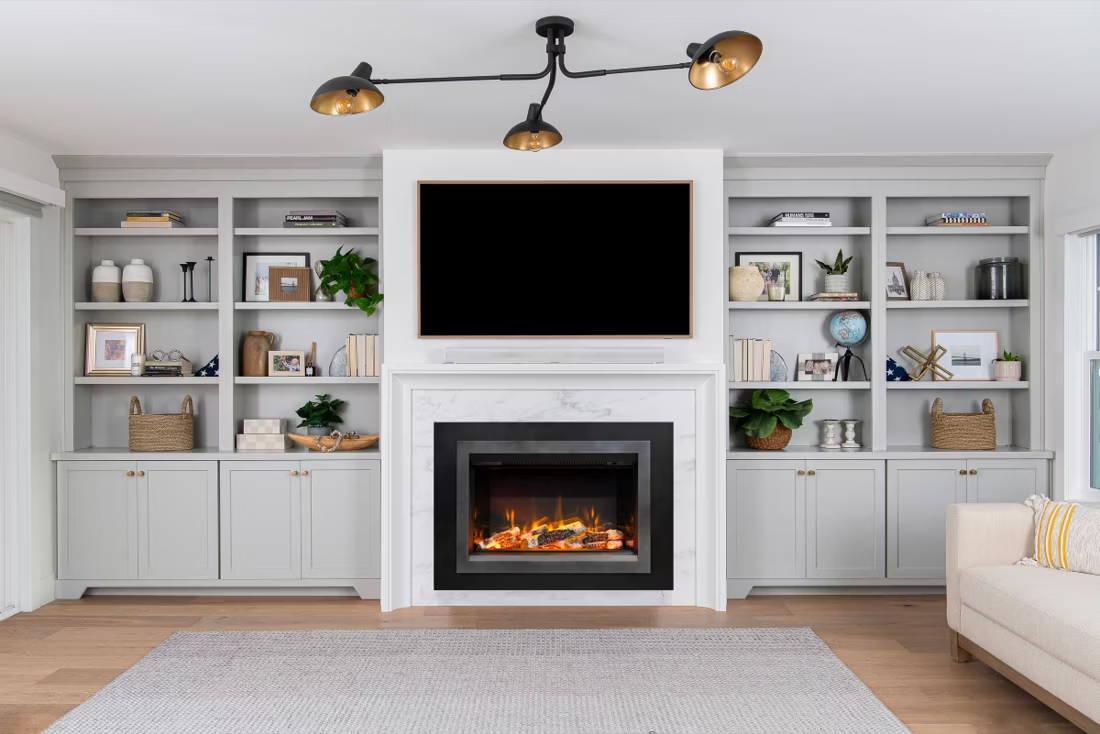
Yes—with an asterisk. Fireplaces are hot and TVs don't like heat. Either put a mantel between them to deflect rising warmth, or choose a fireplace with heat-management technology that creates a cool zone on the wall above—the wall stays around 125 degrees, barely warm, while the room still gets full heat. If you like clean lines and don't want a mantel, heat management is the answer.
Can I install a fireplace myself?
If you're putting a fire in your house on purpose, it's best to work with an expert. Unless you're genuinely experienced in framing, gas line, vent pipe, and the national code on clearances to combustibles, have a professional do it—and ideally the same company that sells you the fireplace, so warranty, service, and liability all live under one roof.
Does a fireplace add value to my home?
On average, a fireplace adds back to the home about the same amount you spent installing it. Add the monthly savings from heating the rooms you actually use instead of the whole house—often hundreds of dollars a year—and the value case is strong before you even count what a fire does for how your family uses the room.
Nearby Dealers
Hearth shops serving Champaign and the surrounding area. Every listing shows whether it is a WhyFire partner, a dealer we have verified as authorized for the brands we recommend, or a local business carrying hearth products. No manufacturer pays for placement. How we verify dealers →
Clayton Sales Company
The Depot
Quality Propane
Electric Service in Champaign
An electric fireplace's heater draws about 1,500 watts—pennies per hour at local rates.
Ameren Illinois Company
Eastern Illinois Elec Coop
Find your electric fireplace in Champaign.
Tell us a bit about your home and we'll match you with the right electric fireplace, insert, or wall unit—and connect you with a trusted local dealer who'll hand you a free Project Guide & Parts List for your Champaign installation.
Find Your Fireplace →