
No chimney, no gas line, no permit—just plug it in.
For the farmhouses and rural homes scattered across Brown County's 2,750 residents, electric heat solves a real problem: adding a fireplace without running gas line or touching a chimney. Find the right unit and connect with a trusted local dealer.
Every Project Starts From One of These Five Situations
The simplest heat source in a county without many easy options.
Brown County is small—about 2,750 people spread across Mount Sterling, Ripley, Timewell, and Versailles, plus a lot of farmland in between. Winters here sit in climate zone 5A, with a fairly long, solidly cold heating season and average lows around 17°F—colder than the Gulf states, but nowhere near the brutal territory of International Falls or Bismarck. It's a climate where a room genuinely needs supplemental heat some mornings, but not one that demands a wood-fired furnace running around the clock.
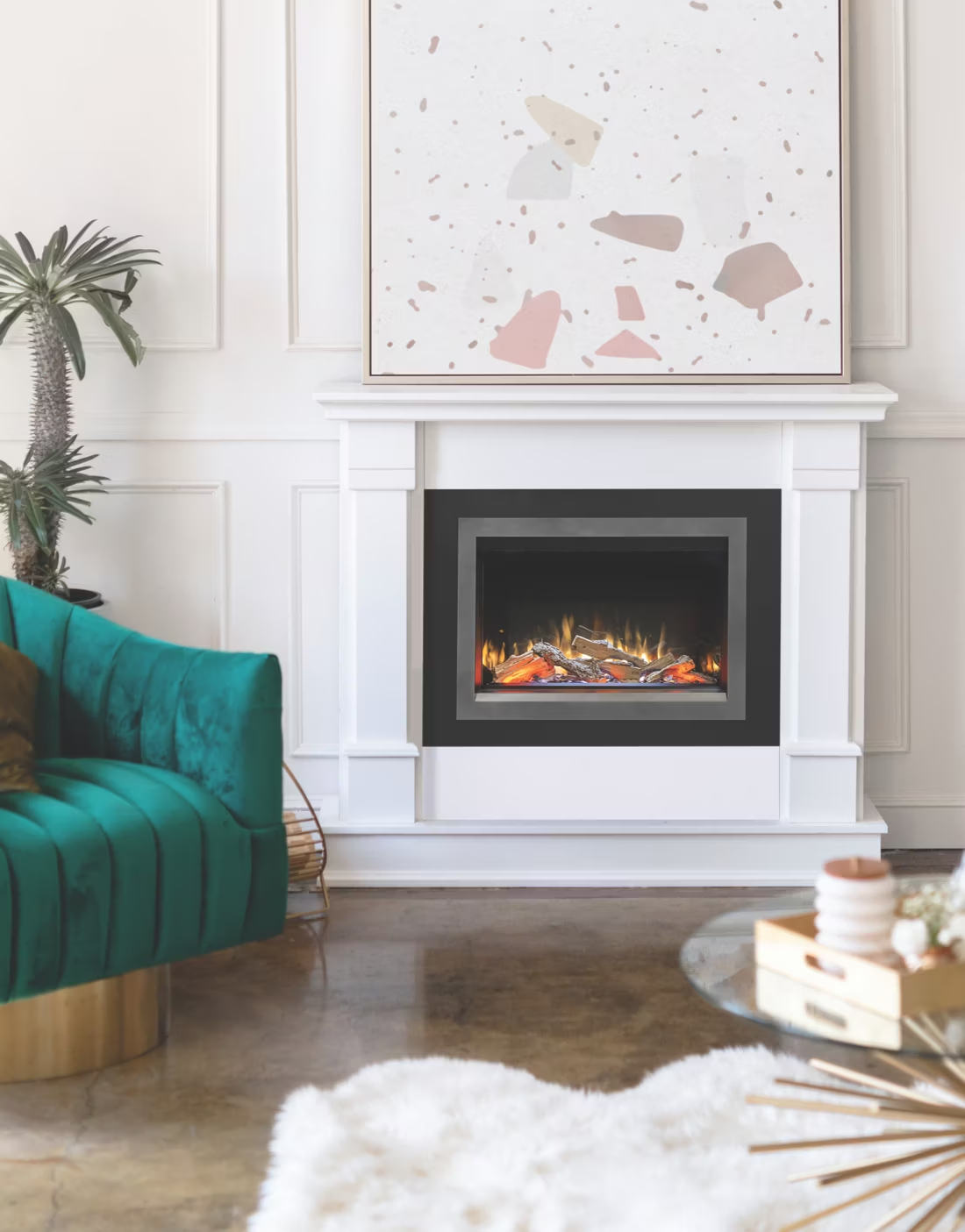
Plenty of Brown County homes already burn oak, hickory, or walnut in a wood stove for primary heat, and many others sit outside any natural gas main entirely, served instead by rural electric cooperatives rather than a municipal gas utility. That combination is exactly where electric fireplaces earn their keep: no venting, no combustion, no gas line to trench across a field, and—in most cases—no building permit at all. For a spare bedroom, a converted porch, a rental property, or a mobile home where a wood or gas install isn't practical, a plug-in or hardwired electric unit gets real supplemental warmth into the room this weekend instead of next season.
Three steps. No salesperson until you're ready.
Tell us about your project
Your zip code, your situation, and the fuel you're leaning toward—or let the answers point you to one.
See what's actually available
The brands dealers within 100 miles genuinely carry—real options, never a catalog mirage.
Get your dealer & Project Guide
A trusted local dealer, plus the free Project Guide & Parts List that names every component of the job.
Frequently Asked Questions
How much does an electric fireplace installation cost in Brown County?
Most electric fireplace projects in Brown County run $300 to $1,200. A plug-in insert or wall-mount unit on the low end needs nothing more than a standard outlet—no electrician, no permit, no demolition. Built-in electric fireplaces or units that need a dedicated 120V or 240V circuit run higher, since that requires an electrician to add or extend wiring, which matters for older farmhouses around Mount Sterling and Ripley that weren't built with a fireplace circuit in mind. Ask any local dealer whether your chosen model needs dedicated wiring before you buy—it changes the install cost more than the unit itself does.
Do I need a permit to install an electric fireplace in Brown County?
In most cases, no. A plug-in electric fireplace or insert that runs off a standard household outlet doesn't require a building permit because there's no venting, gas line, or structural chimney work involved—it's treated like any other appliance. If you're having an electrician add a new dedicated circuit for a larger built-in unit, that electrical work itself may need a permit depending on your township, so it's worth a quick call to confirm before work starts. Either way, it's a far simpler permitting path than a wood stove or gas insert, which is part of why electric is a common choice for Brown County's older rural homes.
Will an electric fireplace actually heat a room, or is it just for looks?
A quality electric fireplace with a built-in heater will genuinely warm a room—most put out around 4,000 to 5,000 BTU, enough for a bedroom, den, or converted porch, though not enough to replace a furnace for a whole farmhouse. In Brown County's climate, with average winter lows around 17°F and a fairly long, solidly cold heating season, that's plenty for supplemental heat in the room you actually spend time in, letting you turn the thermostat down elsewhere in the house. If you're trying to heat a larger open space, ask a local dealer about square footage and insulation before you buy—some units are sized more for ambiance than actual output.
Is electric a good fit for older farmhouses without a gas line?
Yes, and it's one of the more common reasons Brown County homeowners look at electric in the first place. Much of the county sits outside a natural gas service area and is instead served by rural electric cooperatives, which makes running a new gas line for a fireplace expensive or impractical. An electric fireplace sidesteps that entirely—no trenching, no propane tank, no gas-fitter. For a farmhouse near Timewell or Versailles that's off the gas main, electric or wood (often already in use for oak or hickory burning) tend to be the two realistic options, and electric is the far simpler install of the two.
Electric insert vs. wall-mount vs. built-in—what's the difference?
An electric insert is built to slide into an existing masonry fireplace opening, giving an old wood-burning fireplace new life without touching the chimney—a common upgrade in Brown County's older housing stock. A wall-mount unit hangs directly on a wall like a flat-screen TV and needs only a nearby outlet, making it the fastest option for a room with no existing fireplace. A built-in electric fireplace is framed into a wall or cabinetry during a remodel and gives the most finished, custom look, but usually needs an electrician for dedicated wiring. For most Brown County homes with an existing but unused masonry fireplace, the insert is the simplest path back to a usable focal point.
How much does it cost to run an electric fireplace through a Brown County winter?
Running cost depends on the heater setting and how many hours a day it's on, but a typical electric fireplace heater draws around 1,500 watts on high—roughly 1.5 kWh per hour of heater use. Running it for supplemental heat a few hours a day through Brown County's cold months, at a rural electric cooperative's typical rate, generally adds somewhere in the range of $15 to $40 a month depending on usage. Many owners run the flame effect alone (with the heater off) for ambiance most of the time, which uses only a few watts, and switch on the heater only when they actually want the extra warmth.
Where can I find a dealer or installer near Brown County?
Because Brown County's population is small, the closest hearth dealers with in-stock electric fireplace inventory are often in nearby Quincy or Jacksonville rather than in Mount Sterling itself. That's typically fine for electric units—since most don't require the venting or gas-line coordination that makes local proximity critical for wood or gas installs—but it's still worth working with a dealer who will size the unit correctly for your room and confirm whether your chosen model needs dedicated wiring. A trusted local dealer can also tell you honestly when a simple plug-in unit is enough versus when a hardwired install is worth the extra cost.
Electric vs. wood—which makes more sense for my Brown County home?
Wood is still the workhorse fuel across much of rural Brown County, where oak, hickory, walnut, and maple are all locally available and a wood stove can serve as genuine primary heat during outages—a real consideration on rural electric cooperative lines where storm restoration can take a while. Electric can't function during a power outage and won't replace a furnace, but it wins on simplicity: no chimney, no cutting or hauling wood, no ash, and heat at the flip of a switch for a specific room. Many Brown County households end up with both—a wood stove for serious cold and backup heat, and an electric unit in a bedroom or den for everyday convenience.
Electric vs. pellet stove—which is the better fit?
Pellet stoves burn compressed wood pellets—regional supply is available from brands like Indeck Energy Services, Lignetics, and Somerset Pellet Fuel—and can put out serious heat for a whole living area, but they need a vent, a hopper to keep filled, and electricity to run the auger and blower, so they still go down in a power outage. Electric fireplaces skip the pellets, the hopper, and the venting entirely, trading some heat output for total simplicity and a near-zero-maintenance install. For Brown County homeowners who want real heating capacity from a single appliance, pellet is worth a look; for a supplemental, low-hassle heat source in one room, electric is usually the more practical choice.
Can I put a TV above my fireplace?
Yes—with an asterisk. Fireplaces are hot and TVs don't like heat. Either put a mantel between them to deflect rising warmth, or choose a fireplace with heat-management technology that creates a cool zone on the wall above—the wall stays around 125 degrees, barely warm, while the room still gets full heat. If you like clean lines and don't want a mantel, heat management is the answer.
Do electric fireplaces actually produce heat?
Yes—most put out around 4,800–5,000 BTUs from a standard outlet, which comfortably warms a bedroom, office, or den as a comfort-zone heater. What they won't do is carry a whole house the way wood, gas, or pellet can. Think of electric as ambiance-first with honest supplemental heat: flames on with no heat in July, flames plus warmth in January.
How much should I budget for a fireplace?
For an average home—covering the fireplace, the vent pipe, and basic installation—a budget between $3,900 and $5,500 gives you a lot of options across wood, gas, and pellet. By the time you add finish work, gas line, and electrical, the average complete installation lands between $5,000 and $12,000 all-in. In a remodel or new build, a good rule is to put about 2.5% of the total project cost toward the fireplace.
Can a fireplace actually lower my heating bill?
Yes—by creating a comfort zone. A furnace heats every square foot of the house just to warm the one room you're in; a gas fireplace on low burns roughly a sixth of the gas a typical furnace does. Set the furnace around 55–60 degrees as a baseline, then heat the rooms your family actually uses. Families who heat this way commonly save $20–$60 a month.
Find your electric fireplace in Brown County.
Tell us a bit about your home and we'll match you with the right electric fireplace or insert—plus a free Project Guide & Parts List with your recommended local dealer.
Find Your Fireplace →