
Find the right heat source for your Brown County farmhouse.
Wood, gas, pellet, and electric fireplace resources for Mount Sterling, Versailles, and the rural stretches in between. Connect with a trusted local dealer who knows what actually works on the west-central Illinois prairie.
Every Project Starts From One of These Five Situations
Small-county heating on the Illinois prairie.
Brown County is one of Illinois's smallest counties by population—just under 2,800 people spread across rolling farmland along the Illinois River bottoms. Climate zone 5A puts it in the same heating band as Madison, Wisconsin, with a winter heating load on par with that comparison and average winter lows around 17°F. That's a real heating season, not a mild one—furnaces run hard from November through March, and a supplemental hearth appliance meaningfully cuts propane or electric bills in the older farmhouses that make up much of the county's housing stock. Oak, hickory, walnut, and maple are the wood species locals actually burn, mostly self-cut or sourced from neighbors clearing timber ground.
What you'll find on this hub: hearth retailers, service technicians, and fuel suppliers serving Mount Sterling, Versailles, Ripley, and the unincorporated crossroads that make up the rest of the county. Brown County doesn't have its own hearth retailer inside the county line, so most homeowners here work with dealers based in Quincy, Jacksonville, or Beardstown who travel in for installs. Pick your fuel below to see local dealers, typical installation costs, and the resources that fit your project—whether that's a wood insert in a century farmhouse or a propane fireplace in a newer build near Mount Sterling.
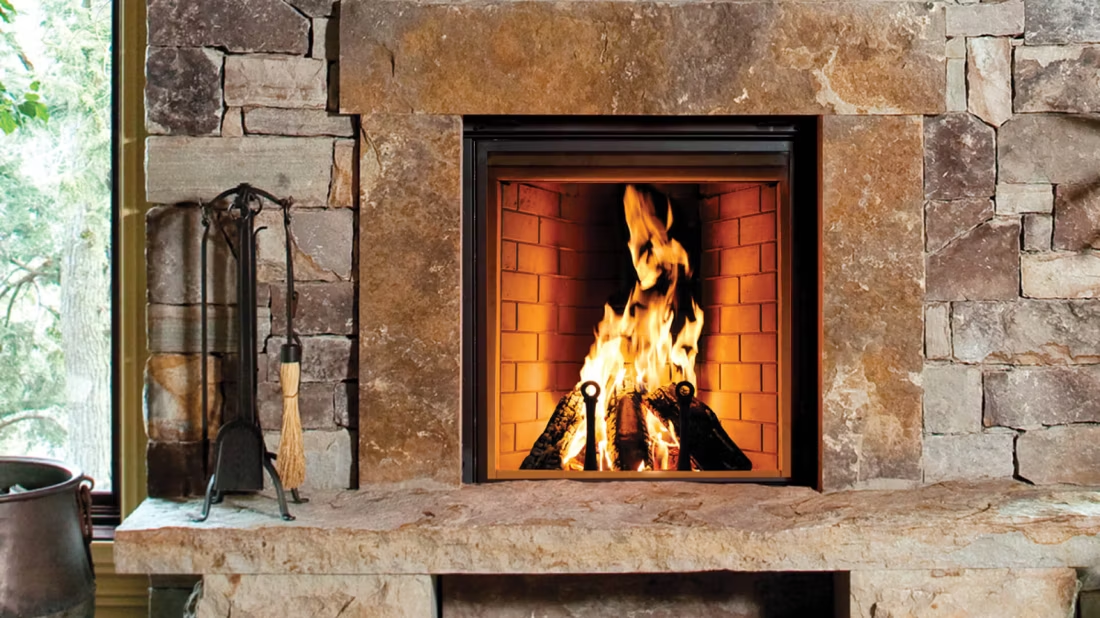
Four fuels. One honest answer for Brown County.
Three steps. No salesperson until you're ready.
Tell us about your project
Your zip code, your situation, and the fuel you're leaning toward—or let the answers point you to one.
See what's actually available
The brands dealers within 100 miles genuinely carry—real options, never a catalog mirage.
Get your dealer & Project Guide
A trusted local dealer, plus the free Project Guide & Parts List that names every component of the job.
Frequently Asked Questions
Which fuel works best in Brown County?
It depends on the home and the budget, but there's no dominant default here the way there might be in a bigger market. Wood remains popular in Brown County's older farmhouses—oak and hickory are abundant on local timber ground, and a wood insert or stove is a genuine hedge against winter power outages on rural lines. Gas (mostly propane, since natural gas service is limited outside Mount Sterling) is the low-maintenance choice for homeowners who want instant heat without stacking wood. Pellet stoves are a solid middle path—Indeck Energy Services and Lignetics pellets are stocked regionally, and pellet appliances need far less physical labor than cordwood while still delivering real heat output. Electric fireplaces work well as supplemental heat in bedrooms or additions but won't carry a whole farmhouse through a 17°F January night on their own. Many Brown County households run wood or pellet as the primary heat source and lean on propane or electric for secondary rooms.
Do I need a permit to install a fireplace in Brown County?
Most likely, yes, though Brown County's rural character means enforcement and process vary by location. New wood stoves, inserts, gas appliances, and pellet stoves typically require a building permit, and any gas line work needs a licensed propane or gas fitter regardless of permit status. Within Mount Sterling city limits, permits run through the city; outside city limits, Brown County's building oversight is limited compared to larger counties, so it's worth confirming requirements directly with whichever dealer handles your install—Quincy- and Jacksonville-based retailers who regularly work in Brown County will know the local process and typically pull permits as part of the installation.
Are there air quality restrictions on wood burning in Brown County?
No. Brown County has no wood-burning curtailment program or air quality non-attainment designation—this is open farmland with good natural air dispersion, not a basin or valley prone to winter inversions. That means no voluntary burn advisories or mandatory curtailment days to plan around. New wood stove installations still need to meet current EPA emissions standards, which is standard everywhere, but there's no local ordinance layered on top of that in this county.
Is there a hearth retailer actually located in Brown County?
Not currently—with a population under 2,800, Brown County doesn't support a standalone hearth retailer inside its borders. Homeowners in Mount Sterling, Versailles, and surrounding areas typically work with dealers based in Quincy (about 25 miles northwest), Jacksonville (about 30 miles southeast), or Beardstown along the Illinois River. These retailers regularly travel into Brown County for consultations, installs, and service, so you're not without options—you're just scheduling around a slightly longer drive time for the initial visit.
How does hearth service work in a rural county like this?
Technicians serving Brown County are based in the surrounding towns and build travel time into their scheduling for rural calls—expect a modest trip fee, often in the $40–$80 range, for service calls to farmhouses outside Mount Sterling or Versailles. Because appointment slots fill up fastest right before heating season, scheduling your chimney sweep or gas inspection in September or early October gets you ahead of the rush. If you're on a long gravel lane or hard to find, give clear directions when booking—rural addresses and lack of consistent cell coverage can complicate day-of communication.
What's the typical cost range for fireplace installation across all fuel types in Brown County?
Costs track close to regional west-central Illinois pricing, though travel fees from Quincy- or Jacksonville-based dealers can add a bit on top. Wood stove or insert installation: roughly $4,000–$8,500 for typical retrofits, more for new chimney construction in an older farmhouse. Gas fireplace, insert, or stove: $4,000–$10,000, with propane tank and line work pushing toward the higher end for homes without existing service. Pellet stove or insert: $4,000–$7,000 for most installs. Electric fireplace: $200–$2,800 for the unit itself, plus $400–$1,000 in labor for anything beyond a plug-and-play unit. Ask your dealer to itemize travel charges separately so you can compare quotes accurately across retailers based in different towns.
How much should I budget for a fireplace?
For an average home—covering the fireplace, the vent pipe, and basic installation—a budget between $3,900 and $5,500 gives you a lot of options across wood, gas, and pellet. By the time you add finish work, gas line, and electrical, the average complete installation lands between $5,000 and $12,000 all-in. In a remodel or new build, a good rule is to put about 2.5% of the total project cost toward the fireplace.
Does a fireplace add value to my home?
On average, a fireplace adds back to the home about the same amount you spent installing it. Add the monthly savings from heating the rooms you actually use instead of the whole house—often hundreds of dollars a year—and the value case is strong before you even count what a fire does for how your family uses the room.
What are the biggest mistakes people make buying a fireplace?
Five come up constantly: budgeting for the unit but not the full job (vent, gas line, electrical, finish work); drowning in options instead of starting from style and fuel; buying without an in-home preview; handing installation to a handyman instead of a pro; and giving up out of sheer indecision. Every one is avoidable with a clear plan—step one, step two, step three.
Can I install a fireplace myself?
If you're putting a fire in your house on purpose, it's best to work with an expert. Unless you're genuinely experienced in framing, gas line, vent pipe, and the national code on clearances to combustibles, have a professional do it—and ideally the same company that sells you the fireplace, so warranty, service, and liability all live under one roof.
Stove and Fireplace Dealers in Brown County
Listings include WhyFire partner dealers, dealers we have verified as authorized for the brands we recommend, and established local businesses that carry hearth products. Every listing shows which one it is. The ones marked Preferred run on WhyFire's software, so they can show you real pricing and book your appointment right here. No manufacturer pays for placement. How we verify dealers →
Peters Heating & Ac
Peters Heating & Ac
Get your Brown County Project Guide & Parts List.
Tell us about your home and fuel preference, and we'll match you with a trusted local dealer serving Brown County plus a free Project Guide & Parts List—the exact parts, vent kit included, for your specific project.
Find Your Fireplace →