
Find your pellet stove in Boone County.
Steady, thermostat-controlled heat for Boone County's long northern Illinois winters—from Belvidere to Poplar Grove to Caledonia. Get matched with a trusted local dealer who can size and install it right.
Every Project Starts From One of These Five Situations
Consistent heat for a full Illinois winter.
Boone County sits in climate zone 5A with a long heating season that stretches from October into April, with average winter lows around 14 degrees. That's comparable to what a household in Madison, WI deals with most winters, and it means a heating appliance here has real work to do for months at a stretch, not just the occasional cold snap. Unlike some Midwest counties dealing with wood smoke restrictions, Boone County has no air quality non-attainment concerns, so the choice between wood and pellet comes down to convenience and burn characteristics rather than local burning bans.
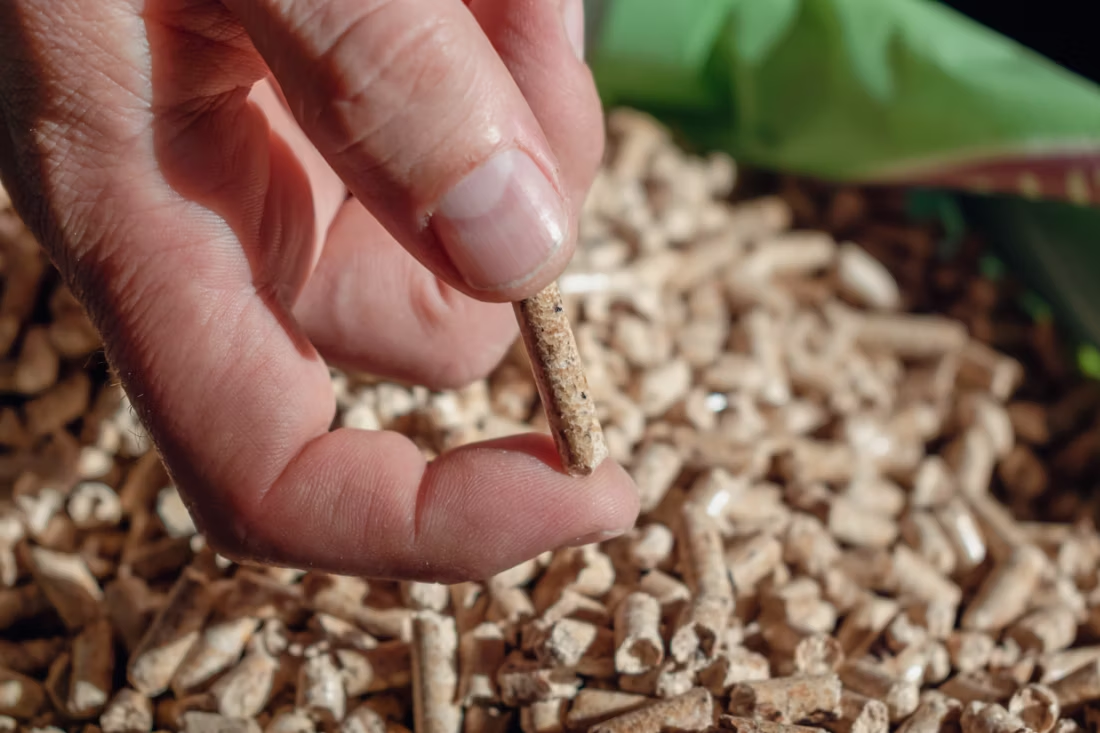
Pellet stoves fit well here because they hold a steady output over long stretches without the tending a cordwood stove demands—you load the hopper, set the thermostat, and it runs. Fuel is straightforward to source regionally, with Indeck Energy Services, Lignetics, and Somerset Pellet Fuel all producing or distributing pellets that reach dealers in northern Illinois. For homes in Belvidere or the more rural stretches near Caledonia and Poplar Grove where oak, hickory, walnut, and maple are the local hardwoods people already burn, a pellet unit offers a cleaner-burning, lower-maintenance alternative that still delivers real heat through a Wisconsin-border winter.
Three steps. No salesperson until you're ready.
Tell us about your project
Your zip code, your situation, and the fuel you're leaning toward—or let the answers point you to one.
See what's actually available
The brands dealers within 100 miles genuinely carry—real options, never a catalog mirage.
Get your dealer & Project Guide
A trusted local dealer, plus the free Project Guide & Parts List that names every component of the job.
Frequently Asked Questions
How much does a pellet stove installation cost in Boone County?
Pellet stove and insert installations in Boone County typically run in the range most Illinois dealers quote for a straightforward hearth or wall installation—factoring in the unit itself, venting through an exterior wall or existing chimney, and electrical work for the hopper motor and igniter. Costs run higher when a home needs a new dedicated outlet, when venting has to be routed through masonry rather than a simple wall pass-through, or when an old wood-burning fireplace is being converted to a pellet insert. A local dealer will give you a firm number after seeing the install site in person—ask for that as part of your Project Guide & Parts List.
What size pellet stove do I need for my Boone County home?
Sizing depends on square footage, ceiling height, and how well-insulated the home is—but Boone County's long, cold winter season pushes sizing toward the larger end compared to milder Illinois counties further south. A stove rated for supplemental heat in a moderate climate may be undersized here if you're hoping to lean on it through January and February. Older farmhouses around Caledonia and Poplar Grove with less insulation typically need more capacity than a tighter, newer build in Belvidere at the same square footage. A local dealer will walk your space and size it properly rather than guessing off a chart.
Where can I find pellet fuel near me in Boone County?
Pellets reach Boone County dealers and hardware retailers through regional producers and distributors, including Indeck Energy Services, Lignetics, and Somerset Pellet Fuel—all of which supply the broader northern Illinois market. Most local hearth dealers sell bagged pellets by the ton or in bulk pallets, and many will help you plan storage for a full winter's supply so you're not making repeat trips in a February cold snap. Buying early in the fall, before the coldest stretch of the season, typically means better selection and pricing.
What's the difference between a pellet stove and a pellet insert?
A pellet stove is a freestanding unit that sits on its own hearth pad and vents through a wall or existing chimney—it can go in almost any room with the right clearances. A pellet insert is built to slide into an existing masonry fireplace opening, turning a fireplace that was likely built for wood into a sealed, high-efficiency pellet-burning unit that vents up the existing flue with a liner. For Boone County homes with an older fireplace already in place—common in some of the county's farmhouse-era housing stock—an insert is often the simpler retrofit. Homes without an existing fireplace usually do better with a freestanding stove.
Do pellet stoves work during a power outage in Boone County?
No—this is the one real trade-off with pellet heat. Pellet stoves rely on an electric auger to feed fuel and a blower to distribute heat, so they shut down when the power goes out, unlike a wood stove that keeps burning on its own. Some homeowners in Boone County pair a pellet stove with a small battery backup or inverter setup to ride out short outages, and a few keep a wood-burning backup for extended winter storm outages. If uninterrupted heat during outages is a top priority, it's worth discussing a backup power option with your local dealer alongside the pellet unit.
What's the best pellet stove for Boone County's climate?
For a heating season with 6,497 degree days and lows regularly in the teens, look for a pellet stove with a larger hopper capacity so it can run longer between refills on the coldest nights, and check the stated heating capacity against your actual square footage rather than a marketing number. Models with a thermostat or programmable control help manage fuel use through a long season rather than running on manual settings around the clock. A local dealer familiar with Boone County's winters can point you toward specific models that have held up well for other customers here.
How often does a pellet stove need to be cleaned and serviced?
Pellet stoves need regular ash removal from the burn pot—often weekly during heavy winter use—plus a deeper cleaning of the venting, hopper, and auger system at least once a year, typically before the season starts. Compared to a wood stove and chimney, pellet units are lower-maintenance overall, but skipping the annual service is still the most common reason people run into feed jams or reduced heat output mid-winter. Local dealers who sell pellet stoves in Boone County generally offer this service or can point you to a technician who does.
Are there rebates available for pellet stoves in Illinois?
Availability and terms of federal and state efficiency incentives change from year to year, and eligibility depends on the specific stove's efficiency rating and your installer's certifications. Rather than quoting a number that may be out of date, the most reliable approach is to ask your matched local dealer directly—they stay current on what's available in Illinois and can tell you whether a specific model qualifies before you commit.
Pellet stove vs. wood stove—which is right for my Boone County home?
Wood stoves burn cordwood—plentiful in Boone County given the local oak, hickory, walnut, and maple—run without electricity, and give you the traditional experience of tending a fire, which also means daily loading and ash cleanup plus an annual chimney sweep. Pellet stoves are more hands-off day to day, burn cleaner, and hold a steady output well suited to the long, cold stretch Boone County sees each winter, but they need electricity and a fuel you buy by the bag or ton rather than cut yourself. If backup heat during power outages matters most, wood has the edge. If day-to-day convenience and consistent output over a full winter matter more, pellet is usually the better fit—talk through both with a local dealer before deciding.
Why is a fireplace insert so efficient?
An insert does two things: it seals the chimney completely, so you stop losing air you already paid to heat, and it radiates warmth into the room through the firebox and glass. Most add a heat-exchange fan that pulls cool room air underneath, wraps it around the hot firebox, and pushes it back out warm. Your home is more efficient before you've even lit the first fire.
What does it take to replace an existing fireplace?
Fireplaces are like icebergs—bigger behind the wall than in front of it. Replacement means removing the surrounding tile or stone (the finish material laps onto the fireplace face), pulling the old unit, setting the new one in the same enclosure, and re-finishing the wall. A hearth professional can determine what's behind your wall without demolition during an in-home preview.
Can a fireplace actually lower my heating bill?
Yes—by creating a comfort zone. A furnace heats every square foot of the house just to warm the one room you're in; a gas fireplace on low burns roughly a sixth of the gas a typical furnace does. Set the furnace around 55–60 degrees as a baseline, then heat the rooms your family actually uses. Families who heat this way commonly save $20–$60 a month.
Can I install a fireplace myself?
If you're putting a fire in your house on purpose, it's best to work with an expert. Unless you're genuinely experienced in framing, gas line, vent pipe, and the national code on clearances to combustibles, have a professional do it—and ideally the same company that sells you the fireplace, so warranty, service, and liability all live under one roof.
Pellet Brands Stocked Around Boone County
Manufacturers will point you to the nearest stocking dealer.
Get matched with a Boone County pellet stove dealer.
Tell us about your home and we'll match you with a trusted local dealer and put together a free Project Guide & Parts List—the right pellet stove or insert, the vent kit, and what it takes to get it installed before winter.
Find Your Fireplace →