
Steady pellet heat for Bond County winters.
From Greenville to Pocahontas and every farm road in between, a pellet stove delivers thermostat-like heat without a chimney full of creosote. Find the right unit and connect with a trusted local dealer.
Every Project Starts From One of These Five Situations
Consistent heat for a county built on hardwood and corn.
Bond County sits in southwestern Illinois farm country, about 45 miles east of St. Louis, with roughly 10,551 residents spread across Greenville, Pocahontas, Sorento, Mulberry Grove, and the surrounding townships. Climate zone 4A here means winters that are cold but not brutal—an average low around 21°F and about 5,140 heating degree days, considerably milder than places like Madison, WI (over 7,000 HDD) or Duluth, MN. That moderate cold is exactly the range where pellet stoves perform best: enough demand to matter for a heating bill, but not so extreme that homeowners need a wood-fired backup as their only option.
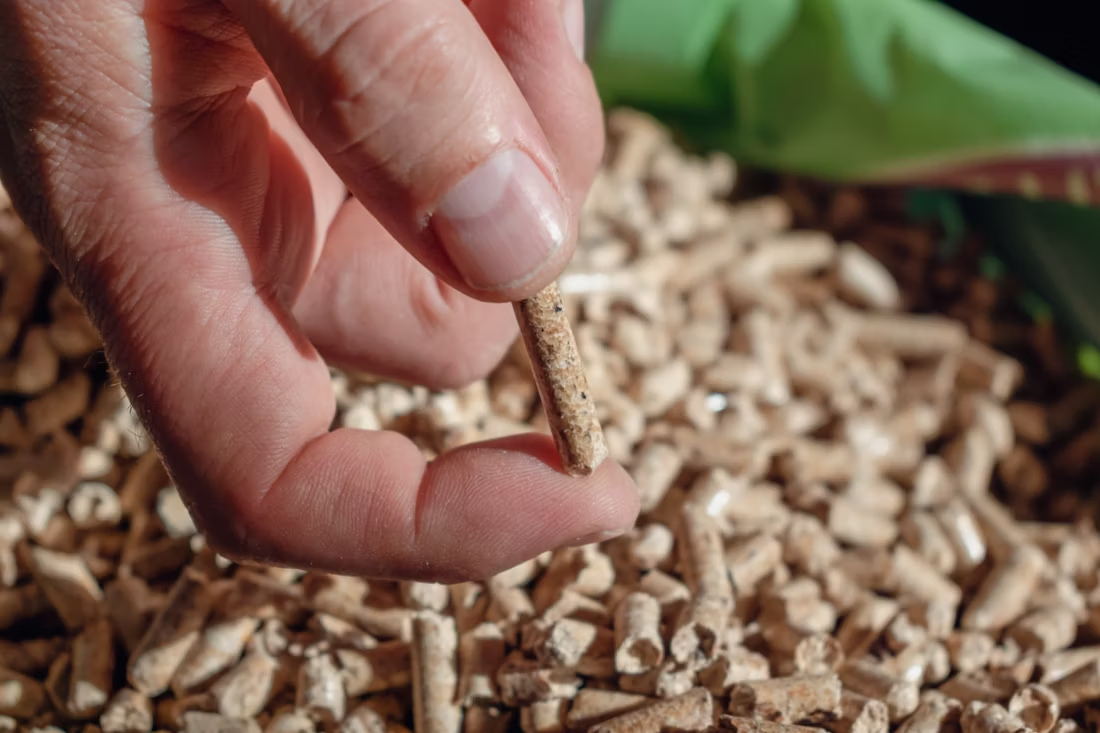
Bond County's oak, hickory, walnut, and maple woodlots feed a regional wood-products economy, and that same hardwood base supports pellet supply from brands like Lignetics and Somerset Pellet Fuel, along with biomass fuel from Indeck Energy Services. Many rural properties here run on propane or electric heat rather than natural gas, which is where a pellet stove earns its keep—it drops into a mudroom, sunroom, or main living area and knocks down the propane bill without the daily hauling and ash cleanup of cordwood. Some Bond County farmhouses even run dual-fuel stoves that burn either wood pellets or shelled corn, a nod to the county's row-crop economy and a genuinely practical hedge against pellet supply swings.
Three steps. No salesperson until you're ready.
Tell us about your project
Your zip code, your situation, and the fuel you're leaning toward—or let the answers point you to one.
See what's actually available
The brands dealers within 100 miles genuinely carry—real options, never a catalog mirage.
Get your dealer & Project Guide
A trusted local dealer, plus the free Project Guide & Parts List that names every component of the job.
Frequently Asked Questions
How much does a pellet stove installation cost in Bond County?
Most pellet stove installations in Bond County run in the $2,800 to $6,000 range, depending on the unit, whether venting runs through an exterior wall or an existing chimney, and whether a hearth pad is needed for clearance. A freestanding pellet stove venting straight out through a nearby wall—common in the ranch-style and farmhouse layouts around Greenville and Pocahontas—tends to land on the lower end. Converting an existing masonry fireplace to a pellet insert, or running vent pipe a longer distance to reach an exterior wall, pushes toward the higher end. A local dealer can give a firm number after seeing your layout.
What size pellet stove do I need for my Bond County home?
Sizing comes down to square footage, ceiling height, and how open your floor plan is. Small units (up to around 1,000 sq ft) suit a single room or a mobile home common in the outlying parts of the county; medium units (1,000–2,000 sq ft) cover most of the county's farmhouses and ranch homes; larger units handle bigger, open-plan living areas. Because Bond County's winters are moderate rather than extreme—a 21°F average low is manageable for most mid-size hoppers—homeowners here rarely need to size up the way a colder climate would require. A local retailer will walk your space and size it for free rather than guessing off square footage alone.
Pellet stove vs. wood stove—which fits Bond County better?
Wood stoves burn cordwood, need no electricity to run, and work fine as backup heat during a power outage—a real consideration on Bond County's rural electric lines, where storms can knock out power for hours. Pellet stoves need electricity to run the auger and combustion blower, so they go dark in an outage unless paired with a battery backup or generator. In exchange, pellet stoves load easier, burn cleaner with far less ash, and hold a steady, thermostat-controlled temperature that a wood stove can't match without constant tending. For a primary living space where convenience matters most, pellet wins; for true off-grid backup heat, wood or a dual-fuel corn/pellet unit is the safer bet.
Where can I buy wood pellets in Bond County?
Regional pellet supply in this part of Illinois runs through brands like Lignetics and Somerset Pellet Fuel, both distributed through farm supply and hardware retailers in the area, along with biomass fuel sourced through Indeck Energy Services. Bags typically run by the ton, with local farm stores restocking heaviest from late fall through midwinter—it's worth buying early in the season rather than waiting for a cold snap when local supply can tighten. If you go with a dual-fuel stove, shelled corn from a local grain elevator is a common and often cheaper alternative fuel for Bond County's farm households.
Do I need a permit to install a pellet stove in Bond County?
Most jurisdictions in Bond County require a building permit for a new pellet stove installation, particularly if it involves new wall penetrations for venting or a new hearth pad. Reach out to the Bond County Building & Zoning office, or your municipality's building department if you're inside Greenville or another incorporated town, before work begins. Most local hearth dealers handle the permit paperwork as part of the installation, so you typically don't need to file anything yourself.
What's the best pellet stove for Bond County's climate?
Because Bond County's winters sit in a moderate range—average lows around 21°F and roughly 5,140 heating degree days—most mid-size pellet stoves from mainstream manufacturers handle the job without needing an oversized hopper or continuous-feed system built for extreme cold. Look for a unit with a hopper capacity that gets you through a full overnight burn without a refill, and ask your local dealer about dual-fuel corn/pellet models if you want a hedge against pellet price swings—a genuinely popular option in this part of the state given the local grain economy.
How often does a pellet stove need maintenance?
Plan on a full cleaning of the burn pot, auger, and venting once a year, ideally before burning season starts in the fall. Daily or weekly ash removal from the burn pot keeps combustion efficient, and the exhaust venting should be checked periodically for pellet ash buildup, especially with softer or lower-quality pellet blends. Bond County doesn't have any air quality non-attainment issues or burn restrictions, so there's no seasonal curtailment to plan around—regular maintenance is purely about efficiency and appliance longevity.
Pellet vs. propane—which is more cost-effective in Bond County?
Many Bond County homes outside Greenville and the other incorporated towns run on propane rather than natural gas, and propane prices can swing seasonally in ways that make a pellet stove an attractive supplement. A pellet stove won't replace a whole-home propane furnace, but running it in the main living area during the coldest months can meaningfully cut propane consumption, since it delivers steady, thermostatically-controlled heat right where the household spends its time. The tradeoff is pellet stoves need electricity to operate, while a propane furnace typically doesn't rely on it the same way.
Pellet stove vs. wood-burning dual-fuel corn stove—what's the difference?
A standard pellet stove burns only manufactured wood pellets, sourced regionally from brands like Lignetics or Somerset Pellet Fuel. A dual-fuel stove can burn either wood pellets or shelled corn, which matters in a farm county like Bond where corn is often cheaper and more locally available than pellets, especially right after harvest. The tradeoff is a slightly more complex auger and burn-pot design, since corn burns differently than wood pellets and needs a stove engineered for both. For households near grain storage or with easy access to shelled corn, a dual-fuel unit can lower ongoing fuel costs considerably.
Why is a fireplace insert so efficient?
An insert does two things: it seals the chimney completely, so you stop losing air you already paid to heat, and it radiates warmth into the room through the firebox and glass. Most add a heat-exchange fan that pulls cool room air underneath, wraps it around the hot firebox, and pushes it back out warm. Your home is more efficient before you've even lit the first fire.
Can a pellet stove heat a whole house?
It genuinely can. I burned a pellet stove as my only heat source for years after a furnace died, and it kept the entire house warm. Pellets feed automatically from a hopper, so you get wood-heat economics with thermostat-style control. Two honest caveats: it needs weekly cleaning during the season, and most models need electricity to run—ask about battery backup if outages are a concern.
Can a fireplace actually lower my heating bill?
Yes—by creating a comfort zone. A furnace heats every square foot of the house just to warm the one room you're in; a gas fireplace on low burns roughly a sixth of the gas a typical furnace does. Set the furnace around 55–60 degrees as a baseline, then heat the rooms your family actually uses. Families who heat this way commonly save $20–$60 a month.
Can I install a fireplace myself?
If you're putting a fire in your house on purpose, it's best to work with an expert. Unless you're genuinely experienced in framing, gas line, vent pipe, and the national code on clearances to combustibles, have a professional do it—and ideally the same company that sells you the fireplace, so warranty, service, and liability all live under one roof.
Pellet Brands Stocked Around Bond County
Manufacturers will point you to the nearest stocking dealer.
Find your pellet stove in Bond County.
Tell us about your home and heating goals, and we'll match you with a trusted local dealer and send over a free Project Guide & Parts List—the exact parts, vent kit, and recommended installer for your Bond County pellet project.
Find Your Fireplace →