
Add Real Ambiance to Your Aurora Home—Without a Chimney.
No chimney, no gas line—just plug-in warmth and ambiance for Aurora homes, from Fox Valley bungalows to new Kane County townhomes. Find the right unit and a trusted local dealer.
Every Project Starts From One of These Five Situations
No gas line, no chimney, no problem.
Aurora is Illinois's second-largest city, spread across the Fox River with a housing stock that ranges from century-old brick two-flats near downtown to newer townhomes and subdivisions out toward Route 59. At climate zone 5A with a cold-winter profile similar to Madison, Wisconsin, average lows of 16°F are normal by January, and a lot of homeowners want supplemental heat that doesn't require a masonry chimney or a gas line retrofit.
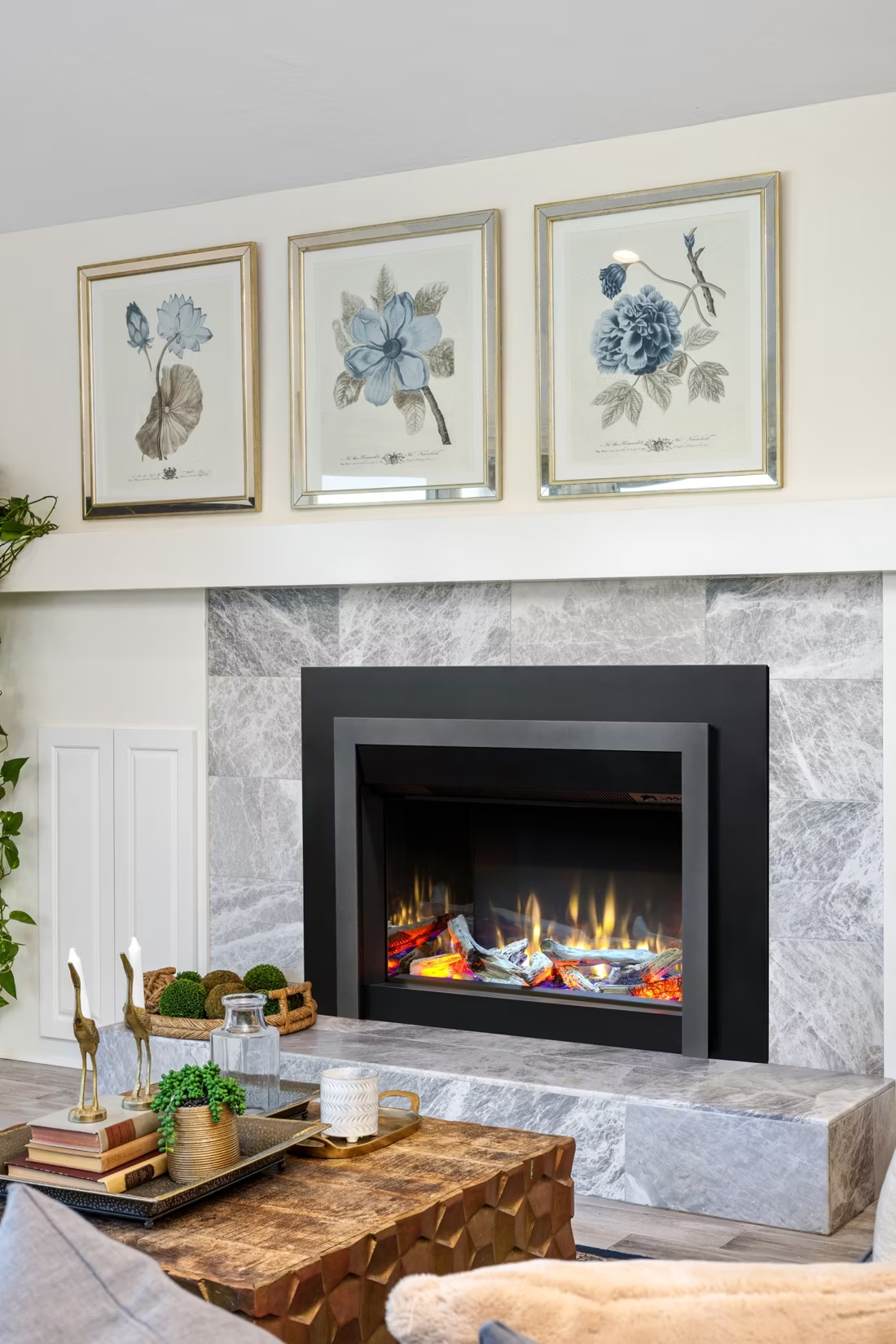
Electric fireplaces have become the practical answer for a lot of Aurora homes, especially condos, townhomes, and finished basements where running a chimney or venting a gas line isn't realistic. Every unit plugs into standard household current, and ComEd's residential rate of about 13.4 cents per kWh keeps typical use costs low for a supplemental heater. There's no chimney to sweep, no cutting permit to track down—wood-burning is genuinely rare here given how much of Aurora's housing is attached or HOA-governed—and no venting to size. Just a unit that plugs in and adds real heat and ambiance to a room.
Three steps. No salesperson until you're ready.
Tell us about your project
Your zip code, your situation, and the fuel you're leaning toward—or let the answers point you to one.
See what's actually available
The brands dealers within 100 miles genuinely carry—real options, never a catalog mirage.
Get your dealer & Project Guide
A trusted local dealer, plus the free Project Guide & Parts List that names every component of the job.
Frequently Asked Questions
How much does an electric fireplace installation cost in Aurora?
Costs vary by unit type. A basic plug-in electric insert that slides into an existing fireplace opening typically runs $300 to $800 including a local dealer's setup and trim kit. A built-in wall unit—recessed into new framing with a dedicated outlet or 240V circuit—usually runs $1,500 to $4,000 once an electrician and finish carpenter are involved. Freestanding electric stoves, a good fit for Aurora's older Fox Valley bungalows without an existing fireplace opening, land in between. A local dealer can give you a firm number after seeing your room.
What does it cost to run an electric fireplace in Aurora?
Most electric fireplaces draw around 1,500 watts on the heat setting. At ComEd's residential rate of roughly $0.1339 per kWh, running one for a full evening—say 4 hours—costs about 80 cents. Used as supplemental zone heat in one room instead of running the furnace to warm the whole house, many Aurora homeowners find it actually trims their winter ComEd bill compared to heating an entire house to warm the one room people are actually using.
Do I need a permit to install an electric fireplace in Aurora?
A plug-in electric insert or freestanding stove that runs off a standard household outlet doesn't require a permit. If you're installing a built-in wall unit that needs a new dedicated circuit or 240V line, that electrical work requires a permit through the City of Aurora Building Division, or the applicable county building department if you're outside city limits in unincorporated Kane County. Most licensed electricians pull this permit as part of the job, so it's rarely something you have to manage yourself.
What's the difference between an electric insert, a built-in wall unit, and a freestanding electric stove?
An electric insert is sized to slide into an existing fireplace opening—the fastest option for Aurora homes with an old wood-burning fireplace nobody uses anymore. A built-in wall unit is framed into a wall like custom cabinetry, common in newer Aurora townhomes and condo remodels that have no existing fireplace at all. A freestanding electric stove sits on the floor like a wood stove, a good fit for older Fox Valley homes near downtown that were never built with a chimney to begin with.
Can an electric fireplace actually heat a room in Aurora's winters?
Most electric fireplaces put out around 5,000 BTU on the heat setting, enough to noticeably warm a single room of 300 to 400 square feet—useful on a 16°F January morning, but not a replacement for a furnace given Aurora's long, cold winters. Think of it as zone heat: it lets you turn the thermostat down a couple degrees elsewhere in the house while keeping the room you're actually in comfortable.
Why don't more Aurora homes have wood stoves or pellet stoves?
Wood is technically available regionally—oak, hickory, walnut, and maple are all common local species—but wood-burning appliances are genuinely uncommon in Aurora itself. A large share of the city's housing is attached (townhomes, condos, two-flats) or governed by HOA rules that restrict chimneys and venting, and pellet stoves face the same practical hurdles despite regional suppliers like Indeck Energy Services and Somerset Pellet Fuel being nearby. Electric fireplaces sidestep all of that: no chimney, no venting, no fuel storage.
Will an electric fireplace work during a ComEd power outage?
No—this is the one real tradeoff. Electric fireplaces run entirely on household current, so if ComEd service goes down, the fireplace goes down with it. That's different from a gas fireplace with battery-backup ignition or a wood stove, either of which can keep producing heat during an outage. If backup heat during winter storms matters to you, it's worth asking a local dealer about pairing an electric unit with a generator circuit, or considering a vented gas option for at least one room.
Electric vs. gas fireplace—which is right for my Aurora home?
Gas is the more common choice for primary supplemental heat in Aurora because it keeps working during a power outage and puts out more BTU per unit. Electric wins on installation simplicity and cost—no gas line, no venting, and a fraction of the install price—which makes it the better fit for condos, rentals, finished basements, and rooms where running gas line isn't practical. A lot of Aurora homeowners end up with gas in the main living area and electric in a bedroom, home office, or basement family room.
Where can I see electric fireplaces in person before buying in Aurora?
A trusted local dealer is the better route than a big-box store here—most big-box locations stock a limited range of electric units and can't tell you which model actually fits your framing, outlet situation, or mantel plans. Working with a local hearth dealer means someone measures your space, tells you honestly whether you'll need an electrician for a 240V circuit, and stands behind the install rather than just the box.
Can I put a TV above my fireplace?
Yes—with an asterisk. Fireplaces are hot and TVs don't like heat. Either put a mantel between them to deflect rising warmth, or choose a fireplace with heat-management technology that creates a cool zone on the wall above—the wall stays around 125 degrees, barely warm, while the room still gets full heat. If you like clean lines and don't want a mantel, heat management is the answer.
Does an electric fireplace need a vent or chimney?
No—that's its superpower. An electric fireplace needs a wall and an outlet, period. No vent pipe, no gas line, no clearances to design around, which is why it works in bedrooms, offices, apartments, and walls where venting a gas or wood unit would be impractical or impossible. Installation is typically the simplest and least expensive of any fireplace type.
How much should I budget for a fireplace?
For an average home—covering the fireplace, the vent pipe, and basic installation—a budget between $3,900 and $5,500 gives you a lot of options across wood, gas, and pellet. By the time you add finish work, gas line, and electrical, the average complete installation lands between $5,000 and $12,000 all-in. In a remodel or new build, a good rule is to put about 2.5% of the total project cost toward the fireplace.
Does a fireplace add value to my home?
On average, a fireplace adds back to the home about the same amount you spent installing it. Add the monthly savings from heating the rooms you actually use instead of the whole house—often hundreds of dollars a year—and the value case is strong before you even count what a fire does for how your family uses the room.
Nearby Dealers
Hearth shops serving Aurora and the surrounding area. Every listing shows whether it is a WhyFire partner, a dealer we have verified as authorized for the brands we recommend, or a local business carrying hearth products. No manufacturer pays for placement. How we verify dealers →
A Cozy Fireplace
A Fireplace Store And More
Ember Glow
A Cozy Fireplace
Electric Service in Aurora
An electric fireplace's heater draws about 1,500 watts—pennies per hour at local rates.
Commonwealth Edison Co
Find your electric fireplace in Aurora.
Tell us a bit about your Aurora home and we'll match you with a trusted local dealer and send over a free Project Guide & Parts List—the exact electric fireplace, mounting or framing parts, and installation plan for your space.
Find Your Fireplace →