
Trade your drafty fireplace for real gas heat in Arlington Heights.
With a long, cold winter and winter lows averaging 18°F, Arlington Heights homes need heat that turns on with a switch. Find the right gas fireplace or insert and connect with a trusted local dealer.
Every Project Starts From One of These Five Situations
Instant heat that keeps up with Chicago winters.
Arlington Heights sits in climate zone 5A, roughly on par with Madison, Wisconsin, for the length and severity of its heating season. Winters here regularly bring lows into the high teens, and the heating season stretches from October into April. Most of the village's housing stock—split-levels, colonials, and mid-century ranches built from the 1950s through the 1970s—already has natural gas service run to the house for the furnace and water heater, which makes adding or upgrading a gas fireplace a straightforward project rather than a major infrastructure job.
Natural gas service throughout Arlington Heights and the rest of Cook County's northwest suburbs is supplied by Nicor Gas, and a gas fireplace, insert, or stove draws off the same line already feeding your furnace. Unlike wood-burning options—which are uncommon in this suburb given village ordinances, small lot sizes, and limited access to cut-your-own firewood—a gas unit gives you real radiant heat at the flip of a switch or a wall switch remote, without ash, smoke, or a chimney to maintain. It's also a practical zone-heat backup for the coldest stretches, when running the furnace nonstop starts to show up on the ComEd and Nicor bills.
Three steps. No salesperson until you're ready.
Tell us about your project
Your zip code, your situation, and the fuel you're leaning toward—or let the answers point you to one.
See what's actually available
The brands dealers within 100 miles genuinely carry—real options, never a catalog mirage.
Get your dealer & Project Guide
A trusted local dealer, plus the free Project Guide & Parts List that names every component of the job.
Frequently Asked Questions
How much does a gas fireplace installation cost in Arlington Heights?
A typical gas fireplace or insert installation in Arlington Heights runs roughly $4,500 to $10,500, depending on the unit, whether you're converting an existing masonry fireplace or building new, and how much gas line and venting work is involved. Homes with an existing chimney and a gas line already nearby—common in Arlington Heights' older ranch and split-level housing stock—tend to land on the lower end. New direct-vent installations in a family room addition or finished basement, where a fresh gas line has to be run from the meter, sit toward the higher end. A local dealer will give you a firm number after seeing the space in person.
Can I convert my existing wood-burning fireplace to gas?
Yes, and it's one of the more common upgrades in Arlington Heights' older housing stock, where many homes still have an open masonry fireplace that rarely gets used. A gas insert typically installs into the existing firebox, using a stainless liner run up the current chimney for venting. Most conversions in the area run $4,000 to $8,500 depending on the insert and whether new gas line work is needed. The result is a sealed, efficient unit that actually heats the room, rather than an open fireplace that pulls warm air up the flue.
Do I need natural gas, or can I use propane?
Nearly every home in Arlington Heights already has natural gas service through Nicor Gas, so most gas fireplace installs simply tap into the existing line feeding the furnace or water heater. Propane is rarely necessary here—it's mainly a fallback for the rare property without gas service. If you're building an addition or converting a garage, your installer can confirm gas line capacity, but the vast majority of local installs run on natural gas without any propane tank or delivery to worry about.
Will my gas fireplace work during a power outage?
Most direct-vent gas fireplaces with intermittent pilot ignition (IPI) run on a battery backup, so they'll still light and heat the room if ComEd power drops during an ice storm or high-wind event—as long as the batteries are fresh. Valor units go a step further: their pilot generates its own electricity through the thermocouple, so there are no batteries to maintain at all. For a suburb where ice storms occasionally knock out power for a day or more, that's worth asking your local dealer about when you're comparing units.
What's the difference between a gas fireplace, gas insert, and gas stove?
A gas fireplace is a fully built-in unit framed into a wall, typically used in new construction or a remodel. A gas insert slides into an existing masonry firebox and vents through the current chimney with a liner—the common choice for Arlington Heights' older homes with an underused wood fireplace. A gas stove is a freestanding cast-iron or steel unit that sits on the floor and vents through a wall or existing flue, often used in basements or additions without a fireplace already in place. Which one fits depends mostly on whether you already have a masonry fireplace to work with.
Do I need a permit to install a gas fireplace in Arlington Heights?
Yes. The Village of Arlington Heights Building Division requires a permit for new gas fireplace installations, and any new gas line work needs to be done by a licensed plumber or gas-fitter and inspected before it's closed up in a wall. Most established local hearth dealers handle the permit application and coordinate the gas line and venting inspections as part of the installation, so you're not left managing separate trades yourself.
What's the difference between vented and vent-free gas fireplaces?
Vented (direct-vent) gas fireplaces draw combustion air from outside and exhaust exhaust gases back outside through a sealed pipe—they're the standard choice and produce real usable heat. Vent-free units burn gas directly into the room with no outside venting; they're legal in Illinois within room-size and ventilation limits, but they release some moisture and combustion byproducts into the living space. For Arlington Heights homes, direct-vent units are by far the more common recommendation from local dealers, especially for any room where the fireplace will get regular winter use rather than occasional ambiance.
How often should my gas fireplace be serviced?
Plan on an annual inspection before the heating season ramps up in the fall. A certified technician checks the burner, pilot assembly, venting, and gas connections, and cleans the glass—usually a $150 to $250 visit. Given how long the heating season runs in this part of Illinois, from roughly October through April, a fireplace that gets daily use in December and January benefits from that yearly checkup to keep the ignition system and venting working reliably.
Should I consider a wood-burning fireplace instead of gas?
For most Arlington Heights homes, no—wood-burning inserts and stoves are uncommon in this suburb, largely due to village building restrictions on new wood-burning installations, small residential lots, and the lack of any local firewood-cutting infrastructure the way you'd find in a rural or forested area. While oak, hickory, walnut, and maple are common shade trees throughout Cook County, they're not typically harvested locally for home heating. Gas is the practical choice here: instant on-off operation, no ash or creosote, and a fuel source already run to nearly every house through Nicor Gas.
Why is my open fireplace making my house colder?
Open fireplaces suck—literally. As the fire burns, it consumes air your furnace already paid to heat and pulls it out through the chimney, so the house is actually colder after the fire goes out than before you lit it. An insert fixes this: it seals the chimney, puts fixed glass across the front, and turns that hole in your house into a real heat source.
Can I put a TV above my fireplace?
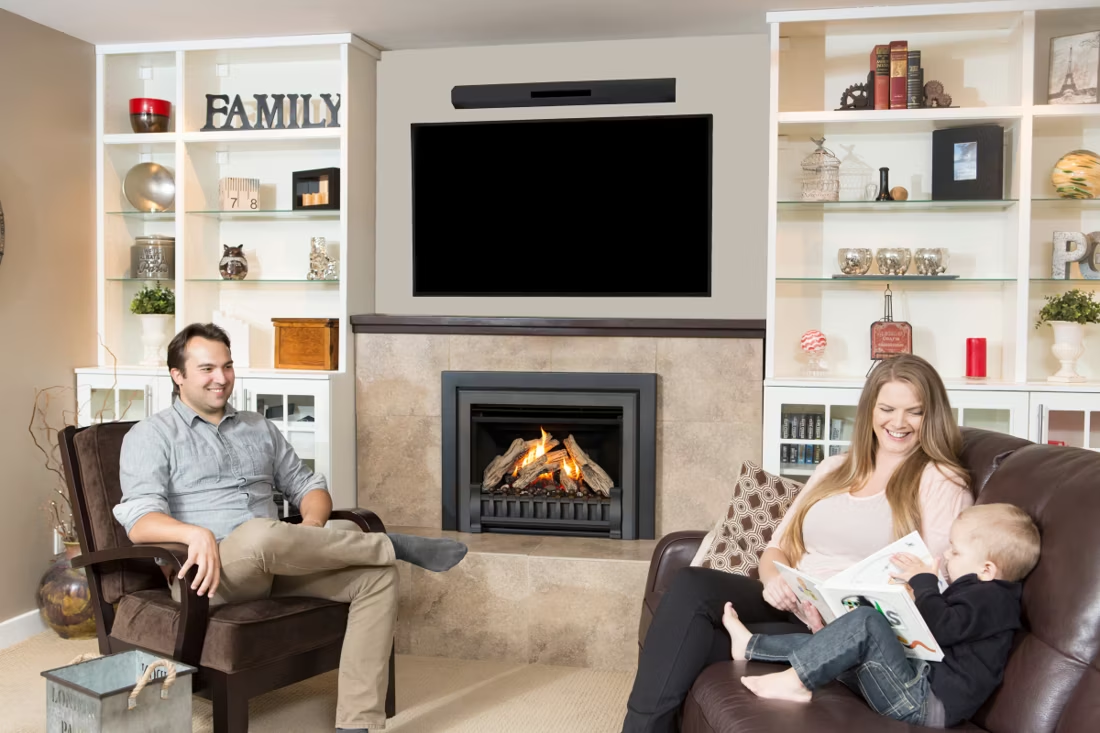
Yes—with an asterisk. Fireplaces are hot and TVs don't like heat. Either put a mantel between them to deflect rising warmth, or choose a fireplace with heat-management technology that creates a cool zone on the wall above—the wall stays around 125 degrees, barely warm, while the room still gets full heat. If you like clean lines and don't want a mantel, heat management is the answer.
Can a fireplace actually lower my heating bill?
Yes—by creating a comfort zone. A furnace heats every square foot of the house just to warm the one room you're in; a gas fireplace on low burns roughly a sixth of the gas a typical furnace does. Set the furnace around 55–60 degrees as a baseline, then heat the rooms your family actually uses. Families who heat this way commonly save $20–$60 a month.
Does a fireplace add value to my home?
On average, a fireplace adds back to the home about the same amount you spent installing it. Add the monthly savings from heating the rooms you actually use instead of the whole house—often hundreds of dollars a year—and the value case is strong before you even count what a fire does for how your family uses the room.
Preferred Dealer in Arlington Heights
Find your gas fireplace in Arlington Heights.
Tell us a bit about your home and we'll put together a free Project Guide & Parts List—the right gas fireplace or insert, the vent kit it needs, and a trusted local Arlington Heights dealer to install it.
Find Your Fireplace →