
Real heat, zero venting, for Rexburg's coldest nights.
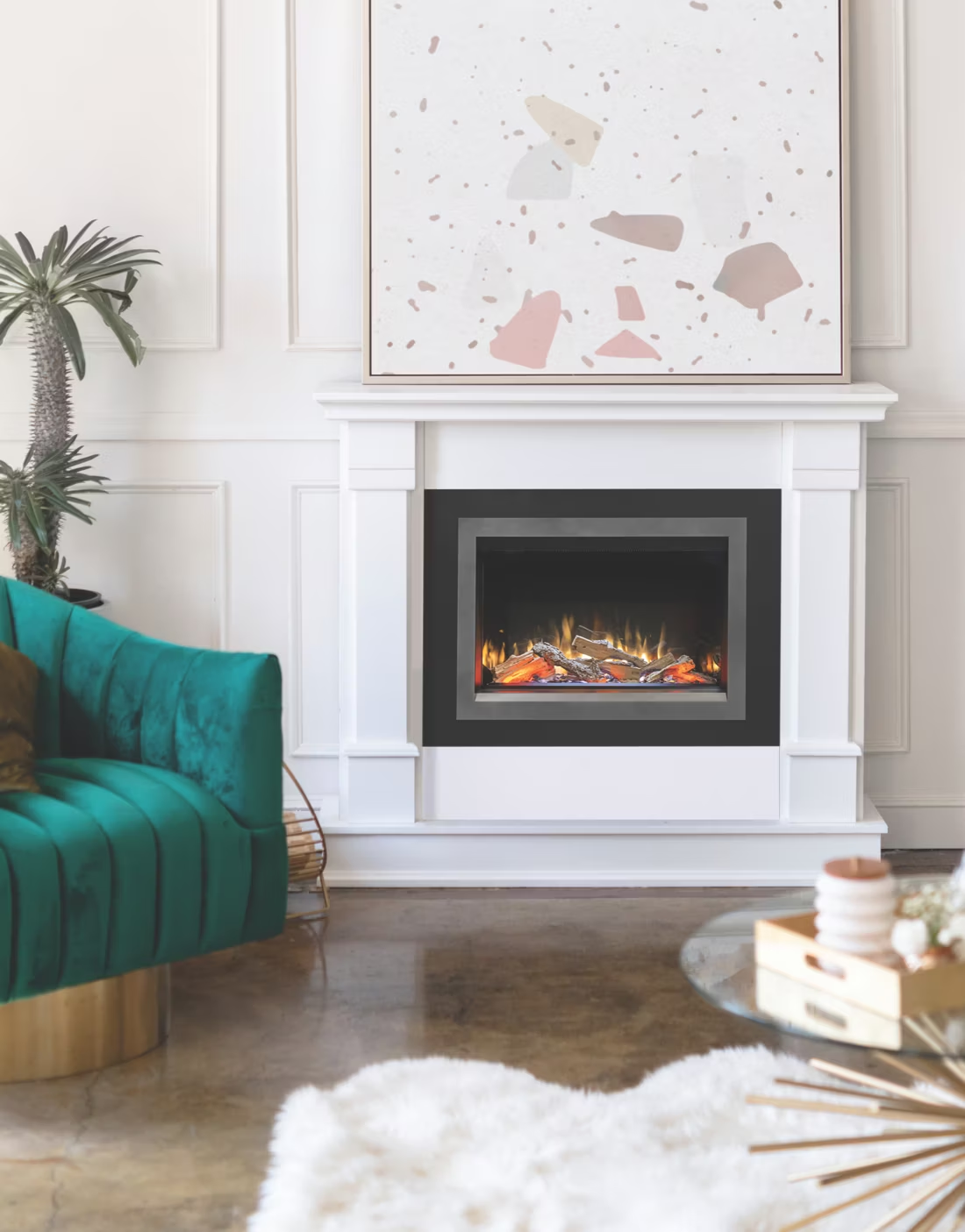
No chimney, no gas line, no wood to split—just plug in and go. Find the right electric fireplace or insert for your Rexburg home or rental, and connect with a trusted local dealer.
Every Project Starts From One of These Five Situations
Instant warmth without the flue.
Rexburg sits at nearly 4,900 feet on the edge of the Snake River Plain, where winters are long and cold, with average lows around 14°F—cold enough to rival Fargo, ND for a long, hard heating season. A huge share of Rexburg's housing stock is rental property serving BYU-Idaho's student population, and most of those leases prohibit open-flame wood stoves or gas inserts outright. That restriction, combined with the total absence of a citywide natural gas utility in this data, is exactly why electric fireplaces have real, practical relevance here—not just as ambiance, but as a legitimate supplemental heat source landlords will actually approve.
Power in Rexburg comes through Fall River Rural Electric Cooperative, and at a residential rate of about 11.1 cents per kWh, running a 1,500-watt electric insert costs roughly 17 cents an hour—cheap enough to run daily in a bedroom or basement apartment without a second thought. Electric won't replace a furnace at this elevation given how long and cold the winters run here, but as zone heat for a converted basement, a student rental, or a home office that runs cold, it delivers real warmth with none of the venting, chimney, or gas-line work the other fuels require.
Three steps. No salesperson until you're ready.
Tell us about your project
Your zip code, your situation, and the fuel you're leaning toward—or let the answers point you to one.
See what's actually available
The brands dealers within 100 miles genuinely carry—real options, never a catalog mirage.
Get your dealer & Project Guide
A trusted local dealer, plus the free Project Guide & Parts List that names every component of the job.
Frequently Asked Questions
How much does it cost to install an electric fireplace in Rexburg?
Plug-in electric inserts and mantel units are the cheapest option—most run $150 to $600 installed, since they only need a standard 120V outlet and no permit. Built-in wall units or electric inserts that replace an existing masonry firebox typically run $1,500 to $4,500 once a licensed electrician runs a dedicated 20-amp circuit and a carpenter frames or trims the surround. That's a fraction of what wood or gas installs cost in this climate, which is part of why electric is popular in Rexburg's rental and student-housing market.
Can an electric fireplace actually heat a room in a Rexburg winter?
It can hold its own in a single room, but not the whole house. Most electric inserts put out around 5,000 BTU—enough to noticeably warm a 300-400 square foot bedroom, living room, or finished basement space, especially paired with the fan-forced heat mode most units include. With winter lows averaging 14°F and a long, hard heating season, an electric unit is best treated as zone heat that supplements a furnace or heat pump, not as the sole heat source for the house—that's true honesty for this climate, not a knock on the product.
Will my electric fireplace work if the power goes out?
No—and this is the one real tradeoff against wood heat in eastern Idaho. Electric fireplaces need grid power to run the heater element and blower, so during a winter outage they go dark along with everything else. Fall River Rural Electric Cooperative's outages in this area are usually short, but if backup heat during a multi-day storm outage matters to you, pair the electric unit with a wood stove or keep a propane heater on hand rather than relying on electric alone.
How much does it cost to run an electric fireplace day-to-day?
At Fall River Rural Electric Cooperative's residential rate of about 11.1 cents per kWh, a typical 1,500-watt insert costs roughly 17 cents an hour on high heat, or about $4 for a full 24-hour day of continuous use. Most households run theirs a few hours an evening rather than around the clock, which puts monthly cost in the $10-$25 range for regular use—noticeably cheaper than propane space heaters, which is one reason renters near BYU-Idaho lean on them for supplemental warmth.
Do I need a permit to install an electric fireplace in Rexburg?
A plug-in unit that uses an existing outlet needs no permit at all. A built-in electric fireplace or insert that requires new wiring or a dedicated circuit does need an electrical permit, which in Rexburg goes through the city building department. Most local hearth dealers or electricians handle that paperwork as part of the installation, so it's rarely something a homeowner has to manage directly—but it's worth confirming before work starts if you're wiring a new circuit.
Are electric fireplaces a good fit for rental properties and student housing?
Yes—this is one of the strongest use cases in Rexburg specifically. With BYU-Idaho driving a huge rental and apartment market, most landlords won't allow wood stoves or gas appliances due to insurance and fire-code concerns, but a plug-in or wall-mounted electric unit is generally fine since it involves no open flame, no combustion byproducts, and no venting. If you're a landlord or property manager upgrading multiple units, ask a local dealer about the lower-cost plug-in models—they install in minutes and don't affect the building's fire rating.
Can I convert my existing wood-burning fireplace to electric?
Yes, and it's a common project for older Rexburg homes with an underused masonry fireplace. An electric insert slides into the existing firebox opening, plugs into a nearby outlet (or a new dedicated circuit run by an electrician), and gives you flame-effect ambiance plus supplemental heat without maintaining a chimney, buying firewood, or worrying about creosote. It's the lowest-cost of all the fuel conversions since there's no venting or gas line to install—just fit, plug, and go, or a short electrical run for a wired model.
What size electric fireplace or insert do I need?
Sizing an electric unit is mostly about the space it needs to visually fill and the heat output you want, since BTU output is fairly standardized across the category at around 5,000 BTU regardless of unit width. A 26-30 inch insert suits a small bedroom or den, while a 50-inch-plus linear unit fills a larger living room wall but still throws the same modest heat. If real supplemental warmth for a Rexburg winter matters more than the visual statement, prioritize a unit with a strong fan-forced heater rating over a wider display width—a local dealer can walk you through the tradeoff.
Electric vs. wood or pellet—which makes more sense for my Rexburg home?
Wood and pellet stoves, burning local lodgepole pine, ponderosa pine, or Douglas fir cut under Caribou-Targhee National Forest permits, put out far more heat and can serve as genuine primary heat during Rexburg's long, cold winters—and wood keeps working when the power's out. Electric can't match that output or that resilience, but it wins on install cost, zero maintenance, no chimney or venting, and compatibility with rental leases that ban combustion appliances. For a primary residence with a wood supply and a Forest Service permit within reach, wood or pellet is usually the stronger long-term choice. For an apartment, a supplemental room, or a landlord-restricted rental, electric is often the only option on the table—and a good one.
Can I put a TV above my fireplace?
Yes—with an asterisk. Fireplaces are hot and TVs don't like heat. Either put a mantel between them to deflect rising warmth, or choose a fireplace with heat-management technology that creates a cool zone on the wall above—the wall stays around 125 degrees, barely warm, while the room still gets full heat. If you like clean lines and don't want a mantel, heat management is the answer.
Do electric fireplaces actually produce heat?
Yes—most put out around 4,800–5,000 BTUs from a standard outlet, which comfortably warms a bedroom, office, or den as a comfort-zone heater. What they won't do is carry a whole house the way wood, gas, or pellet can. Think of electric as ambiance-first with honest supplemental heat: flames on with no heat in July, flames plus warmth in January.
Can I install a fireplace myself?
If you're putting a fire in your house on purpose, it's best to work with an expert. Unless you're genuinely experienced in framing, gas line, vent pipe, and the national code on clearances to combustibles, have a professional do it—and ideally the same company that sells you the fireplace, so warranty, service, and liability all live under one roof.
Can a fireplace actually lower my heating bill?
Yes—by creating a comfort zone. A furnace heats every square foot of the house just to warm the one room you're in; a gas fireplace on low burns roughly a sixth of the gas a typical furnace does. Set the furnace around 55–60 degrees as a baseline, then heat the rooms your family actually uses. Families who heat this way commonly save $20–$60 a month.
Preferred Dealer in Rexburg
Electric Service in Rexburg
An electric fireplace's heater draws about 1,500 watts—pennies per hour at local rates.
Fall River Rural Elec Coop Inc
Find your electric fireplace in Rexburg.
Tell us about your Rexburg home or rental and we'll match you with a trusted local dealer, plus send a free Project Guide & Parts List—the exact insert or wall unit, wiring requirements if needed, and the dealer we recommend for your project.
Find Your Fireplace →