
Zone heat and ambiance for Madison County's long, cold winters.
No chimney, no gas line, no venting - just plug-in warmth for Rexburg, Sugar City, and the rest of Madison County, where a long, cold heating season and 14°F average winter lows make every extra heat source count. Find the right unit and get matched with a trusted local dealer.
Every Project Starts From One of These Five Situations
Reliable, flameless warmth for a valley built on wood and snow.
Madison County sits in Idaho's upper Snake River plain at roughly 4,900 feet, home to Rexburg, Sugar City, and the farmland stretching toward the Caribou-Targhee National Forest and the Tetons. Climate zone 6B and a long, demanding heating season mean average winter lows sit around 14°F, and single-digit nights aren't unusual once cold air settles into the valley. Wood remains a common backup fuel here, with lodgepole pine, ponderosa pine, Douglas fir, and larch cut locally through permits from Caribou-Targhee National Forest, the BLM Idaho Falls District, and Bridger-Teton National Forest. But electric fireplaces have carved out a real role of their own, especially in the county's fast-growing rental and student-housing stock tied to BYU-Idaho.
Because Madison County's rental market is enormous - thousands of BYU-Idaho students cycle through apartments and shared housing every year - electric units solve a problem wood and gas can't: no chimney, no gas line, no open flame, and no landlord liability for combustion venting. They also sidestep the wildfire-smoke air quality concerns that show up most summers in eastern Idaho, since there's no combustion byproduct to worry about indoors. Most installations run a modest $300 to $2,000 depending on whether it's a plug-in insert, a built-in wall unit, or a full mantel package, and because there's no venting or gas line to run, most homeowners and landlords skip the permitting process altogether.
Three steps. No salesperson until you're ready.
Tell us about your project
Your zip code, your situation, and the fuel you're leaning toward—or let the answers point you to one.
See what's actually available
The brands dealers within 100 miles genuinely carry—real options, never a catalog mirage.
Get your dealer & Project Guide
A trusted local dealer, plus the free Project Guide & Parts List that names every component of the job.
Frequently Asked Questions
How much does an electric fireplace installation cost in Madison County?
Most electric fireplace installations in Madison County run $300 to $2,000. Plug-in inserts and freestanding units that use a standard 120V outlet sit at the low end and can often be installed by the homeowner in an afternoon. Built-in wall units or mantel packages that need a dedicated circuit run higher, since you're paying an electrician to run new wiring - common in newer construction around Rexburg's growing subdivisions. Because there's no chimney, gas line, or exterior venting involved, electric installs are consistently the least expensive hearth option in the county, and most local dealers can quote a firm price after seeing your wall and outlet situation.
Will an electric fireplace actually heat a room in Madison County's winters?
Most electric fireplaces are rated for 400 to 1,500 square feet on their built-in heater, which is enough for a bedroom, basement family room, or home office - but not enough to be your primary heat source through a Madison County winter, where the heating season runs long and lows average 14°F. Think of electric as zone heat: it warms the room you're in efficiently and lets you turn down the thermostat or wood stove elsewhere in the house. For whole-home heating in this climate, most residents still rely on a furnace, wood stove, or gas system as the primary source, with electric fireplaces filling in for ambiance and supplemental warmth in specific rooms.
Do I need a permit for an electric fireplace in Madison County?
Usually not. Because electric fireplaces don't require venting, a chimney, or a gas line, most units - plug-in inserts, freestanding stoves, wall-mounted units - don't trigger a building permit through Madison County's building department. The exception is a built-in unit that requires a new dedicated electrical circuit; that wiring work should be pulled by a licensed electrician and may require an electrical permit, same as adding any new circuit to your home. If you're renting near BYU-Idaho, check with your landlord first, since some properties restrict any wall-mounted or built-in modifications regardless of fuel type.
Are electric fireplaces a good fit for BYU-Idaho student housing and rentals?
Yes - this is one of the most common electric fireplace installs in Madison County. With thousands of students cycling through Rexburg's apartment and rental stock every semester, property owners like electric units because there's no open flame, no chimney to maintain, no combustion venting to inspect, and no wood or gas storage to manage. A plug-in insert or small freestanding unit can be moved between units or removed entirely at move-out, which isn't an option with a wood stove or gas insert. It's a low-liability way to add ambiance and supplemental heat to a rental property.
Electric vs. wood - which handles Madison County's winter power outages better?
Wood wins here without question. Electric fireplaces need grid power to run their heater and, in some models, even the flame effect - so during a winter storm outage, which does happen in this part of eastern Idaho when heavy snow or wind takes down lines, an electric unit goes dark along with everything else. A wood stove burning locally cut lodgepole pine or Douglas fir will keep producing heat with zero electricity. If backup heat during outages is a priority for your Madison County home, pair an electric fireplace for everyday ambiance with a wood or gas appliance as your outage-proof backup, rather than relying on electric alone.
What's the difference between an electric insert, wall-mounted unit, and freestanding stove?
An electric insert drops into an existing fireplace opening - a common upgrade for Madison County homes with an old, rarely-used wood-burning fireplace that the owner wants to convert to easy, no-mess heat. A wall-mounted unit hangs like a flat-screen TV and works well in newer construction or remodels where there's no existing fireplace. A freestanding electric stove sits on the floor and can go almost anywhere with an outlet, making it the easiest option for renters and apartments near BYU-Idaho. All three plug into standard household power in most cases, though larger built-in models may need a dedicated circuit.
What does it cost to run an electric fireplace in Madison County?
Running cost depends on your electric rate and how much you use the heater function versus just the flame effect. Most units draw around 1,500 watts on the heater setting, which at typical eastern Idaho electric rates runs roughly 15 to 20 cents an hour when the heater is on. Households inside Rexburg city limits are typically served by the city's municipal electric utility, while outlying parts of Madison County are served by Fall River Electric Cooperative - either way, running the flame effect alone with the heater off costs only a few cents an hour, which is why many owners use electric fireplaces for ambiance far more often than for actual heat.
Electric vs. gas fireplace - which is right for my Madison County home?
Gas delivers real, substantial heat output and can be sized to handle a room through Madison County's coldest stretches, but it requires venting or a vent-free setup, a gas line or propane tank, and a proper installation permit. Electric skips all of that - no venting, no gas line, lower upfront cost - but its heat output is capped and it depends entirely on grid power. For homeowners who want serious supplemental heat and already have gas service, a gas insert is usually the better long-term investment. For renters, secondary rooms, or anyone who wants flame ambiance without construction, electric is the simpler and cheaper path.
Can I install an electric fireplace myself, or do I need a dealer?
Plug-in electric fireplaces are about as close to a DIY hearth project as it gets - many Madison County homeowners and landlords install a freestanding or insert unit themselves in under an hour. Where a local dealer earns their fee is on built-in wall units and mantel packages: getting the framing, clearances, and electrical circuit right the first time avoids a redo, and a dealer can also match the unit's heat output and flame style to your specific room rather than guessing from an online listing. If you're wiring a new dedicated circuit, that portion should go to a licensed electrician regardless of who sells you the unit.
Does an electric fireplace need a vent or chimney?
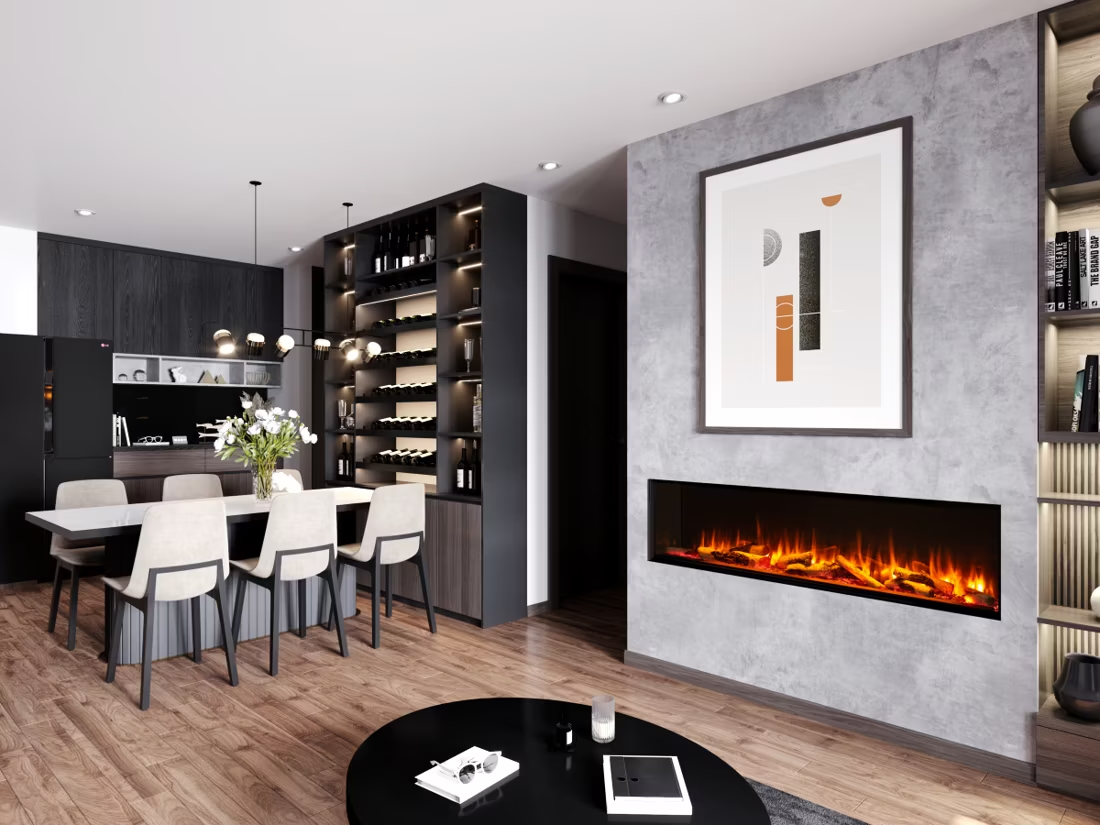
No—that's its superpower. An electric fireplace needs a wall and an outlet, period. No vent pipe, no gas line, no clearances to design around, which is why it works in bedrooms, offices, apartments, and walls where venting a gas or wood unit would be impractical or impossible. Installation is typically the simplest and least expensive of any fireplace type.
Can I put a TV above my fireplace?
Yes—with an asterisk. Fireplaces are hot and TVs don't like heat. Either put a mantel between them to deflect rising warmth, or choose a fireplace with heat-management technology that creates a cool zone on the wall above—the wall stays around 125 degrees, barely warm, while the room still gets full heat. If you like clean lines and don't want a mantel, heat management is the answer.
Can a fireplace actually lower my heating bill?
Yes—by creating a comfort zone. A furnace heats every square foot of the house just to warm the one room you're in; a gas fireplace on low burns roughly a sixth of the gas a typical furnace does. Set the furnace around 55–60 degrees as a baseline, then heat the rooms your family actually uses. Families who heat this way commonly save $20–$60 a month.
Does a fireplace add value to my home?
On average, a fireplace adds back to the home about the same amount you spent installing it. Add the monthly savings from heating the rooms you actually use instead of the whole house—often hundreds of dollars a year—and the value case is strong before you even count what a fire does for how your family uses the room.
Stove and Fireplace Dealers in Madison County
Find your electric fireplace in Madison County.
Tell us about your room, your rental or renovation plans, and your budget, and we'll match you with a trusted local dealer and send you a free Project Guide & Parts List with the exact parts and install plan for your Madison County home.
Find Your Fireplace →