
Reliable gas heat for Power County's high desert winters.
American Falls and the farm communities along the Snake River Plain see winters comparable to Bozeman, MT, with lows near 19°F. Find the right gas fireplace, insert, or stove, and connect with a trusted local dealer who can get it installed correctly.
Every Project Starts From One of These Five Situations
Clean heat for a hardworking farm community.
Power County sits on the Snake River Plain around American Falls and the American Falls Reservoir, at roughly 4,300 feet elevation in a Zone 5B climate that isn't far off Bozeman, Montana, in terms of winter severity—with winter lows averaging around 19°F. With just over 5,500 residents spread across a mostly agricultural county built on potatoes, wheat, and livestock, most homes here are older farmhouses or ranch properties where a dependable, low-maintenance secondary heat source matters as much as looks.
Natural gas infrastructure is limited across much of rural Power County, so propane is the standard fuel for most homes outside the American Falls town core—many properties already run propane tanks for shop heat, water heaters, or irrigation equipment, which makes adding a propane fireplace or insert a straightforward extension of what's already on the property. Whether you're running natural gas in town or propane out on a farm, the right unit gives you instant, thermostat-controlled heat without the wood-hauling and chimney upkeep that comes with the ponderosa pine and lodgepole pine burned by wood-heat neighbors nearby.
Three steps. No salesperson until you're ready.
Tell us about your project
Your zip code, your situation, and the fuel you're leaning toward—or let the answers point you to one.
See what's actually available
The brands dealers within 100 miles genuinely carry—real options, never a catalog mirage.
Get your dealer & Project Guide
A trusted local dealer, plus the free Project Guide & Parts List that names every component of the job.
Frequently Asked Questions
How much does a gas fireplace installation cost in Power County?
Most gas fireplace and insert installations in Power County run in the $4,000 to $10,000 range, with the low end covering a direct-vent insert into an existing masonry fireplace where a propane line or tank is already in place, and the high end covering new construction work with framing, venting, and a fresh propane tank or gas line installation. Rural properties outside American Falls sometimes see a modest travel charge added for installers covering the wider county. A local dealer will give you a firm number after walking your home.
Can I convert my existing wood fireplace to gas?
Yes—it's a common upgrade for the older farmhouses common throughout Power County. A gas insert typically slides into your existing masonry fireplace and uses a stainless liner run through your current chimney, so you keep the look of the original hearth while gaining push-button heat. Homes already running propane for a shop or water heater are usually the simplest conversions since the fuel supply already exists; homes with no propane on-site will need a tank set and line run as part of the job.
Is natural gas available in Power County, or is it all propane?
Natural gas service is limited across most of Power County, and propane is the standard heating fuel for the majority of homes outside the American Falls town core. If you're inside town and already have natural gas appliances, adding a fireplace is usually simple. Everywhere else, propane is the practical choice—most gas fireplace and insert models are available in a propane configuration, and a local dealer can set up an existing tank or coordinate a new one with a regional propane supplier.
Will my gas fireplace work during a power outage?
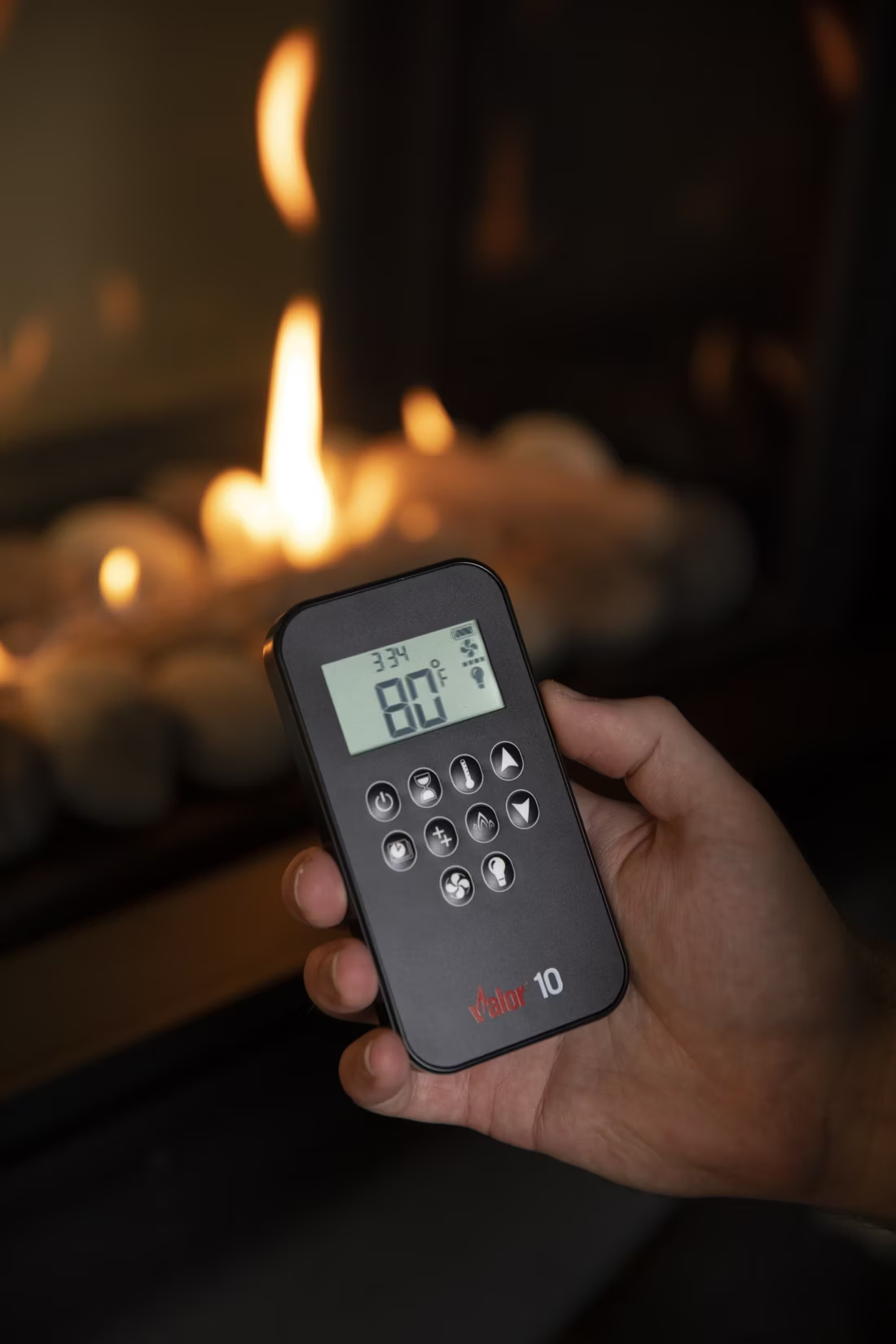
Most modern gas fireplaces are built to run through a power outage. Units with intermittent pilot ignition (IPI) include a battery backup that kicks in the moment power drops, so the fireplace lights on demand just like normal. Valor's gas fireplaces take a different approach: the pilot's thermocouple generates its own electricity, so there are no batteries to remember at all. For Power County's farm and ranch properties, where outages can outlast the nearest utility crew's drive time, that self-powering feature is worth asking about.
What's the difference between a gas fireplace, gas insert, and gas stove?
A gas fireplace is a fully built-in unit framed into a wall—the right call for new construction or a remodel. A gas insert drops into an existing masonry fireplace and uses the chimney as a vent path, which suits the older farmhouses common around American Falls and the outlying ranches. A gas stove is a freestanding unit that sits on the floor like a wood stove but runs on gas or propane—a good fit for a shop, garage, or a home without an existing fireplace. Most Power County homeowners with an old wood-burning fireplace end up choosing an insert.
Do I need a permit to install a gas fireplace in Power County?
Yes—new gas fireplace and insert installations require a building permit through the county, plus sign-off on the gas or propane line work by a licensed installer. Most local dealers coordinate the permitting, the propane or gas line run, and the venting as one package, which avoids the headache of managing separate trades yourself on a rural property.
What's the difference between vented and vent-free gas fireplaces?
Vented (direct-vent) gas fireplaces draw combustion air from outside and exhaust it back outside through sealed venting—they're the cleanest option and the most widely recommended. Vent-free units burn gas directly into the room without external venting; they're legal in Idaho but come with strict room-sizing and oxygen-sensor requirements. Given that Power County sits in a non-attainment area with periodic wildfire smoke already affecting winter air quality, most local installers steer homeowners toward direct-vent units to avoid adding any additional combustion byproducts indoors.
How often should my gas fireplace be serviced?
Plan on an annual inspection for any gas or propane fireplace—a technician checks the burner, pilot, gas connections, and venting, and cleans the glass and interior. This matters even more on propane systems common throughout Power County, where tank connections and regulators should be checked alongside the fireplace itself. Most service providers in the region charge $150 to $250 for a standard annual visit.
Gas vs. wood—which is right for my home?
Wood is the traditional fallback across Power County, with lodgepole pine, ponderosa pine, Douglas fir, and larch all available through Caribou-Targhee National Forest and BLM Idaho Falls District cutting permits—and it keeps working when the power's out. Gas offers push-button convenience, no wood hauling or ash cleanup, and steadier heat output, which matters for households without the time to manage a woodpile through a 6,500-degree-day winter. Plenty of Power County properties run both: propane or gas in the main living space for daily use, and a wood stove out in the shop or a secondary structure for backup heat.
Why is a fireplace insert so efficient?
An insert does two things: it seals the chimney completely, so you stop losing air you already paid to heat, and it radiates warmth into the room through the firebox and glass. Most add a heat-exchange fan that pulls cool room air underneath, wraps it around the hot firebox, and pushes it back out warm. Your home is more efficient before you've even lit the first fire.
Is my gas fireplace wasting gas?
If it was installed more than 15 years ago, probably. Older gas fireplaces keep a standing pilot light burning all the time, and that little flame can cost a couple hundred dollars a year. Newer models use pilot-on-demand ignition—the pilot lights only when you use the fireplace and goes out when you turn it off.
Does a fireplace add value to my home?
On average, a fireplace adds back to the home about the same amount you spent installing it. Add the monthly savings from heating the rooms you actually use instead of the whole house—often hundreds of dollars a year—and the value case is strong before you even count what a fire does for how your family uses the room.
Can a fireplace actually lower my heating bill?
Yes—by creating a comfort zone. A furnace heats every square foot of the house just to warm the one room you're in; a gas fireplace on low burns roughly a sixth of the gas a typical furnace does. Set the furnace around 55–60 degrees as a baseline, then heat the rooms your family actually uses. Families who heat this way commonly save $20–$60 a month.
Stove and Fireplace Dealers in Power County
Find your gas fireplace in Power County.
Tell us a bit about your home and we'll match you with a trusted local dealer and send over a free Project Guide & Parts List—the exact parts, including the vent kit, for your gas fireplace project in Power County.
Find Your Fireplace →