
Find the right fireplace for Power County's long, dry winters.
Wood, gas, pellet, and electric fireplace resources for American Falls, Rockland, Arbon Valley, and the farm and ranch country in between. Find the right unit for your home and connect with a trusted local hearth retailer.
Every Project Starts From One of These Five Situations
Ranching and farm country heat in Power County, Idaho.
Power County sits on the Snake River Plain around the American Falls Reservoir, with roughly 5,500 residents spread across farm and ranch land and the foothills rising toward the Caribou-Targhee National Forest. Winters here run comparable to Bozeman, Montana—average lows near 19°F, over 6,500 heating degree days, and a burn season that starts early and runs long. Wood heat still matters in the outlying areas: lodgepole pine, ponderosa pine, Douglas fir, and larch are common firewood species, most of it cut under permit through Caribou-Targhee National Forest or the BLM Idaho Falls District. The Snake River Plain is also a designated non-attainment area, and wildfire smoke adds to the air quality picture most summers and falls.
What you'll find on this hub: hearth retailers, service technicians, and fuel suppliers covering the whole county—from American Falls, the county seat on the reservoir, out to Rockland and the ranches of Arbon Valley. Because Power County is sparsely populated, several of the businesses listed below are based in nearby Pocatello and travel out for installs and service. Pick your fuel below for local dealers, installation costs, and recommended units for a Power County home.
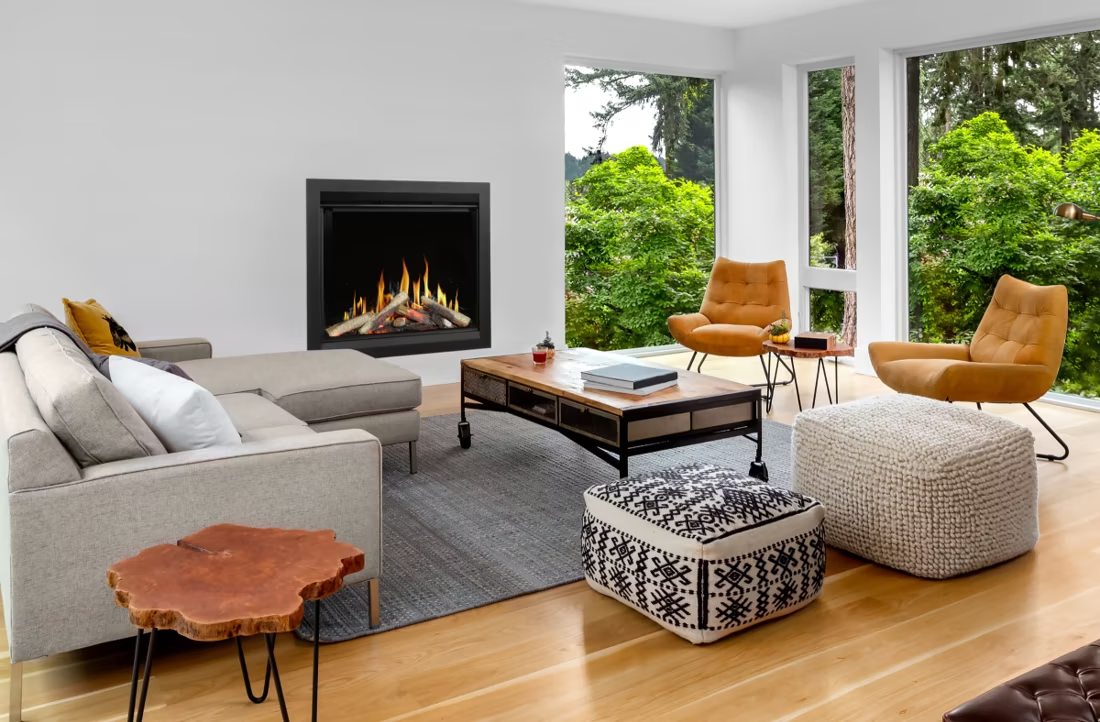
Four fuels. One honest answer for Power County.
Three steps. No salesperson until you're ready.
Tell us about your project
Your zip code, your situation, and the fuel you're leaning toward—or let the answers point you to one.
See what's actually available
The brands dealers within 100 miles genuinely carry—real options, never a catalog mirage.
Get your dealer & Project Guide
A trusted local dealer, plus the free Project Guide & Parts List that names every component of the job.
Frequently Asked Questions
Which fuel works best for a home in Power County?
It depends on where you live in the county and how you use the space. Wood remains a practical primary heat source in the outlying ranch and farm properties—lodgepole pine, ponderosa pine, Douglas fir, and larch are all locally available, much of it self-cut under a Caribou-Targhee National Forest or BLM Idaho Falls District permit, and a good catalytic stove will carry a fire through a night that dips into the high teens, similar to what you'd expect in Bozeman, Montana. Gas is the low-maintenance option, though most of Power County relies on propane rather than piped natural gas, so tank placement and delivery logistics are part of the install conversation. Pellet stoves are a solid middle ground—regional brands like Bear Mountain and Lignetics are widely stocked in the area, and you skip the wood-splitting labor. Electric fireplaces work well for supplemental heat in a bedroom or den but shouldn't be your only heat source through a Power County winter. Many households here run wood or pellet as primary heat with propane or electric backup in secondary rooms.
Do I need a permit to install a fireplace in Power County?
In most cases, yes. New wood stoves, wood inserts, gas fireplaces and inserts, and pellet stoves typically require a building permit through the Power County building department, and any wood-burning appliance needs to meet current EPA emissions standards. If you're cutting your own firewood on public land—a common practice out toward Arbon Valley and the forest edge—that requires a separate cutting permit from Caribou-Targhee National Forest or the BLM Idaho Falls District, which is a different process from the building permit for the stove itself. Gas installations that involve new propane line work generally need a licensed installer for that portion of the job. Electric fireplaces usually skip the permit process unless you're doing a hardwired built-in with new circuit work. Most local retailers who serve Power County handle the permitting as part of the installation, so you typically aren't filing paperwork yourself.
Are there air quality restrictions on wood burning in Power County?
Power County sits within a designated non-attainment area on the Snake River Plain, and wildfire smoke is a recurring concern most summers and into fall, which affects overall air quality even before winter wood-burning season starts. That combination means new wood-burning installations need to meet current EPA certification standards—older, uncertified stoves generally aren't eligible for new installs. There isn't the same kind of daily curtailment advisory system you'd see in a basin city with frequent winter inversions, but given the non-attainment status, choosing an EPA-certified, high-efficiency stove is worth the investment both for air quality and for your own fuel use—a well-sealed catalytic unit burns cleaner and uses less wood per BTU than an older firebox.
Can one local hearth retailer handle all four fuel types in Power County?
Given the county's small population, most of the dealers who actually cover Power County are based in Pocatello and drive out to American Falls, Rockland, and Arbon Valley for consultations and installs. Several of those Pocatello-based retailers carry wood, gas, and pellet units, with electric as a smaller part of the lineup—which makes them a reasonable stop if you want to compare fuel types side by side before deciding. Fuel suppliers for firewood, pellets, and propane are a separate category from hearth retailers and are listed separately on this hub. If you're set on a specific fuel, the county-plus-fuel pages above narrow the list to dealers who actually stock and install that type.
How does service and installation work in a rural county like this?
Because Power County is spread across farm and ranch land with a small population base, most service technicians and retailers travel in from Pocatello rather than being based locally. Expect a modest trip fee for service calls out to Rockland or Arbon Valley, and plan ahead—scheduling annual chimney sweeping or gas inspection in late summer or early fall, before the cold sets in, gets you on the calendar more easily than a mid-winter emergency call. If you're on a rural property relying on wood as primary heat, keeping a backup fuel source—propane or electric—on hand is common practice here in case of a delayed service visit during a hard winter stretch.
What's the typical cost range for fireplace installation across fuel types in Power County?
Costs vary by fuel and by how much venting or gas line work is involved. Wood stove or insert installation: roughly $4,000–$8,500 for a standard install, more if a full chimney system needs to go in from scratch. Gas fireplace, insert, or stove: roughly $4,500–$10,000, with propane tank setup and line runs on rural properties adding to the higher end. Pellet stove or insert: roughly $4,000–$7,000 for a typical install. Electric fireplace: $200–$3,000 for the unit itself, plus $400–$1,200 in labor if it's more than a plug-and-play install. Because most retailers serving Power County travel from Pocatello, ask whether a trip fee is built into the quote—it sometimes is for outlying properties.
How much should I budget for a fireplace?
For an average home—covering the fireplace, the vent pipe, and basic installation—a budget between $3,900 and $5,500 gives you a lot of options across wood, gas, and pellet. By the time you add finish work, gas line, and electrical, the average complete installation lands between $5,000 and $12,000 all-in. In a remodel or new build, a good rule is to put about 2.5% of the total project cost toward the fireplace.
What is an in-home preview and do I need one?
It's a visit where a hearth professional measures your space, confirms the model you picked actually works in your home, and walks the specs—framing, gas line, venting, finish work—before anything is ordered. Some details you just can't know until you see the house. Never make a down payment without one; it's the single most-skipped step that burns buyers.
Can I install a fireplace myself?
If you're putting a fire in your house on purpose, it's best to work with an expert. Unless you're genuinely experienced in framing, gas line, vent pipe, and the national code on clearances to combustibles, have a professional do it—and ideally the same company that sells you the fireplace, so warranty, service, and liability all live under one roof.
Can a fireplace actually lower my heating bill?
Yes—by creating a comfort zone. A furnace heats every square foot of the house just to warm the one room you're in; a gas fireplace on low burns roughly a sixth of the gas a typical furnace does. Set the furnace around 55–60 degrees as a baseline, then heat the rooms your family actually uses. Families who heat this way commonly save $20–$60 a month.
Stove and Fireplace Dealers in Power County
Listings include WhyFire partner dealers, dealers we have verified as authorized for the brands we recommend, and established local businesses that carry hearth products. Every listing shows which one it is. The ones marked Preferred run on WhyFire's software, so they can show you real pricing and book your appointment right here. No manufacturer pays for placement. How we verify dealers →
Idaho Chimney Life
Cal Ranch -Pocatello
Rocky Mountain Supply
Forced Air Systems
Find your fireplace in Power County.
Tell us about your project and we'll match you with a trusted local dealer serving Power County, then send you a free Project Guide & Parts List—the exact parts, including the vent kit, for your home.
Find Your Fireplace →