
Warm Up Post Falls Without the Venting Headache.
No chimney, no gas line, no permit hassle—just plug in or wire in and go. Find the right electric fireplace for your Post Falls home and connect with a trusted local dealer.
Every Project Starts From One of These Five Situations
A fast-growing city on Lake Coeur d'Alene's doorstep needs flexible heat.
Post Falls sits at 2,200 feet along the Spokane River, in a climate zone 5B pocket with a winter heating season about on par with Madison, WI, if noticeably milder, with average winter lows around 26°F. That's cold enough for a real heating season, but not the kind of deep-freeze climate where a wood stove is the only thing standing between you and a cold house. Post Falls has grown fast over the last decade, and a lot of that growth is condos, townhomes, finished basements, and bonus rooms—spaces where running a chimney or gas line isn't practical, but a little extra warmth still matters.
Electric fireplaces fill that gap well here. Whether your home is served by Avista or Kootenai Electric Cooperative, residential rates in the area run in the neighborhood of 12 cents per kilowatt-hour—cheap enough that a 1,500-watt electric fireplace running as supplemental heat costs somewhere around 15 to 20 cents an hour. And with the winter inversions and wildfire-smoke season that occasionally trigger burn advisories in Kootenai County, an electric unit gives you ambiance and zone heat that never touches an air quality restriction. It won't replace your furnace on the coldest January night, but for a den, a bedroom, or a basement rec room, it's often the simplest fireplace project in town.
Three steps. No salesperson until you're ready.
Tell us about your project
Your zip code, your situation, and the fuel you're leaning toward—or let the answers point you to one.
See what's actually available
The brands dealers within 100 miles genuinely carry—real options, never a catalog mirage.
Get your dealer & Project Guide
A trusted local dealer, plus the free Project Guide & Parts List that names every component of the job.
Frequently Asked Questions
How much does an electric fireplace installation cost in Post Falls?
Electric fireplaces span a wide range because the appliance itself does most of the work. A plug-in freestanding or mantel unit can be set up in an afternoon for under $1,000 including the unit and mantel surround. A built-in wall unit or a linear electric fireplace set into new framing, with a dedicated 120V or 240V circuit run by an electrician, typically lands between $1,500 and $3,500 depending on the size of the unit and how much electrical work is involved. Electric inserts that slide into an existing masonry fireplace opening—a popular option for older Post Falls homes converting away from a smoky wood-burning fireplace—usually run $800 to $2,000 installed. There's no venting or chimney work to price in, which is the main reason electric stays on the lower end compared to wood or gas.
Will an electric fireplace actually heat a room in a Post Falls winter?
Most electric fireplaces top out around 5,000 BTU (roughly 1,500 watts), which is enough to noticeably warm a single room—a bedroom, home office, or basement family room—but it's not sized to heat an entire house through a Kootenai County winter on its own. With average winter lows around 26°F and a real heating season behind that, electric works best paired with your existing furnace or heat pump as zone heat: warm the room you're actually using and let the electric bill do the work instead of running the whole-house system harder. If you're hoping to offset a drafty older home's heating bill significantly, a wood or pellet stove will outperform electric on raw BTU output.
Do I need a permit to install an electric fireplace in Post Falls?
A simple plug-in electric fireplace that uses an existing standard outlet doesn't require a permit. If your installation involves running a new dedicated circuit, adding a 240V line, or any new wiring behind a wall for a built-in unit, that electrical work needs to be pulled through the City of Post Falls Building Division or Kootenai County Building & Planning (depending on whether you're inside city limits) and performed by a licensed electrician. Most local dealers either employ a licensed electrician or coordinate with one directly, so this typically isn't something you have to manage yourself.
What does it cost to run an electric fireplace with local utility rates?
Residential electric rates in Post Falls run about 11.9 cents per kWh through Avista and 12.2 cents per kWh through Kootenai Electric Cooperative, depending on which utility serves your address. A typical 1,500-watt electric fireplace on its heat setting draws 1.5 kWh per hour, which works out to roughly 18 to 21 cents an hour of use. Left on for supplemental heat during a cold evening—say 4 hours a night—that's under a dollar a day, which is one reason electric units are popular as zone heat in bonus rooms and basements around Kootenai County rather than as a whole-home heating strategy.
Is electric a good option during Post Falls's winter inversions or wildfire smoke season?
Yes—this is one of electric's real advantages locally. Kootenai County sees winter temperature inversions that trap wood smoke close to the ground, and summer wildfire smoke drifting in from the broader Inland Northwest occasionally triggers air quality advisories. Neither situation affects an electric fireplace, since there's no combustion and nothing goes up a flue. If you want fireplace ambiance without adding to the smoke load—or a heat source that keeps working on days when burning is restricted—electric sidesteps the issue entirely.
What's the difference between an electric insert, a wall-mount unit, and a mantel package?
An electric insert is built to slide into an existing masonry or wood-burning fireplace opening, which makes it a popular upgrade for older Post Falls homes with a fireplace they no longer want to load with cordwood. A wall-mount or built-in linear unit is designed to be recessed into new framing or hung flush on a wall, popular in newer construction and remodels around the growing subdivisions near the Spokane River. A mantel package pairs a freestanding or insertable electric unit with a surrounding cabinet or mantel shelf and needs no construction at all—just an outlet and a spot against the wall. Which one fits depends mostly on whether you're working with an existing fireplace opening or building new.
Will my electric fireplace work during a power outage?
No—electric fireplaces require power to run, so they'll shut off along with everything else during an outage. This is the main tradeoff against wood heat, which keeps working when the grid doesn't. For Kootenai County homes where winter storm outages are a real possibility, some homeowners pair an electric fireplace for everyday convenience and ambiance with a wood or pellet stove elsewhere in the house as backup heat. If outage resilience is a priority for your primary heat source, electric shouldn't be the only option in the house.
Which utility serves my home—Avista or Kootenai Electric Cooperative—and does it matter for an electric fireplace?
Post Falls is served by both Avista Corp and Kootenai Electric Cooperative, with coverage generally split by neighborhood rather than by a clean city boundary. It doesn't affect which electric fireplace you can install, but it does affect your running cost slightly—Avista customers pay around 11.9 cents per kWh, Kootenai Electric Cooperative customers around 12.2 cents. If you're not sure which utility serves your address, check a recent power bill; either way, a licensed electrician handling a new circuit for a built-in unit will need to coordinate any required inspection with the applicable authority.
Electric vs. gas vs. pellet—which fits my Post Falls home best?
Electric wins on simplicity and low upfront cost—no venting, no gas line, minimal permitting—but produces less heat and won't run in a power outage. Gas fireplaces, common in newer Post Falls construction with natural gas service, deliver stronger, consistent heat and can be configured with battery-backed ignition to keep working during outages. Pellet stoves burn regional brands like Bear Mountain or Lignetics and put out serious BTUs for the cost, but need electricity to run the auger and hopper, so they share electric's outage weakness. If you want the least construction and lowest installed cost for a supplemental-heat room, electric is usually the answer. If you're heating a larger primary living space through a full Panhandle winter, gas or pellet will do more of the work.
Can I put a TV above my fireplace?
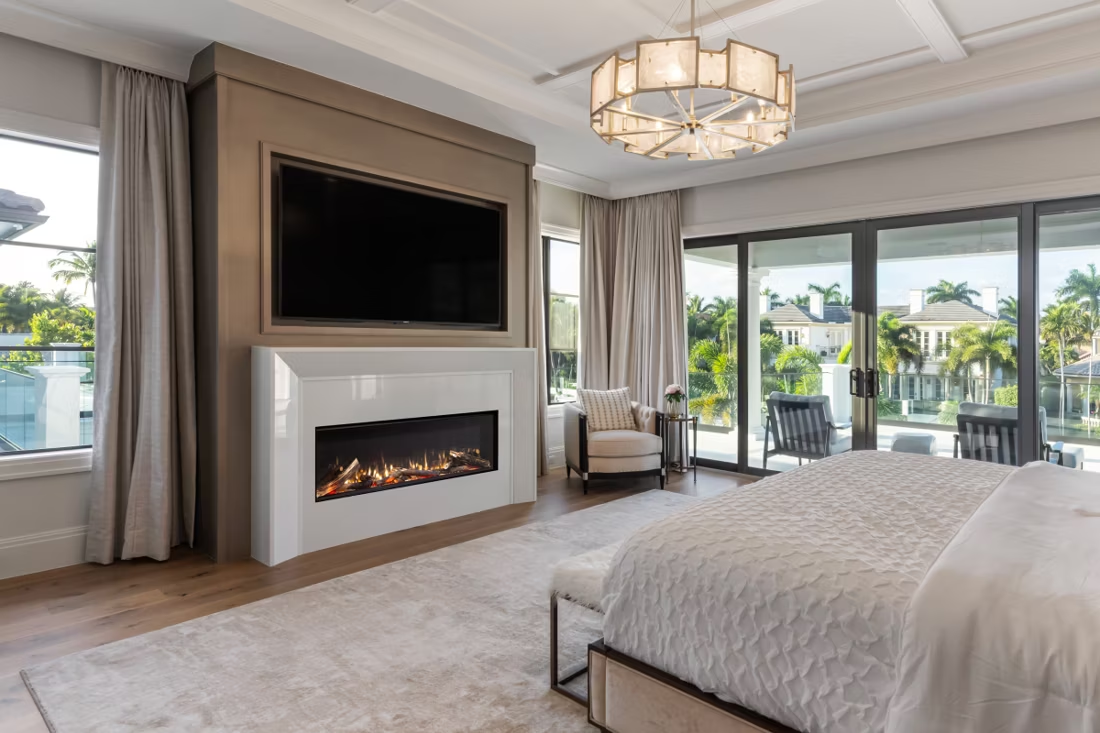
Yes—with an asterisk. Fireplaces are hot and TVs don't like heat. Either put a mantel between them to deflect rising warmth, or choose a fireplace with heat-management technology that creates a cool zone on the wall above—the wall stays around 125 degrees, barely warm, while the room still gets full heat. If you like clean lines and don't want a mantel, heat management is the answer.
Does an electric fireplace need a vent or chimney?
No—that's its superpower. An electric fireplace needs a wall and an outlet, period. No vent pipe, no gas line, no clearances to design around, which is why it works in bedrooms, offices, apartments, and walls where venting a gas or wood unit would be impractical or impossible. Installation is typically the simplest and least expensive of any fireplace type.
Does a fireplace add value to my home?
On average, a fireplace adds back to the home about the same amount you spent installing it. Add the monthly savings from heating the rooms you actually use instead of the whole house—often hundreds of dollars a year—and the value case is strong before you even count what a fire does for how your family uses the room.
Can I install a fireplace myself?
If you're putting a fire in your house on purpose, it's best to work with an expert. Unless you're genuinely experienced in framing, gas line, vent pipe, and the national code on clearances to combustibles, have a professional do it—and ideally the same company that sells you the fireplace, so warranty, service, and liability all live under one roof.
Nearby Dealers
Hearth shops serving Post Falls and the surrounding area. Every listing shows whether it is a WhyFire partner, a dealer we have verified as authorized for the brands we recommend, or a local business carrying hearth products. No manufacturer pays for placement. How we verify dealers →
Iron Stone
Andy's Heating & Cooling
Lake Creek Consulting LLC, Dba Lake Creek Comfort
Armour Chimney Service
Rock Creek
Lake Creek Comfort Systems
Copper Creek Landscaping, Inc
Wing Stoves & More
Tri State Distributors
Accent Stove & Spa
Electric Service in Post Falls
An electric fireplace's heater draws about 1,500 watts—pennies per hour at local rates.
Avista Corp
Kootenai Electric Cooperative
Find your electric fireplace in Post Falls.
Tell us a bit about your home and we'll match you with the right electric fireplace, insert, or wall unit—plus a free Project Guide & Parts List and a trusted local dealer to install it.
Find Your Fireplace →