
Find the right electric fireplace for your Kootenai County home.
No chimney, no gas line, no smoke during a winter inversion—just clean supplemental heat and real ambiance for homes around Lake Coeur d'Alene and across the Panhandle. Find the right unit and connect with a trusted local dealer.
Every Project Starts From One of These Five Situations
Clean heat that skips the smoke, the vent, and the permit hassle.
Kootenai County sits in the Idaho Panhandle along Lake Coeur d'Alene and the Spokane River, with winter lows averaging around 26°F and a long, steady heating season that keeps the furnace running for much of the year—a real Zone 5B winter, if not an extreme one. Wood heat has deep roots here, with local stoves burning lodgepole pine, ponderosa pine, Douglas fir, and larch cut under permits from the Idaho Panhandle National Forests and BLM's Coeur d'Alene and Spokane districts. But the county's winter inversions—the same weather pattern that traps cold, dense air (and wood smoke) in the valley—plus late-summer wildfire smoke drifting down from the Panhandle have pushed a lot of homeowners toward electric fireplaces and inserts for rooms where they want warmth and glow without adding another combustion source to the air.
Electric service in the county splits between Avista Utilities, which covers Coeur d'Alene and much of Post Falls, and Kootenai Electric Cooperative, which serves Hayden, Rathdrum, Athol, Spirit Lake, and most of the surrounding rural county. Either way, electric fireplaces plug into standard household circuits or a dedicated 120V/240V line for larger built-ins, which makes them a practical fit for lake-view condos, additions and sunrooms without a chimney, and secondary living spaces where running venting for a wood or gas unit isn't realistic. They won't replace a wood stove as primary heat during a hard January cold snap, but as zone heat or ambiance in a bedroom, den, or basement, they're straightforward to install and cheap to run compared to combustion appliances.
Three steps. No salesperson until you're ready.
Tell us about your project
Your zip code, your situation, and the fuel you're leaning toward—or let the answers point you to one.
See what's actually available
The brands dealers within 100 miles genuinely carry—real options, never a catalog mirage.
Get your dealer & Project Guide
A trusted local dealer, plus the free Project Guide & Parts List that names every component of the job.
Frequently Asked Questions
How much does an electric fireplace or insert cost to install in Kootenai County?
Plug-in electric fireplaces and freestanding stoves are the least expensive option—typically a few hundred dollars for the unit itself, with no installation cost since they run on a standard household outlet. Built-in electric inserts or wall-mounted linear units cost more once you factor in framing, trim work, and sometimes a dedicated circuit—homeowners in Coeur d'Alene, Post Falls, and Hayden typically budget somewhere in the low thousands depending on the size of the unit and whether an electrician needs to run new wiring. A local dealer can give you a firm number once they see the room and your existing electrical panel.
Does an electric fireplace actually heat a room, or is it just for looks?
Most electric fireplaces and inserts include a fan-forced heater rated in the 4,000-5,000 BTU range, which is enough to noticeably warm a bedroom, den, or small living area—but it's not a substitute for a furnace or a wood stove during a Kootenai County cold snap with lows in the teens or single digits. Think of it as zone heat: many local homeowners run one in a room they use often to take pressure off the central system, then turn the heat element off entirely in warmer months and just run the flame effect for ambiance.
Do I need a permit to install an electric fireplace in Kootenai County?
Plug-in units need no permit at all—you're just plugging into an existing outlet. Built-in electric fireplaces or inserts that require new wiring or a dedicated circuit typically need an electrical permit through Kootenai County's building department (or the city if you're inside Coeur d'Alene, Post Falls, or Hayden limits). Most hearth dealers and electricians handle that paperwork as part of the installation, so it's rarely something the homeowner has to manage directly.
Electric vs. wood—which makes more sense for my Kootenai County home?
Wood remains the go-to for primary heat and self-sufficiency here, especially with cheap Forest Service and BLM cutting permits (as low as $5-$20 per cord) putting lodgepole pine, ponderosa pine, and larch within reach for a lot of rural households. But wood smoke adds to the particulate load during the valley's winter inversions and wildfire-smoke stretches, which is exactly when some homeowners want an alternative. Electric fireplaces produce zero indoor or outdoor emissions, which makes them a good complement—wood or gas for serious heat and backup during outages, electric for the rooms where you want warmth and flame without adding anything to the air.
What kind of Kootenai County home is the best fit for an electric fireplace?
Electric units do well in condos and townhomes around Lake Coeur d'Alene where a chimney or gas line isn't an option, in additions and sunrooms built without venting infrastructure, and in secondary living spaces like bedrooms, basements, and dens where a homeowner wants supplemental warmth without the cost of extending gas line or running a Class A chimney. They're also common in rental properties and vacation homes around the lake, where low maintenance matters more than raw BTU output.
Electric vs. gas fireplace—what's the real difference for installation?
A gas fireplace or insert needs a gas line (natural gas or propane) and, in most cases, venting to the outside—real infrastructure work. An electric fireplace needs only power, which means installation is faster, cheaper, and doesn't involve coordinating a gas-fitter or venting contractor. The tradeoff is heat output and flame realism—gas units burn hotter and look more like a real fire. For a Kootenai County homeowner who already has gas service through the house, gas may still win for a primary living space; for a room without gas access, electric is usually the simpler answer.
How much does it cost to run an electric fireplace in Kootenai County?
Running costs come down to your electric rate through Avista Utilities or Kootenai Electric Cooperative, depending on where in the county you're located, and how often you run the heater element versus just the flame effect. Because most electric fireplaces only draw meaningful power when the heater is actually on, running one a few hours a day for supplemental warmth is inexpensive compared to heating the same square footage with electric resistance baseboard or an undersized furnace running constantly. A local dealer can walk you through wattage specs on any unit you're considering so you know what to expect on your bill.
Will my electric fireplace work if the power goes out?
No—electric fireplaces and inserts require power to run the heater, fan, and flame effect, so they go dark along with everything else in an outage. That's an important consideration in parts of Kootenai County where winter storms occasionally knock out power for hours or longer. If backup heat during an outage matters to you, pair an electric fireplace in your main living space with a wood stove or battery-backed gas unit elsewhere in the house rather than relying on electric as your only heat source.
What's the difference between an electric insert and an electric stove?
An electric insert is built to slot into an existing masonry or built-in fireplace opening, giving you flame effect and supplemental heat without touching your existing surround. An electric stove is a freestanding cabinet-style unit that sits anywhere in a room with an outlet nearby—no existing fireplace required. For Kootenai County homes with an old, rarely-used wood fireplace they want to simplify, an insert is usually the cleaner upgrade; for a room with no fireplace at all, a freestanding electric stove is the more flexible option.
Can I put a TV above my fireplace?
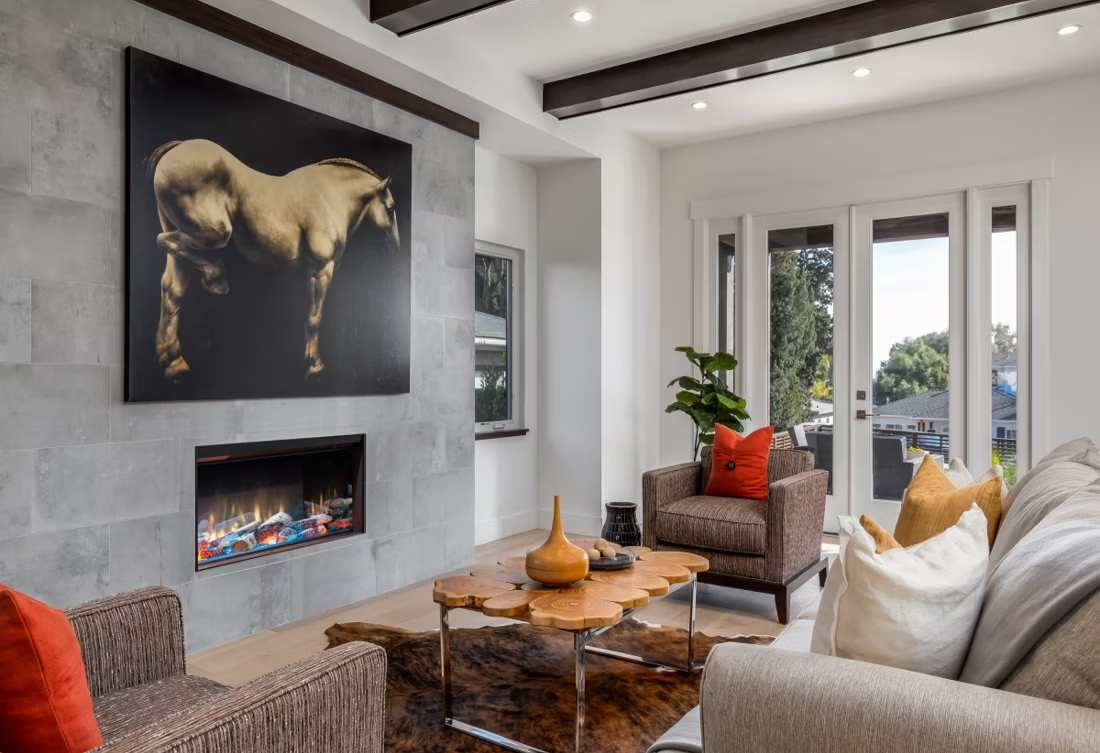
Yes—with an asterisk. Fireplaces are hot and TVs don't like heat. Either put a mantel between them to deflect rising warmth, or choose a fireplace with heat-management technology that creates a cool zone on the wall above—the wall stays around 125 degrees, barely warm, while the room still gets full heat. If you like clean lines and don't want a mantel, heat management is the answer.
Does an electric fireplace need a vent or chimney?
No—that's its superpower. An electric fireplace needs a wall and an outlet, period. No vent pipe, no gas line, no clearances to design around, which is why it works in bedrooms, offices, apartments, and walls where venting a gas or wood unit would be impractical or impossible. Installation is typically the simplest and least expensive of any fireplace type.
How much should I budget for a fireplace?
For an average home—covering the fireplace, the vent pipe, and basic installation—a budget between $3,900 and $5,500 gives you a lot of options across wood, gas, and pellet. By the time you add finish work, gas line, and electrical, the average complete installation lands between $5,000 and $12,000 all-in. In a remodel or new build, a good rule is to put about 2.5% of the total project cost toward the fireplace.
Does a fireplace add value to my home?
On average, a fireplace adds back to the home about the same amount you spent installing it. Add the monthly savings from heating the rooms you actually use instead of the whole house—often hundreds of dollars a year—and the value case is strong before you even count what a fire does for how your family uses the room.
Stove and Fireplace Dealers in Kootenai County
Listings include WhyFire partner dealers, dealers we have verified as authorized for the brands we recommend, and established local businesses that carry hearth products. Every listing shows which one it is. The ones marked Preferred run on WhyFire's software, so they can show you real pricing and book your appointment right here. No manufacturer pays for placement. How we verify dealers →
Iron Stone
Lake Creek Consulting LLC, Dba Lake Creek Comfort
Andy's Heating & Cooling
Armour Chimney Service
Rock Creek
Lake Creek Comfort Systems
Copper Creek Landscaping, Inc
Find your electric fireplace in Kootenai County.
Tell us a bit about your home and we'll match you with the right electric fireplace or insert, plus a free Project Guide & Parts List and a trusted local dealer to install it.
Find Your Fireplace →