
Find your pellet stove in Oneida County.
Thermostat-controlled, clean-burning heat for a county with winters on par with Bozeman, Montana—matched with a vetted local dealer who can size the hopper and vent kit for Malad Valley winters.
Every Project Starts From One of These Five Situations
Consistent heat for a valley that gets genuinely cold.
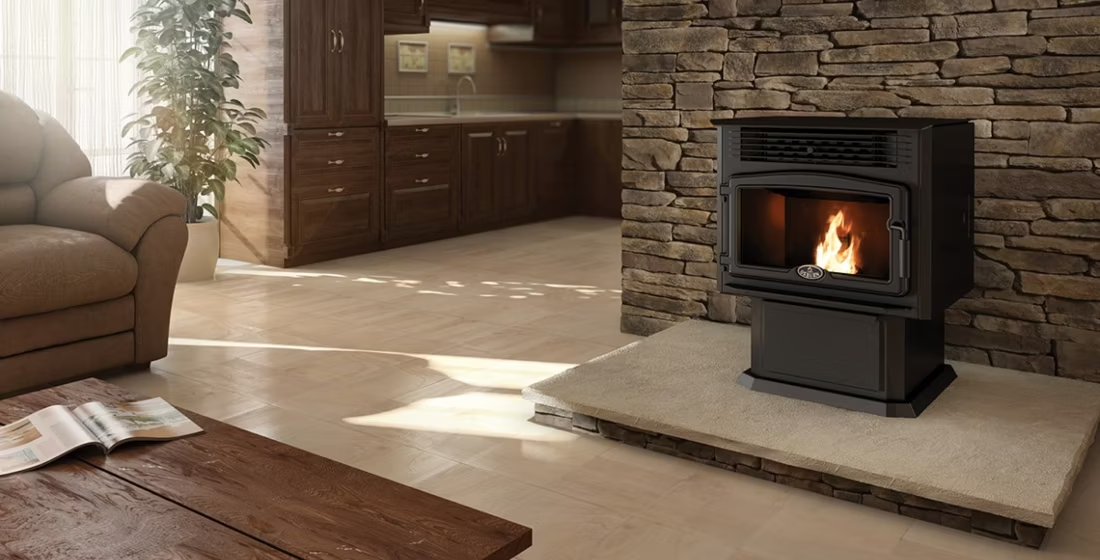
Oneida County sits in the Malad Valley of southeastern Idaho, boxed in by the Samaria Mountains to the west and the Malad Range to the east, with Malad City as the county seat and just over 2,200 residents spread across a mostly ranching and farming landscape. At climate zone 6B with an average winter low near 15°F and a long, demanding heating season—in the same range as Bozeman, Montana—this is a place where a heating appliance has to actually perform, not just look good on the hearth. Wood has been the traditional fallback here for good reason, with lodgepole pine, ponderosa pine, Douglas fir, and larch all growing in the surrounding forests. Pellet stoves have carved out a real niche alongside that tradition for households that want fixed, even heat output without splitting and stacking cordwood every fall.
Bagged pellets from Bear Mountain, Lignetics, and Pacific Pellet are the regional standards available through farm supply and hearth retailers serving this stretch of Idaho, and most Oneida County households who heat with pellets buy by the ton and store a season's supply in a garage or outbuilding. There's a second reason pellet stoves make sense here beyond convenience: wildfire smoke is a recognized air quality concern across the county in late summer and fall, and pellet appliances burn far cleaner than open wood combustion, so they're rarely swept into local burn restrictions the way wood stoves sometimes are. The tradeoff worth knowing going in is that a pellet stove's auger and blower run on household electricity—a real consideration on a county grid where storm-related outages aren't unusual, and one your local dealer should walk you through before you buy.
Three steps. No salesperson until you're ready.
Tell us about your project
Your zip code, your situation, and the fuel you're leaning toward—or let the answers point you to one.
See what's actually available
The brands dealers within 100 miles genuinely carry—real options, never a catalog mirage.
Get your dealer & Project Guide
A trusted local dealer, plus the free Project Guide & Parts List that names every component of the job.
Frequently Asked Questions
How much does a pellet stove installation cost in Oneida County?
A pellet stove or insert installation in Oneida County typically runs $3,500 to $6,500 depending on the unit's hopper size, whether it's a freestanding stove or an insert going into an existing masonry fireplace, and how far the vent run has to travel through an exterior wall. Because Oneida County is sparsely populated, most hearth retailers with certified installers are based out of neighboring markets like Preston, Pocatello, or across the Utah border in Logan, and a modest travel charge for the Malad Valley is common. Ask for that itemized on any quote so there are no surprises.
What size pellet stove do I need for my home?
Sizing comes down to square footage, insulation, and how many hours you want between refills. Given Oneida County's cold, long winters, a larger hopper is worth the extra upfront cost—a 40-to-60-pound hopper can often run 24 hours or more on a low setting, which matters on nights when temperatures sit in the teens or lower. Older farmhouses and homes with less insulation in and around Malad City generally need a stove rated for more square footage than the same-sized newer, tighter-built home. A local dealer will size this properly during an in-home visit rather than guessing off a chart.
Do I need a permit to install a pellet stove in Oneida County?
Yes—a new pellet stove or insert installation typically requires a building permit through the Oneida County Building Department, primarily to verify the wall or roof vent penetration and clearances meet code. Most established local installers handle the permit paperwork as part of the job, so this usually isn't something you have to manage yourself. It's still worth confirming with your dealer before work begins, especially if you're converting an existing wood fireplace.
What's the difference between a pellet stove and a pellet insert?
A pellet stove is a freestanding appliance that sits on its own hearth pad and vents through a wall or existing chimney—it can go almost anywhere in a room with the right clearances. A pellet insert is built to slide into an existing masonry fireplace opening, using a vent liner run up the old chimney. For Oneida County homes with an existing wood fireplace that's rarely used, an insert is often the more straightforward upgrade since it reuses the chimney you already have. Homes without an existing fireplace opening are generally better suited to a freestanding stove.
Will my pellet stove work if the power goes out?
Not on its own—pellet stoves rely on an electric auger to feed fuel and a blower to distribute heat, so a power outage stops the stove. This is worth thinking through carefully in Oneida County, where rural line runs through the Samaria Mountains and Malad Range mean outages happen occasionally, especially during winter storms. Some households pair a pellet stove with a small battery backup or generator sized to keep the auger and igniter running; others keep a wood stove or fireplace as backup heat for exactly this reason. Ask your local dealer about battery backup compatibility for any model you're considering.
What's the best pellet stove for Oneida County's winters?
Look for a stove with a larger hopper capacity and a solid low-burn rate—with average winter lows around 15°F and a heating season that runs long, you'll want a unit that can hold a slow, steady burn overnight without frequent refilling. Established brands like Harman, Quadra-Fire, and Lopi make pellet appliances well suited to sustained cold-climate use, and any of them can run on the regional pellet supply from Bear Mountain, Lignetics, or Pacific Pellet. Your local dealer can match hopper size and BTU output to your home's specific square footage and insulation level.
How often does a pellet stove need to be serviced?
Plan on a full cleaning and inspection once a year, ideally before the heating season starts in fall. This includes clearing ash from the burn pot and hopper, checking the auger mechanism, cleaning the exhaust vent, and inspecting the gasket seals. Households in Oneida County running a pellet stove as primary heat through a full winter should also empty and check the ash pan every few days and do a quick burn pot cleaning weekly—pellet stoves are lower-maintenance than wood but not maintenance-free.
Where can I buy pellets in or near Oneida County?
Bear Mountain, Lignetics, and Pacific Pellet are the regional brands most commonly stocked at farm supply and hearth retailers serving this part of southeastern Idaho, usually sold by the ton in 40-pound bags on a pallet. Buying early in the fall is worth doing in Oneida County—demand can spike during wildfire smoke season when some households shift away from outdoor burning and lean more on their pellet stove, occasionally tightening local supply. Your dealer can usually point you to the nearest stocking retailer or arrange a bulk order.
Pellet stove vs. wood stove—which is right for my home?
Wood stoves work without electricity, burn fuel you can cut yourself from the lodgepole pine, ponderosa pine, Douglas fir, and larch stands around the county, and give the most heat output per dollar if you're set up to process cordwood. Pellet stoves trade that self-sufficiency for convenience—load the hopper, set the thermostat, and walk away—plus a cleaner burn that isn't typically swept into local restrictions during wildfire smoke advisories. For Oneida County households without the time or ability to split and stack wood, or who want backup heat that doesn't require daily tending, pellet is usually the better fit, provided you have a plan for the occasional power outage.
Why is my open fireplace making my house colder?
Open fireplaces suck—literally. As the fire burns, it consumes air your furnace already paid to heat and pulls it out through the chimney, so the house is actually colder after the fire goes out than before you lit it. An insert fixes this: it seals the chimney, puts fixed glass across the front, and turns that hole in your house into a real heat source.
Why is a fireplace insert so efficient?
An insert does two things: it seals the chimney completely, so you stop losing air you already paid to heat, and it radiates warmth into the room through the firebox and glass. Most add a heat-exchange fan that pulls cool room air underneath, wraps it around the hot firebox, and pushes it back out warm. Your home is more efficient before you've even lit the first fire.
Does a fireplace add value to my home?
On average, a fireplace adds back to the home about the same amount you spent installing it. Add the monthly savings from heating the rooms you actually use instead of the whole house—often hundreds of dollars a year—and the value case is strong before you even count what a fire does for how your family uses the room.
Can a fireplace actually lower my heating bill?
Yes—by creating a comfort zone. A furnace heats every square foot of the house just to warm the one room you're in; a gas fireplace on low burns roughly a sixth of the gas a typical furnace does. Set the furnace around 55–60 degrees as a baseline, then heat the rooms your family actually uses. Families who heat this way commonly save $20–$60 a month.
Pellet Brands Stocked Around Oneida County
Manufacturers will point you to the nearest stocking dealer.
Find your pellet stove in Oneida County.
Tell us about your home in the Malad Valley and we'll match you with a trusted local dealer, plus send a free Project Guide & Parts List—sized stove or insert, the correct vent kit, and everything needed for your installation.
Find Your Fireplace →