
Real fire-look heat, zero smoke, right here in Nez Perce County.
Instant, no-venting heat for Lewiston, Culdesac, Lapwai, and Peck homes—no chimney, no gas line, no burn-ban worries during winter inversions. Find the right unit and connect with a trusted local dealer.
Every Project Starts From One of These Five Situations
Heat that skips the chimney, the gas line, and the smoke.
Lewiston sits at roughly 738 feet—the lowest point in Idaho—where the Snake and Clearwater Rivers meet, giving Nez Perce County a noticeably milder microclimate than most of the state. Winters here are mild by Idaho standards, with a shorter, lighter heating season, and winter lows average around 30°F, both well short of what higher-elevation Idaho and Panhandle counties see. But the same river valley that keeps winters mild also traps air in place. Winter inversions settle over Lewiston and the surrounding benches, and combined with wildfire smoke in late summer and fall, county air quality advisories periodically ask residents to ease off wood burning. An electric fireplace produces zero combustion byproducts, so it never triggers a burn-ban conflict and never adds to inversion-trapped particulate on the valley floor.
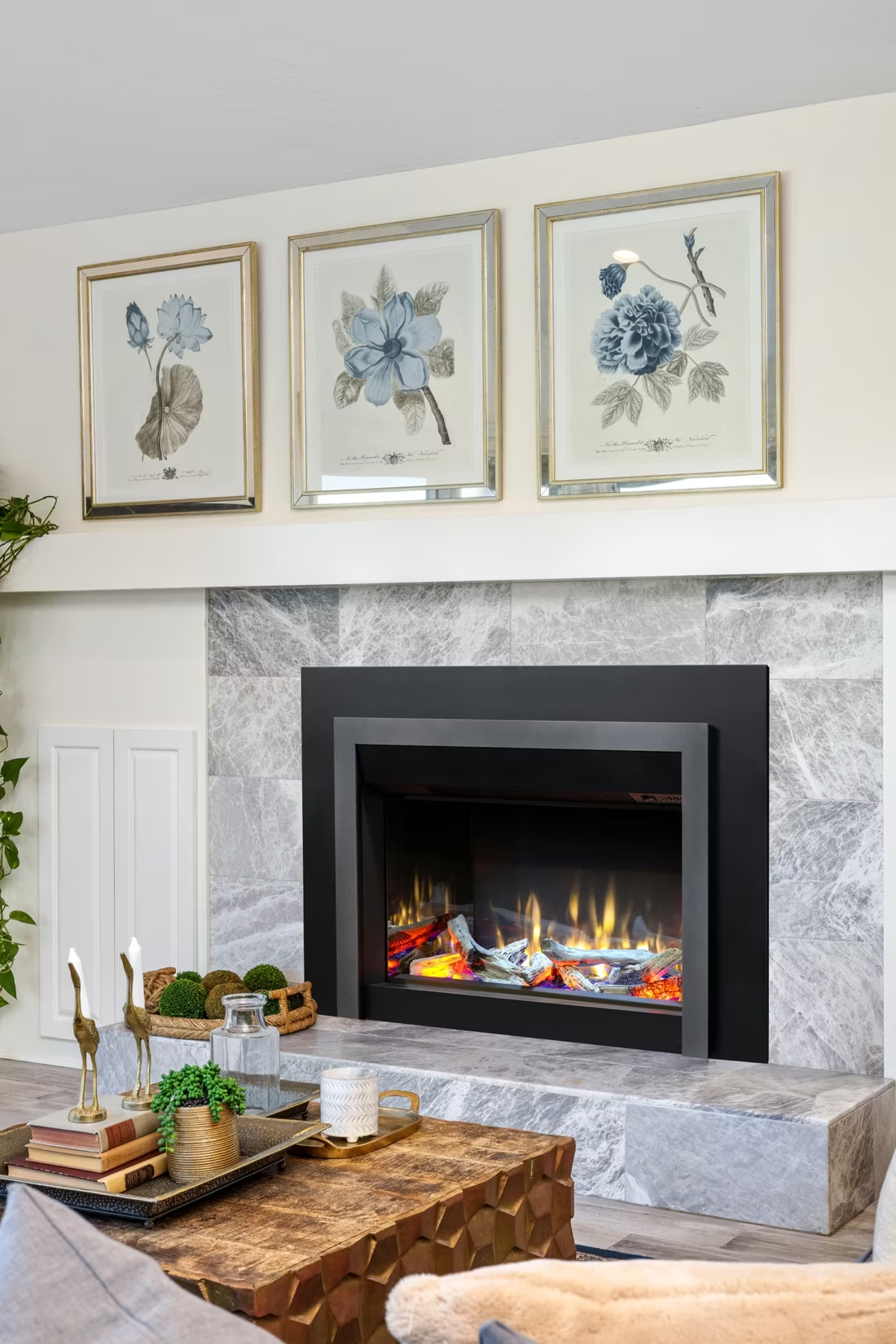
Electric units also solve a practical problem across the county's older housing stock: plenty of homes in Lewiston, Culdesac, and Lapwai have masonry fireplaces with weak draft or no fireplace at all, and newer apartments and manufactured homes often have no chimney chase to work with. A plug-in insert or wall-mount electric fireplace drops into an existing opening or hangs on a wall with a standard outlet—no venting, no gas line, no combustion permit. Avista Utilities serves most electric accounts in and around Lewiston; Clearwater Power Cooperative covers a good share of the rural stretches toward Peck and the Clearwater River corridor. Either way, a local dealer can size the right unit for zone heating in a den, bedroom, or basement rec room.
Three steps. No salesperson until you're ready.
Tell us about your project
Your zip code, your situation, and the fuel you're leaning toward—or let the answers point you to one.
See what's actually available
The brands dealers within 100 miles genuinely carry—real options, never a catalog mirage.
Get your dealer & Project Guide
A trusted local dealer, plus the free Project Guide & Parts List that names every component of the job.
Frequently Asked Questions
How much does an electric fireplace installation cost in Nez Perce County?
Plug-in electric inserts that slide into an existing fireplace opening typically run $500 to $1,500 installed, with most of that being the unit itself since no venting or gas work is required. Built-in wall units or linear electric fireplaces with a custom surround, framing, and a dedicated 120V or 240V circuit run higher—often $1,500 to $3,500—mainly due to the electrician's time. If you're adding a new circuit, a licensed electrician will need to pull a permit through the City of Lewiston Building Division or Nez Perce County, depending on where the home sits. Local retailers can quote the full install after seeing your existing fireplace opening or wall space.
Do I need a permit for an electric fireplace in Nez Perce County?
In most cases, no. A standard plug-in electric fireplace insert that runs off an existing 120V outlet doesn't require a permit—it's treated like any other large appliance. If you're having a dedicated circuit installed for a built-in or larger 240V unit, the electrician handling that work will pull an electrical permit through the City of Lewiston or unincorporated Nez Perce County, depending on the address. This is one of the simplest fuel types to install for exactly that reason—no chimney inspection, no gas-fitter, no combustion venting to code-check.
Electric vs. wood—which makes more sense for my home?
Wood remains a strong choice across Nez Perce County, especially with Forest Service cutting permits through the Nez Perce-Clearwater National Forests running just $5 to $20 per cord during the May-to-October season, and local lodgepole pine, ponderosa pine, Douglas fir, and larch all burning well. Wood also keeps working without electricity, which matters during storm outages. But wood smoke is exactly what county air quality advisories target during winter inversions, and hauling, splitting, and cleaning ash isn't for everyone. Electric skips all of that—no smoke, no ash, no chimney maintenance—but it also stops working the moment the power goes out and won't match a wood stove's raw heat output on the coldest nights. Many homeowners here run wood as primary heat and add an electric unit in a secondary room purely for convenience and ambiance.
Electric vs. gas—which is right for my home?
Gas fireplaces deliver more real heat output and can run during a power outage if equipped with battery-backup ignition, but they require either a natural gas line or a propane tank and typically need venting work and a permit through local building authorities. Electric fireplaces need only an outlet, install in an afternoon, and never require gas line work—but they rely entirely on grid power and produce closer to supplemental warmth than whole-room heat. For a Lewiston-area rental, condo, or a room where running gas line isn't practical, electric is usually the simpler and less expensive path. For a primary living space where you want real heat you can feel across the room, gas is worth the extra install complexity.
Can an electric fireplace actually heat a room in Nez Perce County's winters?
Most electric fireplace inserts put out around 4,500 to 5,000 BTUs from a standard 1,500-watt heater element—enough to comfortably supplement or fully heat a single room in the 300-to-400-square-foot range. Given that Nez Perce County's winters are milder than much of Idaho (winter lows average around 30°F, with a shorter, lighter heating season), an electric unit does more heavy lifting here than it would in a harsher climate zone. It's a realistic primary heat source for a den or bedroom, and a solid supplement to central heat or a wood stove in larger, open floor plans.
What's the difference between an electric insert, a wall-mount, and a built-in electric fireplace?
An electric insert is built to slide into an existing fireplace opening, using the masonry surround you already have—a common upgrade for older Lewiston and Lapwai homes with an underused wood fireplace. A wall-mount unit hangs directly on a wall like a flat-screen TV, needs no existing fireplace, and is popular in newer construction and apartments. A built-in electric fireplace is designed to be framed into new construction or a remodel, often with a custom mantel or surround built around it. For most existing homes with a fireplace opening already in place, an insert is the least disruptive option; for a home with no fireplace at all, a wall-mount is usually the fastest and least expensive.
Will my electric fireplace work during a power outage?
No—electric fireplaces require grid power to run the heater element and, on most models, the flame-effect display. If Nez Perce County sees a winter storm outage, an electric unit goes dark along with everything else on the circuit. This is the main tradeoff against wood or gas with battery-backup ignition, both of which can keep producing heat when the power drops. If backup heat during outages is a priority—particularly for rural properties served by Clearwater Power Cooperative, where restoration times can run longer than in town—many homeowners pair an electric fireplace for daily convenience with a wood stove or battery-backed gas unit as their outage plan.
Does an electric fireplace help during winter air quality advisories?
Yes—this is one of the clearest local advantages. Nez Perce County, and the Lewiston valley in particular, experiences winter temperature inversions that trap wood smoke and wildfire particulate close to the ground, prompting periodic air quality advisories that discourage wood burning. An electric fireplace produces no combustion byproducts at all, so it never factors into those advisories and never needs to be shut down on a bad-air day. For households that want reliable heat regardless of what the inversion is doing outside, that's a real practical benefit beyond just convenience.
How much does it cost to run an electric fireplace in Nez Perce County?
A typical 1,500-watt electric fireplace insert costs roughly 15 to 25 cents per hour to run at full heat, depending on current Avista Utilities or Clearwater Power Cooperative rates—so a few hours of evening use most nights adds somewhere around $10 to $25 to a monthly electric bill. That's noticeably less than running central electric resistance heat for the whole house, which is part of why electric fireplaces work well as targeted, zone-heating supplements rather than whole-home solutions in this climate.
Can I put a TV above my fireplace?
Yes—with an asterisk. Fireplaces are hot and TVs don't like heat. Either put a mantel between them to deflect rising warmth, or choose a fireplace with heat-management technology that creates a cool zone on the wall above—the wall stays around 125 degrees, barely warm, while the room still gets full heat. If you like clean lines and don't want a mantel, heat management is the answer.
What fireplace styles should I know before shopping?
Four cover most of the market: screen-front traditional (mesh front, open feel, fits craftsman homes), traditional door set (the classic look you grew up with), modern linear (wide, low, the statement piece for entertaining), and clean face contemporary (no trim—your tile or stone runs right to the fire's edge). Walk in knowing those four terms and you're ahead of most buyers.
How much should I budget for a fireplace?
For an average home—covering the fireplace, the vent pipe, and basic installation—a budget between $3,900 and $5,500 gives you a lot of options across wood, gas, and pellet. By the time you add finish work, gas line, and electrical, the average complete installation lands between $5,000 and $12,000 all-in. In a remodel or new build, a good rule is to put about 2.5% of the total project cost toward the fireplace.
What is an in-home preview and do I need one?
It's a visit where a hearth professional measures your space, confirms the model you picked actually works in your home, and walks the specs—framing, gas line, venting, finish work—before anything is ordered. Some details you just can't know until you see the house. Never make a down payment without one; it's the single most-skipped step that burns buyers.
Stove and Fireplace Dealers in Nez Perce County
Listings include WhyFire partner dealers, dealers we have verified as authorized for the brands we recommend, and established local businesses that carry hearth products. Every listing shows which one it is. The ones marked Preferred run on WhyFire's software, so they can show you real pricing and book your appointment right here. No manufacturer pays for placement. How we verify dealers →
Welenco Stove Store
Panhandle Heating Solutions LLC
Moscow Building Supply
Get your free Project Guide & Parts List for an electric fireplace in Nez Perce County.
Tell us a bit about your home and we'll match you with a trusted local dealer and send a free Project Guide & Parts List—the exact parts for your project and who to call to get it installed right.
Find Your Fireplace →