
Clean, instant heat for Idaho's banana belt.
Lewiston's mild valley winters and cheap local power make electric an easy, no-venting way to add warmth. Find the right unit and connect with a trusted local dealer.
Every Project Starts From One of These Five Situations
The valley that stays warm—and the power that stays cheap.
At 1,305 feet, Lewiston sits in the lowest, warmest pocket of Idaho—the confluence of the Snake and Clearwater rivers gives the valley a reputation locals call the "banana belt," with an average winter low around 30°F and a winter that's only moderately demanding on the heating side. Compare that to a genuinely cold inland climate like Fargo, ND, which needs nearly twice as much heating over the course of the season, and it's clear Lewiston homeowners aren't fighting the same battle against subzero nights that much of the Northern Rockies deals with. That changes what electric heat needs to do here—it's less about surviving a polar night and more about efficient, flexible zone heat.
The valley's geography that keeps winters mild also traps air during winter inversions, and wildfire smoke settles in during late summer—both are reasons an electric fireplace appeals to Lewiston homeowners who want ambiance and supplemental warmth without adding another combustion source to the airshed. Avista Corp serves most of the city, with Clearwater Power Company covering outlying Nez Perce County areas, and at roughly $0.1187 per kWh, Lewiston's residential electric rate sits well below the national average—meaning an electric fireplace or insert costs only a few cents an hour to run, with no chimney, no venting, and no permit headaches for most plug-in models.
Three steps. No salesperson until you're ready.
Tell us about your project
Your zip code, your situation, and the fuel you're leaning toward—or let the answers point you to one.
See what's actually available
The brands dealers within 100 miles genuinely carry—real options, never a catalog mirage.
Get your dealer & Project Guide
A trusted local dealer, plus the free Project Guide & Parts List that names every component of the job.
Frequently Asked Questions
How much does an electric fireplace installation cost in Lewiston?
Plug-in electric fireplaces and freestanding stoves need no installation beyond finding an outlet—many Lewiston homeowners are up and running for the cost of the unit alone, often $300 to $1,200. Built-in electric fireplaces or wall-mounted units that require recessing into a wall, running a dedicated circuit, or framing a surround typically run $800 to $2,500 installed, depending on whether an electrician needs to add a new line. Because there's no gas line and no chimney, electric installs are consistently the least expensive and fastest hearth project available in Lewiston—most are done in a day.
How much does it cost to run an electric fireplace in Lewiston?
Most electric fireplace inserts draw around 1,500 watts on the heat setting. At Avista's residential rate of about $0.1187 per kWh, that works out to roughly 18 cents an hour, or under $1.50 for an average evening of use—cheaper than most other cities in the region thanks to Lewiston's below-average electric rates. Running one as ambiance-only, with the heater off, costs a fraction of that. Clearwater Power Company customers in outlying areas should check their current rate, but the math stays similarly favorable across the Lewiston-Clarkston valley.
Is electric heat enough for a Lewiston winter, or do I need something else?
For most Lewiston homes, electric fireplaces work best as supplemental or zone heat rather than a whole-home primary source—the valley's moderate winter heating needs and 30°F average winter low are mild by Idaho standards, but an electric insert alone won't carry a large or poorly insulated home through a January cold snap. Many homeowners here pair an electric fireplace in a living room or bedroom with existing central heat, or with a wood stove for backup during storms. If your goal is ambiance plus everyday comfort in one room, electric is often all you need.
What's the difference between an electric insert, a wall-mount, and a freestanding electric stove?
An electric insert is built to slide into an existing masonry fireplace opening, giving an old wood-burning fireplace a clean, no-mess makeover with real heat output. A wall-mount or built-in unit is designed to be recessed into new framing or hung flush against a wall, popular in newer Lewiston builds along the bench or in the valley's newer subdivisions. A freestanding electric stove looks like a traditional wood stove but plugs into any outlet, which makes it a good option for renters or homeowners who want the wood-stove look without cutting into a wall. All three run off standard household current in most cases.
Will my electric fireplace still work during a winter power outage?
No—this is the one real tradeoff of electric heat. Unlike a wood stove or many pellet stoves, an electric fireplace has no function without grid power, so it can't serve as backup heat when a winter storm knocks out lines along the Clearwater or Snake River corridors. If reliable outage backup matters to your household, most local dealers recommend pairing an electric fireplace for everyday convenience with a separate wood stove, or at minimum a battery or generator setup, rather than depending on electric as your only heat source.
Do I need a permit for an electric fireplace in Lewiston?
Plug-in electric fireplaces and stoves generally don't require a permit since there's no venting, gas line, or structural chimney work involved. Built-in units that require new electrical wiring or a dedicated circuit typically do need an electrical permit through the local building department, and most licensed electricians pull that permit as part of the job. Because there's no combustion appliance involved, electric installations skip the EPA certification and clearance requirements that apply to wood and gas units in Nez Perce County.
Electric vs. wood—which is right for my Lewiston home?
Wood offers real backup heat during outages and pairs well with self-cut firewood—lodgepole pine, ponderosa pine, Douglas fir, and larch are all common locally, and permits through the Nez Perce-Clearwater National Forests run just $5 to $20 per cord during the May-to-October cutting season. But wood also means smoke, which matters in a valley that already deals with winter inversions and wildfire smoke season. Electric produces zero emissions, needs no chimney, and costs pennies to run on Lewiston's below-average electric rates—making it the cleaner, lower-maintenance choice for a den, bedroom, or secondary living space where ambiance matters more than emergency heat.
Electric vs. pellet stove—which makes more sense here?
Pellet stoves burn compressed wood pellets from regional brands like Bear Mountain, Lignetics, or Pacific Pellet, and produce real, substantial heat—enough to serve as a primary source in many Lewiston homes. But they need a vent, a hopper to reload, and electricity to run the auger and blower, so they still go dark in an outage. Electric fireplaces need no venting at all, cost less upfront, and are simpler to operate, but produce comparatively modest heat and offer zero backup value. For a home that already has a furnace and just wants clean supplemental warmth and ambiance, electric is usually the simpler, cheaper answer; for a home leaning on wood-adjacent heat as a real cost offset, pellet often wins.
Do electric fireplaces need any ventilation or clearance from walls?
No venting is required for any electric fireplace—there's no combustion, so there's no exhaust to route outside, which is a big part of the appeal in a valley that already deals with winter inversions trapping smoke. Clearance requirements are minimal too, typically just a few inches from combustible materials as specified by the manufacturer, far less restrictive than the clearances required for wood stoves. This is why electric units can go into rooms, condos, and rentals across Lewiston where a chimney or gas line simply isn't an option.
Can I put a TV above my fireplace?
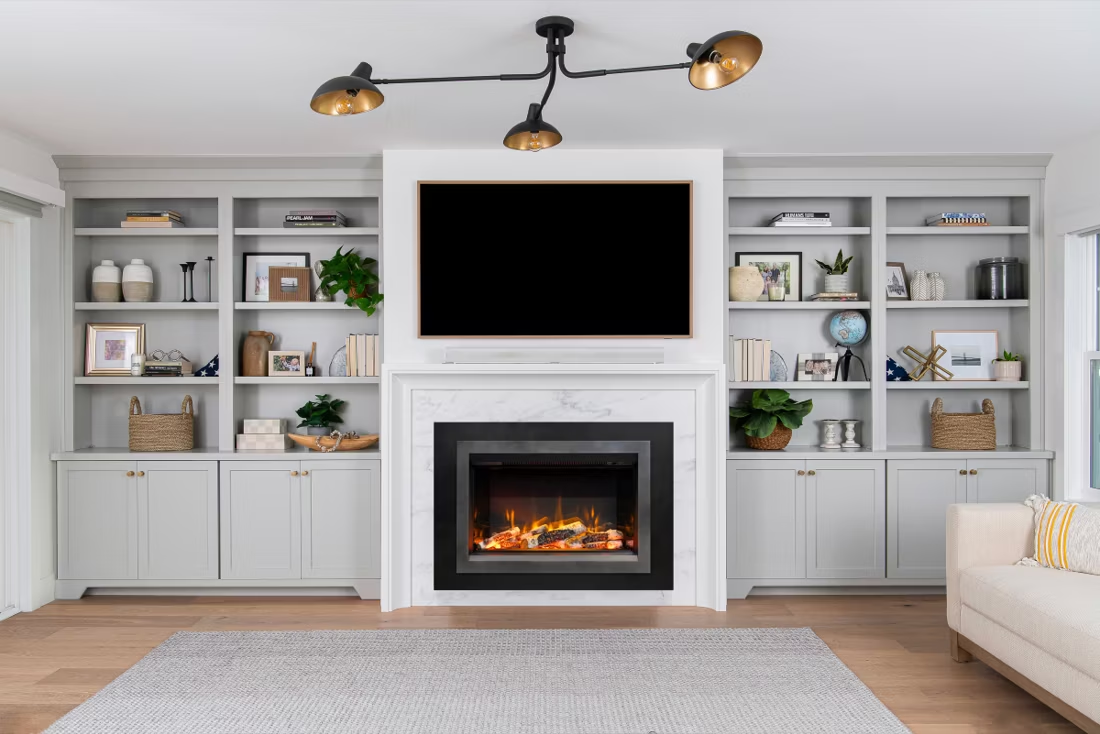
Yes—with an asterisk. Fireplaces are hot and TVs don't like heat. Either put a mantel between them to deflect rising warmth, or choose a fireplace with heat-management technology that creates a cool zone on the wall above—the wall stays around 125 degrees, barely warm, while the room still gets full heat. If you like clean lines and don't want a mantel, heat management is the answer.
Does an electric fireplace need a vent or chimney?
No—that's its superpower. An electric fireplace needs a wall and an outlet, period. No vent pipe, no gas line, no clearances to design around, which is why it works in bedrooms, offices, apartments, and walls where venting a gas or wood unit would be impractical or impossible. Installation is typically the simplest and least expensive of any fireplace type.
Can I install a fireplace myself?
If you're putting a fire in your house on purpose, it's best to work with an expert. Unless you're genuinely experienced in framing, gas line, vent pipe, and the national code on clearances to combustibles, have a professional do it—and ideally the same company that sells you the fireplace, so warranty, service, and liability all live under one roof.
Can a fireplace actually lower my heating bill?
Yes—by creating a comfort zone. A furnace heats every square foot of the house just to warm the one room you're in; a gas fireplace on low burns roughly a sixth of the gas a typical furnace does. Set the furnace around 55–60 degrees as a baseline, then heat the rooms your family actually uses. Families who heat this way commonly save $20–$60 a month.
Nearby Dealers
Hearth shops serving Lewiston and the surrounding area. Every listing shows whether it is a WhyFire partner, a dealer we have verified as authorized for the brands we recommend, or a local business carrying hearth products. No manufacturer pays for placement. How we verify dealers →
Welenco Stove Store
Panhandle Heating Solutions LLC
Moscow Building Supply
Electric Service in Lewiston
An electric fireplace's heater draws about 1,500 watts—pennies per hour at local rates.
Avista Corp
Clearwater Power Company
Find your electric fireplace in Lewiston.
Tell us a bit about your home and we'll match you with the right electric fireplace, insert, or stove—and connect you with a trusted local dealer who can get it installed.
Find Your Fireplace →