
Instant Heat for Snake River Plain Winters.
Lincoln sits at 4,723 feet in Bonneville County, where winter lows average 16°F and the season runs long. Find the right gas fireplace or insert, and get matched with a trusted local dealer.
Every Project Starts From One of These Five Situations
Reliable heat when the inversion sets in.
Lincoln is a small unincorporated community in Bonneville County just outside Idaho Falls, and its winters are serious business—a winter heating season longer and colder than Bozeman, Montana's. Snow and sub-freezing overnight lows are typical from November through March, and the Snake River Plain is prone to winter temperature inversions that trap smoke and particulates close to the ground for days at a time.
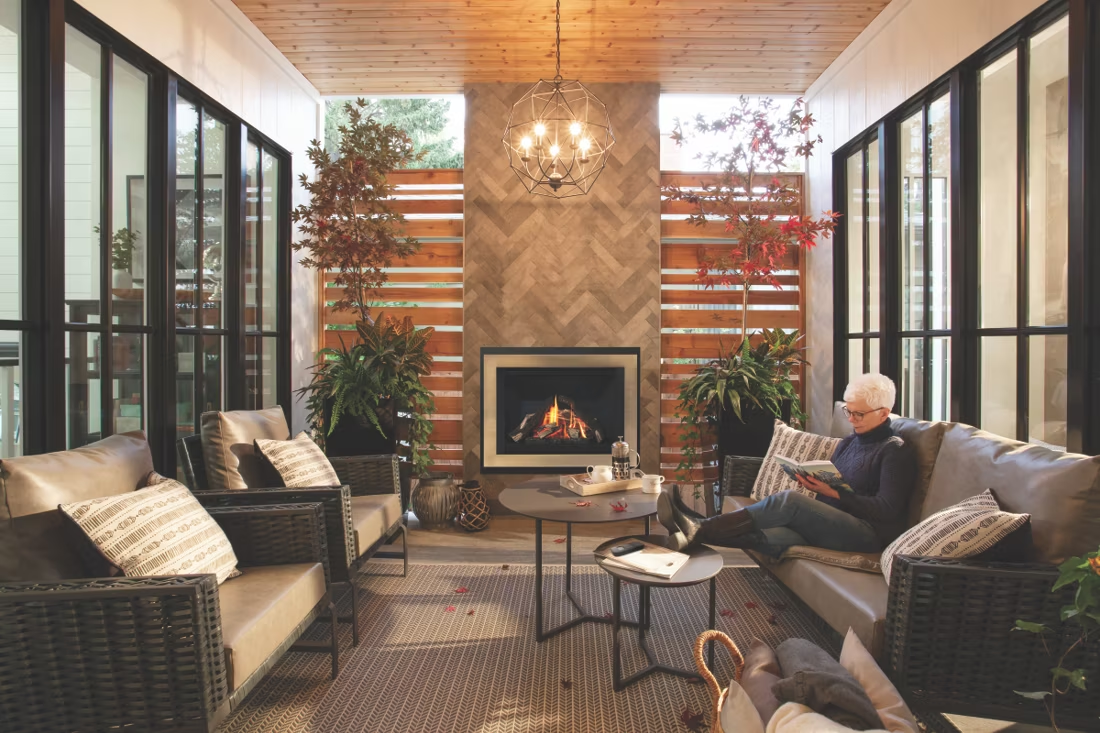
That inversion pattern is one reason gas has become a popular choice alongside wood heat in this part of Idaho: a sealed, direct-vent gas fireplace doesn't add to the air quality problem during a stagnant-air advisory the way an older wood stove can. Natural gas service through Intermountain Gas Company reaches much of the developed Idaho Falls-Ammon corridor, while many rural properties around Lincoln rely on propane delivered and stored in a home tank. Either way, a properly sized gas fireplace or insert gives you instant, thermostatically controlled heat that pairs well with central HVAC on the area's coldest nights.
Three steps. No salesperson until you're ready.
Tell us about your project
Your zip code, your situation, and the fuel you're leaning toward—or let the answers point you to one.
See what's actually available
The brands dealers within 100 miles genuinely carry—real options, never a catalog mirage.
Get your dealer & Project Guide
A trusted local dealer, plus the free Project Guide & Parts List that names every component of the job.
Frequently Asked Questions
How much does a gas fireplace installation cost in Lincoln?
Most gas fireplace and insert installations in the Lincoln and Idaho Falls area run $4,000 to $10,500, depending on the unit, whether you're on natural gas or propane, and how much venting or gas line work is required. A direct-vent insert going into an existing masonry fireplace where gas is already run to the house sits toward the lower end. New construction, a fresh gas line from the meter or propane tank, or venting through a longer chimney run pushes toward the higher end. A local dealer will give you a firm number after walking your home.
Can I convert my existing wood fireplace to gas?
Yes, and it's a common upgrade in older Bonneville County homes that were built with a masonry wood fireplace. A gas insert slides into that existing firebox and vents up through the same chimney using a stainless liner, so you keep the look of your fireplace without the ash, smoke, or wood handling. Because a lot of the housing around Lincoln predates natural gas expansion, this project sometimes involves a propane conversion rather than natural gas—your installer can tell you which fuel makes sense based on what's already run to your house.
Do I need natural gas, or is propane the standard here?
It depends on exactly where your property sits. Natural gas through Intermountain Gas Company is available in the more built-up parts of the Idaho Falls area, but Lincoln itself is unincorporated and rural in character, so a meaningful share of homes here run on propane, with a tank installed and refilled by a regional propane supplier. Most gas fireplace models can be set up for either fuel with the correct orifice and regulator, so fuel choice is less about the fireplace and more about what's already serving your house.
Will my gas fireplace work if the power goes out?
Most modern gas fireplaces with intermittent pilot ignition (IPI) run on a small battery backup that kicks in the moment PacifiCorp power drops, so the fireplace still lights and operates normally. That matters here—winter storms on the Snake River Plain can knock out power for hours at elevation. Valor's lineup takes it a step further: their pilot assembly generates its own electricity through a thermocouple, so there's no battery to remember or replace. Ask your local dealer which ignition system a given model uses before you buy.
What's the difference between a gas fireplace, insert, and stove?
A gas fireplace is a built-in unit framed into a wall, typically chosen for new construction or a full remodel. A gas insert is sized to drop into an existing masonry firebox and uses your current chimney as the vent path—the most common route for older Lincoln-area homes with an existing wood fireplace. A gas stove is freestanding, sitting on the floor on its own hearth pad like a wood stove but burning gas instead. If you already have a fireplace opening, an insert is usually the simplest and least invasive option.
Do I need a permit to install a gas fireplace in Lincoln?
Yes. Because Lincoln is unincorporated, permitting for a new gas fireplace or insert goes through the Bonneville County Building Department, and any new gas line—whether run from a natural gas meter or a propane tank—requires work by a licensed gas fitter. Most local hearth dealers coordinate the building permit, gas line, and venting inspection together as part of the installation, so you're not left managing separate trades on your own.
Vented or vent-free—which makes sense for a Lincoln home?
Vented direct-vent units draw combustion air from outside and exhaust it back outside through a sealed pipe, which keeps combustion byproducts out of the living space entirely. Vent-free units burn without outdoor venting and release some water vapor and trace combustion gases into the room, which means strict room-sizing rules and oxygen depletion sensors apply, and they're not legal everywhere. Idaho permits vent-free units under those restrictions, but for a home at 4,723 feet with a winter heating season as demanding as Bozeman, Montana's, most Bonneville County dealers steer customers toward direct-vent units—they deliver more consistent heat and don't require any tradeoffs on indoor air quality during a winter when you're already dealing with inversion smoke outside.
How often does a gas fireplace need to be serviced?
Plan on an annual inspection, ideally before the heating season ramps up in October or November. A technician checks the burner, pilot assembly, venting, and gas connections, and cleans the glass and firebox interior. It's a shorter visit than a wood chimney sweep, but skipping it is the main way small igniter or venting issues turn into no-heat calls in January. Expect to pay in the range of $150 to $250 for a standard annual service call in the Idaho Falls area.
Gas vs. wood—which is the better fit around Lincoln?
Wood is deeply practical here: lodgepole pine, ponderosa pine, Douglas fir, and larch are all common locally, and cutting permits through the Caribou-Targhee National Forest, BLM Idaho Falls District, or Bridger-Teton National Forest typically run $5 to $20 per cord in season. Wood heat also keeps working when the power's out. But Lincoln's winter inversions are the real tiebreaker for a lot of households—a sealed gas fireplace doesn't add particulates to the air during a stagnant-air advisory, and it gives you instant, no-hauling heat on the days you don't want to deal with a fire. Plenty of homes in Bonneville County run both: wood as a backup and daily-use option, gas for the convenience of flipping a switch on a bad-air day.
Is my gas fireplace wasting gas?
If it was installed more than 15 years ago, probably. Older gas fireplaces keep a standing pilot light burning all the time, and that little flame can cost a couple hundred dollars a year. Newer models use pilot-on-demand ignition—the pilot lights only when you use the fireplace and goes out when you turn it off.
What's the difference between an insert and a zero-clearance fireplace?
An insert is a fireplace that slides into a pre-existing wood-burning fireplace—if you don't have one, there's nothing to insert it into. A zero-clearance fireplace is built into a framed wall, which makes it the answer for remodels and new construction. Simple test: existing masonry fireplace means insert; blank or framed wall means zero-clearance.
Can a fireplace actually lower my heating bill?
Yes—by creating a comfort zone. A furnace heats every square foot of the house just to warm the one room you're in; a gas fireplace on low burns roughly a sixth of the gas a typical furnace does. Set the furnace around 55–60 degrees as a baseline, then heat the rooms your family actually uses. Families who heat this way commonly save $20–$60 a month.
Should the dealer who sells my fireplace also install it?
Ideally, yes. A fireplace project involves vent pipe, gas line, electrical, and often tile or stone. Hire three or four separate trades and you own the liability and the game of telephone between them. One company selling and installing means one accountable party, start to finish—ask about factory training, on-time completion records, and what happens if an inspection fails.
Nearby Dealers
Hearth shops serving Lincoln and the surrounding area. Every listing shows whether it is a WhyFire partner, a dealer we have verified as authorized for the brands we recommend, or a local business carrying hearth products. No manufacturer pays for placement. How we verify dealers →
Romaine's Mattress
Quality Heating, Inc
Find your gas fireplace in Lincoln.
Tell us about your home and we'll match you with a trusted local dealer and send over your free Project Guide & Parts List—a plan for your Lincoln gas fireplace project with the exact parts, vent kit, and recommended installer.
Find Your Fireplace →