
Instant Heat for Lincoln's High-Desert Winters.
No venting, no chimney, no wood to split—just heat at the flip of a switch for Bonneville County homes and additions. Find the right unit and connect with a trusted local dealer.
Every Project Starts From One of These Five Situations
Electric heat fills the gap between wood stoves and propane tanks.
Lincoln sits at 4,723 feet on the eastern Snake River Plain just outside Idaho Falls, where winter lows average 16°F and the area faces a winter heating season about as demanding as Helena, Montana. Between the elevation and the winter inversions that regularly settle over Bonneville County, most homes here lean on wood or propane for serious heat. Electric fireplaces and stoves fit a different, still very real need: zone heat for additions, basements, and rooms that don't justify running new gas or propane lines, plus ambiance that doesn't add another appliance to sweep or inspect.
PacifiCorp serves electric customers in and around Lincoln at a residential rate of about $0.1252 per kWh, which makes electric units cost-competitive for supplemental heat even though they're rarely anyone's whole-house solution at this altitude. Because plug-in electric fireplaces require no chimney, no gas line, and often no permit at all, they're also a practical option for the manufactured and modular homes common throughout this part of Bonneville County, where retrofitting venting for wood or gas can be impractical.
Three steps. No salesperson until you're ready.
Tell us about your project
Your zip code, your situation, and the fuel you're leaning toward—or let the answers point you to one.
See what's actually available
The brands dealers within 100 miles genuinely carry—real options, never a catalog mirage.
Get your dealer & Project Guide
A trusted local dealer, plus the free Project Guide & Parts List that names every component of the job.
Frequently Asked Questions
How much does an electric fireplace or insert cost to install in Lincoln?
Most plug-in electric fireplace inserts and wall-mount units run $400 to $1,500 installed, since they typically just need a standard 120V outlet and a mounting bracket or existing firebox opening. Larger built-in electric fireplaces that require a dedicated 240V circuit run higher—often $1,500 to $2,500 once an electrician runs new wiring from the panel. If you're converting an old masonry fireplace into an electric insert, expect the lower end of that range since no venting or chimney work is involved, which is the main reason electric installs cost less than wood or gas conversions in this area.
Can an electric fireplace actually heat a Lincoln home through the winter?
For most homes, no—not as the sole heat source. With Bonneville County facing a winter heating season about as demanding as Helena, Montana and winter lows regularly near 16°F, a 1,500-watt electric unit (the typical max for a standard outlet) tops out around 5,000 BTUs, which comfortably heats one room but won't carry a whole house through a January cold snap. Electric works best here as zone heat for a bonus room, converted garage, or basement, paired with a furnace, wood stove, or propane system for the rest of the home. Homeowners near the Caribou-Targhee National Forest who can access cheap self-cut firewood ($5 to $20 per cord through Forest Service permits) often use wood as primary heat and electric for convenience in secondary spaces.
Do I need a permit to install an electric fireplace in Lincoln?
Plug-in electric fireplaces that use an existing standard outlet generally don't require a permit. If you're installing a built-in unit that needs a new dedicated circuit, the electrical work itself requires a permit through the Bonneville County Building Department, and it needs to be pulled by a licensed electrician. Unlike wood stove installs, there's no EPA certification or chimney inspection involved—the permitting, when it's needed at all, is strictly about the wiring.
What size electric fireplace do I need for my space?
Most electric fireplaces and inserts top out at 1,500 watts (roughly 5,100 BTUs) due to standard household circuit limits, which is enough to comfortably heat 400 to 1,000 square feet depending on ceiling height and insulation. For an older, drafty farmhouse-style home common around Lincoln, plan on the lower end of that range for real heating performance; for a well-insulated addition or a smaller bonus room, a single unit can carry the whole space. If you need more heat than one unit provides, running a second unit on a separate circuit is usually more practical than hunting for an oversized single unit.
How much does it cost to run an electric fireplace in Lincoln?
At PacifiCorp's residential rate of about $0.1252 per kWh, a 1,500-watt electric fireplace running 5 hours a day costs roughly $0.94 a day, or about $28 a month, mostly on the heater setting rather than the flame-only ambiance mode (which draws only a few watts). That's competitive with running a space heater and considerably cheaper to install than extending a gas line, though it will run higher than wood heat for households with access to low-cost Forest Service firewood permits.
Is an electric fireplace a good backup during a power outage?
No—this is the one real limitation worth planning around. Electric fireplaces stop working the moment the power goes out, which matters in Bonneville County given the winter storms that occasionally knock out lines in this part of eastern Idaho. If backup heat during outages is a priority, pair an electric unit with a wood stove or a propane appliance that doesn't depend on grid power. Many local homes run electric for everyday zone heat and keep a wood stove for the occasions when the power actually drops.
What's the difference between an electric insert, a built-in fireplace, and a freestanding electric stove?
An electric insert drops into an existing fireplace opening—masonry or zero-clearance—and is the easiest upgrade for a home with an old wood-burning fireplace that no longer gets used. A built-in electric fireplace is designed into new framing or a wall, common in additions and remodels. A freestanding electric stove mimics the look of a wood stove and sits on the floor, requiring only an outlet—a good fit for a room with no existing fireplace or chimney chase. For most Lincoln homes with a dated masonry fireplace, an insert is the simplest and least expensive path.
Electric vs. propane—which makes more sense for my home?
Propane is more common as a primary heat source in the rural stretches of Bonneville County without natural gas infrastructure, and it can outperform electric on raw heat output for a similar footprint. But propane requires a tank, periodic deliveries, and price swings tied to the regional market. Electric fireplaces skip all of that—no tank, no delivery schedule, no combustion byproducts to vent—at the cost of higher per-BTU running expense and no function during outages. For supplemental heat in a single room, electric usually wins on simplicity; for whole-home heating, propane or wood typically wins on capacity.
What electric fireplace brands are worth looking at for a Lincoln home?
Dimplex and Napoleon both make well-regarded insert and built-in electric units with realistic flame effects and reliable heaters, and both are widely serviced by hearth retailers in the Idaho Falls area. Touchstone is a solid budget option for wall-mount units in smaller rooms or additions. Whichever brand you consider, a local dealer can tell you which models are actually stocked and serviced in the Bonneville County area—that regional support matters more long-term than which brand has the flashiest flame technology.
Can I put a TV above my fireplace?
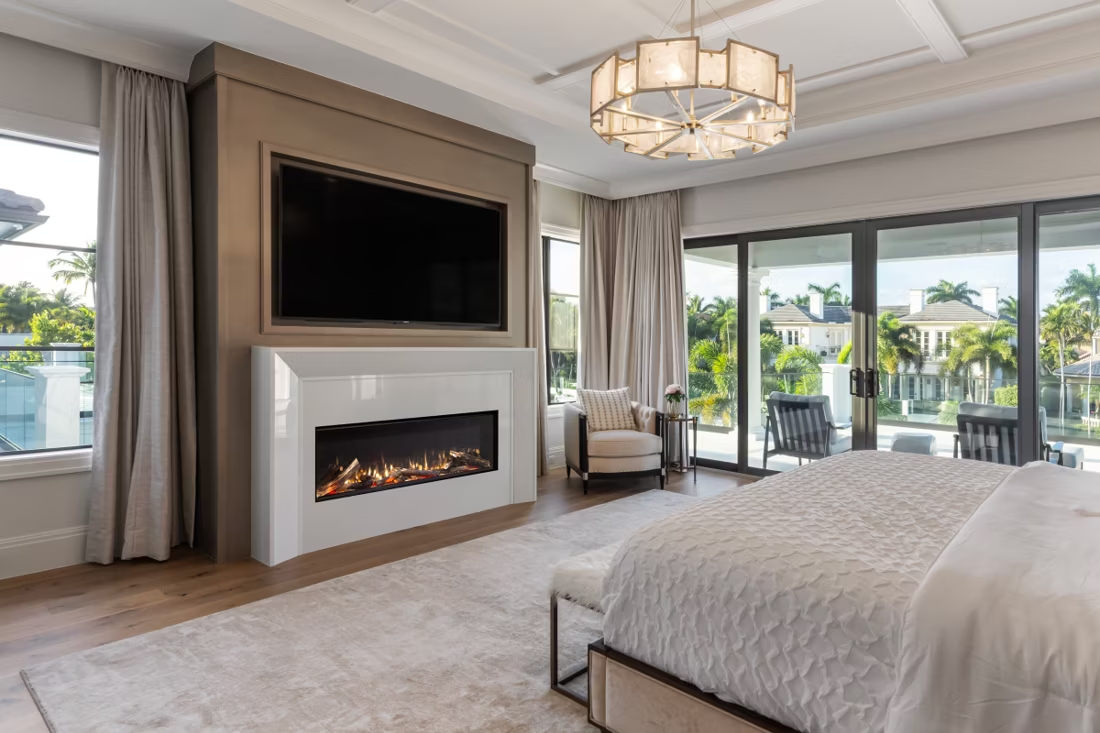
Yes—with an asterisk. Fireplaces are hot and TVs don't like heat. Either put a mantel between them to deflect rising warmth, or choose a fireplace with heat-management technology that creates a cool zone on the wall above—the wall stays around 125 degrees, barely warm, while the room still gets full heat. If you like clean lines and don't want a mantel, heat management is the answer.
Do electric fireplaces actually produce heat?
Yes—most put out around 4,800–5,000 BTUs from a standard outlet, which comfortably warms a bedroom, office, or den as a comfort-zone heater. What they won't do is carry a whole house the way wood, gas, or pellet can. Think of electric as ambiance-first with honest supplemental heat: flames on with no heat in July, flames plus warmth in January.
What is an in-home preview and do I need one?
It's a visit where a hearth professional measures your space, confirms the model you picked actually works in your home, and walks the specs—framing, gas line, venting, finish work—before anything is ordered. Some details you just can't know until you see the house. Never make a down payment without one; it's the single most-skipped step that burns buyers.
Can a fireplace actually lower my heating bill?
Yes—by creating a comfort zone. A furnace heats every square foot of the house just to warm the one room you're in; a gas fireplace on low burns roughly a sixth of the gas a typical furnace does. Set the furnace around 55–60 degrees as a baseline, then heat the rooms your family actually uses. Families who heat this way commonly save $20–$60 a month.
Nearby Dealers
Hearth shops serving Lincoln and the surrounding area. Every listing shows whether it is a WhyFire partner, a dealer we have verified as authorized for the brands we recommend, or a local business carrying hearth products. No manufacturer pays for placement. How we verify dealers →
Romaine's Mattress
Quality Heating, Inc
Electric Service in Lincoln
An electric fireplace's heater draws about 1,500 watts—pennies per hour at local rates.
Find your electric fireplace in Lincoln.
Tell us about your home and we'll match you with a trusted local dealer and send over a free Project Guide & Parts List—sized for your space, with the exact parts and your recommended installer.
Find Your Fireplace →