
Steady heat for the Camas Prairie's long, cold winters.
From Nezperce to Craigmont to Winchester, Lewis County runs on propane where the fuel is gas—and the right direct-vent unit means instant, reliable heat without touching a woodpile. Find your fit and connect with a trusted local dealer.
Every Project Starts From One of These Five Situations
Propane does the work natural gas can't reach.
Lewis County sits on the Camas Prairie in north-central Idaho, a plateau of wheat and cattle country at roughly 3,000 feet, with the Clearwater River canyon dropping off to the west. With a population under 2,600 spread across Nezperce, Craigmont, Winchester, and outlying farms, there's no natural gas utility running mains out here—homes and small ranches that want gas heat run on propane, delivered and stored in a tank on the property. That's not a workaround; it's the standard setup, and it works well in a climate zone 5B county where winter nights routinely sit well below freezing.
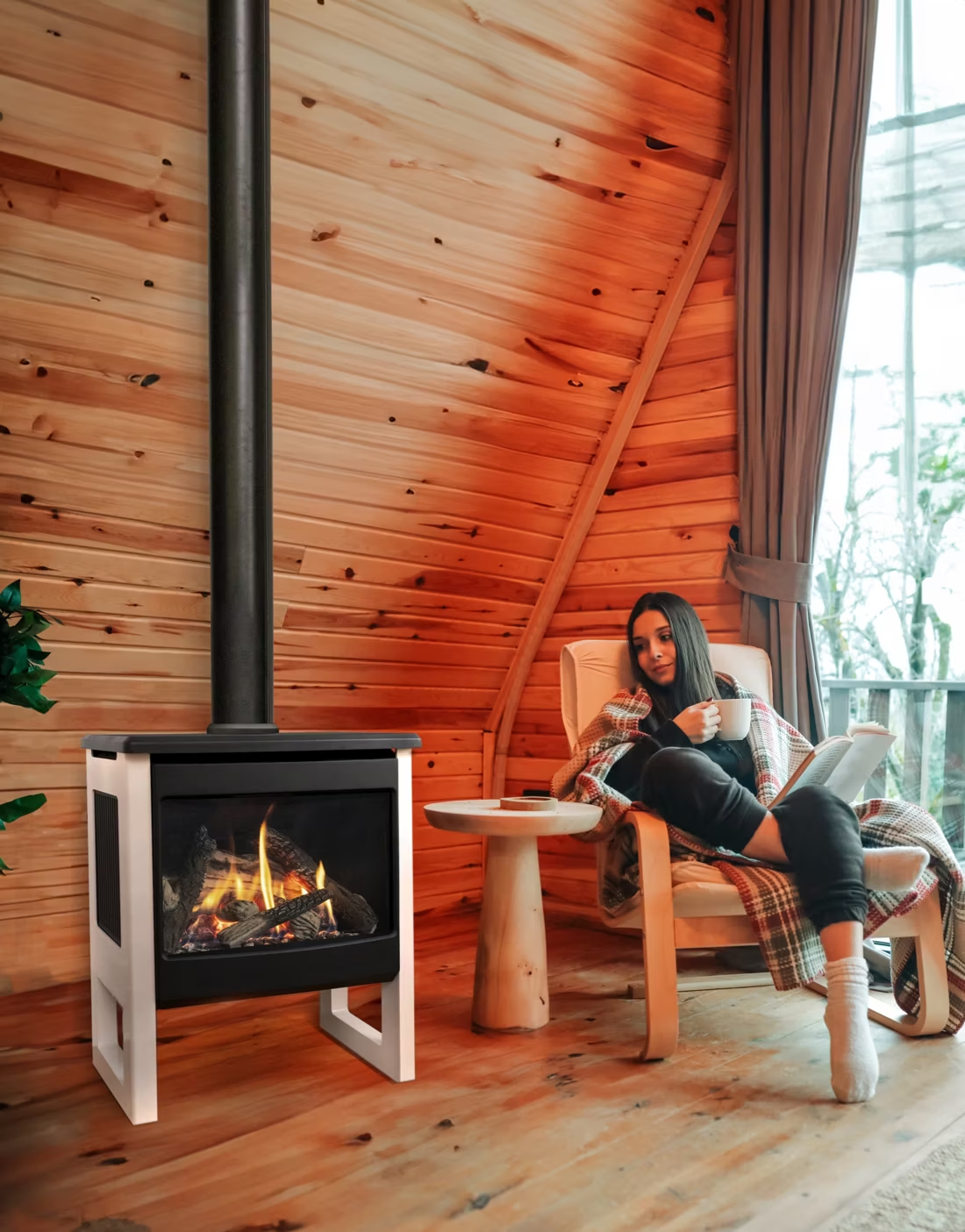
Wood heat has deep roots on the prairie too, cut from the lodgepole pine, ponderosa pine, Douglas fir, and larch stands in the surrounding national forest land, and wildfire smoke in late summer is a real seasonal concern for anyone burning or storing fuel outdoors. But for homeowners who want heat at the flip of a switch—especially in a main living room or a home where nobody wants to split and stack wood every fall—a propane fireplace, insert, or stove delivers clean, consistent warmth with none of the daily tending. A local dealer will size the unit, size the tank, and run the line correctly the first time.
Three steps. No salesperson until you're ready.
Tell us about your project
Your zip code, your situation, and the fuel you're leaning toward—or let the answers point you to one.
See what's actually available
The brands dealers within 100 miles genuinely carry—real options, never a catalog mirage.
Get your dealer & Project Guide
A trusted local dealer, plus the free Project Guide & Parts List that names every component of the job.
Frequently Asked Questions
How much does a gas fireplace installation cost in Lewis County?
Most propane fireplace and insert installations in a rural county like Lewis run somewhere between $3,500 and $9,000, depending on the unit, whether you're converting an existing masonry fireplace or building new, and whether a propane tank already sits on the property. Homes that already have a tank and regulator in place for a range or water heater are on the lower end. New tank installation, a longer buried line run out to the house, or venting through a masonry chase pushes costs toward the top of that range. Because there's no natural gas utility serving Lewis County, every quote here is built around propane from the start—ask your installer to confirm tank sizing based on your fireplace's BTU rating, not just a generic tank swap.
Is natural gas available anywhere in Lewis County?
No—Lewis County has no natural gas utility infrastructure, so "gas fireplace" here means propane in every case, whether you're in Nezperce, Craigmont, Winchester, or out on the prairie. This isn't a limitation so much as the local norm: propane tanks (usually 250 or 500 gallon, buried or above-ground) supply fireplaces, ranges, and water heaters throughout the county. Any gas fireplace model designed for natural gas can typically be converted to run on propane with a different orifice and regulator setup—your local dealer handles that conversion as part of a standard install, so model selection isn't limited by the fuel.
Can I convert my existing wood fireplace to gas?
Yes, and it's a common upgrade on the prairie for homeowners who still want a fireplace look but not the daily wood-hauling. A propane insert slides into your existing masonry firebox and vents through a stainless liner run up your current chimney, so you keep the mantel and surround you already have. Because Lewis County runs on propane rather than piped gas, the conversion also means confirming there's a tank on-site (or installing one) and running a line to the hearth—your installer will fold that into the quote rather than treating it as a separate project.
Will my gas fireplace work during a power outage?
Most direct-vent propane fireplaces will, which matters in a rural county where outages can last longer than they would in town. Units with IPI (intermittent pilot ignition) run on battery backup—typically AA batteries built into the unit—that kick in automatically when the power drops, so the fireplace still lights on demand. Valor units go a step further: the pilot's thermocouple generates its own electricity, so there are no batteries to remember at all. For a Camas Prairie winter storm that knocks out power to outlying farms for a day or more, that self-powering feature is worth asking about specifically when you're comparing units.
What's the difference between a gas fireplace, gas insert, and gas stove?
A gas fireplace is a fully framed-in unit built into a wall, typically chosen for new construction or a remodel. A gas insert is sized to slide into an existing masonry firebox, converting an old wood-burning fireplace into a sealed, efficient propane unit that vents through the existing chimney with a liner. A gas stove is freestanding, sitting on its own hearth pad rather than built into a wall—a good fit for a room without an existing fireplace opening, including many of the older farmhouses common around Nezperce and Craigmont. For most Lewis County homes with a fireplace already in place, an insert is the straightforward answer; homes without one usually do better with a stove or a new built-in unit.
Do I need a permit to install a propane fireplace in Lewis County?
Yes—new fireplace installations typically require a building permit through the Lewis County Building Department, and the propane line and tank work should be handled by a licensed installer familiar with local code. Most hearth dealers coordinate the permitting and the propane supplier's tank-set together, so you're not managing separate trades on a job that's really one project. Given the county's smaller population, it's worth confirming your specific installer's permit process directly, since timelines can vary more than in a larger jurisdiction with a dedicated permit desk.
What's the difference between vented and vent-free gas fireplaces?
Vented (direct-vent) propane fireplaces draw combustion air from outside and exhaust it back outside through a sealed pipe—they're the cleaner, code-compliant standard almost everywhere, including Lewis County. Vent-free units burn propane directly into the room air without external venting; they're legal in Idaho but come with strict room-sizing and ventilation requirements, and they release some combustion byproducts into the living space. For a well-sealed modern farmhouse or a tighter newer build on the prairie, that's a real indoor air quality tradeoff worth weighing. Direct-vent units are the more common and more broadly recommended choice for Lewis County homes, and a local dealer can walk through both options if you want to compare.
How often should my gas fireplace be serviced?
Plan on an annual inspection, ideally before the coldest stretch of winter sets in. A technician checks the burner, pilot assembly, venting, and gas connections, and cleans the glass and interior—a quick job compared to wood-stove chimney sweeping, but just as important for a unit that's going to run daily through a long, cold Camas Prairie winter. Because service providers can be spread thin across a county this size, it's worth booking your annual check in late summer rather than waiting until the first hard freeze, when everyone else is calling at once.
Gas vs. wood—which makes more sense for a Lewis County home?
Wood is genuinely standard here too—lodgepole pine, ponderosa pine, Douglas fir, and larch are all locally available, wood heat works without electricity, and it's the traditional choice on a lot of Camas Prairie properties with land and a woodlot. Propane wins on convenience: no splitting, hauling, or ash cleanup, instant on-off operation, and more consistent output for a main living space or a household that isn't home to tend a fire all day. Late-summer wildfire smoke is also a real consideration for anyone storing or handling wood outdoors for long stretches. Plenty of Lewis County homes run both—propane for daily convenience, wood as backup and for the times when a real fire is what you want.
Why is a fireplace insert so efficient?
An insert does two things: it seals the chimney completely, so you stop losing air you already paid to heat, and it radiates warmth into the room through the firebox and glass. Most add a heat-exchange fan that pulls cool room air underneath, wraps it around the hot firebox, and pushes it back out warm. Your home is more efficient before you've even lit the first fire.
What's the difference between an insert and a zero-clearance fireplace?
An insert is a fireplace that slides into a pre-existing wood-burning fireplace—if you don't have one, there's nothing to insert it into. A zero-clearance fireplace is built into a framed wall, which makes it the answer for remodels and new construction. Simple test: existing masonry fireplace means insert; blank or framed wall means zero-clearance.
Can a fireplace actually lower my heating bill?
Yes—by creating a comfort zone. A furnace heats every square foot of the house just to warm the one room you're in; a gas fireplace on low burns roughly a sixth of the gas a typical furnace does. Set the furnace around 55–60 degrees as a baseline, then heat the rooms your family actually uses. Families who heat this way commonly save $20–$60 a month.
How much should I budget for a fireplace?
For an average home—covering the fireplace, the vent pipe, and basic installation—a budget between $3,900 and $5,500 gives you a lot of options across wood, gas, and pellet. By the time you add finish work, gas line, and electrical, the average complete installation lands between $5,000 and $12,000 all-in. In a remodel or new build, a good rule is to put about 2.5% of the total project cost toward the fireplace.
Find your gas fireplace in Lewis County.
Tell us a bit about your home and we'll put together your free Project Guide & Parts List—the right propane fireplace, insert, or stove, the exact parts including the vent kit, and a trusted local dealer to install it.
Find Your Fireplace →