
Find the right heat for Lewis County's long, cold winters.
Wood, gas, pellet, and electric fireplace resources for Nezperce, Craigmont, Winchester, and the rest of Lewis County. Find the right unit and connect with a trusted local hearth retailer.
Every Project Starts From One of These Five Situations
Camas Prairie heating for a small, rural county.
Lewis County sits on the Camas Prairie in north-central Idaho, a sparsely populated stretch of rolling farmland and timbered draws between the Clearwater and Salmon River canyons. At roughly 2,500 residents spread across a few small towns, this is a place where heating decisions are practical, not trendy—a climate-5B winter with sustained cold snaps, and a landscape thick with lodgepole pine, ponderosa pine, douglas fir, and larch that's been feeding woodstoves here for generations. Summers bring wildfire smoke off the surrounding national forests, which shapes how residents think about outdoor burning and stove maintenance alike, even though it doesn't restrict winter wood heat.
What you'll find on this hub: hearth retailers, service technicians, and fuel suppliers with reach into Nezperce, Craigmont, Winchester, and the unincorporated pockets in between. Pick your fuel below to drill into specifics—local dealers, installation costs, recommended units, and the resources that fit a rural Camas Prairie property. Whether you're heating a farmhouse on the prairie or a place tucked near the Nez Perce forest boundary, this is the starting point.
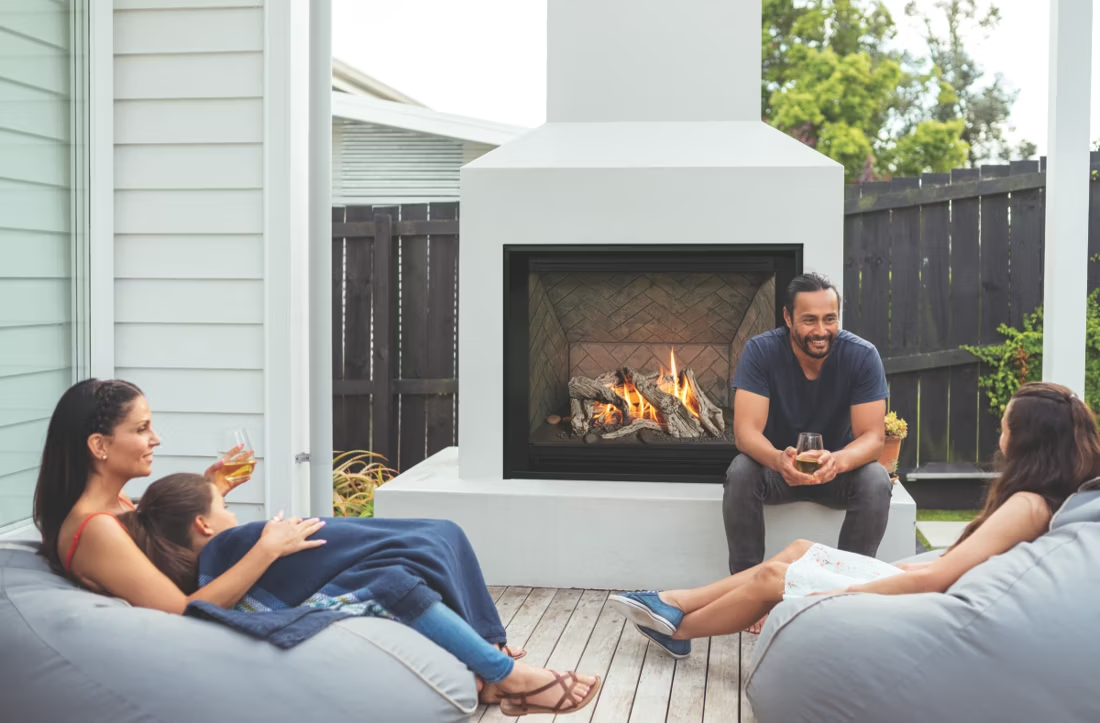
Four fuels. One honest answer for Lewis County.
Three steps. No salesperson until you're ready.
Tell us about your project
Your zip code, your situation, and the fuel you're leaning toward—or let the answers point you to one.
See what's actually available
The brands dealers within 100 miles genuinely carry—real options, never a catalog mirage.
Get your dealer & Project Guide
A trusted local dealer, plus the free Project Guide & Parts List that names every component of the job.
Frequently Asked Questions
Which fuel works best in Lewis County?
It depends on the property and how remote it is. Wood remains the practical default across most of Lewis County—lodgepole pine, ponderosa pine, douglas fir, and larch are all locally available, and a catalytic or non-cat EPA-certified stove holds heat through the kind of sustained cold that would stall a smaller unit, similar to what you'd plan for in Bozeman or Helena. Gas is workable where propane delivery reaches—no natural gas utility serves this rural county, so gas fireplaces here run on propane tanks, which adds a bit of upfront cost but gives you push-button convenience. Pellet is a solid middle option—Bear Mountain and Lignetics bags are stocked at feed and hardware stores along Highway 95, so fuel access isn't the barrier it can be in more remote counties. Electric works fine as a supplemental heater in a bedroom or office but isn't reliable as primary heat once temperatures drop hard in January. Most homes here end up with wood or pellet as the main heat source and propane or electric as backup.
Do I need a permit to install a fireplace in Lewis County?
Generally yes for anything beyond a plug-in electric unit. Lewis County issues building permits through the county planning and building office in Nezperce for new wood stoves, wood inserts, gas fireplaces, gas inserts, gas stoves, and pellet stoves. Wood-burning appliances need to meet EPA emissions certification, and propane gas connections should be done by a licensed gas fitter, with a separate gas permit if new line work is involved. Electric fireplaces usually skip the permit process unless you're doing a built-in installation with new wiring. Because the county building department has limited staff and covers a large rural area, it helps to call ahead—many local hearth retailers who install here handle the permit paperwork as part of the job, which saves a trip into Nezperce.
Does wildfire smoke affect wood-burning rules in Lewis County?
Not for winter heating, but it shapes the seasonal mindset. Lewis County sits close to the Nez Perce-Clearwater National Forest, and summer wildfire smoke is a regular fact of life here—it affects outdoor air quality and, some years, prompts advisories about outdoor burning of debris piles. It doesn't translate into winter wood stove curtailment days the way it might in a more populated air-quality nonattainment area. That said, many homeowners here use the wildfire season as a reminder to get their chimney swept and stove inspected before the heating season starts, since a well-maintained EPA-certified stove burns cleaner and is less likely to add to particulate load during any future smoke events.
Can one local hearth retailer handle all four fuel types in a county this small?
Not always—because Lewis County's population is under 3,000, you won't find a hearth showroom sitting in Nezperce or Craigmont. Most homeowners here end up working with a multi-fuel retailer based in Lewiston, about 30-40 minutes away, that carries wood, gas, pellet, and electric and is willing to travel out for installation. A smaller number of feed stores and hardware stores in Craigmont and Nezperce stock pellet fuel and basic stove parts but aren't full-service retailers. If you're comparing fuel types side by side, plan on a trip into Lewiston to see working displays—it's worth the drive before committing to a unit that has to perform through a full Camas Prairie winter.
How does service and installation work for such a rural county?
Technicians and installers serving Lewis County are almost all based out of Lewiston or Grangeville and run route-based service days out to Nezperce, Craigmont, and Winchester rather than keeping a local office. Expect a modest trip charge for service calls, often built into the invoice rather than itemized separately. Scheduling annual chimney sweeps or pellet stove cleanings in late summer—before the smoke season winds down and before the first cold snap hits—tends to get you on the calendar faster than waiting for a mid-winter emergency call. If you're on a remote farm road, mentioning that up front when you book helps the technician plan their route and arrival window.
What's the typical cost range for fireplace installation across all fuel types in Lewis County?
Costs run a bit higher here than in more urban parts of Idaho because installers are traveling in from Lewiston or Grangeville. Wood stove or insert installation: roughly $4,500-$9,500 for a standard install, more if new chimney or hearth work is needed for an older farmhouse. Gas fireplace, insert, or stove: $5,000-$12,000, with propane tank setup and line work adding to the lower end of that range if there's no existing propane service. Pellet stove or insert: $4,500-$8,000 for a typical installation. Electric fireplace: $200-$3,000 for the unit itself, plus $400-$1,200 in labor for anything beyond a simple plug-in unit. For a more precise number, see the county + fuel pages above, where cost detail is tied to the specific retailers serving this area.
Does a fireplace add value to my home?
On average, a fireplace adds back to the home about the same amount you spent installing it. Add the monthly savings from heating the rooms you actually use instead of the whole house—often hundreds of dollars a year—and the value case is strong before you even count what a fire does for how your family uses the room.
How much should I budget for a fireplace?
For an average home—covering the fireplace, the vent pipe, and basic installation—a budget between $3,900 and $5,500 gives you a lot of options across wood, gas, and pellet. By the time you add finish work, gas line, and electrical, the average complete installation lands between $5,000 and $12,000 all-in. In a remodel or new build, a good rule is to put about 2.5% of the total project cost toward the fireplace.
I know I want a fireplace—where do I actually start?
Do two things today: snap a photo of the wall or fireplace you want to transform, and take a tape measure to the space—width, height, depth. Those two artifacts answer most of a hearth professional's first questions. Then settle fuel (wood, gas, pellet, or electric) and set a realistic budget: $3,900–$5,500 covers fireplace, vent, and basic install for most homes.
Can a fireplace actually lower my heating bill?
Yes—by creating a comfort zone. A furnace heats every square foot of the house just to warm the one room you're in; a gas fireplace on low burns roughly a sixth of the gas a typical furnace does. Set the furnace around 55–60 degrees as a baseline, then heat the rooms your family actually uses. Families who heat this way commonly save $20–$60 a month.
Stove and Fireplace Dealers in Lewis County
Listings include WhyFire partner dealers, dealers we have verified as authorized for the brands we recommend, and established local businesses that carry hearth products. Every listing shows which one it is. The ones marked Preferred run on WhyFire's software, so they can show you real pricing and book your appointment right here. No manufacturer pays for placement. How we verify dealers →
Best Built Builders Supply
Best Built Builders Supply
Find your fireplace project in Lewis County.
Pick your fuel below and get matched with a trusted local dealer—including a free Project Guide & Parts List with the exact parts, vent kit, and recommended dealer for your Lewis County home.
Find Your Fireplace →