
Bring reliable gas heat to your Gooding County home.
From the town of Gooding out to Wendell, Hagerman, and Bliss, winter lows average 22°F across the Snake River Plain. A gas fireplace or insert delivers instant, thermostat-controlled heat—and we'll match you with a local dealer who can size the unit and vent it correctly for your home.
Every Project Starts From One of These Five Situations
Clean, dependable heat for high desert winters.
Gooding County sits on the Snake River Plain at roughly 3,700 feet, a stretch of southern Idaho farmland and canyon country running from the county seat of Gooding through Wendell, Hagerman, and Bliss. With 5,883 heating degree days and a Climate Zone 5B designation, winters here run comparably cold to places like Helena, Montana—long stretches of overnight lows in the 20s and below, with wind off the open plain that makes drafty older farmhouses feel colder than the thermometer suggests. Population here is small, just over 8,000 countywide, but the heating needs are the same as any cold-climate region: reliable, consistent warmth that doesn't depend on tending a fire by hand.
Natural gas service through Intermountain Gas Company reaches the town of Gooding and portions of Wendell, making direct-vent gas fireplaces and inserts a straightforward retrofit for homes already on the line. Outside those service areas—including much of the county's farmland around Hagerman and Bliss—propane is the standard fuel, either from an existing tank or a new tank set by a regional supplier. Either way, a gas fireplace gives you heat at the flip of a switch, works well as zone heating alongside a farmhouse's forced-air furnace, and—with the right ignition system—can keep running through a winter power outage.
Three steps. No salesperson until you're ready.
Tell us about your project
Your zip code, your situation, and the fuel you're leaning toward—or let the answers point you to one.
See what's actually available
The brands dealers within 100 miles genuinely carry—real options, never a catalog mirage.
Get your dealer & Project Guide
A trusted local dealer, plus the free Project Guide & Parts List that names every component of the job.
Frequently Asked Questions
How much does a gas fireplace installation cost in Gooding County?
Most gas fireplace and insert installations in Gooding County run roughly $3,500 to $9,500, depending on the unit, whether you're on natural gas or propane, and how much venting or gas line work is involved. A direct-vent insert going into an existing masonry fireplace on a home already served by Intermountain Gas sits toward the lower end. New construction, a fresh propane tank set, or a long gas line run from the meter to a new location in the house pushes costs toward the higher end. A local dealer will give you a firm number after seeing the space.
Can I convert my existing wood fireplace to gas?
Yes—it's a common project for older farmhouses around Gooding, Wendell, and Hagerman that have a masonry fireplace but want to stop hauling wood. A gas insert typically slides into the existing firebox and vents through a stainless liner run up the same chimney, which keeps costs down since you're not adding new venting from scratch. Whether you run natural gas or propane changes the line work involved, but the chimney itself usually does the job it was already doing.
Do I need natural gas, or can I use propane?
Either works, and which one makes sense mostly comes down to where in the county you live. Intermountain Gas Company serves the town of Gooding and parts of Wendell, so homes there can often tie a new fireplace into existing natural gas service. Farms and homes around Hagerman, Bliss, and the more rural stretches of the county are typically on propane, supplied by a tank on the property. Nearly every gas fireplace on the market can be set up for either fuel—your installer configures the orifice and regulator to match.
Will my gas fireplace work during a power outage?
Most will, if you pick the right ignition system. Units with intermittent pilot ignition (IPI) run on a battery backup that kicks in automatically when the power drops, so the fireplace still lights on demand. Valor's gas fireplaces go a step further—the pilot's thermocouple generates its own electricity, so there's no battery to remember at all. For a county where winter storms on the open plain can knock out power for a stretch, that's worth asking your local dealer about when you're comparing models.
What's the difference between a gas fireplace, gas insert, and gas stove?
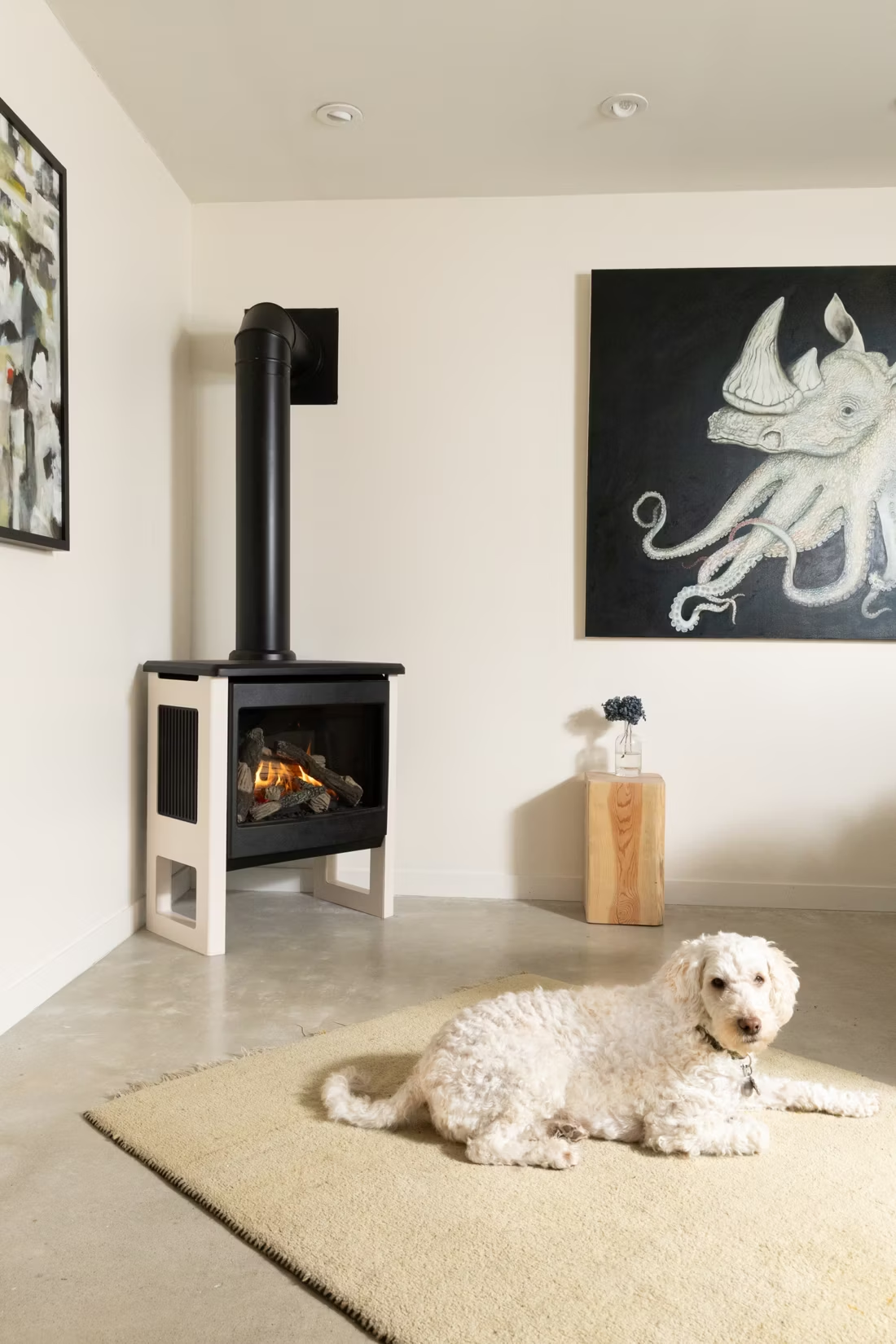
A gas fireplace is a fully built-in unit, framed into a wall—the right choice for new construction or a remodel without an existing fireplace. A gas insert is built to drop into an existing masonry firebox, turning a drafty open fireplace into a sealed, efficient heat source using the chimney you already have. A gas stove is a freestanding unit that sits on a hearth pad like a wood stove but runs on gas—a good option when you want a stove-style look without an existing fireplace to convert. For most existing Gooding County farmhouses, an insert is the simplest upgrade.
Do I need a permit to install a gas fireplace in Gooding County?
Yes—new gas fireplace installations require a building permit, and any new gas line work requires a licensed gas-fitter and its own permit. Most local dealers handle the permitting as part of the installation, coordinating the building permit through the county and the gas line work together so you're not managing separate trades yourself. If you're on propane, your propane supplier typically handles the tank set and connection permitting as well.
What's the difference between vented and vent-free gas fireplaces?
Vented (direct-vent) gas fireplaces pull combustion air from outside and exhaust it back outside through sealed venting—they're the most common choice and produce real, substantial heat. Vent-free units burn fuel directly into the room without exterior venting; they're legal in Idaho but come with strict room-sizing rules and oxygen depletion sensors, since combustion byproducts release into the living space. For Gooding County homes, direct-vent units are the standard recommendation—they heat well and don't require any compromise on indoor air quality, which matters in a region that already deals with wildfire smoke some summers.
How often should my gas fireplace be serviced?
Plan on an annual inspection, ideally before the first cold snap in the fall. A technician checks the burner, pilot assembly, venting, and gas connections, and cleans the glass and interior. It's a quicker job than sweeping a wood chimney but just as important for safe operation—expect to pay somewhere in the $150 to $250 range for a standard annual visit from a local service provider.
Gas vs. wood—which is right for my home?
Wood is still a real option in Gooding County—lodgepole pine, ponderosa pine, Douglas fir, and larch are all cut locally, with permits available through the Sawtooth National Forest and BLM's Twin Falls District for roughly $5 to $20 per cord depending on the unit. Wood also keeps working without electricity, which matters during a plains windstorm outage. Gas trades that self-sufficiency for convenience: no hauling, no ash, and heat that's on the moment you flip a switch or set a thermostat. Many households here end up with both—gas for the main living space, wood as backup or for a shop or cabin elsewhere on the property.
Why is my open fireplace making my house colder?
Open fireplaces suck—literally. As the fire burns, it consumes air your furnace already paid to heat and pulls it out through the chimney, so the house is actually colder after the fire goes out than before you lit it. An insert fixes this: it seals the chimney, puts fixed glass across the front, and turns that hole in your house into a real heat source.
Can I put a TV above my fireplace?
Yes—with an asterisk. Fireplaces are hot and TVs don't like heat. Either put a mantel between them to deflect rising warmth, or choose a fireplace with heat-management technology that creates a cool zone on the wall above—the wall stays around 125 degrees, barely warm, while the room still gets full heat. If you like clean lines and don't want a mantel, heat management is the answer.
Can a fireplace actually lower my heating bill?
Yes—by creating a comfort zone. A furnace heats every square foot of the house just to warm the one room you're in; a gas fireplace on low burns roughly a sixth of the gas a typical furnace does. Set the furnace around 55–60 degrees as a baseline, then heat the rooms your family actually uses. Families who heat this way commonly save $20–$60 a month.
Can I install a fireplace myself?
If you're putting a fire in your house on purpose, it's best to work with an expert. Unless you're genuinely experienced in framing, gas line, vent pipe, and the national code on clearances to combustibles, have a professional do it—and ideally the same company that sells you the fireplace, so warranty, service, and liability all live under one roof.
Get your Gooding County gas fireplace project moving.
Tell us about your home and whether you're on natural gas or propane, and we'll match you with a trusted local dealer plus a free Project Guide & Parts List—the exact parts, vent kit, and recommended dealer for your Gooding County gas project.
Find Your Fireplace →