
Clean, controllable heat for Snake River Plain winters.
With 5,883 heating degree days and winter lows averaging 22°F, Gooding County homes need reliable zone heat without a gas line or a chimney. I'll match you with a trusted local dealer who knows which electric fireplace or insert actually pulls its weight on an Idaho Power circuit.
Every Project Starts From One of These Five Situations
A county wired by Idaho Power, not natural gas mains.
Gooding County covers roughly 720 square miles of the Snake River Plain in south-central Idaho, home to about 8,052 people spread across Gooding, Wendell, Bliss, and the Hagerman Valley. Winters here run long—5,883 heating degree days puts the county in cold-climate territory comparable to Buffalo, NY—and with an average winter low near 22°F, most homes need a real secondary heat source in bedrooms, basements, and additions that the central furnace never quite reaches. Electricity, delivered by Idaho Power, reaches nearly every household in the county, including farms and ranch properties well outside Gooding city limits where a new gas line simply isn't practical or cost-effective to run.
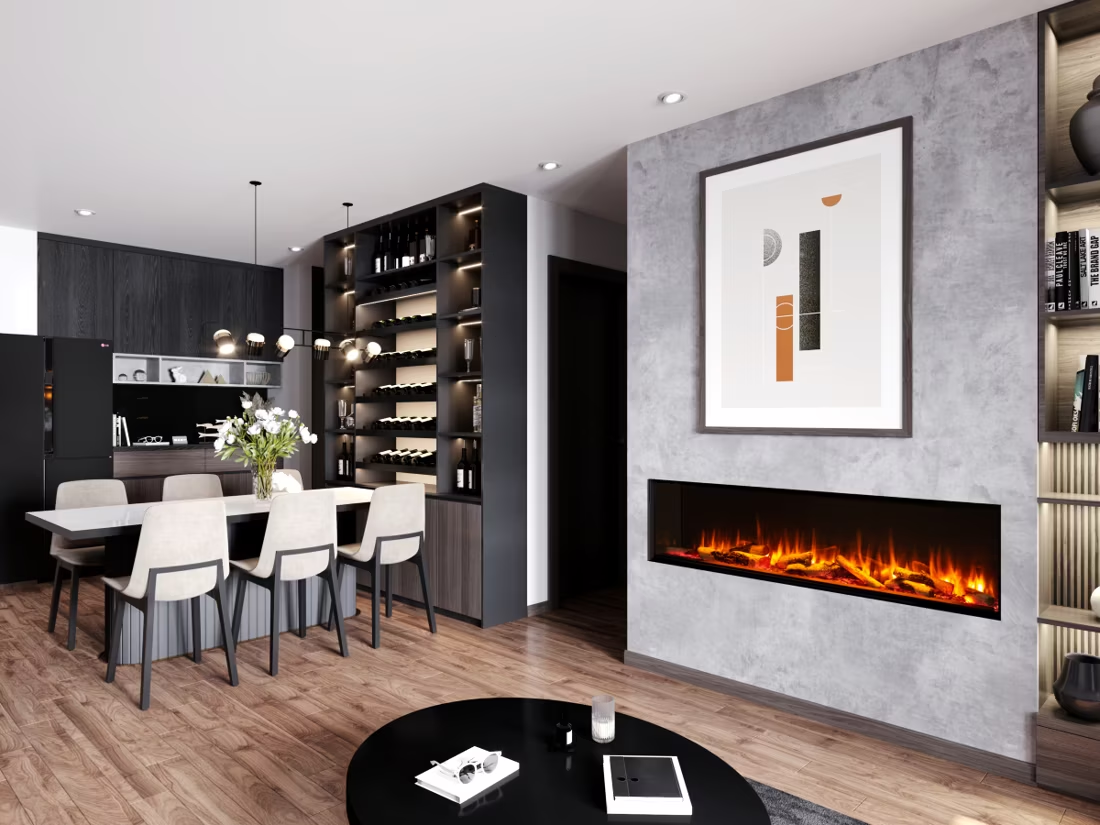
That reach is the real case for electric heat here: an electric insert or wall-mount unit plugs into existing wiring (or a dedicated 240V circuit for larger built-ins) with no venting, no gas line, and no combustion byproducts to manage. It's also the cleanest option during the region's summer wildfire smoke season, when outdoor air quality on the Snake River Plain can turn hazy for days—an electric unit adds zero particulates indoors, unlike a wood stove drawing on Sawtooth National Forest or BLM Twin Falls District firewood. For most Gooding County households, electric heat isn't the sole answer to a 5,883-HDD winter, but it's an honest, low-maintenance way to add supplemental warmth to the rooms that need it most.
Three steps. No salesperson until you're ready.
Tell us about your project
Your zip code, your situation, and the fuel you're leaning toward—or let the answers point you to one.
See what's actually available
The brands dealers within 100 miles genuinely carry—real options, never a catalog mirage.
Get your dealer & Project Guide
A trusted local dealer, plus the free Project Guide & Parts List that names every component of the job.
Frequently Asked Questions
How much does an electric fireplace installation cost in Gooding County?
Most projects in Gooding County run somewhere between $300 and $2,000. A plug-in electric insert or freestanding stove that drops into an existing fireplace opening or sits against a wall sits at the low end—no electrician required beyond a standard outlet. A built-in wall unit or a larger unit that needs a dedicated 240V circuit run by a licensed electrician, common in newer construction around Wendell and Gooding, lands toward the top of that range. Either way, it's a fraction of what a wood or gas install costs locally, since there's no chimney, gas line, or venting to plan around.
Do I need a permit to install an electric fireplace in Gooding County?
A standard plug-in electric fireplace or insert typically doesn't require a permit—it's treated like any other appliance on a household circuit. A built-in unit that needs new wiring or a dedicated circuit, though, generally needs an electrical permit reviewed through the Gooding County Building Department, and the wiring itself should be done by a licensed electrician rather than a DIY job. A local dealer handling a built-in installation will usually pull that permit as part of the project so you don't have to track it down separately.
Will an electric fireplace actually heat my home through a Gooding County winter?
Realistically, an electric fireplace is a supplemental heater, not a whole-house solution—and I'd rather tell you that upfront than let you find out the hard way. With 5,883 heating degree days and winter lows averaging 22°F, similar to what Buffalo, NY sees over a full season, most electric units are sized to comfortably heat a single room, roughly 400 to 1,000 square feet depending on insulation and ceiling height. They're excellent for a bonus room, a converted garage, or a bedroom that runs cold, but they're not built to replace a furnace during a hard Snake River Plain cold snap.
What's the difference between an electric insert, electric stove, and wall-mount unit?
An electric insert slides into an existing wood or gas fireplace opening, giving you the look of a real fire with a heater built in—a common upgrade for older Gooding and Hagerman homes with an unused masonry fireplace. A freestanding electric stove sits on the floor like a wood stove, useful in a room with no existing fireplace. A wall-mount or built-in unit gets recessed or hung flush with the wall, popular in newer construction and additions where a homeowner wants a modern look without any fuel storage or venting at all. A local dealer can walk your space and tell you which format actually fits.
How much does it cost to run an electric fireplace on an Idaho Power bill?
Most electric fireplace heaters draw around 1,500 watts on the heat setting, which works out to roughly 15 to 20 cents an hour at typical Idaho Power residential rates—call it $1 to $2 for a four-hour evening of use. Running one as supplemental heat in a single room for a few hours a day through the winter adds up to a modest monthly bump, well below what it costs to heat that same space with a whole-house furnace or an electric baseboard system running longer hours.
Electric vs. wood—which makes more sense for a Gooding County home?
Wood, cut from lodgepole pine, ponderosa pine, Douglas fir, or larch under a Sawtooth National Forest or BLM Twin Falls District personal-use permit ($5 to $20 per cord), gives you heat that keeps working during a power outage—a real consideration on rural lines outside Gooding and Bliss. Electric heat, on the other hand, needs the grid to run, but it produces zero smoke, which matters during the county's summer wildfire smoke season and any time you'd rather not manage ash, creosote, or a chimney. For a primary heat source on a farm or ranch property, wood still has an edge; for clean, low-maintenance supplemental heat in a specific room, electric is hard to beat.
Electric vs. gas—which is right for my home?
Gas fireplaces put out more heat and can serve as a legitimate secondary heat source for a larger living area, but they require a gas line, venting, and a higher upfront install cost. Electric units skip all of that—no gas line to run, no combustion venting, no chimney—which makes them the simpler, cheaper choice for homes on the edges of Gooding County where extending gas service isn't practical, or for anyone who just wants a fast, low-cost heat and ambiance upgrade in one room rather than a full remodel.
Does wildfire smoke affect which fireplace fuel makes sense here?
It's a real factor. Gooding County, like much of the Snake River Plain, sees periods of wildfire smoke drifting in during summer and early fall, which can degrade outdoor air quality for days at a stretch. An electric fireplace or insert adds nothing to indoor air during those stretches—no particulates, no need to manage a flue damper—which is one reason some Gooding County homeowners lean electric for a den or bonus room even when they also run a wood stove elsewhere in the house.
What size electric fireplace or heater do I need for my room?
Size the unit to the room, not the house. A 1,500-watt insert or stove comfortably heats a well-insulated 400 to 600 square foot room; a larger or drafty space, common in some of Gooding County's older farmhouses with single-pane windows, may need a higher-output unit or a second heater to feel the difference. Given the county's 5,883 heating degree days, don't expect one electric unit to carry a whole open floor plan—a local dealer can look at your square footage and insulation and recommend a wattage that will actually keep that specific room comfortable.
Do electric fireplaces actually produce heat?
Yes—most put out around 4,800–5,000 BTUs from a standard outlet, which comfortably warms a bedroom, office, or den as a comfort-zone heater. What they won't do is carry a whole house the way wood, gas, or pellet can. Think of electric as ambiance-first with honest supplemental heat: flames on with no heat in July, flames plus warmth in January.
Can I put a TV above my fireplace?
Yes—with an asterisk. Fireplaces are hot and TVs don't like heat. Either put a mantel between them to deflect rising warmth, or choose a fireplace with heat-management technology that creates a cool zone on the wall above—the wall stays around 125 degrees, barely warm, while the room still gets full heat. If you like clean lines and don't want a mantel, heat management is the answer.
What is an in-home preview and do I need one?
It's a visit where a hearth professional measures your space, confirms the model you picked actually works in your home, and walks the specs—framing, gas line, venting, finish work—before anything is ordered. Some details you just can't know until you see the house. Never make a down payment without one; it's the single most-skipped step that burns buyers.
How much should I budget for a fireplace?
For an average home—covering the fireplace, the vent pipe, and basic installation—a budget between $3,900 and $5,500 gives you a lot of options across wood, gas, and pellet. By the time you add finish work, gas line, and electrical, the average complete installation lands between $5,000 and $12,000 all-in. In a remodel or new build, a good rule is to put about 2.5% of the total project cost toward the fireplace.
Get your free Project Guide & Parts List for an electric fireplace in Gooding County.
Tell me about your home and the room you're trying to heat, and I'll match you with a trusted local Gooding County dealer and send over a free Project Guide & Parts List—the exact unit, any electrical work needed, and a recommended installer for your electric fireplace project.
Find Your Fireplace →