
Steady pellet heat for Clearwater County's mill towns and back roads.
Clean, steady heat for Orofino, Pierce, Weippe, and Elk River—communities built on Clearwater County's timber, at the edge of the Nez Perce-Clearwater National Forests. Find the right pellet stove or insert, and connect with a trusted local dealer who can size and install it correctly.
Every Project Starts From One of These Five Situations
Clean-burning heat for timber country.
Clearwater County stretches across nearly 2,500 square miles of forested mountains along the Clearwater River in north-central Idaho, most of it within the Nez Perce-Clearwater National Forests. With a population just over 4,000 spread between Orofino, Pierce, Weippe, and Elk River, this is timber country first—a place where logging trucks share the road with elk hunters and the local economy still runs on lodgepole pine, ponderosa pine, Douglas fir, and larch. Winters here average 5,459 heating degree days with lows around 28°F in the valley towns, though backcountry cabins near Pierce and Elk River see harder winters at elevation. Summers and early falls bring their own challenge: wildfire smoke settles into the river valleys and hangs there for weeks, which has made a lot of households rethink how they heat and what they burn.
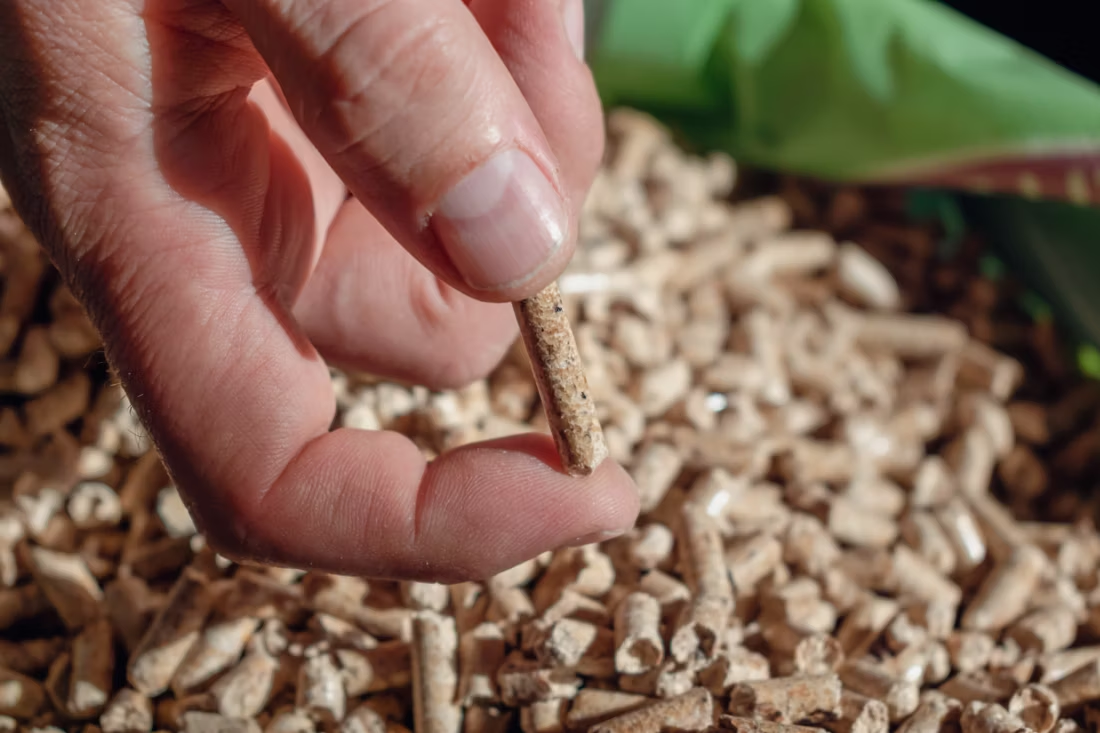
Pellet stoves fit that reality well. They burn wood pellets—often milled from the same lodgepole pine and Douglas fir that come off local timber operations—at a fraction of the particulate output of an open wood fire, which matters in a county already dealing with smoke season most years. Regional brands like Bear Mountain, Lignetics, and Pacific Pellet supply much of the Inland Northwest, so pellets aren't hard to find even this far up the Clearwater drainage. Clearwater County has no piped natural gas, so the real comparison for most homeowners here is pellet versus wood versus propane—and pellet stoves split the difference: cleaner and more hands-off than cordwood, without the tank contract and price swings of propane. The one tradeoff worth planning for is power: pellet stoves need electricity to run the auger and blower, and rural lines around Pierce, Weippe, and Elk River can go down in a winter storm, so a battery backup or generator plan is worth discussing with your installer.
Three steps. No salesperson until you're ready.
Tell us about your project
Your zip code, your situation, and the fuel you're leaning toward—or let the answers point you to one.
See what's actually available
The brands dealers within 100 miles genuinely carry—real options, never a catalog mirage.
Get your dealer & Project Guide
A trusted local dealer, plus the free Project Guide & Parts List that names every component of the job.
Frequently Asked Questions
How much does a pellet stove installation cost in Clearwater County?
A pellet stove installation in Clearwater County typically runs $3,000 to $6,500, depending on the unit, whether you're venting through an existing wall or running new venting, and whether a dedicated electrical circuit is needed. Homes converting an old wood-burning fireplace to a pellet insert tend to land on the lower end since the existing chimney or opening does most of the work; freestanding stoves in new locations cost more once venting and hearth pad requirements are factored in. Because the county is rural, expect a modest travel charge added to installs out toward Pierce, Weippe, or Elk River.
What size pellet stove do I need for my home?
Sizing depends on square footage, ceiling height, and how drafty the home is—common in older timber-town housing stock around Orofino and Pierce. As a general guide, stoves rated for 1,000 to 1,500 square feet handle a single large room or a small, well-insulated home, while units in the 2,000+ square foot range are built for whole-home heating in a county averaging 5,459 heating degree days. Homes at elevation near Elk River or in the backcountry around Pierce typically need to size up compared to valley homes in Orofino at the same square footage, since they run colder for longer. A local dealer can size your space properly during an in-home visit—oversizing leads to short, inefficient burn cycles, and undersizing means the auger runs constantly without keeping up.
Where can I find certified pellet stove installers near me?
Look for installers with NFI (National Fireplace Institute) pellet certification, which covers proper venting, clearances, and electrical hookup for pellet appliances specifically. Given how spread out Clearwater County is—Orofino, Pierce, Weippe, and Elk River are each a real drive apart—most local dealers cover the whole county but may add a travel fee for the more remote communities. Working with the dealer who sold you the stove usually simplifies warranty coverage, since pellet stoves have more moving parts (auger motor, blower, igniter) than a simple wood stove and benefit from an installer familiar with that specific brand.
What's the difference between a pellet stove and a pellet insert?
A pellet stove is a freestanding unit that vents through a wall or existing chimney and can go almost anywhere in a room with the right clearances. A pellet insert is built to slide into an existing masonry fireplace opening, using the existing chimney chase—with a proper liner—as part of the vent path. For Clearwater County's older homes, plenty of which have an original wood-burning fireplace from the mill-town building boom, an insert is often the simpler retrofit. Homes without an existing fireplace, or newer construction, are usually better suited to a freestanding stove.
Do I need a permit to install a pellet stove in Clearwater County?
Yes—Clearwater County requires a building permit for a new pellet stove or insert installation, since it involves venting through an exterior wall or existing chimney and often a dedicated electrical circuit. Most local dealers handle the permit paperwork as part of the installation, so you're not the one filing it. Unlike wood stoves in some Idaho counties, pellet appliances generally aren't subject to burn curtailment restrictions, which is one more reason they've caught on in a county that already deals with wildfire smoke advisories most summers.
What's the best pellet stove for Clearwater County's climate?
With winter lows averaging around 28°F in the valley towns and colder swings at elevation near Pierce and Elk River, a mid-to-large pellet stove with a hopper capacity of 40+ pounds is a practical choice—it means fewer refills during the coldest stretches and longer unattended burn times overnight. Bear Mountain, Lignetics, and Pacific Pellet all supply this part of the Inland Northwest reliably, so fuel availability isn't a concern with most major brands. Ask your local dealer about auto-ignition models if you want the stove to relight itself after an outage, and about battery backup options given the rural power lines running out toward the smaller communities.
How often should my pellet stove be serviced?
Plan on a full cleaning and inspection once a year, ideally before burning season starts in the fall—the burn pot, exhaust vent, and hopper all need attention, and the igniter and auger motor should be checked for wear. Homes running the stove as a primary heat source through a full Clearwater County winter may need a mid-season burn pot cleaning if ash buildup slows the burn. This is lighter maintenance than a wood-burning chimney sweep, but skipping it is still the most common cause of poor performance and error codes.
Where can I buy wood pellets in Clearwater County?
Bear Mountain, Lignetics, and Pacific Pellet are the three brands most commonly stocked in this part of Idaho, typically running $260 to $320 per ton depending on the retailer and whether you buy by the pallet. Hardware stores in Orofino and feed and farm supply stores serving Pierce and Weippe often carry one or more of these brands seasonally, and some local hearth dealers sell pellets directly alongside stoves. Buying a full season's supply—usually 2 to 3 tons for a primary-heat home—before the fall rush is the common local strategy, since supply can tighten once the first cold snap hits the Inland Northwest.
Pellet stove vs. wood stove—which is right for me?
Wood is free or cheap if you're willing to cut it yourself—Forest Service permits through the Nez Perce-Clearwater National Forests run $5 to $20 per cord during the May-to-October cutting season, and lodgepole pine, ponderosa pine, Douglas fir, and larch are all common locally. Wood also keeps working without electricity, which matters when winter storms take down rural power lines. Pellet stoves trade that self-sufficiency for convenience and cleaner burning—no splitting, stacking, or hauling, less ash, and far less particulate output, which counts for something in a county already contending with wildfire smoke most summers. For households that want low-maintenance, consistent heat and don't mind an outage plan—a battery backup or generator—pellet is often the better fit. For those with access to timber and time to process it, wood remains the practical, self-reliant choice many Clearwater County households have used for generations.
What do I measure to size a fireplace insert?
Four numbers tell you what fits: the front width, the front height, the back width, and the overall depth of your existing fireplace opening. Grab a tape measure, jot those down, and snap a photo of the wall—those two things do more to move your project forward than anything else you can do today.
What's the difference between an insert and a zero-clearance fireplace?
An insert is a fireplace that slides into a pre-existing wood-burning fireplace—if you don't have one, there's nothing to insert it into. A zero-clearance fireplace is built into a framed wall, which makes it the answer for remodels and new construction. Simple test: existing masonry fireplace means insert; blank or framed wall means zero-clearance.
Does a fireplace add value to my home?
On average, a fireplace adds back to the home about the same amount you spent installing it. Add the monthly savings from heating the rooms you actually use instead of the whole house—often hundreds of dollars a year—and the value case is strong before you even count what a fire does for how your family uses the room.
Can a fireplace actually lower my heating bill?
Yes—by creating a comfort zone. A furnace heats every square foot of the house just to warm the one room you're in; a gas fireplace on low burns roughly a sixth of the gas a typical furnace does. Set the furnace around 55–60 degrees as a baseline, then heat the rooms your family actually uses. Families who heat this way commonly save $20–$60 a month.
Stove and Fireplace Dealers in Clearwater County
Pellet Brands Stocked Around Clearwater County
Manufacturers will point you to the nearest stocking dealer.
Find your pellet stove in Clearwater County.
Tell us about your home in Clearwater County and we'll match you with a trusted local dealer and put together your free Project Guide & Parts List—the pellet stove or insert, vent kit, and everything else it takes to get it installed right.
Find Your Fireplace →