
Steady, low-maintenance heat for Caribou County's long winters.
With winter lows averaging 10°F and 8,396 heating degree days a year, Caribou County—Soda Springs, Grace, Bancroft, and the ranches in between—needs heat that doesn't quit. A pellet stove loads once and runs on a thermostat for a day or more. We'll match you with a local dealer who can size and install one correctly.
Every Project Starts From One of These Five Situations
Consistent heat without the wood-cutting.
Caribou County sits high in southeastern Idaho—Soda Springs alone is near 5,700 feet—bordered by the Caribou-Targhee National Forest and within reach of the Bridger-Teton to the east. At 8,396 heating degree days, this county runs colder over the full winter than Duluth, Minnesota, and single-digit overnight lows are routine from November through February. The forest around the county is full of lodgepole pine, ponderosa pine, Douglas fir, and larch, and plenty of households still cut their own firewood through permits from Caribou-Targhee National Forest or the BLM Idaho Falls District. But for a lot of homes here—especially smaller households, rentals, or anyone who doesn't want to spend a fall stacking cords—a pellet stove delivers the same steady radiant heat with a lot less labor.
Pellet stoves burn compressed wood pellets from an automatic hopper, which means you load it every day or two rather than every few hours, and the burn is controlled by a thermostat instead of an open damper. Regional brands like Bear Mountain, Lignetics, and Pacific Pellet are the ones most local dealers stock and can order in bulk for winter. Because Caribou County also deals with wildfire smoke concerns through the dry months, pellet appliances burn noticeably cleaner than an open wood stove—a real consideration if air quality is already a summer and fall issue where you live. The tradeoff is that pellet stoves need electricity to run the auger and blower, which matters in a county with long rural power lines and occasional winter outages—something worth discussing with your local dealer if backup heat is a priority.
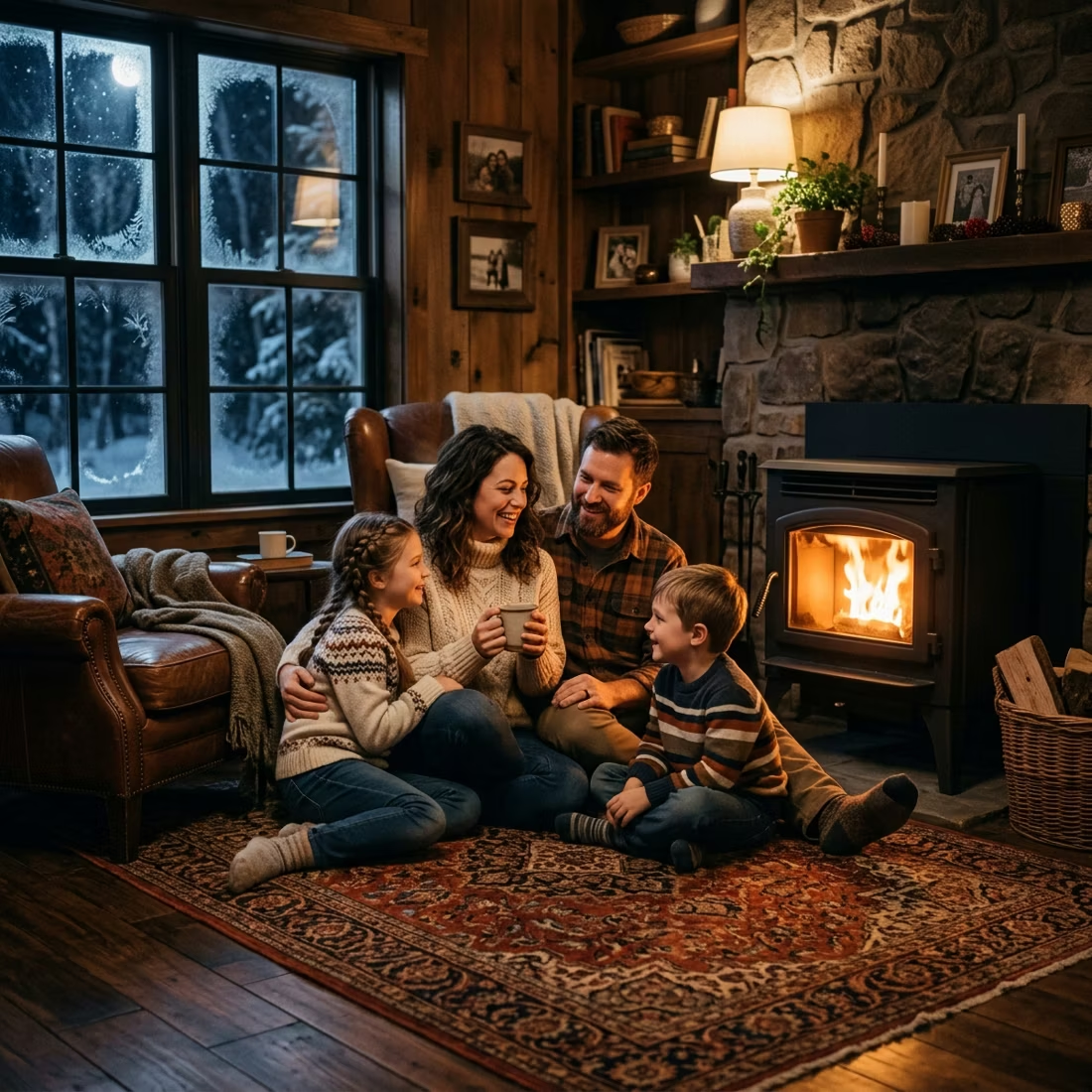
Three steps. No salesperson until you're ready.
Tell us about your project
Your zip code, your situation, and the fuel you're leaning toward—or let the answers point you to one.
See what's actually available
The brands dealers within 100 miles genuinely carry—real options, never a catalog mirage.
Get your dealer & Project Guide
A trusted local dealer, plus the free Project Guide & Parts List that names every component of the job.
Frequently Asked Questions
How much does a pellet stove installation cost in Caribou County?
Most pellet stove installations run in the $3,000 to $6,500 range, depending on whether you're installing a freestanding stove or a pellet insert into an existing fireplace, how much venting work is needed, and whether an electrical outlet needs to be added near the unit. Freestanding units on a simple hearth pad with straightforward horizontal venting through an exterior wall sit toward the lower end. Insert conversions into an existing masonry fireplace, or installs requiring new wiring for a rural outbuilding or older farmhouse, run higher. A local dealer serving Soda Springs and the surrounding county can give you a firm number after seeing your space.
What size pellet stove do I need for a Caribou County home?
Sizing depends on square footage, insulation, and how much of the heating load you want the pellet stove to carry. Given the county's 8,396 heating degree days and regular single-digit nights, most local homes are better served sizing up rather than down—a stove rated for the low end of a room's square footage will struggle to keep pace once temperatures drop hard in January. Homes at higher elevation, like those closer to the forest boundary outside Soda Springs, typically need a larger unit than the same square footage would require at lower elevation. A local dealer will walk through your floor plan and insulation before recommending a model—this is one area where a quick in-home visit beats guessing from a size chart online.
Where can I buy pellets in Caribou County?
Bear Mountain, Lignetics, and Pacific Pellet are the regional brands most commonly stocked by dealers serving southeastern Idaho, and most hearth retailers either carry pellets directly or can point you to a local supplier who restocks through the winter. Because Caribou County is rural, it's worth buying a season's supply—usually 2 to 3 tons for an average home—in the fall rather than trying to restock mid-winter when a storm closes roads. Dry, covered storage matters here too; pellets that absorb moisture won't feed properly through the auger.
Will my pellet stove work during a power outage?
Not without a backup power source. Pellet stoves rely on electricity to run the auger that feeds pellets and the blower that circulates heat, so a standard unit goes dark the moment the power does. For a rural county like Caribou, where winter storms can knock out lines for stretches, this is a real consideration. Some homeowners pair a pellet stove with a small battery backup or generator sized for the stove's low draw (usually under 5 amps), which keeps it running through most outages. If uninterrupted heat during outages is a priority for you, it's worth discussing a wood stove as a supplemental backup—your local dealer can talk through both options honestly.
Do I need a permit to install a pellet stove in Caribou County?
In most cases, yes—a building permit is typically required for a new pellet stove installation, whether you're inside Soda Springs city limits or in unincorporated parts of the county. If you're in town, check with the local building office first; outside city limits, the county building department handles it. Most installers who sell and install pellet stoves in the area will pull the permit as part of the job, so you're not left coordinating inspections yourself. Because pellet stoves vent horizontally through a wall rather than needing a full masonry chimney, the permit process is usually simpler and faster than a wood stove install.
What's the difference between a pellet stove and a wood stove?
A wood stove burns cordwood, needs no electricity, and works as backup heat during outages—but it requires cutting, hauling, and stacking wood, and the burn rate is manual. A pellet stove burns compressed pellets fed automatically from a hopper, runs on a thermostat, and needs far less daily attention, but it depends on electricity and a steady pellet supply. For Caribou County households near the national forest who already cut firewood through a Caribou-Targhee permit, wood often makes sense as a primary or backup heat source. For households who'd rather skip the wood-cutting altogether and want thermostat-controlled convenience, pellet is usually the better fit—as long as you have a plan for outages.
How often does a pellet stove need cleaning and maintenance?
Pellet stoves need more frequent light cleaning than wood stoves, but far less heavy chimney work. Most manufacturers recommend emptying the ash pan every few days to weekly depending on use, cleaning the burn pot every one to two weeks, and a full professional cleaning and inspection once a year—usually before the season starts in fall. Given how many hours a pellet stove runs during a Caribou County winter, staying on top of the burn pot specifically matters: a clogged burn pot is the most common reason a pellet stove starts running poorly or shutting off unexpectedly.
What's the best pellet stove for Caribou County's climate?
Look for a stove rated for the higher end of its stated square footage range, since 8,396 heating degree days and regular single-digit lows push most units harder than their rating suggests. Larger-hopper models that hold 60 to 80 pounds of pellets are worth considering for rural homes where you don't want to reload constantly during a multi-day cold stretch. Beyond that, ask your local dealer which models they see hold up best to daily winter use in this part of southeastern Idaho—dealers who service what they sell tend to know which units come back for repairs and which don't.
Pellet vs. wood—which is right for my Caribou County home?
Wood wins on independence from the grid and lower fuel cost if you're already cutting your own from a Caribou-Targhee National Forest or BLM Idaho Falls District permit—cutting season runs roughly May through October and permits typically cost $5 to $20 per cord. Pellet wins on convenience: no splitting, no stacking, thermostat control, and a cleaner burn that matters when wildfire smoke is already affecting regional air quality later in the year. Many households in the county end up with both—a pellet stove for daily convenience in the main living space, and a wood stove or older unit kept as backup heat for when the power goes out. A local dealer can walk through both with your specific home in mind.
What's the difference between an insert and a zero-clearance fireplace?
An insert is a fireplace that slides into a pre-existing wood-burning fireplace—if you don't have one, there's nothing to insert it into. A zero-clearance fireplace is built into a framed wall, which makes it the answer for remodels and new construction. Simple test: existing masonry fireplace means insert; blank or framed wall means zero-clearance.
Why is a fireplace insert so efficient?
An insert does two things: it seals the chimney completely, so you stop losing air you already paid to heat, and it radiates warmth into the room through the firebox and glass. Most add a heat-exchange fan that pulls cool room air underneath, wraps it around the hot firebox, and pushes it back out warm. Your home is more efficient before you've even lit the first fire.
Can I install a fireplace myself?
If you're putting a fire in your house on purpose, it's best to work with an expert. Unless you're genuinely experienced in framing, gas line, vent pipe, and the national code on clearances to combustibles, have a professional do it—and ideally the same company that sells you the fireplace, so warranty, service, and liability all live under one roof.
Can a fireplace actually lower my heating bill?
Yes—by creating a comfort zone. A furnace heats every square foot of the house just to warm the one room you're in; a gas fireplace on low burns roughly a sixth of the gas a typical furnace does. Set the furnace around 55–60 degrees as a baseline, then heat the rooms your family actually uses. Families who heat this way commonly save $20–$60 a month.
Stove and Fireplace Dealers in Caribou County
Pellet Brands Stocked Around Caribou County
Manufacturers will point you to the nearest stocking dealer.
Find your pellet stove in Caribou County.
Tell us about your home and we'll match you with a trusted local dealer serving Caribou County, plus a free Project Guide & Parts List—the exact parts, vent kit, and recommended dealer for your pellet stove project.
Find Your Fireplace →