
A fireplace built for Kekaha's climate, not against it.
With a winter low average of 62°F, Kekaha doesn't need heat from a fireplace—it needs ambiance. Find the right electric unit and connect with a trusted local dealer.
Every Project Starts From One of These Five Situations
Heat isn't the point here—ambiance is.
Kekaha sits at 14 feet above sea level on Kauai's sunny west side, in climate zone 1A, where the winter low averages 62°F and there's basically no heating season at all across the entire year. For comparison, a place like Duluth, MN has a long, brutal heating season that runs a huge chunk of the year. Wood stoves and pellet stoves—mainstays of cold-climate heating elsewhere—simply have no functional role here; the eucalyptus, ohia, and koa that grow on the island are used for canoes, furniture, and carving, not for cordwood.
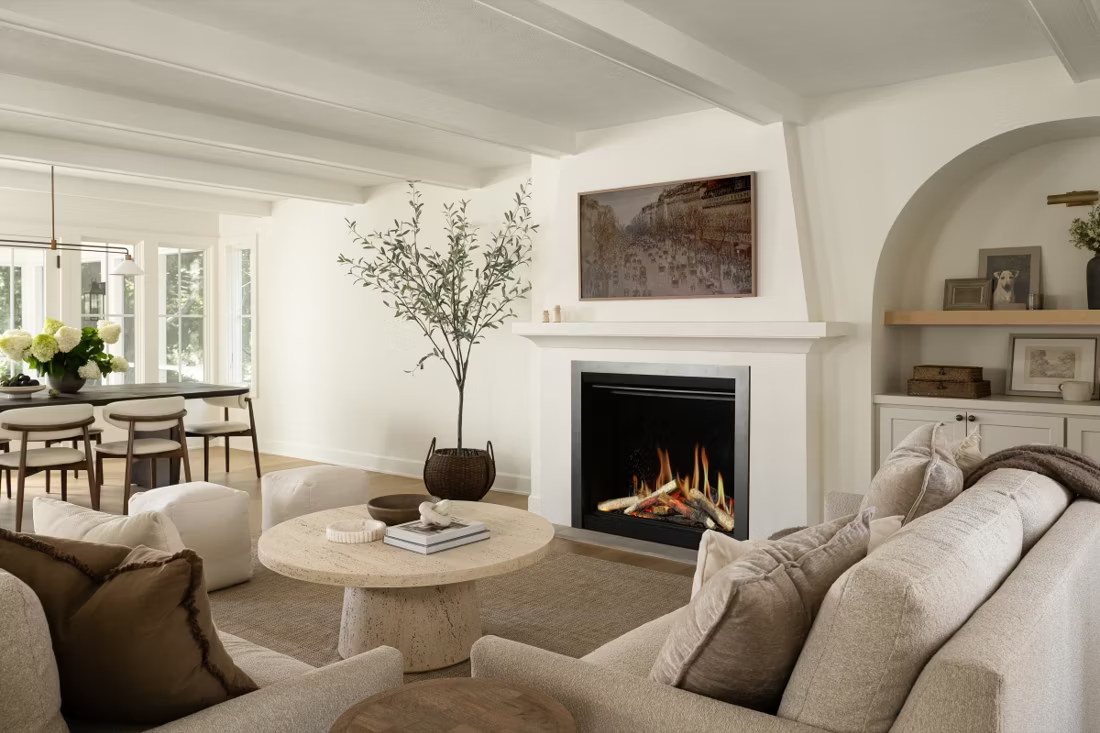
Electric fireplaces, though, still make sense in Kekaha—just not for their heat. Homeowners install them for the look of a real fire in a great room or primary suite, for the safety of a unit with no open flame or combustion byproducts, and because they require no chimney, no venting, and no gas line. Kauai Island Utility Cooperative serves the island's electric grid, and at roughly $0.41 per kWh—among the highest residential rates in the country because the co-op still relies heavily on imported fuel—most local buyers choose a flame-effect-only setting rather than running the heating element, which keeps the operating cost close to what a light fixture would draw.
Three steps. No salesperson until you're ready.
Tell us about your project
Your zip code, your situation, and the fuel you're leaning toward—or let the answers point you to one.
See what's actually available
The brands dealers within 100 miles genuinely carry—real options, never a catalog mirage.
Get your dealer & Project Guide
A trusted local dealer, plus the free Project Guide & Parts List that names every component of the job.
Frequently Asked Questions
Does an electric fireplace actually make sense if Kekaha barely gets cold?
It makes sense for a different reason than in most of the country. With basically no heating season at all and winter lows averaging 62°F, you're very unlikely to ever need the heating function. What an electric fireplace adds in Kekaha is the visual centerpiece of a room—a realistic flame effect, mantel or built-in styling, and the ambiance of a fire without smoke, soot, or a chimney. Most local installs are set to run flame-only nearly year-round, with the heater reserved for the rare stretch of trade-wind-driven cool evenings.
How much does it cost to install an electric fireplace in Kekaha?
Because electric units don't need venting or a chimney, installation is far simpler and cheaper than wood or gas. A plug-in freestanding or wall-mount unit can run as little as $500-$800 including mounting. A built-in electric fireplace set into cabinetry or a framed wall, which typically needs a licensed electrician to run a dedicated circuit, runs closer to $1,500-$2,500 on Kauai once labor and any custom surround work are factored in. Island freight can add modestly to material costs compared to mainland pricing, which your local dealer can walk you through.
Will running an electric fireplace noticeably raise my electric bill?
It depends almost entirely on whether you run the heater. Kauai Island Utility Cooperative's residential rate is around $0.41 per kWh, one of the highest in the nation, so running a 1,500-watt heating element for several hours a day would add up quickly. But most Kekaha homeowners run their unit on flame-effect only, which typically draws under 100 watts—closer to the cost of a few light bulbs than a space heater. If you do want supplemental warmth on an unusually cool night, using the heater sparingly rather than as a daily habit keeps the KIUC bill impact minimal.
Can I install a wood or pellet stove in Kekaha instead?
Technically yes, but it isn't a fit for the climate or the fuel supply, which is why it's rare here. There's no meaningful cordwood industry on this side of Kauai—eucalyptus, ohia, and koa are prized for lumber and craftwork, not stacked as firewood—and pellet fuel has to be shipped in from the mainland (Lignetics is the brand most likely to show up through island retailers, at a premium over West Coast pricing). With essentially zero heating demand, the appeal of either fuel type is almost entirely aesthetic, and most homeowners find an electric or gas unit gets them the same look without the logistics.
What's the difference between a heat-producing and flame-only electric fireplace?
Every modern electric fireplace has two independent controls: the flame effect and the heating element. You can run the flame display with the heater off, which is what most Kekaha buyers do most of the year, or turn the heater on for supplemental warmth during a cooler evening. Some models offer a variable-wattage heater (750W/1,500W) so you can dial in a small amount of warmth without pulling full power. When you're shopping, ask your local dealer to show you both settings—the flame quality varies more between brands than most people expect, and that's the feature you'll actually use daily here.
Do I need a permit or an electrician to install an electric fireplace?
A simple plug-in unit on a standard 15-amp outlet typically doesn't require a permit. A built-in unit wired to its own dedicated circuit, however, is electrical work that should go through a licensed electrician, and larger built-ins or any wall modification may need a permit through the County of Kauai's building process. Your local dealer can tell you which category your chosen unit falls into and coordinate the electrician if one is needed—it's a much smaller lift than the gas line or chimney work a combustion fireplace would require.
Are gas fireplaces a realistic alternative in Kekaha?
They're used here, but on propane rather than piped natural gas—Kauai has no natural gas utility infrastructure, so any gas fireplace runs off a propane tank filled by a local supplier. That adds a fuel-delivery step and tank placement to the project that an electric fireplace skips entirely. Gas does offer a more traditional flame and radiant heat if you genuinely want warmth on a cool evening, but given how rarely Kekaha needs that heat, many homeowners choose electric for the simplicity and skip the propane logistics altogether.
Does an electric fireplace need any clearance or venting?
No venting or chimney at all—that's the main practical advantage in a climate like Kekaha's where you're not trying to solve a heating problem. You do still need to follow the manufacturer's clearance specs to combustible materials (typically a few inches on the sides and above, more if it's a linear or larger built-in unit), and any recessed or built-in installation should be framed to the unit's exact spec sheet. Your local dealer will confirm clearances for the specific model and surround material you choose, especially if you're building it into a wood-frame wall common in island construction.
What style of electric fireplace works best in a Kekaha home?
Given the island's open floor plans, lanai-adjacent living rooms, and indoor-outdoor design, a linear wall-mount or built-in unit tends to fit better than a bulky traditional mantel surround—it reads as a design feature rather than a heat appliance, which is honestly closer to its real job here. Freestanding stove-style electric units also show up in more traditional-feeling homes for a cozier look. Because there's no venting to plan around, you have more flexibility in where the unit goes than you would with wood or gas—a local dealer can help you match the style to your room rather than your chimney.
Does an electric fireplace need a vent or chimney?
No—that's its superpower. An electric fireplace needs a wall and an outlet, period. No vent pipe, no gas line, no clearances to design around, which is why it works in bedrooms, offices, apartments, and walls where venting a gas or wood unit would be impractical or impossible. Installation is typically the simplest and least expensive of any fireplace type.
Do electric fireplaces actually produce heat?
Yes—most put out around 4,800–5,000 BTUs from a standard outlet, which comfortably warms a bedroom, office, or den as a comfort-zone heater. What they won't do is carry a whole house the way wood, gas, or pellet can. Think of electric as ambiance-first with honest supplemental heat: flames on with no heat in July, flames plus warmth in January.
Does a fireplace add value to my home?
On average, a fireplace adds back to the home about the same amount you spent installing it. Add the monthly savings from heating the rooms you actually use instead of the whole house—often hundreds of dollars a year—and the value case is strong before you even count what a fire does for how your family uses the room.
Can I install a fireplace myself?
If you're putting a fire in your house on purpose, it's best to work with an expert. Unless you're genuinely experienced in framing, gas line, vent pipe, and the national code on clearances to combustibles, have a professional do it—and ideally the same company that sells you the fireplace, so warranty, service, and liability all live under one roof.
Nearby Dealers
Hearth shops serving Kekaha and the surrounding area. Every listing shows whether it is a WhyFire partner, a dealer we have verified as authorized for the brands we recommend, or a local business carrying hearth products. No manufacturer pays for placement. How we verify dealers →
We’ve paused dealer listings for this connection today. Enter your zip or postal code above to find dealers near you, or come back tomorrow.
Popular Electric Brands
Where each brand came from, what's inside it today, and every current model. No brand pays to be here. Not every dealer carries every brand, so enter your zip code to see what's sold near Kekaha.
Fireplace Xtrordinair
Fireplace Xtrordinair, now often called FireplaceX, is the fireplace brand of Travis Industries, Inc., of Mukilteo, Washington.
5 electric models →DaVinci
DaVinci Custom Fireplaces is a brand of Travis Industries, Inc., of Mukilteo, Washington, the company behind Lopi and Fireplace Xtrordinair.
5 electric models →Kozy Heat
Kozy Heat was founded in 1976 by Dudley Hussong in Lakefield, Minnesota, and incorporated as Hussong Manufacturing Co., Inc. in 1978.
3 electric models →Forge & Flame
Forge & Flame is the stove brand Hearth & Home Technologies introduced in August 2023 to bring Vermont Castings, Harman, and Quadra-Fire under one name.
1 electric model →Electric Service in Kekaha
An electric fireplace's heater draws about 1,500 watts—pennies per hour at local rates.
Kauai Island Utility Cooperative
Find your electric fireplace in Kekaha.
Tell us a bit about your home and we'll help you find the right electric fireplace or insert, plus a free Project Guide & Parts List and a trusted local Kauai dealer who can install it correctly.999
Find Your Fireplace →