
Add fireplace ambiance to your Kauai home—no heat required.
From Lihue to Hanalei, Kauai's electric fireplaces are chosen for glow and design, not warmth—no venting, no gas line, and nothing for the salt air to corrode. Find the right unit and connect with a trusted local dealer.
Every Project Starts From One of These Five Situations
A fireplace that adds ambiance, not degrees.
Kauai County is the entire island—roughly 68,930 residents spread from Hanalei on the North Shore to Waimea in the west, all sitting in climate zone 1A, hot-humid, with an average winter low of 66°F and zero heating degree days on the books. Compare that to Duluth, Minnesota, where furnaces run from October through April—on Kauai, there is functionally no heating season at all. Nobody here is installing a fireplace to keep a room from getting cold.
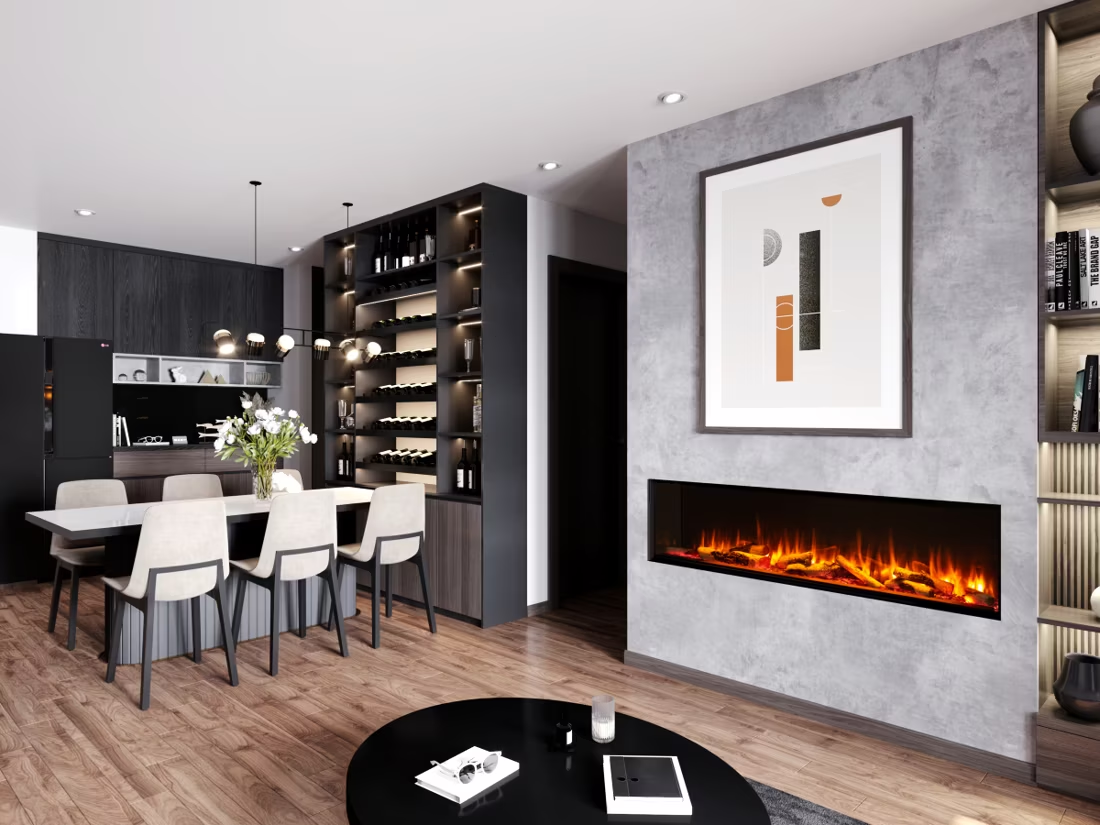
What they're installing it for is the look. Electric fireplaces have become a standard fixture in Kauai renovations and vacation rentals—from Poipu condos to Kapaa townhomes—because they deliver the visual focal point of a fireplace without a chimney, combustion byproducts, or venting to fight through the island's humidity and salt air. A plug-in insert or wall-mounted unit installs in an afternoon, the County of Kauai Building Division generally doesn't require a permit unless you're adding a dedicated electrical circuit for a built-in, and there's nothing for the coastal air to corrode the way it does with exposed hardware over time. For owners staging a home for sale or refreshing a rental, that combination is hard to beat.
Three steps. No salesperson until you're ready.
Tell us about your project
Your zip code, your situation, and the fuel you're leaning toward—or let the answers point you to one.
See what's actually available
The brands dealers within 100 miles genuinely carry—real options, never a catalog mirage.
Get your dealer & Project Guide
A trusted local dealer, plus the free Project Guide & Parts List that names every component of the job.
Frequently Asked Questions
How much does an electric fireplace installation cost in Kauai County?
A plug-in electric fireplace insert or mantel package typically runs $300 to $1,200 installed, since most units simply plug into an existing outlet with no electrical or venting work required. A built-in wall unit with a dedicated 120V or 240V circuit—common in North Shore remodels around Hanalei and Princeville—runs closer to $1,500 to $3,500 once an electrician is involved. Add a modest surcharge for installs in more remote parts of the island, like Kekaha or the far end of the Kuhio Highway past Hanalei, where dealers factor in drive time and inter-island freight on the unit itself.
Do I need a permit to install an electric fireplace on Kauai?
Usually not. The County of Kauai Building Division generally doesn't require a permit for a plug-in electric fireplace insert or freestanding unit, since there's no gas line, no venting, and no structural change involved. If you're installing a built-in wall unit that requires a new dedicated circuit, an electrical permit is typically pulled by your electrician as part of that work—but that's a permit for the wiring, not the fireplace itself. Either way, a local dealer familiar with Kauai's permitting process can tell you exactly what your specific installation requires.
Why install a fireplace in a place with zero heating degree days?
It's a fair question, and the honest answer is that nobody on Kauai needs a fireplace for warmth—with winter lows averaging 66°F, even the coldest nights of the year don't call for supplemental heat. What draws Kauai homeowners to electric fireplaces is almost entirely the visual: the flame effect as a design centerpiece in a living room, a lanai-adjacent great room, or a vacation rental listing photo. Most owners run the unit in flame-only mode with the heater switched off, which is one of the advantages of electric over gas or wood here—you get the look without adding any heat load to a home that's already working to stay cool.
What's the difference between an electric insert, mantel package, and wall-mounted unit?
An electric insert is designed to slide into an existing fireplace opening—useful if you're converting an old masonry or gas firebox that's no longer in use. A mantel package pairs a freestanding electric firebox with a surrounding cabinet or mantel shelf, giving you a complete look without an existing opening. A wall-mounted unit hangs flush or recessed into a wall like a piece of art, which is popular in newer Kauai condos and open-concept great rooms where floor space is tight. All three run on standard household power and none require venting.
Will an electric fireplace raise my electric bill?
It depends almost entirely on whether you run the heater function. Kauai Island Utility Cooperative (KIUC) rates run well above the U.S. mainland average, so running a 1,500-watt heater element for hours at a time adds up quickly—often more than most owners expect. The good news is that on Kauai, there's rarely a reason to run the heat at all. Most owners use flame-only mode, which draws only a small amount of power for the LED light effect, similar to leaving on a floor lamp. Ask your dealer about models with an independent flame-only setting if minimizing your KIUC bill is a priority.
What's the best electric fireplace for Kauai's humid, coastal climate?
Look for units with sealed electronics and corrosion-resistant components—Kauai's salt air and humidity are hard on any exposed metal hardware, including fireplace trim and internal wiring over time. Indoor-rated units installed away from direct ocean exposure hold up well; homes closer to the shoreline in places like Poipu or Hanalei should ask their dealer specifically about moisture-resistant models and stainless or powder-coated trim rather than standard painted steel. A local dealer who installs regularly on the island will know which lines have held up best in Kauai's conditions.
Electric vs. gas fireplace—which is right for my Kauai home?
Gas is the other common choice here, running on propane since Kauai has no natural gas utility infrastructure—most gas fireplace owners have a propane tank installed or already use propane for cooking or water heating. Gas produces real heat output and a live flame, which some homeowners prefer for authenticity, but it requires venting, gas line work, and periodic servicing. Electric skips all of that: no combustion, no venting, no tank to refill, and a simpler install in condos or rentals where adding gas infrastructure isn't practical. For most Kauai homes where the fireplace is about ambiance rather than heat, electric is the simpler, lower-maintenance choice.
Are wood or pellet stoves ever used on Kauai?
Rarely, and for good reason—with zero heating degree days and winter lows averaging 66°F, there's no functional need for wood or pellet heat anywhere on the island. Local hardwoods like koa, ohia, and eucalyptus are prized on Kauai for furniture, flooring, and turned bowls, not firewood, and pellet brands like Lignetics that serve the broader Pacific market aren't really stocked for Kauai's residential trade. On the rare occasion a homeowner wants a wood-look stove purely for aesthetics, an electric unit with a realistic flame effect almost always ends up being the practical substitute, since it avoids sourcing a fuel that has no real use case on the island.
How do I find a trusted electric fireplace dealer on Kauai?
The island has a small number of hearth and electrical retailers who regularly handle fireplace installs, concentrated around Lihue with service reach across the island to Kapaa, Koloa, and the North Shore. Because units and parts typically ship in from Oahu or the mainland, working with a dealer who orders regularly and knows realistic freight timelines matters more here than in a mainland market with same-day big-box stock. That's the core of what Find My Fireplace does—we match you with a trusted local dealer who already knows what's realistic to get installed on Kauai, rather than leaving you to guess at shipping times and compatibility on your own.
Does an electric fireplace need a vent or chimney?
No—that's its superpower. An electric fireplace needs a wall and an outlet, period. No vent pipe, no gas line, no clearances to design around, which is why it works in bedrooms, offices, apartments, and walls where venting a gas or wood unit would be impractical or impossible. Installation is typically the simplest and least expensive of any fireplace type.
Can I put a TV above my fireplace?
Yes—with an asterisk. Fireplaces are hot and TVs don't like heat. Either put a mantel between them to deflect rising warmth, or choose a fireplace with heat-management technology that creates a cool zone on the wall above—the wall stays around 125 degrees, barely warm, while the room still gets full heat. If you like clean lines and don't want a mantel, heat management is the answer.
What is an in-home preview and do I need one?
It's a visit where a hearth professional measures your space, confirms the model you picked actually works in your home, and walks the specs—framing, gas line, venting, finish work—before anything is ordered. Some details you just can't know until you see the house. Never make a down payment without one; it's the single most-skipped step that burns buyers.
Can a fireplace actually lower my heating bill?
Yes—by creating a comfort zone. A furnace heats every square foot of the house just to warm the one room you're in; a gas fireplace on low burns roughly a sixth of the gas a typical furnace does. Set the furnace around 55–60 degrees as a baseline, then heat the rooms your family actually uses. Families who heat this way commonly save $20–$60 a month.
Stove and Fireplace Dealers in Kauai County
Find your electric fireplace in Kauai County.
Tell us a bit about your home and we'll match you with a trusted local Kauai dealer and send over your free Project Guide & Parts List—the exact unit, mounting hardware, and a recommended installer for your project.
Find Your Fireplace →