
Gas Fireplaces Are Uncommon in Hawi—But Not Unheard Of.
With winter lows averaging 51°F and almost no heating demand, Hawi doesn't need a furnace substitute. A small number of homeowners still add a propane-fueled fireplace for ambiance, cool misty evenings off the Kohala mountains, or vacation-rental appeal.
Every Project Starts From One of These Five Situations
Hawi rarely needs heat—but a few homes still want the flame.
Hawi sits at 893 feet in North Kohala, on the cooler, wetter, windward side of the Big Island—a world away from sunny Kona. Even so, this is Köppen zone 1A, tropical, with one of the lightest winter heating loads anywhere in the country. Compare that to a place like Duluth, MN, which faces a brutally long, harsh heating season most winters, and it's clear why almost no home here is built with a heating system at all, let alone a dedicated fireplace.
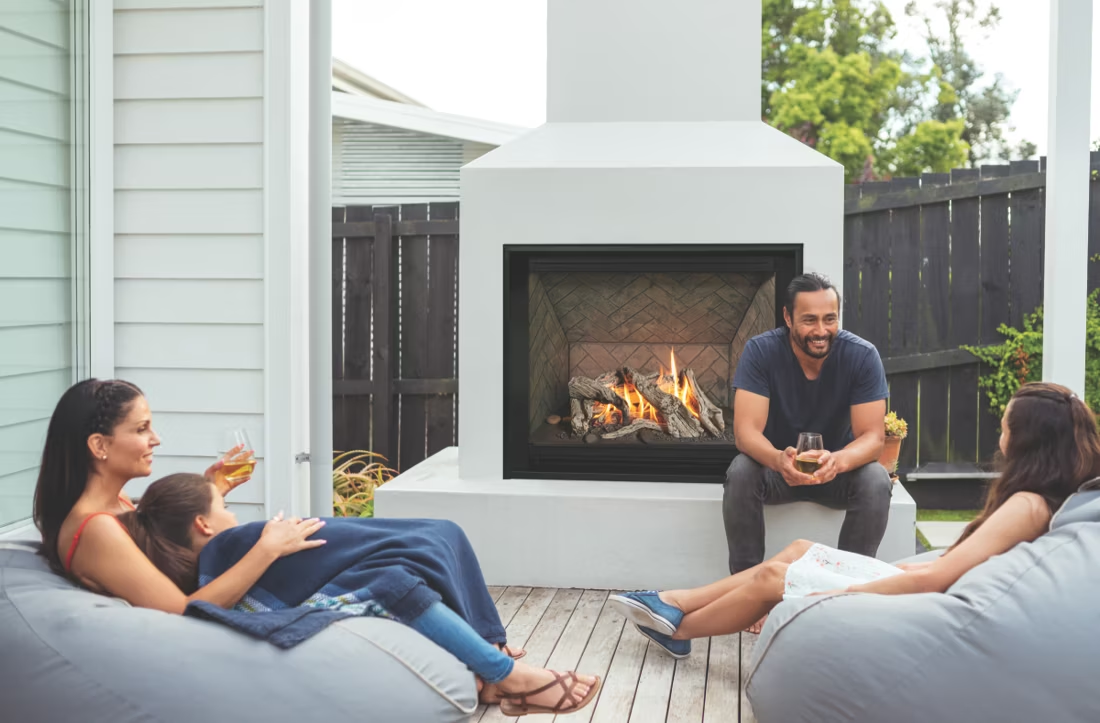
There's also no piped natural gas anywhere on Hawaii Island—Oahu is the only island with a gas utility, and that's a synthetic gas system, not true natural gas. So any 'gas' fireplace installed in Hawi runs on propane from a delivered tank, not a utility line. The handful of homeowners who do install one are usually after the look and ambiance of a real flame, a cozy focal point for the occasional cool, foggy Kohala evening, or a feature that helps a vacation rental or B&B stand out to mainland guests who expect a hearth in a living room.
Three steps. No salesperson until you're ready.
Tell us about your project
Your zip code, your situation, and the fuel you're leaning toward—or let the answers point you to one.
See what's actually available
The brands dealers within 100 miles genuinely carry—real options, never a catalog mirage.
Get your dealer & Project Guide
A trusted local dealer, plus the free Project Guide & Parts List that names every component of the job.
Frequently Asked Questions
Does anyone actually install gas fireplaces in Hawi?
Yes, though it's uncommon—this isn't a climate that drives fireplace demand the way a mainland winter does. The installs that do happen in Hawi and greater North Kohala tend to be in higher-end homes, vacation rentals, or B&B properties where the owner wants the visual warmth of a hearth as a design feature rather than a heat source. A local dealer familiar with island installs can tell you honestly whether it's worth it for your specific home before you spend anything on a project guide or quote.
Is natural gas available in Hawi?
No. Hawaii Island has no piped natural gas system at all—the only utility gas service in the state is on Oahu, and even that is a synthetic gas product, not true natural gas. Any fireplace, range, or water heater run on 'gas' in Hawi is actually running on propane, delivered by truck and stored in a tank on the property. When you talk to a local dealer about a gas fireplace, they'll be sizing the unit and orifice for propane from the start.
How much does a propane fireplace cost to install in Hawi?
Expect costs to run toward the higher end of what you'd see on the mainland for a comparable vented propane fireplace, largely because of inter-island freight on the unit and venting materials, plus a smaller pool of specialty installers on this side of the island. A local dealer can give you a firm number once they know whether you're installing new, adding a propane tank, and how far the gas line has to run from tank to hearth—that's the kind of detail a generic online price simply can't account for.
Do I need a permit for a gas fireplace in Hawi?
Yes—installations go through the County of Hawaii Department of Public Works Building Division, which covers permitting for both the gas line and any structural work tied to the fireplace surround or venting. Propane tank placement also has its own setback and safety requirements. A trusted local installer will typically pull these permits as part of the job rather than leaving you to navigate county paperwork solo.
Why would anyone want a fireplace if it never gets cold in Hawi?
Heat isn't really the draw here. North Kohala's trade-wind-driven mist and the cooler air at Hawi's 893-foot elevation can make evenings feel genuinely chilly compared to the beach towns down the coast, but the bigger reason homeowners install a gas fireplace is ambiance and resale appeal—especially for mainland transplants and vacation-rental guests who associate a hearth with a proper living room, even in a house that will never see a hard frost.
What's the difference between a propane and a natural gas fireplace?
The fireplace itself is nearly identical; the difference is the orifice sizing and regulator, which are set up for the fuel's pressure and BTU content. Since Hawaii Island has no natural gas utility, this question is mostly academic in Hawi—every gas fireplace installed here runs on propane. If you're bringing in a unit sold or rated for natural gas elsewhere, make sure your local installer converts it to propane before hookup.
Will a gas fireplace work during a power outage?
Most will, with the right ignition system. Units with intermittent pilot ignition (IPI) run on battery backup and will light and operate even when Hawaii Electric Light Co. service is down—worth knowing given that North Kohala's exposed, windward position means storm-related outages do happen here more than on the leeward side of the island. Ask your installer which ignition system a given model uses if outage performance matters to you.
Should I consider an electric fireplace instead of gas in Hawi?
It's worth asking, especially since electric units carry no venting or propane tank requirements. The tradeoff is cost to operate: Hawaii Electric Light Co. residential rates run around 48 cents per kWh, among the highest in the country, so running an electric unit as an actual heat source adds up fast. Most Hawi homeowners who go electric are using it purely for the visual flame effect on occasion rather than for warmth, which keeps the running cost low.
Gas vs. electric—which makes more sense for a Hawi home?
Gas (propane, in this case) gives you a real flame with real heat output for the rare misty evening, but it requires a tank, a gas line, and county permitting. Electric skips all of that—plug it in and it's running—but at Hawaii Electric Light's roughly 48-cent kWh rate, using it as a genuine heat source is expensive, so most owners run it just for the look. If ambiance and resale appeal are the goal, either works; if you specifically want the sound and radiant feel of a real flame for a rental property, propane is usually the better fit.
What's the difference between an insert and a zero-clearance fireplace?
An insert is a fireplace that slides into a pre-existing wood-burning fireplace—if you don't have one, there's nothing to insert it into. A zero-clearance fireplace is built into a framed wall, which makes it the answer for remodels and new construction. Simple test: existing masonry fireplace means insert; blank or framed wall means zero-clearance.
Why is a fireplace insert so efficient?
An insert does two things: it seals the chimney completely, so you stop losing air you already paid to heat, and it radiates warmth into the room through the firebox and glass. Most add a heat-exchange fan that pulls cool room air underneath, wraps it around the hot firebox, and pushes it back out warm. Your home is more efficient before you've even lit the first fire.
How much should I budget for a fireplace?
For an average home—covering the fireplace, the vent pipe, and basic installation—a budget between $3,900 and $5,500 gives you a lot of options across wood, gas, and pellet. By the time you add finish work, gas line, and electrical, the average complete installation lands between $5,000 and $12,000 all-in. In a remodel or new build, a good rule is to put about 2.5% of the total project cost toward the fireplace.
Does a fireplace add value to my home?
On average, a fireplace adds back to the home about the same amount you spent installing it. Add the monthly savings from heating the rooms you actually use instead of the whole house—often hundreds of dollars a year—and the value case is strong before you even count what a fire does for how your family uses the room.
Nearby Dealers
Hearth shops serving Hawi and the surrounding area. Every listing shows whether it is a WhyFire partner, a dealer we have verified as authorized for the brands we recommend, or a local business carrying hearth products. No manufacturer pays for placement. How we verify dealers →
Hawaii Fireplace – Kamuela
Island Pool & Spa Supply
Fireplace & Home Center
See if a gas fireplace makes sense for your Hawi home.
Tell us about your home and we'll give you a straight answer on whether propane hearth makes sense in Hawi's climate, match you with a trusted local dealer who knows island installs, and send you a free Project Guide & Parts List with the exact parts—including the vent kit—for your project.
Find Your Fireplace →