
Keep Your Family Warm and Safe—No Matter What
With essentially no heating season and winter lows averaging 65°F, almost no one in Ewa Villages needs wood heat. Here's the honest picture, and the local alternatives worth a look.
Every Project Starts From One of These Five Situations
Ewa Villages doesn't need wood heat—and almost nobody installs it.
Ewa Villages sits on Oahu's leeward Ewa Plain at just 50 feet of elevation, in climate zone 1A—hot and humid year-round with a winter low average of 65°F and essentially no heating season on the books. Compare that to a place like Duluth, MN, which racks up months of serious winter heating demand a year and depends on wood stoves to survive months of sub-zero nights. In Ewa Villages, there simply isn't a cold season to heat against, which is why wood-burning appliances are classified as not applicable for this area rather than standard equipment.
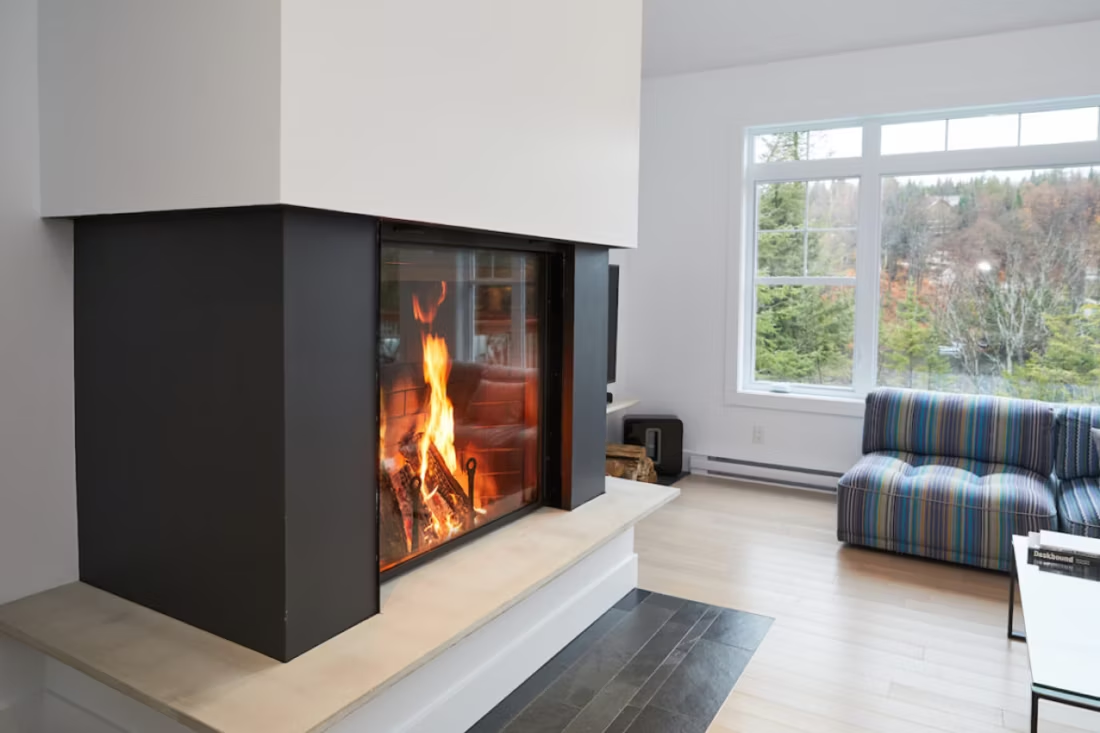
That said, a small number of homeowners here still install a wood-burning fireplace for the look and ritual of a real fire, or because they split time with a mainland property where wood heat makes sense. If you're one of them, know that the logistics differ from a cold-climate install: there's no national forest cutting-permit system to source firewood locally, common landscape species like eucalyptus and koa aren't harvested as firewood, and ohia—culturally significant in Hawaiian craft—is subject to interisland movement restrictions tied to Rapid Ohia Death (ROD), a fungal disease killing ohia trees statewide. Firewood for a Ewa Villages install is typically purchased and shipped in, which changes the cost equation from what you'd see in a wood-heavy state.
Three steps. No salesperson until you're ready.
Tell us about your project
Your zip code, your situation, and the fuel you're leaning toward—or let the answers point you to one.
See what's actually available
The brands dealers within 100 miles genuinely carry—real options, never a catalog mirage.
Get your dealer & Project Guide
A trusted local dealer, plus the free Project Guide & Parts List that names every component of the job.
Frequently Asked Questions
Do people actually install wood stoves or wood-burning fireplaces in Ewa Villages?
Rarely, and almost never for heat. With a winter low average of 65°F and essentially no heating season, there's no functional need to burn wood to stay warm in Ewa Villages. The handful of installs we see are decorative—homeowners who want the visual and sound of a real fire in a living room or lanai, or people who split time between Oahu and a colder property elsewhere and want the same aesthetic at both. If that's your goal, a local dealer can still install one correctly, but it's a specialty request here, not a routine one.
Why doesn't Ewa Villages need wood heat the way cold-climate cities do?
Ewa Villages sits in climate zone 1A—hot-humid, near sea level, with trade winds keeping temperatures mild essentially year-round. Essentially no heating season means the National Weather Service data shows no measurable demand for space heating in an average year. Compare that to Duluth, MN, where months of serious winter heating demand a year make a wood stove a survival tool rather than a lifestyle choice. In Ewa Villages, the equivalent decision homeowners face is cooling, not heating.
Can I still install a wood-burning fireplace for the look and feel of it?
Yes, and some Ewa Villages homeowners do. A decorative wood fireplace still needs real venting, proper clearances, and a hearth pad just like it would in any climate—Hawaii's high humidity actually makes chimney maintenance a bit more demanding, since moisture accelerates rust on flue components and creosote can behave differently in a damp coastal environment. It's a workable project, but plan for a dealer who's installed one before, not a big-box crew unfamiliar with tropical conditions.
Where would I even get firewood in Ewa Villages?
Not from a national forest cutting permit program—Oahu doesn't have the equivalent of the Forest Service firewood permits you'd find in a mainland wood-heat state. Local landscape species like eucalyptus are more commonly cleared as green waste than sold as seasoned firewood, koa is reserved almost entirely for woodworking and canoe-building given its value and scarcity, and ohia is subject to interisland transport restrictions tied to Rapid Ohia Death. In practice, most homeowners who want a wood fire buy kiln-dried firewood shipped in through local retailers rather than sourcing it themselves.
What permits or codes apply to a wood fireplace in Ewa Villages?
Any new wood-burning appliance still has to meet the City and County of Honolulu's building and fire code requirements, permitted through the Department of Planning and Permitting (DPP), the same as it would for a gas or electric unit. Because wood installs are uncommon here, it's worth confirming your installer has actually pulled a DPP permit for a solid-fuel appliance before—not every hearth contractor on Oahu has.
What do most Ewa Villages homeowners install instead of a wood fireplace?
Gas and electric fireplaces are the standard choices here. Propane-fueled units are common since Oahu has no natural gas utility, and they're popular for both indoor living rooms and covered lanai entertaining spaces. Electric fireplaces are also common, used almost exclusively for the visual effect rather than supplemental heat, given that the climate rarely calls for the latter.
Are electric fireplaces worth it given Hawaii's electricity rates?
Hawaiian Electric's residential rate runs around 42.87 cents per kWh—among the highest in the country, largely because Oahu's grid depends heavily on imported fuel. The good news for an electric fireplace specifically: in Ewa Villages it's almost always run for the flame effect, not for heat, so it's typically drawing 100-400 watts for the LED display and fan rather than running a heating element for hours. That keeps the operating cost modest even at Hawaiian Electric's rate, compared to what an actual space heater would cost to run.
Are gas fireplaces common in Ewa Villages?
More common than wood, yes. Since there's no natural gas utility on Oahu, gas fireplaces here run on propane, delivered and refilled by local suppliers. Vent-free propane units are popular for ambiance in living rooms, and direct-vent models show up in newer construction where homeowners want a built-in look. A local dealer can walk you through which venting approach fits your specific floor plan.
If I want a wood fireplace anyway, what should I expect from a local dealer?
Expect an honest conversation first. A good Oahu hearth dealer will walk through why wood is uncommon here—the lack of local firewood infrastructure, the DPP permitting process, and the climate mismatch—before quoting a solid-fuel install. Many will also flag that a gas or electric unit gets you the same visual result with fewer supply-chain headaches. If you still want wood, expect a somewhat higher cost than you'd see in a wood-heavy mainland market, mostly driven by imported firewood logistics and the specialty nature of the install.
What's the difference between an insert and a zero-clearance fireplace?
An insert is a fireplace that slides into a pre-existing wood-burning fireplace—if you don't have one, there's nothing to insert it into. A zero-clearance fireplace is built into a framed wall, which makes it the answer for remodels and new construction. Simple test: existing masonry fireplace means insert; blank or framed wall means zero-clearance.
Why is my open fireplace making my house colder?
Open fireplaces suck—literally. As the fire burns, it consumes air your furnace already paid to heat and pulls it out through the chimney, so the house is actually colder after the fire goes out than before you lit it. An insert fixes this: it seals the chimney, puts fixed glass across the front, and turns that hole in your house into a real heat source.
Can a fireplace actually lower my heating bill?
Yes—by creating a comfort zone. A furnace heats every square foot of the house just to warm the one room you're in; a gas fireplace on low burns roughly a sixth of the gas a typical furnace does. Set the furnace around 55–60 degrees as a baseline, then heat the rooms your family actually uses. Families who heat this way commonly save $20–$60 a month.
Does a fireplace add value to my home?
On average, a fireplace adds back to the home about the same amount you spent installing it. Add the monthly savings from heating the rooms you actually use instead of the whole house—often hundreds of dollars a year—and the value case is strong before you even count what a fire does for how your family uses the room.
Nearby Dealers
Hearth shops serving Ewa Villages and the surrounding area. Every listing shows whether it is a WhyFire partner, a dealer we have verified as authorized for the brands we recommend, or a local business carrying hearth products. No manufacturer pays for placement. How we verify dealers →
Island Pool And Supply
Get a straight answer on wood heat in Ewa Villages.
Tell us about your home and goals, and we'll match you with a trusted local dealer who'll tell you honestly whether wood makes sense here—plus a free Project Guide & Parts List covering the right unit, venting, and parts for your project.
Find Your Fireplace →