
Pellet Heat Is Rare in Winterville—Here's Where It Still Makes Sense.
Winterville's mild Piedmont winters mean most homes never touch cordwood or pellets—but a handful of homeowners still want a pellet stove for backup warmth or ambiance. We'll match you with a trusted dealer who can give you an honest read on whether it's the right fit.
Every Project Starts From One of These Five Situations
Winterville's mild winters don't demand pellet heat—but some homes still want it.
Winterville sits in the Georgia Piedmont at just under 800 feet, in a Climate Zone 3A pocket where the average winter low hovers around 30°F and the overall heating season is mild, adding up to only a light winter heating load. Compare that to a genuine cold-climate market like Duluth, Minnesota, where winters are brutally long and pellet stoves are a core heating appliance—Winterville's heating load is a fraction of that. Most homes here get by fine on a heat pump running off Georgia Power's grid, with strip heat or a gas furnace kicking in on the rare hard-freeze night. That's the honest reason pellet stoves haven't caught on locally: the climate doesn't ask for the kind of sustained, high-output heat a pellet appliance is built to deliver.
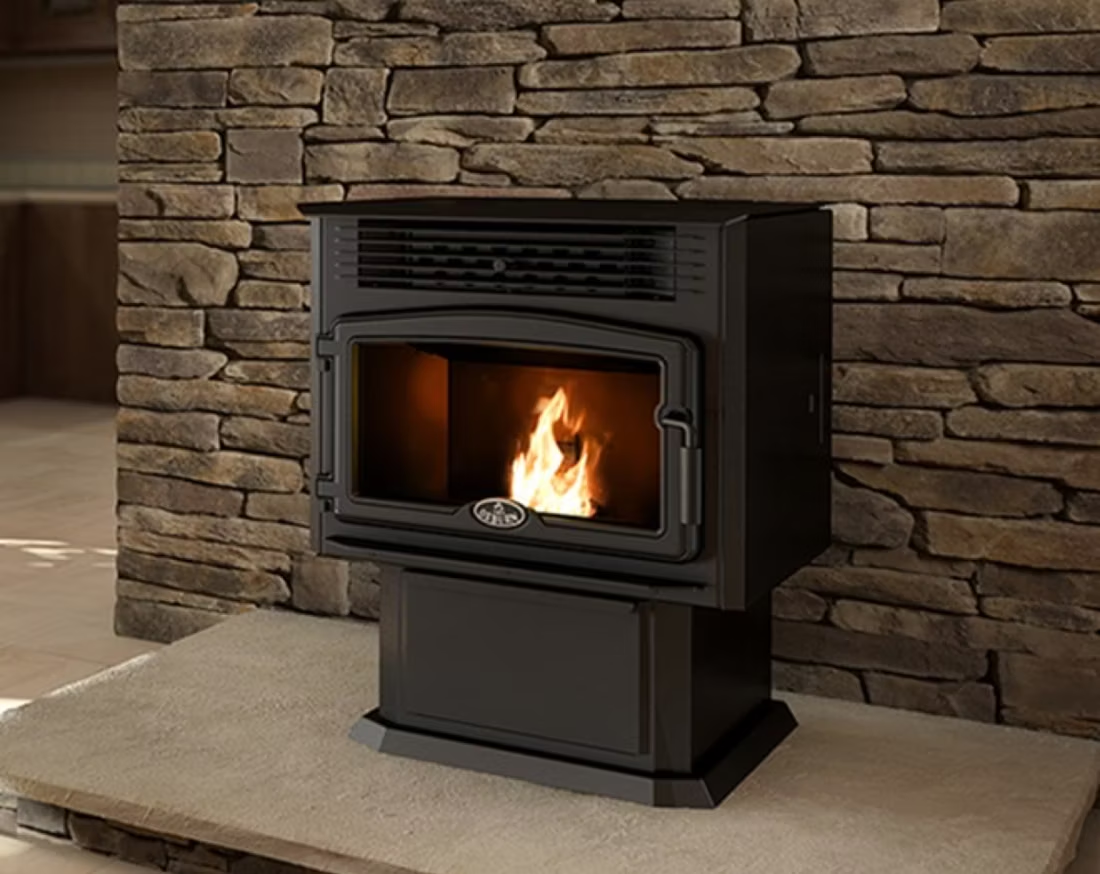
That said, a small number of Winterville and Clarke County homeowners do install pellet stoves—usually for a den or sunroom that runs cold, for the ambiance of real flame without the mess of cordwood, or as a hedge against the ice storms that occasionally knock out power across northeast Georgia (though it's worth knowing upfront that most pellet stoves need electricity to run their auger and blower, so they're not true off-grid backup). Wood pellets themselves aren't hard to find—regional producers like Lignetics, Hamer Pellet Fuel, and Greenway Renewable Energy distribute through hearth retailers and farm supply stores across the state—but the certified installers doing this work are concentrated in nearby Athens rather than in Winterville itself. If a pellet stove genuinely fits your home, I can match you with a trusted dealer who installs in Clarke County and give you a straight answer if gas or electric would actually serve you better.
Three steps. No salesperson until you're ready.
Tell us about your project
Your zip code, your situation, and the fuel you're leaning toward—or let the answers point you to one.
See what's actually available
The brands dealers within 100 miles genuinely carry—real options, never a catalog mirage.
Get your dealer & Project Guide
A trusted local dealer, plus the free Project Guide & Parts List that names every component of the job.
Frequently Asked Questions
Are pellet stoves actually common in Winterville, GA?
No, not really—and it's worth saying plainly. Winterville's winters average a low of 30°F with a mild overall heating load per season, far lighter than a market like Burlington, Vermont, where pellet stoves are everyday appliances. Most Winterville and Clarke County homes heat with a Georgia Power-served heat pump, and pellet stoves show up mainly as a secondary or ambiance choice in a handful of homes rather than a primary heat source. If you're set on one, it's absolutely possible to install and use well here—it's just a smaller, more specialized market than in colder states.
How much does a pellet stove installation cost in Winterville?
Because pellet stoves are an uncommon request locally, pricing tends to run a bit wider than in markets with more installers competing for the work. Expect somewhere in the $3,000 to $6,500 range for a freestanding pellet stove vented through an exterior wall, depending on the unit and whether a dedicated electrical circuit needs to be added for the auger and blower. A pellet insert into an existing masonry fireplace typically lands in a similar range. Because Winterville doesn't have its own hearth retailers, most installers doing this work travel from Athens, which can add a modest trip charge.
Where can I buy wood pellets near Winterville?
Wood pellets aren't sold on every corner here the way they are in colder states, but they're not hard to source either. Regional brands including Lignetics, Hamer Pellet Fuel, and Greenway Renewable Energy distribute through farm supply stores and hearth retailers in the Athens area, and most pellet stove owners in Clarke County either buy by the pallet (roughly 50 forty-pound bags) once a season or set up seasonal delivery through a dealer. Because demand is lower here than in the Midwest or Northeast, it's smart to buy your season's supply early rather than assume you can grab a few bags mid-January.
Will a pellet stove keep my house warm during a power outage?
This is the single most important thing to understand before buying one in Georgia: pellet stoves require electricity to run the hopper auger, igniter, and combustion blower, so a standard unit shuts down the moment the power goes out—which matters here, since ice storms occasionally take down lines across northeast Georgia for days at a time. If backup heat during outages is your main goal, a battery backup unit or small generator can keep a pellet stove running, but a wood-burning stove or a propane unit with a standing pilot will get you through an outage with zero electrical dependence. Talk to a local dealer about your actual priority—ambiance and efficiency, or true grid independence—because it changes the recommendation.
What size pellet stove do I need for a Winterville home?
Given the region's mild heating load, most Winterville homes need far less pellet stove than a colder-climate house of the same square footage. A small to mid-size unit rated around 40,000–50,000 BTU is plenty to heat a den, sunroom, or open living area up to about 1,500 square feet even on the area's coldest nights in the 20s. Oversizing is a real risk here—a stove sized for a Minnesota winter will run you out of the room on a mild Georgia evening. A local dealer should size to your specific space rather than default to a generic recommendation.
Do I need a permit to install a pellet stove in Clarke County?
Yes—a building permit is typically required for a new solid-fuel appliance installation, including pellet stoves, through the Clarke County Building Inspections Department, or the City of Winterville's permitting process for in-town addresses. The permit confirms proper clearances, venting, and the electrical work needed for the unit's auger and blower. Most certified installers coming from Athens handle the permit application as part of the job, so you generally won't need to file it yourself.
Pellet, gas, or electric—which makes the most sense for a Winterville home?
For most homes here, a heat pump on the Georgia Power grid (at roughly 15.5 cents per kWh) already covers the heating load efficiently, and a gas fireplace or insert is the more common upgrade for homeowners who want visible flame with instant, thermostat-controlled heat. Pellet stoves make sense in a narrower set of cases—a converted sunroom or detached space without existing HVAC, or simply a homeowner who wants the specific look and feel of a pellet fire. If your goal is lower utility bills or backup heat, gas or electric resistance heat is usually the more practical local answer; if it's the appliance itself you want, pellet is absolutely available through Athens-area dealers.
How much maintenance does a pellet stove need?
Pellet stoves need more routine attention than a gas fireplace but less than a wood stove chimney sweep. Plan on emptying the ash pan every few days during regular use, cleaning the burn pot weekly to keep the auger feeding cleanly, and scheduling a full professional cleaning of the exhaust venting and hopper once a year. Because pellet stoves see lighter, more occasional use in a mild climate like Winterville's, some owners stretch that professional service to every other year—but skipping it entirely risks a clogged venting system, which is the most common service call installers get.
Are there rebates or incentives for pellet stoves in Georgia?
Georgia doesn't have a dedicated statewide rebate program for pellet stoves the way some Northeastern and Pacific Northwest states do. The federal biomass stove tax credit has, in past years, covered qualifying high-efficiency pellet stoves at a percentage of installed cost—a local dealer can confirm which specific models currently qualify and help you claim it correctly. Georgia Power also occasionally offers efficiency rebates for electric heat pump upgrades, which is worth comparing against a pellet stove if your main goal is cutting your winter bill rather than adding a wood-pellet appliance.
Why is my open fireplace making my house colder?
Open fireplaces suck—literally. As the fire burns, it consumes air your furnace already paid to heat and pulls it out through the chimney, so the house is actually colder after the fire goes out than before you lit it. An insert fixes this: it seals the chimney, puts fixed glass across the front, and turns that hole in your house into a real heat source.
Why is a fireplace insert so efficient?
An insert does two things: it seals the chimney completely, so you stop losing air you already paid to heat, and it radiates warmth into the room through the firebox and glass. Most add a heat-exchange fan that pulls cool room air underneath, wraps it around the hot firebox, and pushes it back out warm. Your home is more efficient before you've even lit the first fire.
Can I install a fireplace myself?
If you're putting a fire in your house on purpose, it's best to work with an expert. Unless you're genuinely experienced in framing, gas line, vent pipe, and the national code on clearances to combustibles, have a professional do it—and ideally the same company that sells you the fireplace, so warranty, service, and liability all live under one roof.
How much should I budget for a fireplace?
For an average home—covering the fireplace, the vent pipe, and basic installation—a budget between $3,900 and $5,500 gives you a lot of options across wood, gas, and pellet. By the time you add finish work, gas line, and electrical, the average complete installation lands between $5,000 and $12,000 all-in. In a remodel or new build, a good rule is to put about 2.5% of the total project cost toward the fireplace.
Nearby Dealers
Hearth shops serving Winterville and the surrounding area. Every listing shows whether it is a WhyFire partner, a dealer we have verified as authorized for the brands we recommend, or a local business carrying hearth products. No manufacturer pays for placement. How we verify dealers →
Carson Plumbing
Dory's Hearth, Home & Patio
Dory's Hearth Home & Patio
Maddox Feed & Seed
Pellet Brands Stocked Around Winterville
Manufacturers will point you to the nearest stocking dealer.
Find your pellet stove in Winterville.
Tell us about your home and honestly what you're hoping to get from a pellet stove—we'll tell you if it's a good fit, and match you with a trusted local dealer for a free Project Guide & Parts List, including the exact venting kit for your install.
Find Your Fireplace →