
Warmth on demand for Wilkes County's mild winters.
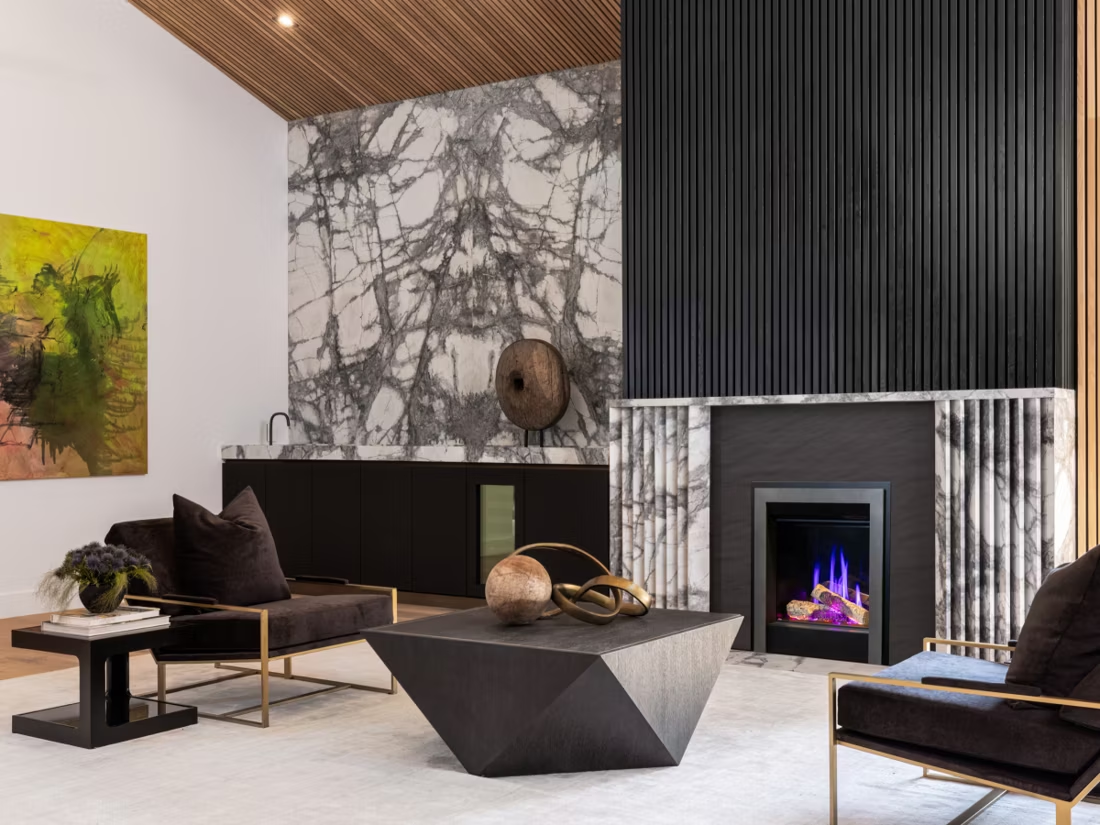
No chimney, no gas line, no permit hassle—just a real-looking flame and supplemental heat that fits the Piedmont's short heating season. Find the right unit for your home and connect with a trusted local installer.
Every Project Starts From One of These Five Situations
Electric heat that fits Wilkes County's mild climate.
Wilkes County sits in Georgia's upper Piedmont, home to about 5,071 people spread between the historic town of Washington and the surrounding farmland toward Rayle and Tignall. With roughly 2,797 heating degree days and winter lows averaging around 34°F, this is a Climate Zone 3A county—a fraction of the heating demand you'd see in a place like Duluth, MN, where HDD totals run near 10,000. Wood is still cut and burned here (oak, hickory, and pine are common in local woodlots), but for a lot of households the heating need most winters is short bursts of supplemental warmth, not an all-night burn. That's exactly the gap an electric fireplace or insert is built to fill.
Electric also solves a real problem in a county full of older and historic homes—Washington's downtown and surrounding neighborhoods have no shortage of antebellum and early-1900s houses where owners don't want to cut a new flue through original brick or plaster. An electric insert or built-in unit runs on a standard or dedicated circuit through Washington EMC, requires no venting, and can go into an existing fireplace opening or a new wall without touching the roofline. It won't replace a wood stove as primary heat on a hard freeze night, but for the bulk of a Wilkes County winter, it's often the simplest, lowest-maintenance way to add real warmth and a fire's glow to a room.
Three steps. No salesperson until you're ready.
Tell us about your project
Your zip code, your situation, and the fuel you're leaning toward—or let the answers point you to one.
See what's actually available
The brands dealers within 100 miles genuinely carry—real options, never a catalog mirage.
Get your dealer & Project Guide
A trusted local dealer, plus the free Project Guide & Parts List that names every component of the job.
Frequently Asked Questions
How much does an electric fireplace installation cost in Wilkes County?
Plug-in electric inserts and stoves that don't require new wiring typically run $300 to $1,200 installed, since there's no venting or gas line to run—just setting the unit and, in some cases, adding a dedicated outlet. Built-in electric fireplaces or larger wall units that need a new 120V or 240V circuit run higher, generally $1,500 to $3,500, depending on how far the electrician has to run wire and whether drywall or trim work is needed to finish the opening. Because Wilkes County has a small population and most retailers and licensed electricians are based out of Washington or nearby in Augusta, expect a modest trip charge factored into installs out toward Rayle or Tignall.
What size electric fireplace do I need for my home?
Because Wilkes County's winter lows average around 34°F and the county logs under 2,800 heating degree days a year, most homeowners here are sizing for supplemental heat and ambiance rather than whole-home warmth—a very different calculation than a cold-climate county would use. A 1,500-watt insert or stove-style unit comfortably takes the chill off a single living room or den in the 250-400 sq ft range. Larger great rooms or open-concept additions common in newer builds around Washington may call for a bigger unit or a model with a higher BTU rating, but few Wilkes County homes need more than one well-placed unit to cover their actual heating need most winters.
Where can I find electric fireplace installers near me?
With a population of just over 5,000, Wilkes County doesn't have a big-box hearth showroom of its own—most homeowners work with hearth retailers or licensed electricians based in or near Augusta, about 45 minutes southeast, or with independent installers who cover the Washington area directly. Any licensed electrician working through Washington EMC's service territory can handle the wiring for a built-in unit; for a finished, code-correct install with the right mantel or surround, a hearth specialist who regularly works in older Wilkes County homes is worth the extra call, especially in the historic district where trim and wall assemblies need care.
What's the difference between an electric fireplace, insert, and stove?
An electric fireplace is typically a built-in unit set into a wall or existing mantel opening, often the choice for new construction or a remodel. An electric insert is sized to slide into an existing masonry or prefab fireplace opening, which is common in Washington's older homes where the original fireplace surround stays but the wood-burning function goes away. An electric stove is a freestanding cabinet-style unit that sits on the floor and can go almost anywhere there's an outlet—a good fit for a den, sunroom, or a home without an existing fireplace at all. All three plug into standard household power; none require venting.
Do I need a permit to install an electric fireplace in Wilkes County?
A simple plug-in electric insert or stove that uses an existing outlet generally doesn't require a permit. If your installation involves running new wiring or adding a dedicated circuit—common for larger built-in units—an electrical permit through the Wilkes County Building Department is typically required, and the work should be done by a licensed electrician. There's no combustion involved, so none of the venting, clearance, or EPA-certification rules that apply to wood or gas appliances come into play here.
What's the best electric fireplace for Wilkes County homes?
Since most Wilkes County installs are about ambiance plus light supplemental heat rather than replacing a furnace, look at mid-size inserts or wall units from brands like Dimplex or ClassicFlame with realistic LED flame technology and a simple built-in thermostat—enough output to warm a den or living room on the county's coldest nights without overheating a small room during a mild spell, which is most of the season here. For historic homes downtown, a mantel-style insert that slots into an existing fireplace opening preserves the original brick and trim while updating the heat source.
How much does it cost to run an electric fireplace in Wilkes County?
A typical 1,500-watt electric fireplace costs roughly 15-20 cents an hour to run on heat setting, based on Washington EMC's residential rates—call it $1.50-$2 for a full evening of use. Because Wilkes County's heating season is short and mild compared to the rest of the country, most households run their unit intermittently rather than for hours every day, which keeps the added cost on a monthly electric bill modest even during a cold snap.
Electric vs. wood—which makes more sense in Wilkes County?
Wood heat has deep roots here—oak, hickory, and pine are all common in local woodlots, and a wood stove or insert still makes sense for anyone wanting real backup heat during an ice storm or power outage, since Wilkes County does see the occasional multi-day outage after severe weather. But with winter lows averaging only around 34°F and a heating season that's short by national standards, plenty of homeowners find that an electric unit covers their actual day-to-day need—ambiance and light warmth—without the wood handling, chimney maintenance, or ash cleanup. Homes wanting true off-grid backup heat should still keep a wood or gas option in the mix alongside electric.
Electric vs. gas fireplace—which is right for my home?
Gas fireplaces deliver more heat output and can serve as a real secondary heat source, but they require either natural gas service or a propane tank, venting in most configurations, and periodic professional servicing. Electric fireplaces skip all of that—no fuel line, no venting, no annual inspection—in exchange for lower heat output, which is a fair trade in a climate as mild as Wilkes County's. For a historic home in Washington where you don't want to alter the exterior for venting, or a rental property, or a room where flipping a switch matters more than raw BTUs, electric is usually the simpler, lower-cost choice.
Can I put a TV above my fireplace?
Yes—with an asterisk. Fireplaces are hot and TVs don't like heat. Either put a mantel between them to deflect rising warmth, or choose a fireplace with heat-management technology that creates a cool zone on the wall above—the wall stays around 125 degrees, barely warm, while the room still gets full heat. If you like clean lines and don't want a mantel, heat management is the answer.
Do electric fireplaces actually produce heat?
Yes—most put out around 4,800–5,000 BTUs from a standard outlet, which comfortably warms a bedroom, office, or den as a comfort-zone heater. What they won't do is carry a whole house the way wood, gas, or pellet can. Think of electric as ambiance-first with honest supplemental heat: flames on with no heat in July, flames plus warmth in January.
Can I install a fireplace myself?
If you're putting a fire in your house on purpose, it's best to work with an expert. Unless you're genuinely experienced in framing, gas line, vent pipe, and the national code on clearances to combustibles, have a professional do it—and ideally the same company that sells you the fireplace, so warranty, service, and liability all live under one roof.
Does a fireplace add value to my home?
On average, a fireplace adds back to the home about the same amount you spent installing it. Add the monthly savings from heating the rooms you actually use instead of the whole house—often hundreds of dollars a year—and the value case is strong before you even count what a fire does for how your family uses the room.
Find your electric fireplace in Wilkes County.
Tell us about your home and we'll put together a free Project Guide & Parts List—the right electric fireplace or insert for your space, plus a match with a trusted local installer in Wilkes County.
Find Your Fireplace →