
Find out if a pellet stove fits your Turner County home.
With only a light winter heating load and winter lows averaging 36°F, Turner County rarely needs a dedicated solid-fuel heat source. A pellet stove can still make sense for the right home—we'll help you find out and connect you with a vetted local dealer if it does.
Every Project Starts From One of These Five Situations
A mild climate that rarely calls for supplemental heat.
Turner County sits in south-central Georgia around the county seat of Ashburn, in IECC climate zone 3A—warm, humid, and mild through most of the winter. With a winter heating load that's a fraction of what a place like Duluth, MN or Burlington, VT sees, the county logs hard freezes as the exception rather than the norm. With average winter lows around 36°F, most homes in the county get by on a heat pump or propane furnace, and a standalone pellet appliance simply isn't something the climate demands the way it does farther north.
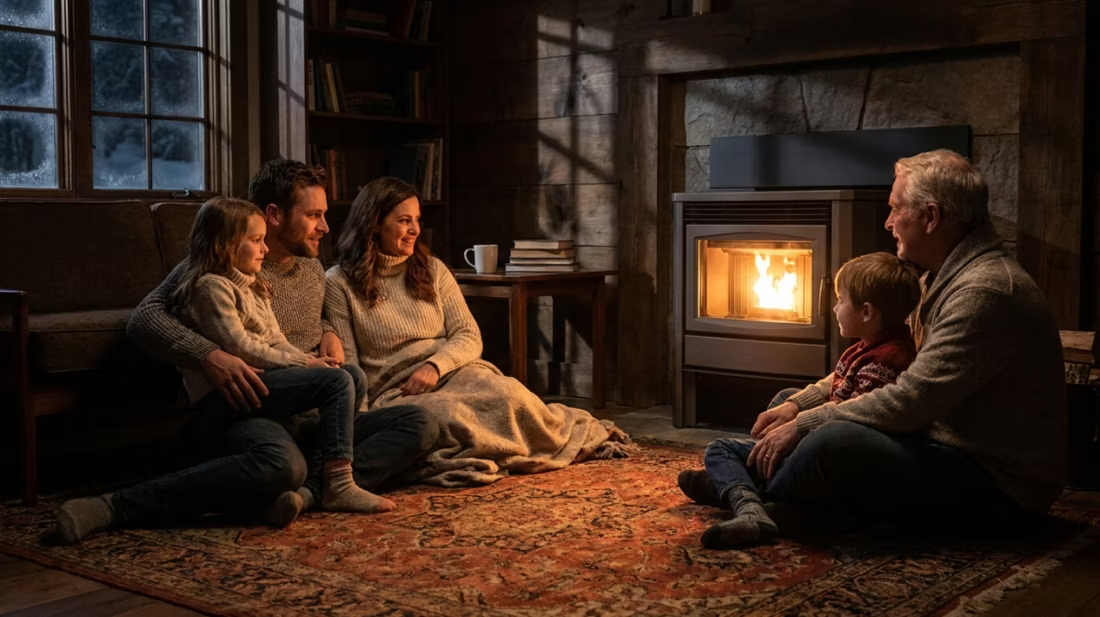
That's reflected in the local market: pellet stoves aren't a mainstream product here, and dealer density is thin compared to counties with real winter heating needs. The homeowners who do install one in Turner County are usually after ambiance in a den or workshop, a low-smoke alternative to an open fireplace, or supplemental warmth for the handful of nights each winter when temperatures actually drop. It's worth knowing up front that pellet stoves need continuous electricity to run the auger and combustion blower, so they don't double as storm backup heat the way a wood stove would—an important distinction in a rural county where outages happen. Pellet fuel itself isn't hard to come by: Hamer Pellet Fuel in Baxley and Greenway Renewable Energy in Uvalda both produce Georgia-milled pellets, often from the same pine and oak that grow throughout the county, so supply isn't the bottleneck—finding a dealer who installs and services the appliance is.
Three steps. No salesperson until you're ready.
Tell us about your project
Your zip code, your situation, and the fuel you're leaning toward—or let the answers point you to one.
See what's actually available
The brands dealers within 100 miles genuinely carry—real options, never a catalog mirage.
Get your dealer & Project Guide
A trusted local dealer, plus the free Project Guide & Parts List that names every component of the job.
Frequently Asked Questions
Are pellet stoves common in Turner County?
No, and it's worth being upfront about that. With a light winter heating load and winter lows averaging 36°F, Turner County's heating season is short and mild compared to most of the country. Homes here are typically built around heat pumps or propane, and a dedicated pellet appliance is a niche add rather than a primary heat source. That doesn't make it a bad option—it just means demand, and the number of local dealers who regularly install and service them, is smaller than you'd find in a colder county.
How much does a pellet stove installation cost?
Installed pellet stoves typically run in the $3,000–$6,000 range depending on the unit, whether you need a new through-wall or vertical vent kit, and any hearth pad work required for clearance. Because so few homes in Turner County install pellet appliances in a given year, there isn't a well-established local benchmark the way there is for propane or electric work—getting an itemized quote from an actual dealer matters more here than in a county with a deep installer bench.
Where can I buy pellet fuel near Turner County?
Two Georgia producers are within reasonable driving distance: Hamer Pellet Fuel out of Baxley and Greenway Renewable Energy in Uvalda, both of which mill pellets from regional pine. Lignetics also distributes into the broader Southeast market. In Turner County itself, expect to find pellets at farm supply or hardware stores in Ashburn on a seasonal basis, or to make a trip toward Tifton or Albany where selection and stock are more reliable during winter.
Why don't more people in Turner County heat with pellets?
It comes down to climate math. With a mild winter heating load and average winter lows near 36°F, most Turner County homes simply don't have enough cold-weather demand to justify a dedicated pellet appliance and its ongoing fuel costs. Propane and electric heat pumps handle the county's mild winters efficiently, and the handful of genuinely cold nights each year don't move the needle the way they would in a county with real sustained cold. Pellet stoves end up being a lifestyle or ambiance choice here rather than a heating necessity.
Will a pellet stove work as backup heat if the power goes out?
Not reliably. Pellet stoves depend on an electric auger to feed fuel and a blower to distribute heat and exhaust—without power, most units won't run at all, and battery backup packs (where available) are typically good for only a few hours at low output. In a rural county where outages can stretch longer, that's a real limitation. If outage-proof backup heat is the goal, a vented propane heater or a wood-burning appliance is a more dependable choice than pellet.
What's the difference between a pellet stove and a pellet insert?
A pellet stove is a freestanding unit that sits on a hearth pad and vents through an exterior wall or roof—it can go almost anywhere with the right clearances. A pellet insert is built to slide into an existing masonry fireplace opening, using the existing chimney or a liner for venting. Since a lot of Turner County's housing stock is newer construction or manufactured homes without a masonry fireplace already in place, a freestanding stove is usually the more practical route locally; an insert only makes sense if you already have a fireplace opening to convert.
Do I need a permit to install a pellet stove in Turner County?
Most likely, yes—a new solid-fuel appliance with through-wall venting generally requires a building permit through the county's building department, even for a fairly small installation. Because pellet installs are infrequent here, it's worth confirming directly with a dealer who's pulled a Turner County permit before, rather than assuming the process mirrors a neighboring county. Reputable local installers typically handle the permit paperwork as part of the job.
Pellet vs. propane—which makes more sense for a Turner County home?
For most homes here, propane wins on practicality. Gas service in this part of Georgia is standard and well-supported, propane delivery is routine in rural areas, and a propane furnace or fireplace can run without you managing fuel bags or emptying an ash pan. Pellet stoves make more sense as a secondary, ambiance-driven choice—a room you want a real flame in, or a supplemental source for the occasional cold snap—rather than as the primary heat plan for the house.
What size pellet stove do I need for a Turner County home?
Given how mild the heating season is here, most Turner County installs skew toward smaller units meant to warm a single room or open living area rather than a whole house. A small to mid-size pellet stove (rated for roughly 1,000–1,500 square feet) is usually more than enough for supplemental use, even in an older, less-insulated farmhouse. Sizing up rarely pays off in this climate the way it might in a county with a real winter—a local dealer can confirm the right fit based on your specific layout.
Why is my open fireplace making my house colder?
Open fireplaces suck—literally. As the fire burns, it consumes air your furnace already paid to heat and pulls it out through the chimney, so the house is actually colder after the fire goes out than before you lit it. An insert fixes this: it seals the chimney, puts fixed glass across the front, and turns that hole in your house into a real heat source.
Why is a fireplace insert so efficient?
An insert does two things: it seals the chimney completely, so you stop losing air you already paid to heat, and it radiates warmth into the room through the firebox and glass. Most add a heat-exchange fan that pulls cool room air underneath, wraps it around the hot firebox, and pushes it back out warm. Your home is more efficient before you've even lit the first fire.
What is an in-home preview and do I need one?
It's a visit where a hearth professional measures your space, confirms the model you picked actually works in your home, and walks the specs—framing, gas line, venting, finish work—before anything is ordered. Some details you just can't know until you see the house. Never make a down payment without one; it's the single most-skipped step that burns buyers.
Can I install a fireplace myself?
If you're putting a fire in your house on purpose, it's best to work with an expert. Unless you're genuinely experienced in framing, gas line, vent pipe, and the national code on clearances to combustibles, have a professional do it—and ideally the same company that sells you the fireplace, so warranty, service, and liability all live under one roof.
Pellet Brands Stocked Around Turner County
Manufacturers will point you to the nearest stocking dealer.
See if a pellet stove is worth it for your Turner County home.
Tell us about your home and how you'd actually use a pellet stove, and we'll give you a straight answer—plus, if it's a good fit, a free Project Guide & Parts List with the exact parts, vent kit, and a matched local dealer for your Turner County project.
Find Your Fireplace →