
Pellet heat sized for Toombs County's short, mild winters.
From Vidalia to Lyons to Santa Claus, Toombs County sees only about 1,793 heating degree days a year—a fraction of what colder states log. A right-sized pellet stove or insert delivers clean, thermostatic warmth for the cool snaps without overbuilding for a winter that rarely shows up. We'll match you with a trusted local dealer who can size it correctly.
Every Project Starts From One of These Five Situations
Steady, low-maintenance heat for Georgia's coastal plain climate.
Toombs County sits in the flat coastal plain of southeast Georgia, home to Vidalia—famous for its sweet onions—and the county seat of Lyons, with a combined county population of around 15,138. Winters here are mild by national standards: average lows sit around 39°F, and the county logs roughly 1,793 heating degree days a year, compared to well over 7,000 in a place like Burlington, VT. That means Toombs County homeowners aren't fighting sub-zero nights—they're looking for efficient, controllable heat for the handful of genuinely cold weeks each winter, plus a comfortable backup when the thermostat dips.
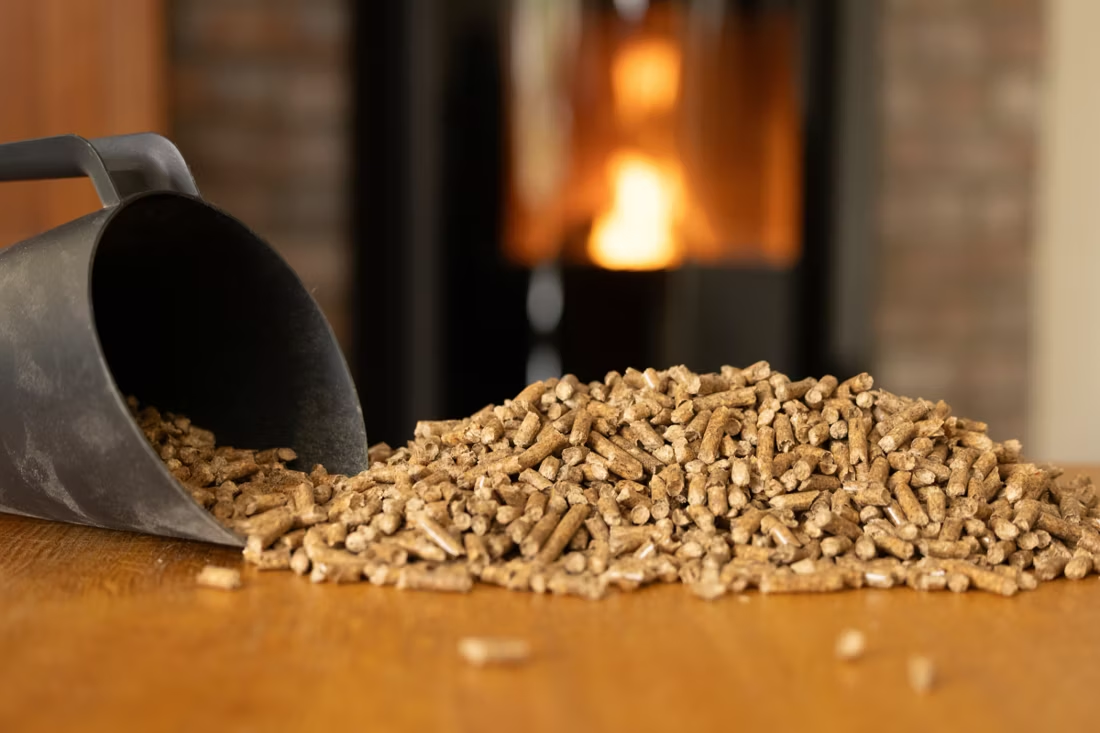
Pellet stoves fit that need well. They run on compressed hardwood or softwood pellets—regional brands like Lignetics, Hamer Pellet Fuel, and Greenway Renewable Energy are commonly stocked at hearth dealers and farm supply stores throughout southeast Georgia, much of it milled from the region's abundant Southern yellow pine. Unlike a wood stove burning local oak, pine, or hickory, a pellet unit runs on a thermostat, needs no chimney, and produces almost no visible smoke—which matters even though Toombs County has no air quality non-attainment concerns to navigate. For most local homes, a pellet stove serves as efficient supplemental heat in a den or living room rather than a whole-house primary system, since the mild coastal plain climate rarely demands more.
Three steps. No salesperson until you're ready.
Tell us about your project
Your zip code, your situation, and the fuel you're leaning toward—or let the answers point you to one.
See what's actually available
The brands dealers within 100 miles genuinely carry—real options, never a catalog mirage.
Get your dealer & Project Guide
A trusted local dealer, plus the free Project Guide & Parts List that names every component of the job.
Frequently Asked Questions
How much does a pellet stove installation cost in Toombs County?
Most pellet stove and insert installations in Toombs County run in the $3,000 to $6,500 range, depending on the unit and whether you need new wall venting or electrical work for the hopper's auger and blower. Because pellet stoves vent through a small-diameter wall or roof pipe rather than a full masonry chimney, installs are often simpler—and cheaper—than a comparable wood stove project, especially in homes without an existing fireplace. A local dealer serving Vidalia, Lyons, and the surrounding county can give you a firm quote after an in-home look at your space and existing electrical setup.
Do I need a big pellet stove for a Toombs County home?
Usually not. With only about 1,793 heating degree days a year and winter lows averaging 39°F, Toombs County doesn't demand the large, high-BTU units you'd see recommended in a colder climate like Duluth, MN or Burlington, VT. A small to mid-size pellet stove—often in the 40,000 to 50,000 BTU range—is enough to comfortably heat a den, living room, or open living space, and many homeowners run it on a lower setting most of the season. Oversizing just means more cycling on and off, which shortens auger and igniter life over time.
Where can I buy pellets locally in Toombs County?
Regional brands including Lignetics, Hamer Pellet Fuel, and Greenway Renewable Energy are the most common pellets stocked by hearth dealers and farm supply stores across southeast Georgia, much of it produced from the region's Southern yellow pine. Because Toombs County's heating season is short, most homeowners buy pellets a few bags or a pallet at a time rather than stockpiling for a long winter—though buying a full ton in early fall before demand picks up is usually the better price.
Do I need a permit to install a pellet stove in Toombs County?
Yes—a building permit is typically required through the Toombs County Building Department for a new pellet stove installation, covering the wall or roof venting penetration and any electrical work for the unit's power supply. Because pellet stoves burn cleanly and Toombs County has no air quality non-attainment designation, there are no curtailment periods or burn bans to plan around—a pellet stove can run whenever the weather calls for it. Most local dealers handle the permit paperwork as part of the installation.
Pellet stove vs. wood stove—which makes more sense in Toombs County?
With oak, pine, and hickory all common and inexpensive to source locally, wood heat has a long tradition in this part of Georgia—and it works without electricity, which matters if you want backup heat during a storm. Pellet stoves trade that off for convenience: load the hopper, set the thermostat, and let the auger do the work, with far less ash and no chimney to sweep. Given Toombs County's mild climate and short heating season, many homeowners choose pellet for the ease of use in a den or living room, while keeping wood—or a generator—as the fallback for the rare ice storm that knocks out power.
Will my pellet stove work if the power goes out?
Not without a backup power source. Pellet stoves rely on an electric auger to feed fuel and a blower to distribute heat, so a power outage stops the stove even with a full hopper. Toombs County doesn't see frequent outages, but the region is occasionally hit by ice storms or severe thunderstorms that can knock out power for a day or more. If backup heat during an outage matters to you, ask your local dealer about a small battery backup unit or plan to pair the pellet stove with a portable generator.
What size venting does a pellet stove need?
Pellet stoves use a smaller-diameter vent pipe—typically 3 or 4 inches—that runs through an exterior wall or the roof, unlike the full masonry or Class A chimney a wood stove requires. That makes pellet stoves a practical retrofit for Toombs County homes that don't have an existing fireplace or chimney, since the vent kit can usually be run through an exterior wall in a single afternoon. Your local dealer will size the vent run based on the stove model and the wall or roof path in your specific home.
How often does a pellet stove need cleaning or service?
Plan on emptying the ash pan every few days during regular use and doing a deeper clean of the burn pot, hopper, and auger every few weeks. Most manufacturers also recommend an annual professional service—checking the blower, gaskets, and venting—typically done at the end of the heating season. Given Toombs County's short winter, many homeowners find their pellet stove needs less overall maintenance than a comparable unit running daily in a colder climate.
Is pellet heat worth it for a mild climate like Toombs County's?
It depends on how you plan to use it. If you're looking for genuine whole-house heat, Toombs County's 1,793 heating degree days and 39°F average winter low mean central HVAC will usually carry most of the load—a pellet stove works best as efficient, controllable supplemental heat for a den, living room, or the coldest handful of weeks each year. For that use case, the lower ash and thermostatic control of a pellet stove are a real upgrade over an open wood fireplace, even if the county's mild winters mean you won't run it around the clock.
Why is a fireplace insert so efficient?
An insert does two things: it seals the chimney completely, so you stop losing air you already paid to heat, and it radiates warmth into the room through the firebox and glass. Most add a heat-exchange fan that pulls cool room air underneath, wraps it around the hot firebox, and pushes it back out warm. Your home is more efficient before you've even lit the first fire.
Why is my open fireplace making my house colder?
Open fireplaces suck—literally. As the fire burns, it consumes air your furnace already paid to heat and pulls it out through the chimney, so the house is actually colder after the fire goes out than before you lit it. An insert fixes this: it seals the chimney, puts fixed glass across the front, and turns that hole in your house into a real heat source.
How much should I budget for a fireplace?
For an average home—covering the fireplace, the vent pipe, and basic installation—a budget between $3,900 and $5,500 gives you a lot of options across wood, gas, and pellet. By the time you add finish work, gas line, and electrical, the average complete installation lands between $5,000 and $12,000 all-in. In a remodel or new build, a good rule is to put about 2.5% of the total project cost toward the fireplace.
Can a fireplace actually lower my heating bill?
Yes—by creating a comfort zone. A furnace heats every square foot of the house just to warm the one room you're in; a gas fireplace on low burns roughly a sixth of the gas a typical furnace does. Set the furnace around 55–60 degrees as a baseline, then heat the rooms your family actually uses. Families who heat this way commonly save $20–$60 a month.
Pellet Brands Stocked Around Toombs County
Manufacturers will point you to the nearest stocking dealer.
Find your pellet stove in Toombs County.
Tell us about your home and heating goals, and we'll match you with a trusted local dealer serving Toombs County—plus a free Project Guide & Parts List with the exact parts, vent kit, and recommended dealer for your project.
Find Your Fireplace →