
Electric fireplace heat, sized for Tifton's mild winters.
With winter lows averaging 37°F and a fairly short, mild winter overall, Tift County rarely needs a full heating retrofit—just a clean, plug-and-play way to add warmth and ambiance to a room. Find the right electric fireplace or insert, and connect with a trusted local dealer.
Every Project Starts From One of These Five Situations
A short heating season calls for supplemental heat, not a full retrofit.
Tift County sits in USDA climate zone 3A, in the flat farm country of south Georgia between Tifton and the surrounding peanut and cotton fields along I-75. Winters here are short and mild—the average low sits around 37°F, and the county logs a fairly light winter heating season overall. For comparison, a place like Duluth, MN faces a winter heating load nearly four times as heavy. That difference matters for fireplace choice: homes here rarely need the sustained, high-BTU output that a wood stove or pellet insert is built to deliver further north, even though oak, pine, and hickory are all plentiful locally for anyone who still wants a traditional hearth.
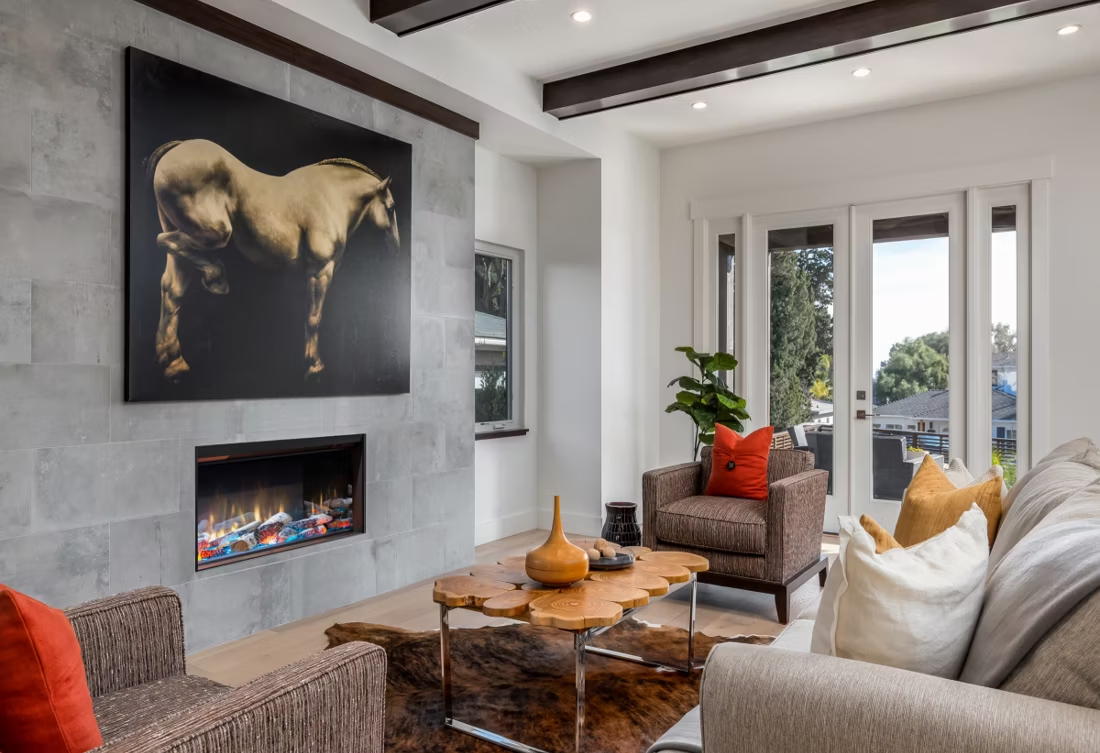
What Tift County homes do want is targeted, no-fuss heat for a family room, sunroom, or converted garage—plus the look of a fire without smoke, ash, or a masonry chimney. An electric fireplace or insert plugs into a standard outlet or a dedicated circuit, needs no venting and no combustion air, and works equally well in a site-built home or one of the county's many manufactured and modular homes. Regional pellet brands like Lignetics and Hamer Pellet Fuel do circulate through south Georgia, but mostly for grills and outdoor cookers rather than home heating—the county's mild climate simply doesn't generate the demand for pellet or wood as a primary heat source that colder regions do.
Three steps. No salesperson until you're ready.
Tell us about your project
Your zip code, your situation, and the fuel you're leaning toward—or let the answers point you to one.
See what's actually available
The brands dealers within 100 miles genuinely carry—real options, never a catalog mirage.
Get your dealer & Project Guide
A trusted local dealer, plus the free Project Guide & Parts List that names every component of the job.
Frequently Asked Questions
How much does an electric fireplace installation cost in Tift County?
Costs vary widely by unit type. A plug-in freestanding or wall-mount electric fireplace can run $300 to $1,200 installed, since many need nothing more than an existing outlet. A built-in electric insert or a unit requiring a new dedicated 120V or 240V circuit—common for larger great-room installs—typically runs $1,000 to $3,500 once an electrician runs wiring and a local dealer handles the surround or mantel work. Because there's no chimney, gas line, or venting to install, electric projects are almost always the least expensive fireplace option available to Tift County homeowners.
What size electric fireplace do I need for my home?
Most electric fireplaces in Tift County are chosen for ambiance and zone heat rather than whole-home heating, given the mild climate. A standard 1,500-watt unit comfortably supplements a single family room or sunroom on the occasional cold night, and larger great rooms may benefit from a wider insert with a higher-output heater. Since central HVAC already carries the bulk of the heating load here, sizing is more about matching the wall or hearth opening than hitting a specific BTU target—a local dealer can size the unit to your room during a quick consultation.
Where can I find electric fireplace installers near me?
Look for a hearth dealer who works alongside a licensed electrician, particularly if your project needs a new dedicated circuit rather than a simple plug-in unit. Local hearth retailers serving Tifton and the rest of Tift County typically coordinate both the fireplace installation and any required wiring in one visit, which keeps warranty coverage and code compliance straightforward. Avoid big-box installs for anything beyond a plug-in unit—circuit sizing and load calculations are best left to someone licensed to pull an electrical permit.
What's the difference between an electric insert, wall-mount, and mantel package?
An electric insert is designed to slide into an existing masonry fireplace opening, giving an old wood-burning firebox new life without any chimney work. A wall-mount unit hangs flat against a wall like a large television and needs only a nearby outlet or a short electrical run. A mantel package pairs an electric insert with a surround and mantel shelf, built to look like a traditional fireplace in a room that never had one. For Tift County homes with an existing but unused masonry fireplace, an insert is usually the simplest upgrade; for new rooms or additions, a wall-mount or mantel package is more common.
Do I need a permit to install an electric fireplace in Tift County?
A simple plug-in electric fireplace that uses an existing outlet typically doesn't require a permit. If your installation calls for a new dedicated circuit—common for larger inserts or built-in units—that electrical work does need a permit through your local building department, and it should be pulled by a licensed electrician. There's no gas line, venting, or chimney inspection involved, which is one reason electric projects in Tift County tend to move faster than gas or wood installations.
Will my electric fireplace work during a power outage?
No—electric fireplaces need household power to run, so they'll shut off along with everything else during an outage. This is different from a gas fireplace with battery-backup ignition, which can keep running when the grid goes down. Tift County doesn't see the deep, sustained cold that makes backup heat a survival issue, but ice storms do periodically knock out power in south Georgia for a day or more. If backup heat during outages matters to you, a local dealer can talk through a gas or dual-fuel option alongside your electric fireplace.
What's the best electric fireplace for Tift County's climate?
Since heat output is rarely the deciding factor here, flame realism and build quality matter more than raw BTUs. Look for units with LED flame technology and adjustable brightness so the fireplace looks good even when the heater is switched off—a common preference in a climate where the fire runs for ambiance more often than warmth. Given the region's humidity, a unit rated for use in enclosed spaces without excess moisture exposure is worth confirming with your dealer, especially for sunroom or three-season-room installs.
Electric vs. gas fireplace—which is right for my home?
Gas fireplaces in Tift County require either a natural gas line or a propane tank, plus venting, and they deliver more consistent, higher-output heat—useful if you want a fireplace that can genuinely offset your heating bill on a cold night. Electric fireplaces need only an outlet or a simple circuit, cost less to install, and carry no ongoing combustion byproducts or venting to maintain, but they can't match gas for sustained heat output or off-grid operation during an outage. For most Tift County homes, where the heating season is short and central HVAC does the heavy lifting, electric covers the ambiance and supplemental-heat need without the added infrastructure gas requires.
Electric vs. wood fireplace—which makes sense here?
Wood-burning fireplaces are uncommon as a primary heat source in Tift County's climate zone 3A—with winter lows averaging 37°F and only a fairly light winter heating season overall, most homes simply don't face the sustained cold that makes a wood stove worth the upkeep the way it would be in a place like Duluth, MN. Some rural homeowners with access to local oak, pine, or hickory still keep a wood fireplace going for ambiance or an occasional cold front, but it's a lifestyle choice here rather than a heating necessity. An electric fireplace delivers the same visual warmth without firewood, ash, chimney sweeps, or smoke—which is why it's become the more practical choice for most of the county.
Can I put a TV above my fireplace?
Yes—with an asterisk. Fireplaces are hot and TVs don't like heat. Either put a mantel between them to deflect rising warmth, or choose a fireplace with heat-management technology that creates a cool zone on the wall above—the wall stays around 125 degrees, barely warm, while the room still gets full heat. If you like clean lines and don't want a mantel, heat management is the answer.
Do electric fireplaces actually produce heat?
Yes—most put out around 4,800–5,000 BTUs from a standard outlet, which comfortably warms a bedroom, office, or den as a comfort-zone heater. What they won't do is carry a whole house the way wood, gas, or pellet can. Think of electric as ambiance-first with honest supplemental heat: flames on with no heat in July, flames plus warmth in January.
Can a fireplace actually lower my heating bill?
Yes—by creating a comfort zone. A furnace heats every square foot of the house just to warm the one room you're in; a gas fireplace on low burns roughly a sixth of the gas a typical furnace does. Set the furnace around 55–60 degrees as a baseline, then heat the rooms your family actually uses. Families who heat this way commonly save $20–$60 a month.
What is an in-home preview and do I need one?
It's a visit where a hearth professional measures your space, confirms the model you picked actually works in your home, and walks the specs—framing, gas line, venting, finish work—before anything is ordered. Some details you just can't know until you see the house. Never make a down payment without one; it's the single most-skipped step that burns buyers.
Find your electric fireplace in Tift County.
Tell us a bit about your home and we'll put together a free Project Guide & Parts List—a plan for your electric fireplace project in Tift County with the exact parts, including any wiring or mounting hardware, and our recommended local dealer.
Find Your Fireplace →