
A low-maintenance heat source for Omega's mild winters.
With an average winter low near 37°F and just a brief, mild heating season each year, Omega doesn't need a heavy-duty heating appliance. We'll help you find a trusted local dealer for a fireplace sized for supplemental comfort, not Georgia Power's whole winter bill.
Every Project Starts From One of These Five Situations
Heat on demand, without a chimney or a gas line.
Omega sits in climate zone 3A at 311 feet in Tift County, where winters are short and mild—average lows hover around 37°F and the area has a brief, mild heating season, a fraction of what a colder climate like Duluth or Burlington racks up. That's exactly why wood stoves and pellet stoves barely register here: plenty of older farmhouses around Omega still have a masonry fireplace that burns oak, pine, or hickory on a cold night for atmosphere, but almost nobody depends on it as a primary heat source, and pellet stoves are rare enough that most of the regional brands stocked nearby—Lignetics, Hamer Pellet Fuel, Greenway Renewable Energy—sell more tonnage toward the Georgia mountains than toward Tift County.
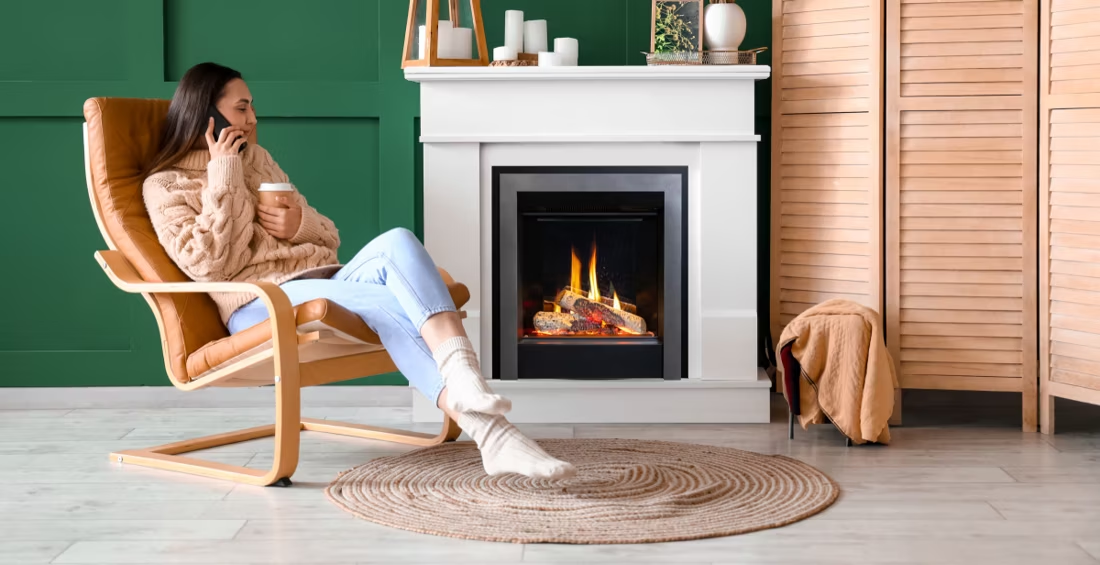
Electric fireplaces fit this climate well because they do exactly what Omega households actually need: instant, controllable heat for the occasional 30-degree night, with ambiance the rest of the season, and none of the venting, chimney, or fuel storage a wood or gas unit requires. Power here comes through either Georgia Power Co or Colquitt Electric Membership Corporation depending on your exact location, with residential rates around $0.1549 and $0.132 per kWh respectively—both reasonable enough that running a 1,500-watt unit for a few hours on a cold evening costs pocket change rather than a line item on the bill.
Three steps. No salesperson until you're ready.
Tell us about your project
Your zip code, your situation, and the fuel you're leaning toward—or let the answers point you to one.
See what's actually available
The brands dealers within 100 miles genuinely carry—real options, never a catalog mirage.
Get your dealer & Project Guide
A trusted local dealer, plus the free Project Guide & Parts List that names every component of the job.
Frequently Asked Questions
How much does an electric fireplace cost to install in Omega?
A plug-in freestanding or wall-mount unit runs $150 to $600 and needs no installation beyond a standard outlet, which covers a lot of Omega households given how mild the climate is. A built-in insert or a mantel package that calls for a dedicated 20-amp circuit typically lands between $800 and $2,500 once an electrician runs the new line—whether you're on Georgia Power or Colquitt EMC doesn't change the install cost, just which utility signs off on the meter if the project adds load. Full mantel surrounds with custom millwork can run higher, closer to $3,500, but that's finish-driven, not heating-driven.
Do I need a permit to install an electric fireplace in Omega?
A simple plug-in unit generally doesn't trigger a permit since it's not altering your home's wiring or structure. If you're having an electrician add a dedicated circuit for a built-in insert, that work typically needs an electrical permit through the Tift County Building & Development Department, since Omega's small size means most residential building and electrical permitting routes through the county rather than a separate city office. Most licensed electricians working in Tift County handle that paperwork as part of the job.
Why don't more homes in Omega use wood or pellet stoves?
The climate just doesn't call for it. With winter lows averaging 37°F and a brief, mild heating season each year, Omega's heating season is short and mild compared to most of the country—oak, pine, and hickory are still common firewood for the occasional cold-night fire or outdoor fire pit, but very few households need a stove running for months straight the way a colder climate does. Pellet stoves are even less common locally; the per-ton pellet investment doesn't pencil out when you might only burn on a handful of nights each winter.
What size electric fireplace do I need for an Omega home?
Smaller than you'd guess if you're used to shopping based on square footage alone. Because Omega rarely sees sustained cold, most homeowners here are heating one room for comfort on specific evenings rather than trying to offset a whole-house heating load—a unit rated for 400 to 1,000 square feet is usually plenty for a living room or den, even in an older, less-insulated farmhouse. Central HVAC handles the baseline heating; the electric fireplace is there for the ambiance and the occasional 30s-and-dropping night.
How much does it cost to run an electric fireplace in Omega?
Cheaper than most people expect. A typical 1,500-watt unit costs roughly $0.23 an hour to run on Georgia Power's $0.1549 per kWh residential rate, or about $0.20 an hour on Colquitt Electric Membership Corporation's $0.132 rate. Running it for three or four hours on a cold evening costs less than a dollar either way—which is part of why electric makes sense as a supplemental heat source here rather than something homeowners worry about leaving on.
Can an electric fireplace be my home's main heat source in Omega?
It can work as a zone heater for one room, but it's not designed to replace central heat, and with how mild Omega's winters run that's rarely necessary anyway. Most local installs serve as a supplemental source for the living area during the relatively few nights that dip into the 20s and 30s, while a heat pump or furnace covers the rest of the house. If you're trying to cut your Georgia Power or Colquitt EMC bill by heating only the room you're in, an electric insert is a reasonable way to do that.
What's the difference between an electric insert, mantel, and wall-mount unit?
A built-in insert drops into an existing masonry firebox—common for homeowners around Omega who have an old wood-burning fireplace they no longer use for oak or pine fires and want to convert without touching the chimney. A mantel package pairs a freestanding or built-in unit with a surround and is typical for newer construction without an existing fireplace. A wall-mount unit skips the mantel entirely and installs flush or surface-mounted, which is the simplest option if you just want supplemental heat and ambiance without a furniture-style centerpiece.
What happens to my electric fireplace during a power outage?
It won't run—electric fireplaces depend entirely on utility power, and both Georgia Power and Colquitt EMC territory in this part of South Georgia see occasional outages from summer storms and the remnants of tropical systems. Given how mild Omega's winters generally are, that's rarely a heating emergency, but if you want backup for a cold snap during an outage, some homeowners pair the fireplace with a small generator or keep a propane space heater as insurance rather than relying on wood heat, which isn't common here.
How much maintenance does an electric fireplace need?
Very little, which is part of the appeal compared to a wood setup. Wipe down the glass front occasionally, dust the heating element and fan intake a couple of times a season, and check that the outlet or dedicated circuit connection stays secure. There's no chimney to sweep and no ash to clean out—LED-based units commonly run 10 or more years before the light elements need attention, and most issues that do come up are simple fan or thermostat fixes a local dealer can handle quickly.
Can I put a TV above my fireplace?
Yes—with an asterisk. Fireplaces are hot and TVs don't like heat. Either put a mantel between them to deflect rising warmth, or choose a fireplace with heat-management technology that creates a cool zone on the wall above—the wall stays around 125 degrees, barely warm, while the room still gets full heat. If you like clean lines and don't want a mantel, heat management is the answer.
How much does an electric fireplace cost to run?
With the heater on, a typical unit draws about 1,500 watts—at average electric rates that's roughly 20 cents an hour. Run the flame effect alone and it costs pennies; the flames are LED-driven and use about as much power as a light bulb. There's no pilot light, no fuel delivery, and essentially no maintenance.
Can I install a fireplace myself?
If you're putting a fire in your house on purpose, it's best to work with an expert. Unless you're genuinely experienced in framing, gas line, vent pipe, and the national code on clearances to combustibles, have a professional do it—and ideally the same company that sells you the fireplace, so warranty, service, and liability all live under one roof.
Should the dealer who sells my fireplace also install it?
Ideally, yes. A fireplace project involves vent pipe, gas line, electrical, and often tile or stone. Hire three or four separate trades and you own the liability and the game of telephone between them. One company selling and installing means one accountable party, start to finish—ask about factory training, on-time completion records, and what happens if an inspection fails.
Nearby Dealers
Hearth shops serving Omega and the surrounding area. Every listing shows whether it is a WhyFire partner, a dealer we have verified as authorized for the brands we recommend, or a local business carrying hearth products. No manufacturer pays for placement. How we verify dealers →
We’ve paused dealer listings for this connection today. Enter your zip or postal code above to find dealers near you, or come back tomorrow.
Popular Electric Brands
Where each brand came from, what's inside it today, and every current model. No brand pays to be here. Not every dealer carries every brand, so enter your zip code to see what's sold near Omega.
Fireplace Xtrordinair
Fireplace Xtrordinair, now often called FireplaceX, is the fireplace brand of Travis Industries, Inc., of Mukilteo, Washington.
5 electric models →DaVinci
DaVinci Custom Fireplaces is a brand of Travis Industries, Inc., of Mukilteo, Washington, the company behind Lopi and Fireplace Xtrordinair.
5 electric models →Kozy Heat
Kozy Heat was founded in 1976 by Dudley Hussong in Lakefield, Minnesota, and incorporated as Hussong Manufacturing Co., Inc. in 1978.
3 electric models →Forge & Flame
Forge & Flame is the stove brand Hearth & Home Technologies introduced in August 2023 to bring Vermont Castings, Harman, and Quadra-Fire under one name.
1 electric model →Electric Service in Omega
An electric fireplace's heater draws about 1,500 watts—pennies per hour at local rates.
Georgia Power Co
Colquitt Electric Membership Corp
Get your free Project Guide & Parts List for an Omega electric fireplace.
Tell us about your home and whether you're on Georgia Power or Colquitt Electric Membership Corporation, and we'll help you find a trusted local dealer and send a free Project Guide & Parts List sized right for Omega's mild winters.
Find Your Fireplace →