
Keep Your Family Warm and Safe—No Matter What
With winter lows averaging 33°F, most Stone Mountain homes don't need wood heat to get through the season—but if you want one for ambiance, backup power, or a historic mantel, we'll connect you with a dealer who can do it right.
Every Project Starts From One of These Five Situations
A mild climate makes wood a lifestyle choice, not a necessity.
Stone Mountain sits in DeKalb County just east of Atlanta, in climate zone 3A with a fairly mild, short heating season and an average winter low around 33°F. Compare that to Duluth, MN, where winters are long and brutally cold and wood stoves are often essential backup heat—Stone Mountain's winters simply don't demand it. That's why our models rate wood as not applicable here: it's not that wood fireplaces don't exist, it's that almost no one in this climate needs one to stay warm.
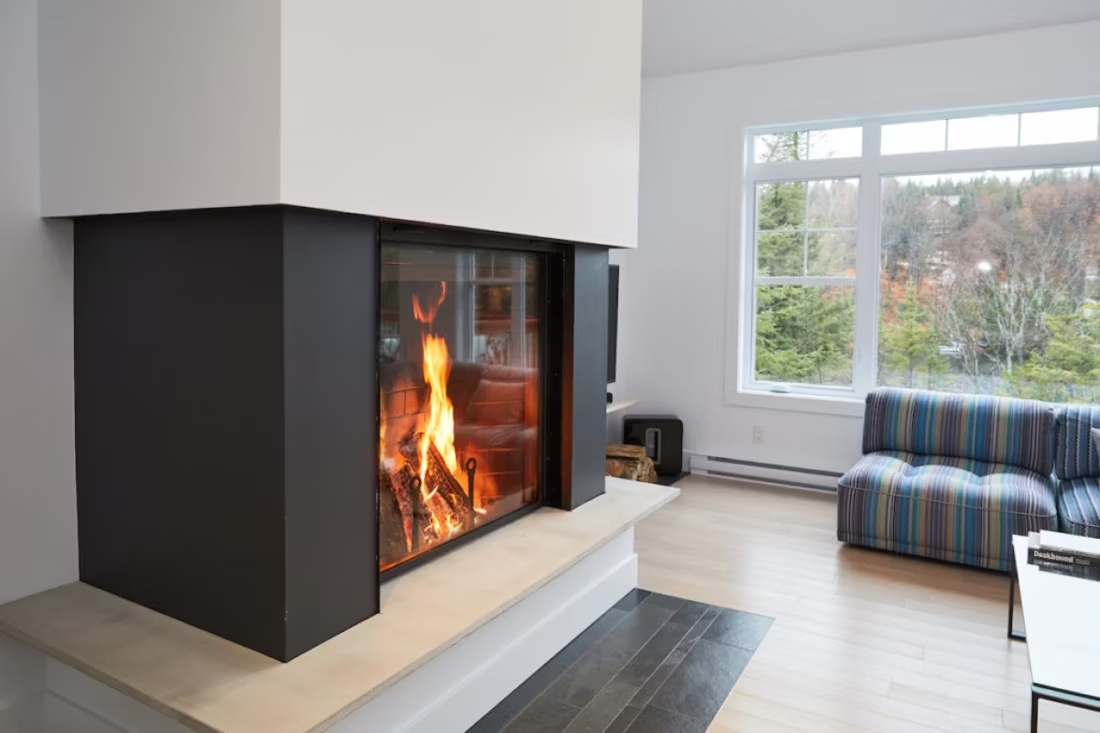
That said, plenty of homes around Stone Mountain Village and the older DeKalb County neighborhoods near the park still have original masonry fireplaces, and some homeowners want to bring them back to life with an EPA-certified wood insert—for the look of a real fire, for the rare ice storm that knocks out power, or simply because they prefer a wood fire to a gas one. If that's you, we'll match you with a local dealer who can size the unit, handle the DeKalb County permit, and make sure the chimney and clearances are done correctly rather than left to guesswork.
Three steps. No salesperson until you're ready.
Tell us about your project
Your zip code, your situation, and the fuel you're leaning toward—or let the answers point you to one.
See what's actually available
The brands dealers within 100 miles genuinely carry—real options, never a catalog mirage.
Get your dealer & Project Guide
A trusted local dealer, plus the free Project Guide & Parts List that names every component of the job.
Frequently Asked Questions
Are wood stoves or fireplaces common in Stone Mountain, GA?
Not really, and it's worth saying plainly: with an average winter low around 33°F and only a short, mild heating season each year, most Stone Mountain homes get by fine on gas or electric heat, and full wood-burning setups are a small minority. The homes that do have them are usually older properties near Stone Mountain Village with existing masonry chimneys, or homeowners who specifically want a real wood fire for atmosphere rather than as their main heat source.
Why would anyone want a wood fireplace in a climate this mild?
A few real reasons come up locally. Georgia ice storms occasionally knock out power for days at a time, and a wood-burning stove or insert is one of the few heat sources that keeps working with no electricity at all—unlike most gas fireplaces, which need power for the blower or ignition. Others simply have an existing masonry fireplace in an older DeKalb County home and want it functional again rather than decorative. And some homeowners just prefer the smell and sound of a real wood fire over a gas flame, even if they only use it a handful of nights a year.
What does a wood fireplace or insert installation typically cost?
Because wood installs are uncommon here, pricing is less standardized than it would be in a wood-heating region, but a straightforward EPA-certified insert going into an existing masonry fireplace generally runs in the $3,000 to $7,000 range nationally, depending on the unit and whether the chimney needs a new stainless liner. A freestanding stove with new Class A chimney pipe in a home with no existing fireplace runs higher once venting and a hearth pad are factored in. A local dealer will give you a firm number after seeing your chimney and home in person.
Do I need a permit to install a wood stove or insert in Stone Mountain?
Yes—new wood-burning installations require a building permit through DeKalb County, and the unit itself needs to meet current EPA 2020 NSPS emissions standards. There's no winter burn-ban or air quality curtailment program active in this area the way there is in some Western cities, so once it's installed and permitted, you can burn it whenever you like. Most hearth dealers handle the permit paperwork as part of the installation.
What firewood species are available locally?
Oak, pine, and hickory are the common options around DeKalb County. Oak and hickory are dense hardwoods that season slowly—plan on 9 to 12 months of drying—but burn longer and hotter once ready, which matters for the occasional cold night or power outage. Pine is easier to find and lights faster, but its higher sap content means more creosote buildup if it's not fully seasoned, so it's better as a supplemental fuel than a steady diet.
Can I convert my existing masonry fireplace into a working wood-burning insert?
Often, yes. Many of the older homes near Stone Mountain Village have original masonry fireboxes that were built for open-hearth burning decades ago and are inefficient by today's standards. A qualified installer can inspect the flue, install a stainless steel liner sized to the new appliance, and fit an EPA-certified insert that dramatically improves heat output and cuts creosote buildup compared to the open fireplace. It's one of the more common wood projects we see requested in this area, even though full wood heating systems are rare.
What are people in Stone Mountain using instead of wood heat?
Gas and electric fireplaces are far more typical here. Gas units offer instant, thermostat-controlled heat without any wood handling, and electric fireplaces are simple to install—Georgia Power serves the area at roughly 15.5 cents per kWh, which makes a supplemental electric unit inexpensive to run for occasional evenings. For most Stone Mountain homeowners looking for a fireplace upgrade rather than an off-grid backup heat source, gas or electric solves the problem with a lot less maintenance than wood.
How do I find a wood stove or insert dealer near Stone Mountain?
Because demand is low, there are far fewer wood-focused hearth specialists in the DeKalb County and metro Atlanta area than you'd find in a wood-heating region, and some general hearth shops focus almost entirely on gas. That makes picking the right dealer more important, not less—you want someone who still regularly installs EPA-certified wood units and knows DeKalb County permitting, not a shop that will talk you into a gas conversion by default. We match you with a trusted local dealer who actually stocks and installs wood-burning appliances in this market.
Wood vs. gas vs. electric—what actually makes sense for my home?
Wood makes sense if you specifically want a fire that works without electricity during an ice storm outage, or you have an existing masonry chimney near Stone Mountain Village you want back in service. Gas makes sense for most other homeowners—instant heat, no ash, and it pairs well with a mild climate where you're using the fireplace for comfort more than survival. Electric makes sense for the lowest-cost, lowest-maintenance option, especially in a room where you mainly want the visual of a fire on a cool evening. Given Stone Mountain's winters, gas or electric covers the vast majority of homes well; wood is the right call for a specific reason, not the default.
Why is my open fireplace making my house colder?
Open fireplaces suck—literally. As the fire burns, it consumes air your furnace already paid to heat and pulls it out through the chimney, so the house is actually colder after the fire goes out than before you lit it. An insert fixes this: it seals the chimney, puts fixed glass across the front, and turns that hole in your house into a real heat source.
Why is a fireplace insert so efficient?
An insert does two things: it seals the chimney completely, so you stop losing air you already paid to heat, and it radiates warmth into the room through the firebox and glass. Most add a heat-exchange fan that pulls cool room air underneath, wraps it around the hot firebox, and pushes it back out warm. Your home is more efficient before you've even lit the first fire.
Can a fireplace actually lower my heating bill?
Yes—by creating a comfort zone. A furnace heats every square foot of the house just to warm the one room you're in; a gas fireplace on low burns roughly a sixth of the gas a typical furnace does. Set the furnace around 55–60 degrees as a baseline, then heat the rooms your family actually uses. Families who heat this way commonly save $20–$60 a month.
Can I install a fireplace myself?
If you're putting a fire in your house on purpose, it's best to work with an expert. Unless you're genuinely experienced in framing, gas line, vent pipe, and the national code on clearances to combustibles, have a professional do it—and ideally the same company that sells you the fireplace, so warranty, service, and liability all live under one roof.
Nearby Dealers
Hearth shops serving Stone Mountain and the surrounding area. Every listing shows whether it is a WhyFire partner, a dealer we have verified as authorized for the brands we recommend, or a local business carrying hearth products. No manufacturer pays for placement. How we verify dealers →
North Atlanta Fireplace Grill & Patio
Construction Resources - Decatur
The Man Cave Store
Atlanta Chimney Worx
Builder Specialties, Inc.
Cr Design Center - Westside
Authenteak
Fireplaces By Mike
C & P Fireplaces
Fireplace Depot
Tara Residential
Bolton Fireplace
EarthCore Industries
Rutherford Equipment, Inc.
The Mad Hatter
Find your wood fireplace in Stone Mountain, GA.
Tell us about your home and we'll match you with a trusted local dealer and put together your free Project Guide & Parts List—sized correctly for a wood stove or insert in Stone Mountain's mild climate, permits and all.
Find Your Fireplace →