
Keep Your Family Warm and Safe—No Matter What
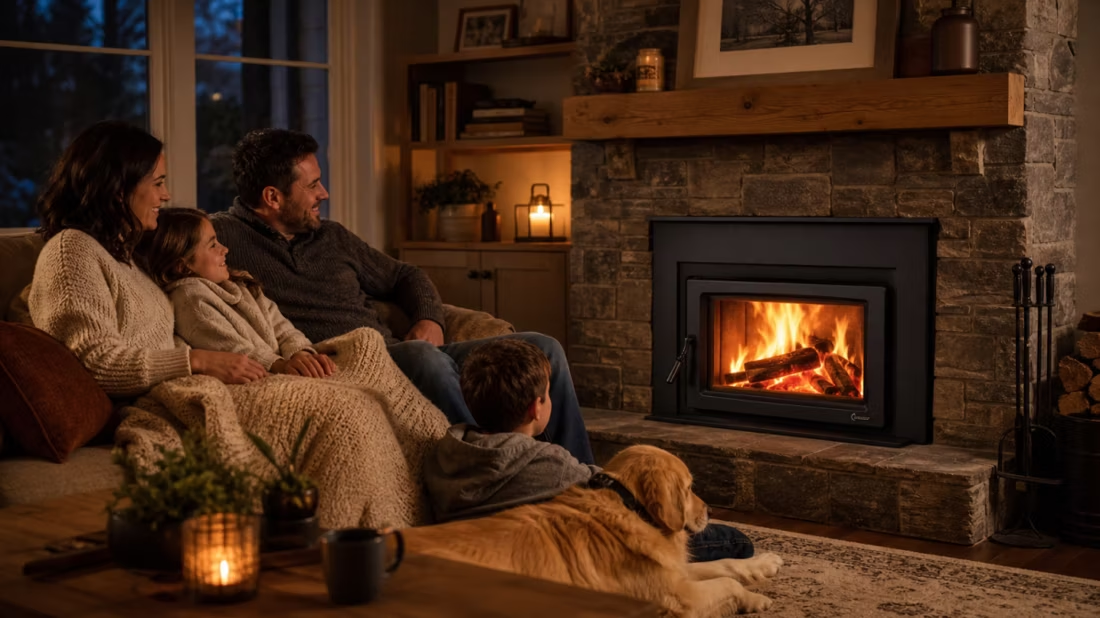
Wood isn't the default heat source in Henry County, but for ambiance, ice-storm backup, or a rural property with a wood lot, it can still make sense. We'll match you with a local dealer who handles it correctly.
Every Project Starts From One of These Five Situations
A Supplemental Luxury, Not a Necessity.
Stockbridge sits in climate zone 3A about 20 miles south of Atlanta, at 814 feet elevation, with an average winter low around 32°F and just under 3,000 heating degree days a year. That's a fraction of the heating load a place like Duluth, MN or Burlington, VT sees—most Henry County homes get through winter comfortably on a heat pump alone, and a handful of genuinely cold nights rarely justify building a home around wood heat the way colder regions do.
That said, wood isn't extinct here—it's just occasional. Some Stockbridge homeowners install a wood stove or fireplace insert for the ambiance of a real fire, as backup heat during the ice storms that occasionally knock out power in Henry County, or because they're on a wooded lot with easy access to oak, pine, and hickory. There are no air quality non-attainment restrictions or burn curtailment rules here like you'd find out West, so if wood heat fits your home and lifestyle, nothing local stands in the way—you'll just want a dealer experienced enough to size and install it right in a market where wood isn't the everyday request.
Three steps. No salesperson until you're ready.
Tell us about your project
Your zip code, your situation, and the fuel you're leaning toward—or let the answers point you to one.
See what's actually available
The brands dealers within 100 miles genuinely carry—real options, never a catalog mirage.
Get your dealer & Project Guide
A trusted local dealer, plus the free Project Guide & Parts List that names every component of the job.
Frequently Asked Questions
How much does a wood stove installation cost in Stockbridge?
There isn't a deep bench of wood-focused installers in Henry County the way there is in colder parts of the country, so pricing tends to be quoted per project rather than off a standard local rate sheet. Nationally, a comparable wood stove or insert installation—unit, hearth pad, and Class A chimney or liner work—typically runs $3,500 to $8,000 depending on whether you're venting through an existing masonry chimney or building new. Because demand is lower here, it's worth getting a home-specific quote rather than assuming a number; that's exactly what the free Project Guide from a matched local dealer is for.
Do I even need a large wood stove in a climate like Stockbridge's?
Usually not. With roughly 2,972 heating degree days a year, Stockbridge's heating load is closer to Charlotte or Raleigh than to a true cold-climate market. Most homeowners here who install wood heat are looking for supplemental warmth in one room, backup heat for power outages, or the look and feel of a real fire—not a unit sized to carry the whole house through a hard winter. A small to mid-size EPA-certified stove or insert is plenty for a den, great room, or single living area, and it avoids the overheating and smoldering that comes with an oversized unit in a mild climate.
Where can I find a certified wood stove installer near Stockbridge?
Look for NFI (National Fireplace Institute) or CSIA (Chimney Safety Institute of America) certification—credentials that matter more here, not less, precisely because wood-burning installs are a smaller share of the local hearth business compared to gas. A generalist contractor who mostly installs gas logs and gas inserts may not have the same depth of experience with solid-fuel clearances and chimney venting. We match Stockbridge homeowners with dealers who genuinely stock and install wood-burning equipment, rather than treating it as an afterthought.
What's the difference between a wood stove and a wood insert?
A wood stove is a freestanding unit on its own hearth pad, vented through a chimney, and can go almost anywhere with the right clearances. A wood insert slides into an existing masonry fireplace opening and uses that chimney (typically with a stainless liner) to vent—a common choice for older Stockbridge homes with a builder-grade open fireplace that's more decorative than functional. If your home already has a masonry fireplace, an insert usually delivers far more usable heat for the ambiance you're after; if it doesn't, a freestanding stove is the more practical route.
Do I need a permit to install a wood stove in Henry County?
Yes—new wood-burning installations in Henry County require a building permit covering the unit, hearth clearances, and chimney or venting work, and most local dealers handle that paperwork as part of the installation. The good news is Stockbridge has no air quality non-attainment designation and no seasonal burn curtailment rules like you'd find in parts of the West, so once it's permitted and installed, you can burn without worrying about advisory days or restricted-burn periods.
What's the best wood stove for a mild climate like Stockbridge's?
Since most Stockbridge installs are supplemental rather than whole-house primary heat, you don't need a catalytic stove built for 20-hour overnight burns at sub-zero temperatures—that's overkill here. A smaller non-catalytic EPA-certified stove or insert from a brand like Pacific Energy, Lopi, or Jotul will comfortably heat a single room or open living area and is easier to run efficiently on the shorter, milder burn cycles typical of a Georgia winter. If backup heat during outages is a priority, ask your dealer about models rated to run without electricity, since that's often the actual use case.
How often should my chimney be inspected if I only burn occasionally?
Annually, regardless of how often you actually use it—this is one place lighter use can work against you. Occasional, low-and-slow fires (common with a supplemental or ambiance-focused stove) often produce more creosote buildup per hour of burn time than the hot, steady fires of a primary heat source, because the flue doesn't stay consistently warm. A once-a-year inspection before the first cold snap catches that buildup before it becomes a hazard, even in a climate as mild as Stockbridge's.
Where can I get firewood in the Stockbridge area?
Henry County has plenty of oak, pine, and hickory available through local tree services, land-clearing operations, and rural sellers rather than a federal forest permit system—there's no national forest cutting-permit office near Stockbridge the way there is out West. Oak and hickory split and seasoned for six months to a year burn hot and clean and are the preferred choice for anyone running a stove regularly; pine is more common as kindling or shoulder-season wood since it burns faster and leaves more resin buildup in the flue.
Wood vs. gas—which actually makes sense in Stockbridge?
For most Henry County homes, gas is the more practical everyday choice—natural gas and propane fireplaces are common here, offer instant on/off heat, and don't require sourcing or stacking firewood for a climate that only occasionally needs it. Wood earns its place for a different reason: the ambiance of a real fire, and the fact that a wood stove keeps working when an ice storm knocks out power and a gas unit's electronic ignition (or a heat pump) doesn't. If you already have gas heat and just want backup and atmosphere, wood is a strong complement rather than a replacement.
What's the difference between an insert and a zero-clearance fireplace?
An insert is a fireplace that slides into a pre-existing wood-burning fireplace—if you don't have one, there's nothing to insert it into. A zero-clearance fireplace is built into a framed wall, which makes it the answer for remodels and new construction. Simple test: existing masonry fireplace means insert; blank or framed wall means zero-clearance.
Can a wood stove burn all night?
The right one can. If waking up to a warm house and live coals matters to you, say exactly that when you're shopping—firebox size and burn-rate control determine overnight performance far more than any number on a spec sheet. It's a much more useful question than asking about BTUs.
What is an in-home preview and do I need one?
It's a visit where a hearth professional measures your space, confirms the model you picked actually works in your home, and walks the specs—framing, gas line, venting, finish work—before anything is ordered. Some details you just can't know until you see the house. Never make a down payment without one; it's the single most-skipped step that burns buyers.
Can a fireplace actually lower my heating bill?
Yes—by creating a comfort zone. A furnace heats every square foot of the house just to warm the one room you're in; a gas fireplace on low burns roughly a sixth of the gas a typical furnace does. Set the furnace around 55–60 degrees as a baseline, then heat the rooms your family actually uses. Families who heat this way commonly save $20–$60 a month.
Nearby Dealers
Hearth shops serving Stockbridge and the surrounding area.
Find your wood fireplace in Stockbridge.
Wood heat is a smaller niche in Henry County, so working with the right local dealer matters even more here. Tell us about your home and we'll match you with a dealer who genuinely stocks wood stoves and inserts, plus a free Project Guide & Parts List for your project.
Find Your Fireplace →