
Keep Your Family Warm and Safe—No Matter What
With winter lows averaging 32°F and central gas or electric heat covering most homes, wood isn't how Smyrna heats. But for ambiance, resale value, or backup during a Cobb County ice storm, the right stove or insert still makes sense—if you know where to find it.
Every Project Starts From One of These Five Situations
A mild climate means wood is optional, not essential.
Smyrna sits in climate zone 3A at just over 1,000 feet elevation, with a mild, short heating season—a fraction of what a cold-climate city like Duluth, Minnesota logs in a single season. Winter lows here average 32°F, not the single digits that make wood heat a survival tool further north. The result: almost every home in Smyrna and the surrounding Cobb County suburbs heats primarily with a gas furnace or an electric heat pump through Georgia Power, and a wood-burning stove or fireplace is rarely anyone's main heat source.
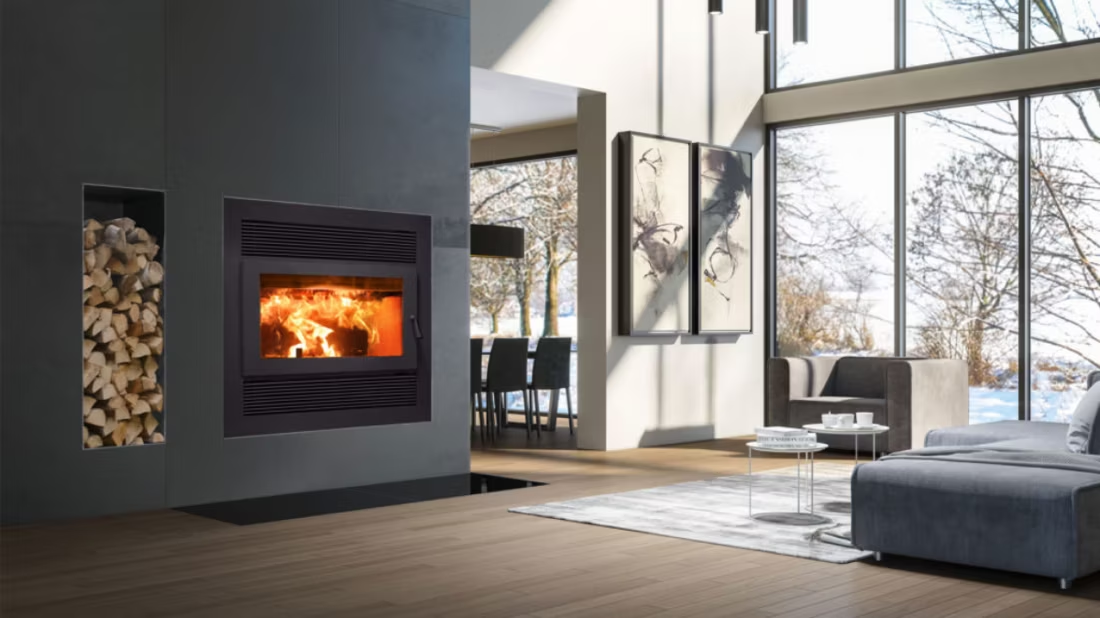
That doesn't mean wood is irrelevant here. Older homes in Smyrna's historic Vinings-adjacent neighborhoods often have an existing masonry fireplace that owners want to bring back into service, and plenty of homeowners simply want the look and feel of a real wood fire for a few cold nights a year. Local firewood—mostly oak, hickory, and pine—is sold seasoned and split by the rack or cord rather than self-cut, since Cobb County is suburban and doesn't offer the kind of national forest cutting permits you'd find further north in the Chattahoochee-Oconee. With no air quality nonattainment issues or winter inversion concerns on the books here, there's nothing stopping an occasional wood fire—it's just not the default.
Three steps. No salesperson until you're ready.
Tell us about your project
Your zip code, your situation, and the fuel you're leaning toward—or let the answers point you to one.
See what's actually available
The brands dealers within 100 miles genuinely carry—real options, never a catalog mirage.
Get your dealer & Project Guide
A trusted local dealer, plus the free Project Guide & Parts List that names every component of the job.
Frequently Asked Questions
Are wood-burning fireplaces common in Smyrna, Georgia?
Not really, and that's worth saying plainly. With winter lows averaging 32°F and only a mild, short heating season, most Smyrna homes rely on a gas furnace or an electric heat pump through Georgia Power for daily heat. A wood stove or fireplace here is almost always a secondary or ambiance choice—for a handful of chilly nights, for the look of a real fire, or as backup if the power goes out during a winter storm. It's a legitimate project, just not the primary heating decision it would be in a colder climate.
How much does a wood stove or fireplace installation cost in Smyrna?
Because wood installs are uncommon locally, pricing varies more than it would in a market with more volume. As a general range, a freestanding wood stove with new Class A chimney venting typically runs $4,000 to $8,000, while converting an existing masonry fireplace to a wood-burning insert—common in Smyrna's older homes—tends to land lower, often $3,500 to $6,500, since the chimney already exists. A local dealer can give you a firm number once they've seen your existing hearth or chimney, if you have one.
Do I need a permit to install a wood stove in Smyrna?
Yes. New wood-burning appliance installations in Smyrna require a building permit through the City of Smyrna's Community Development Department, and the stove itself needs to meet current EPA emissions standards. Homes just outside city limits in unincorporated Cobb County go through Cobb County's permitting process instead. Most hearth dealers who install wood stoves in this market handle the permit paperwork as part of the job, since it's a less frequent request here than in colder regions.
What firewood works best for a wood stove in Smyrna?
Oak and hickory are the two workhorses in this part of Georgia—both are dense hardwoods that burn hot and long once properly seasoned (six months to a year, split and stacked off the ground). Pine is also common locally and burns fine for occasional fires, but it's resinous and builds creosote faster, so it's better suited to backup or ambiance use than daily burning. Since Cobb County doesn't have public land cutting permits the way a national forest region would, nearly everyone here buys seasoned firewood by the rack or cord from a local supplier rather than cutting their own.
Does a wood stove make sense as backup heat during a Georgia ice storm?
It's one of the better reasons to install one here. Atlanta-area ice storms—the kind that knocked out power across Cobb County for days back in 2014—are infrequent but not rare, and a wood stove is one of the only heating appliances that works with zero electricity. A gas furnace typically needs power for its blower and ignition, and an electric heat pump obviously needs power outright. A wood stove or fireplace insert will keep one room genuinely warm regardless of what Georgia Power's grid is doing, which is worth factoring in even if you'll only burn it a few times a winter otherwise.
Wood vs. gas—which makes more sense for a Smyrna home?
For most Smyrna homeowners, gas wins on convenience: instant on-off heat, no wood handling or ash cleanup, and it pairs naturally with the central gas heating many homes already have. Wood wins on ambiance, resale appeal in older homes with existing masonry fireplaces, and true off-grid backup heat during outages. Given the area's mild climate—a light heating load compared to almost anywhere north of Georgia—wood here is rarely a primary-heat decision. It's chosen for what a gas insert can't offer: a real flame and heat that doesn't depend on the grid.
Can I convert my existing masonry fireplace into a wood-burning insert?
Yes, and this is one of the more common wood projects in Smyrna specifically because a number of homes here have an older open masonry fireplace that's inefficient and rarely used. A wood insert fits into that existing opening, uses the existing chimney with a stainless liner, and turns a decorative fireplace into a real heat source. It's typically the lower-cost wood project in this market since the masonry and chimney already exist—a local dealer can inspect your flue and confirm it's a good candidate before quoting the insert itself.
Are there any burn restrictions on wood stoves in Smyrna?
No—Smyrna and Cobb County have no air quality nonattainment designation and no winter inversion pattern, so there's nothing like the seasonal burn curtailments you'd see in a smoke-prone basin out West. The main air quality issue in the Atlanta metro is summer ozone, which has nothing to do with wintertime wood burning. Practically, this means you won't run into a curtailment notice telling you not to light a fire on a given winter night in Smyrna.
Wood vs. pellet stove—is either a good fit for Smyrna?
Between the two, wood is the more practical option here, and it isn't close. Pellet stoves need a steady electric supply to run their auger and blower, which erases the one real advantage wood has locally—working during a power outage—and pellet fuel isn't stocked or sold widely in this market the way it is in the Northeast or Pacific Northwest. If you want a real wood fire occasionally or backup heat for an ice storm, a wood stove or insert is the more sensible, more available choice for a Smyrna home.
What's the difference between an insert and a zero-clearance fireplace?
An insert is a fireplace that slides into a pre-existing wood-burning fireplace—if you don't have one, there's nothing to insert it into. A zero-clearance fireplace is built into a framed wall, which makes it the answer for remodels and new construction. Simple test: existing masonry fireplace means insert; blank or framed wall means zero-clearance.
Why is my open fireplace making my house colder?
Open fireplaces suck—literally. As the fire burns, it consumes air your furnace already paid to heat and pulls it out through the chimney, so the house is actually colder after the fire goes out than before you lit it. An insert fixes this: it seals the chimney, puts fixed glass across the front, and turns that hole in your house into a real heat source.
How much should I budget for a fireplace?
For an average home—covering the fireplace, the vent pipe, and basic installation—a budget between $3,900 and $5,500 gives you a lot of options across wood, gas, and pellet. By the time you add finish work, gas line, and electrical, the average complete installation lands between $5,000 and $12,000 all-in. In a remodel or new build, a good rule is to put about 2.5% of the total project cost toward the fireplace.
Can I install a fireplace myself?
If you're putting a fire in your house on purpose, it's best to work with an expert. Unless you're genuinely experienced in framing, gas line, vent pipe, and the national code on clearances to combustibles, have a professional do it—and ideally the same company that sells you the fireplace, so warranty, service, and liability all live under one roof.
Nearby Dealers
Hearth shops serving Smyrna and the surrounding area.
Find your wood fireplace in Smyrna, Georgia.
Wood-burning units are a niche request in this market, so we'll match you with a local dealer who genuinely stocks and installs them—and send you a free Project Guide & Parts List covering the exact parts, venting, and recommended dealer for your Smyrna home.
Find Your Fireplace →