
Electric warmth for Seminole County's mild winters.
From Donalsonville to the farmland ringing Lake Seminole, most homes here need a boost of heat on a cold front, not a primary heat source. Find the right electric fireplace and connect with a trusted local dealer.
Every Project Starts From One of These Five Situations
A little heat goes a long way in Seminole County.
Seminole County sits in Georgia's far southwest corner, where Spring Creek and the Chattahoochee back up into Lake Seminole and the state line brushes both Florida and Alabama. It's classified climate zone 2A—hot and humid—with heating degree days running around 1,796 a year, a fraction of what a place like Duluth, Minnesota logs in a single winter. Winter lows average 39°F. In a climate like that, a furnace or heat pump handles the bulk of the heating load, and a fireplace's job shifts from keeping a family alive during a cold snap to warming a room on the handful of nights that actually call for it.
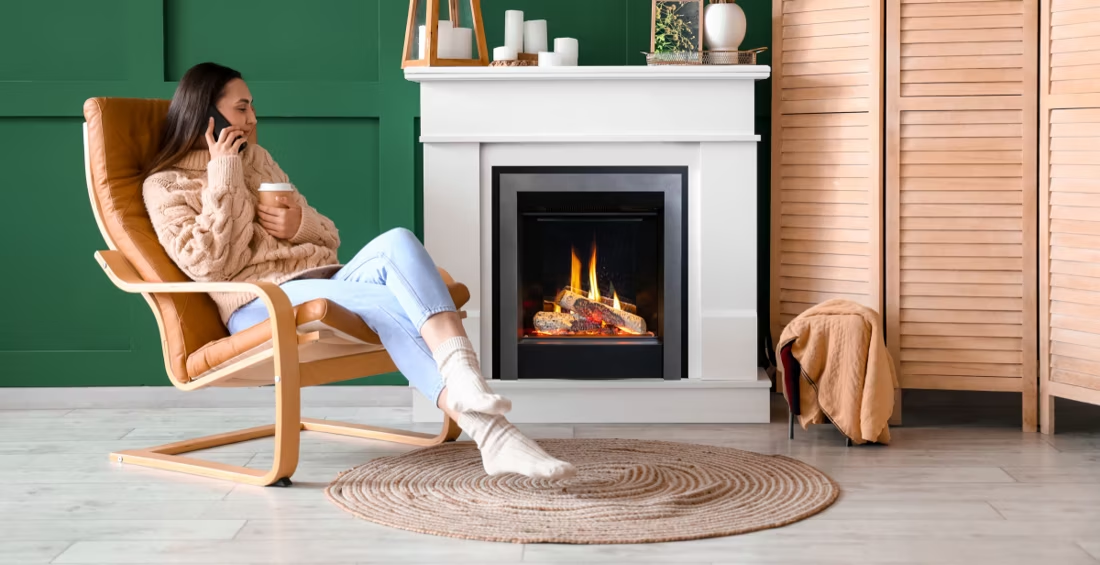
For most of the county's roughly 3,100 residents—spread between Donalsonville and the pecan orchards, peanut fields, and cotton acreage around it—an electric fireplace or insert fits the climate and the housing stock better than a wood or pellet setup ever would. There's no chimney to maintain, no fuel to store, and no smoke to manage on a still winter morning. Plug-in units run on a standard household outlet; larger built-ins wired to a dedicated 240-volt circuit put out more heat for an open living area. Either way, it's warmth you switch on with a remote and switch off just as fast once the front moves through.
Three steps. No salesperson until you're ready.
Tell us about your project
Your zip code, your situation, and the fuel you're leaning toward—or let the answers point you to one.
See what's actually available
The brands dealers within 100 miles genuinely carry—real options, never a catalog mirage.
Get your dealer & Project Guide
A trusted local dealer, plus the free Project Guide & Parts List that names every component of the job.
Frequently Asked Questions
How much does an electric fireplace installation cost in Seminole County?
Most electric fireplace projects in Seminole County run $500 to $2,500. A plug-in insert or freestanding unit that uses an existing 120-volt outlet sits at the low end—there's no chimney, gas line, or venting to install. A larger built-in or linear wall unit wired to a dedicated 240-volt circuit costs more once you factor in the electrician's time to run that circuit, especially in older homes around Donalsonville where the electrical panel may need a slot freed up. Because there's no combustion involved, costs stay well below what a gas or wood installation would run in this county.
Do I need a permit for an electric fireplace in Seminole County?
A plug-in electric fireplace or insert typically doesn't require any permit—it's no different than plugging in a space heater. If you're having a built-in unit hardwired to a new 240-volt circuit, that electrical work generally needs a permit through the Seminole County Building Department, and it should be pulled by the licensed electrician doing the work. There's no chimney inspection, no gas line permit, and no air quality consideration to navigate, which is part of why electric installs move faster here than a wood or gas project would.
Is an electric fireplace enough heat for Seminole County winters?
For most homes, yes—as supplemental heat. With average winter lows around 39°F and only about 1,796 heating degree days a year, Seminole County's heating season is short and mild by national standards. Most houses already rely on a central heat pump sized for zone 2A conditions, so an electric fireplace is there to take the edge off a specific room during a cold front or add ambiance the rest of the time. On the rare nights temperatures dip into the 20s, a mid-size electric insert (1,500 watts, roughly 5,000 BTU equivalent) can noticeably warm a living room or den without straining the circuit.
What's the difference between an electric fireplace, insert, and wall-mounted unit?
An electric insert is built to drop into an existing fireplace opening—common in the older brick ranch homes scattered around Donalsonville and the county's rural roads. A wall-mounted or built-in unit is designed to be recessed into a wall or framed enclosure, popular in newer construction or remodels where there's no existing masonry fireplace to work with. A freestanding electric stove or mantel package sits on the floor and needs no structural modification at all, which makes it a common choice for the manufactured and mobile homes that make up a meaningful share of housing in a small rural county like this one.
Will my electric fireplace work during a power outage?
No—electric fireplaces need power to run the heater and, in most models, the flame-effect display, so they go dark along with everything else when the electricity drops. That matters in Seminole County because summer thunderstorms and the occasional remnant of a Gulf tropical system can knock out power for hours at a time. If outage resilience during a storm is a real priority for your household, a propane fireplace with a battery-backed or self-powered ignition system is worth discussing with a local dealer as a complement to an electric unit used the rest of the year.
What should I look for in an electric fireplace for Georgia's humid climate?
Humidity isn't the concern with electric units that it is with masonry chimneys—there's no flue to develop condensation or creosote buildup. What matters more locally is sealed electronics that hold up to Seminole County's humid summers even when the unit sits unused for months, and, for the county's manufactured and mobile homes, a model rated for the wall or clearance situation you actually have. Ask your local dealer about LED heat elements over older coil-style heaters—they run cooler to the touch and tend to last longer in a hot, humid climate.
Electric insert vs. built-in wall unit vs. mantel package—which fits my Seminole County home?
If you have an existing masonry fireplace—common in older homes near Donalsonville—an insert is usually the simplest and least expensive path since it drops into the opening you already have. If you're in a manufactured or mobile home, which make up a significant share of housing in a county this size, a lightweight mantel package or wall-mounted unit avoids any structural fireplace requirement entirely. For new construction or a remodel, a linear built-in recessed into a framed wall gives the cleanest, most modern look. A local dealer can walk your specific floor plan and tell you which option actually works with your walls and wiring.
Where can I find a local dealer or installer near Donalsonville?
With Seminole County's population under 3,200, dealer storefronts inside the county are limited, and many residents end up working with retailers in nearby Bainbridge (Decatur County) or Blakely (Early County) that already service this stretch of southwest Georgia. That's exactly the gap Find My Fireplace is built to close—we match you with a trusted dealer who covers Seminole County, whether their showroom is in Donalsonville or a short drive away, so you're not left guessing at a big-box store that's never wired a fireplace for a rural Georgia home.
Electric vs. gas—which is right for my Seminole County home?
Gas fireplaces in this county run on propane, since natural gas service is limited to none in most rural areas—that means a tank, a delivery relationship, and a bigger upfront install. In exchange, gas delivers more heat output and, with the right ignition system, can keep running through a power outage. Electric skips the fuel storage and delivery entirely, installs faster and cheaper, and suits a climate where 1,796 heating degree days means most of the demand is for ambiance and light supplemental warmth rather than serious BTU output. Wood and pellet stoves, by contrast, are essentially absent from Seminole County's building stock—the short, mild heating season rarely justifies the cutting, storage, and venting they require. For most homes here, the choice comes down to electric for simplicity and gas for heat output and outage backup.
Can I put a TV above my fireplace?
Yes—with an asterisk. Fireplaces are hot and TVs don't like heat. Either put a mantel between them to deflect rising warmth, or choose a fireplace with heat-management technology that creates a cool zone on the wall above—the wall stays around 125 degrees, barely warm, while the room still gets full heat. If you like clean lines and don't want a mantel, heat management is the answer.
Do electric fireplaces actually produce heat?
Yes—most put out around 4,800–5,000 BTUs from a standard outlet, which comfortably warms a bedroom, office, or den as a comfort-zone heater. What they won't do is carry a whole house the way wood, gas, or pellet can. Think of electric as ambiance-first with honest supplemental heat: flames on with no heat in July, flames plus warmth in January.
Can a fireplace actually lower my heating bill?
Yes—by creating a comfort zone. A furnace heats every square foot of the house just to warm the one room you're in; a gas fireplace on low burns roughly a sixth of the gas a typical furnace does. Set the furnace around 55–60 degrees as a baseline, then heat the rooms your family actually uses. Families who heat this way commonly save $20–$60 a month.
What is an in-home preview and do I need one?
It's a visit where a hearth professional measures your space, confirms the model you picked actually works in your home, and walks the specs—framing, gas line, venting, finish work—before anything is ordered. Some details you just can't know until you see the house. Never make a down payment without one; it's the single most-skipped step that burns buyers.
Find your electric fireplace in Seminole County.
Tell us about your home and we'll match you with a trusted local dealer and send over a free Project Guide & Parts List—sized right for Seminole County's mild winters.
Find Your Fireplace →