
Find the Right Fireplace for Seminole County's Mild Winters.
Fireplace resources for Donalsonville, Iron City, and the rural communities around Lake Seminole—connect with a trusted local hearth dealer who knows what actually fits a south Georgia winter.
Every Project Starts From One of These Five Situations
Mild winters, humid summers, and short heating seasons on the Georgia-Florida line.
Seminole County sits in Georgia's bottom-left corner, wedged between the Chattahoochee and Flint rivers where they merge into Lake Seminole along the Florida and Alabama state lines. The climate here is Zone 2A—hot, humid summers and winters mild enough that the average low sits at 39°F. With a short, mild winter heating season, Seminole County burns through less than a third of the heating load you'd see in a place like Duluth, Minnesota, where a wood stove might run nonstop from October through April. Local forests are full of oak, pine, and hickory—the same species that fuel the region's barbecue pits—but that firewood culture leans toward outdoor smokers, not indoor primary heat.
This hub covers Seminole County's two incorporated communities—Donalsonville, the county seat, and Iron City—along with the unincorporated stretches around Lake Seminole, Spring Creek, and Fowlstown. Because the heating season here is short, gas and electric fireplaces do most of the real work; wood and pellet stoves are uncommon enough that we've flagged them as not a typical fit for this county, though a handful of homeowners still install them for cabins, hunting camps, or personal taste. Pick your fuel below for local dealer listings, installation costs, and the resources that match your project.
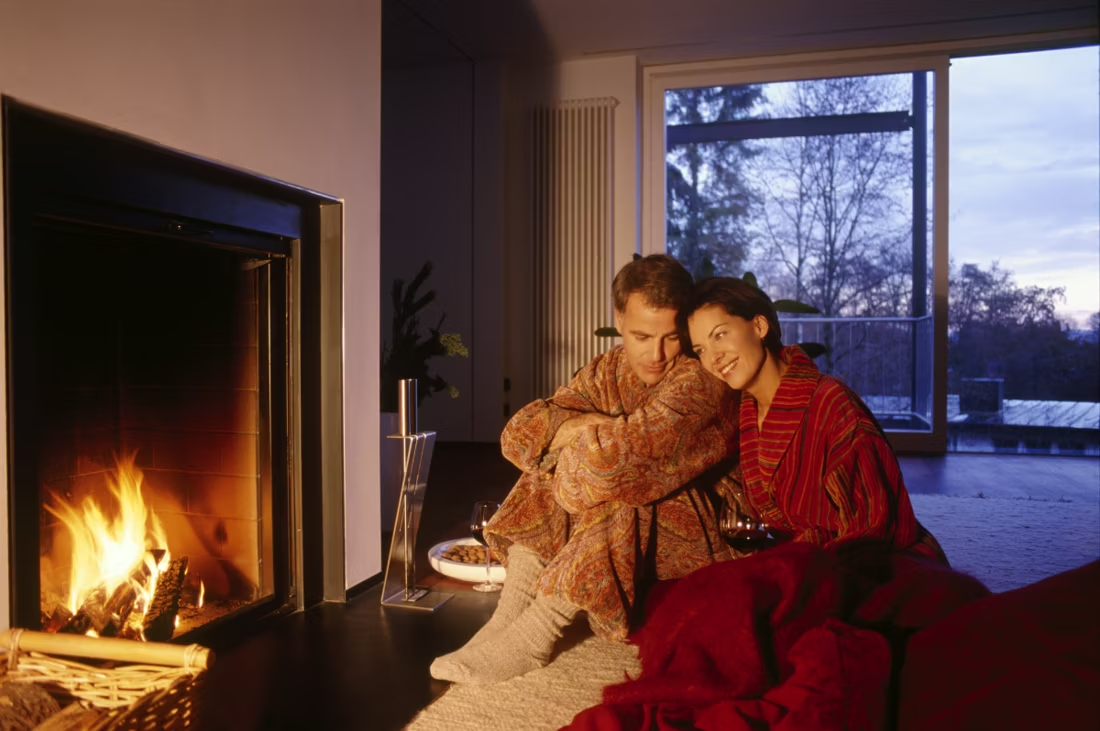
Four fuels. One honest answer for Seminole County.
Three steps. No salesperson until you're ready.
Tell us about your project
Your zip code, your situation, and the fuel you're leaning toward—or let the answers point you to one.
See what's actually available
The brands dealers within 100 miles genuinely carry—real options, never a catalog mirage.
Get your dealer & Project Guide
A trusted local dealer, plus the free Project Guide & Parts List that names every component of the job.
Frequently Asked Questions
Which fuel works best in Seminole County?
In a county with such a short, mild winter heating season and winter lows that average 39°F, gas is generally the practical choice for primary supplemental heat—propane-fed fireplaces and inserts fire up instantly for the handful of genuinely cold nights each winter and need no chimney maintenance. Electric fireplaces are popular for ambiance in living rooms and bedrooms and for manufactured homes or rentals where venting gas isn't practical. Wood and pellet stoves aren't a typical fit here—the heating season is too short and mild to justify the woodpile or pellet-bag logistics that make sense somewhere with real winters. That said, a small number of homeowners with hunting camps or cabins near Lake Seminole still install a wood fireplace, usually for atmosphere rather than necessity.
Are wood-burning fireplaces and stoves common in Seminole County?
Not really, and that's a climate fact more than a cultural one—oak, pine, and hickory are all abundant locally, and plenty of longtime residents know how to run a woodstove. But with an average winter low of 39°F and a heating season that's a fraction of what a colder state sees, most households don't need the daily commitment a wood stove requires. Where wood fireplaces do turn up, it's usually a decorative masonry fireplace in an older Donalsonville home or a stove installed at a hunting lease or river cabin near Lake Seminole for the occasional cold snap. Local dealers can still source and install a wood unit if that's your situation—it's just not the default recommendation for a primary-residence heating project here.
Can I install a pellet stove in Seminole County?
You can, but it's uncommon, and we flag pellet the same way we flag wood: heating demand here is too low to make the ongoing cost of ordering pellet bags worthwhile for most households. Regional brands like Lignetics, Hamer Pellet Fuel, and Greenway Renewable Energy do have distribution into south Georgia, mostly serving customers who already own a unit, are replacing an aging pellet stove, or want one for a workshop or detached space. If you want one anyway, a local dealer can special-order the appliance and venting—it's a smaller, custom category here rather than a stocked, everyday product.
Do I need a permit to install a gas or electric fireplace in Seminole County?
Generally yes for gas, and it depends for electric. Gas fireplace and insert installations typically require a building permit through the Seminole County Building Inspections Department, and the gas line work itself needs a licensed gas fitter, whether you're on propane (most of the county) or natural gas. Electric fireplaces that simply plug into an existing outlet usually don't need a permit; built-in electric units that require new wiring or a dedicated circuit do. Most local hearth retailers pull the permit as part of the installation, so you're rarely handling the county paperwork yourself.
What does a gas or electric fireplace installation cost in Seminole County?
Gas fireplace, insert, or stove installs typically run $4,000–$9,000 depending on whether you're tying into existing propane service or running new gas line and venting through an exterior wall—and since most of Seminole County is on propane rather than natural gas, tank setup or upgrade can add to that range. Electric fireplaces are the more affordable option—$200–$2,500 for the unit itself, plus $300–$1,000 in labor for anything beyond a simple plug-in wall unit, such as a built-in with a dedicated circuit. Wood and pellet installs are possible but priced as custom, special-order projects, since so few local dealers stock those units here.
How does hearth service and installation work in a small county like Seminole?
With a population just over 3,100, Seminole County doesn't support a large roster of dedicated hearth businesses on its own. Most gas fireplace technicians, electricians, and propane suppliers covering Donalsonville and Iron City are based in Bainbridge, about 20 minutes northeast, or travel down from the Albany or Tallahassee, Florida markets for larger installation jobs. Expect a modest trip fee for service calls out to the Lake Seminole area or the more rural parts of the county, and plan installation timelines a bit further ahead than you would in a bigger metro, since rural techs often rotate through several counties on a set schedule.
Does a fireplace add value to my home?
On average, a fireplace adds back to the home about the same amount you spent installing it. Add the monthly savings from heating the rooms you actually use instead of the whole house—often hundreds of dollars a year—and the value case is strong before you even count what a fire does for how your family uses the room.
Can a fireplace actually lower my heating bill?
Yes—by creating a comfort zone. A furnace heats every square foot of the house just to warm the one room you're in; a gas fireplace on low burns roughly a sixth of the gas a typical furnace does. Set the furnace around 55–60 degrees as a baseline, then heat the rooms your family actually uses. Families who heat this way commonly save $20–$60 a month.
What is an in-home preview and do I need one?
It's a visit where a hearth professional measures your space, confirms the model you picked actually works in your home, and walks the specs—framing, gas line, venting, finish work—before anything is ordered. Some details you just can't know until you see the house. Never make a down payment without one; it's the single most-skipped step that burns buyers.
Wood, gas, pellet, or electric—how do I choose?
Match the fuel to your life, not the other way around. Wood: lowest fuel cost and total power-outage independence, but you're hauling and stacking. Gas: press a button, set a thermostat, no maintenance to speak of. Pellet: wood economics with automatic feeding, in exchange for weekly cleaning and a need for electricity. Electric: plugs in anywhere with honest supplemental heat. Nobody regrets the fuel that fits how they actually live.
Stove and Fireplace Dealers in Seminole County
Listings include WhyFire partner dealers, dealers we have verified as authorized for the brands we recommend, and established local businesses that carry hearth products. Every listing shows which one it is. The ones marked Preferred run on WhyFire's software, so they can show you real pricing and book your appointment right here. No manufacturer pays for placement. How we verify dealers →
Plantation Propane Inc.
Waldorf Ace Hardware
Find the right fireplace for your Seminole County home.
Get matched with a trusted local dealer serving Donalsonville, Iron City, and the Lake Seminole area, and receive a free Project Guide & Parts List—the exact parts, venting, and recommended installer for your gas or electric fireplace project.
Find Your Fireplace →