
Keep Your Family Warm and Safe—No Matter What
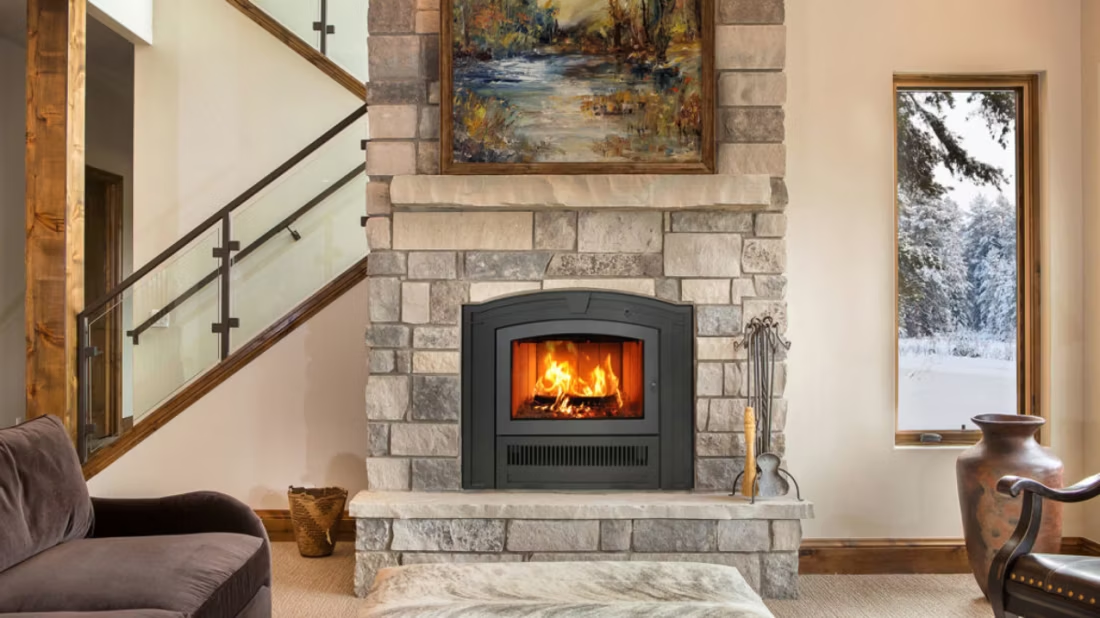
With winter lows averaging 33°F and a winter heating season far milder than true cold-climate cities, most Sandy Springs homes run on gas or electric. But a wood stove or insert still has a place here—for ambiance, backup heat, and homeowners who just want a real fire.
Every Project Starts From One of These Five Situations
Mild winters mean gas and electric carry the load.
Sandy Springs sits at just under 1,000 feet along the Chattahoochee River in Fulton County, in a climate zone (3A) that has far more in common with the Gulf South than with a true cold-climate market. With a winter heating season that's less than half as demanding as a place like Burlington, VT, and average winter lows only dipping to about 33°F, Sandy Springs stays mild. Central HVAC, gas fireplaces, and electric units handle the vast majority of home heating here, and they do it well.
That said, wood heat hasn't disappeared from Sandy Springs—it's just a smaller, more deliberate choice. Some homeowners in the older neighborhoods around Mount Vernon and Riverside want a wood stove or insert for the ambiance of a real fire, others want a backup heat source for the ice storms that occasionally knock out Georgia Power service for days at a stretch, and some simply have mature oak and hickory on their property they'd rather burn than haul away. With no non-attainment status or winter inversion issues on record for this area, there's no seasonal burn restriction working against you—the barrier is availability of installers who specialize in wood, not air quality rules.
Three steps. No salesperson until you're ready.
Tell us about your project
Your zip code, your situation, and the fuel you're leaning toward—or let the answers point you to one.
See what's actually available
The brands dealers within 100 miles genuinely carry—real options, never a catalog mirage.
Get your dealer & Project Guide
A trusted local dealer, plus the free Project Guide & Parts List that names every component of the job.
Frequently Asked Questions
Does a wood stove actually make sense in Sandy Springs's climate?
For most homes, no—not as a primary heat source. With average winter lows around 33°F and a winter heating season far milder than true cold-climate cities, Sandy Springs doesn't have the sustained cold that makes wood heat the backbone of a home's heating plan the way it would in, say, Duluth, MN. Where a wood stove earns its keep here is as supplemental or backup heat: something to run during a hard freeze, during a Georgia Power outage after an ice storm, or simply for the atmosphere of a real fire on the handful of genuinely cold nights each winter. If you're weighing wood purely for efficiency and cost savings, gas or electric will usually make more financial sense in this climate.
What does a wood stove or insert installation cost in the Sandy Springs area?
Because wood-burning installs are less common here than gas or electric work, pricing is less standardized among local dealers—but homeowners in the metro Atlanta area typically see quotes in the $3,500 to $8,000 range for a stove or insert, depending on the unit, whether an existing masonry chimney can be relined and reused, and how much clearance or hearth pad work is needed. Homes without an existing chimney, which is common in Sandy Springs's newer construction, run higher once Class A pipe and roof penetration are added. Because this isn't a routine request for every installer in the area, it's worth getting quotes from two or three dealers who specifically list wood-burning experience.
What wood species are actually available to burn in Sandy Springs?
Oak, pine, and hickory are the three species most commonly available in the metro Atlanta area, whether from a fallen tree on your own property or a local firewood supplier. Oak and hickory are dense hardwoods that burn hot and long, making them the better choice for a stove used as real supplemental heat. Pine is plentiful and often cheaper, but it needs a full six to twelve months of seasoning—burning green pine leads to heavier creosote buildup in the flue, which matters more in a mild climate where the stove may only get occasional use and the chimney has fewer chances to self-clean through frequent hot burns.
Do I need a permit to install a wood stove in Sandy Springs?
Yes. New wood-burning installations require a building permit, handled through the City of Sandy Springs Community Development Department for work inside city limits. The stove itself needs to meet current EPA 2020 NSPS emissions standards—nearly every stove sold new today qualifies, but it matters if you're buying a used or older unit. Most local hearth dealers who handle wood installs will pull the permit as part of the job, which is worth confirming up front since it's a less routine request than a gas fireplace permit in this market.
Are there any wood-burning or air quality restrictions in Sandy Springs?
No—Fulton County and the greater Sandy Springs area currently have no reported non-attainment status, winter inversion pattern, or wildfire smoke concern tied to wood burning, unlike Western basin cities that see seasonal curtailment days. That means there's no burn-ban calendar to check before lighting a fire here. The practical limiting factor on wood heat in Sandy Springs isn't air quality policy—it's simply that the climate doesn't demand it, so fewer installers and chimney specialists focus on it full time.
Why would someone choose a wood stove over gas or electric here?
The most common reasons in Sandy Springs are backup heat and ambiance. Ice storms have knocked out Georgia Power service across the metro area for multiple days at a time in past winters, and a wood stove is one of the few heat sources that keeps working with no electricity and no gas line. Beyond emergency use, some homeowners simply want the smell, sound, and radiant heat of a real wood fire, especially in homes with mature oak on the property already. If neither of those matters much to you, gas offers instant on-off convenience without the wood handling, and it's the more common upgrade path for existing masonry fireplaces in this market.
Where can I buy firewood in Sandy Springs?
Unlike forested mountain markets with nearby national forest cutting permits, Sandy Springs is a suburban Fulton County market—there's no public land cutting program nearby, so firewood here comes from regional delivery services and tree services that sell seasoned cordwood, typically a mix of oak, hickory, and pine. Expect to pay by the cord, with hardwood mixes generally running higher than pine-heavy loads. If you have your own oak or hickory come down in a storm, several local suppliers will also split and season it for a fee rather than you buying elsewhere.
How often should I have my chimney inspected if I install a wood stove?
Once a year, ideally before the first cold snap of the season. This matters even more in a market like Sandy Springs, where many homes have older masonry chimneys that sat unused or served only gas logs for years before a wood insert went in—a chimney that hasn't been swept in a long time can hide bird nests, deteriorated mortar, or old creosote that a home inspector wouldn't catch. Because a wood stove here often gets lighter, more occasional use than in a colder market, it's tempting to skip inspections; that's exactly when problems go unnoticed longest.
Wood vs. gas—which is the better fit for my Sandy Springs home?
For the large majority of homes here, gas wins on convenience: instant heat, no wood handling or ash cleanup, and a straightforward hookup for homes already on natural gas or propane. Wood's advantages are narrower but real—it works without electricity or gas service during outages, and it appeals to homeowners who want the experience of a genuine fire rather than a flame effect. If you already have an existing masonry fireplace, converting it to a gas insert is usually the simpler, more common project in this market; adding a wood stove or insert makes more sense if backup heat or authenticity is the priority and you're comfortable with less common installer availability.
Why is my open fireplace making my house colder?
Open fireplaces suck—literally. As the fire burns, it consumes air your furnace already paid to heat and pulls it out through the chimney, so the house is actually colder after the fire goes out than before you lit it. An insert fixes this: it seals the chimney, puts fixed glass across the front, and turns that hole in your house into a real heat source.
Why is a fireplace insert so efficient?
An insert does two things: it seals the chimney completely, so you stop losing air you already paid to heat, and it radiates warmth into the room through the firebox and glass. Most add a heat-exchange fan that pulls cool room air underneath, wraps it around the hot firebox, and pushes it back out warm. Your home is more efficient before you've even lit the first fire.
Can a fireplace actually lower my heating bill?
Yes—by creating a comfort zone. A furnace heats every square foot of the house just to warm the one room you're in; a gas fireplace on low burns roughly a sixth of the gas a typical furnace does. Set the furnace around 55–60 degrees as a baseline, then heat the rooms your family actually uses. Families who heat this way commonly save $20–$60 a month.
How much should I budget for a fireplace?
For an average home—covering the fireplace, the vent pipe, and basic installation—a budget between $3,900 and $5,500 gives you a lot of options across wood, gas, and pellet. By the time you add finish work, gas line, and electrical, the average complete installation lands between $5,000 and $12,000 all-in. In a remodel or new build, a good rule is to put about 2.5% of the total project cost toward the fireplace.
Nearby Dealers
Hearth shops serving Sandy Springs and the surrounding area. Every listing shows whether it is a WhyFire partner, a dealer we have verified as authorized for the brands we recommend, or a local business carrying hearth products. No manufacturer pays for placement. How we verify dealers →
North Atlanta Fireplace Grill & Patio
Builder Specialties, Inc.
The Man Cave Store
Authenteak
Cr Design Center - Westside
Construction Resources - Decatur
Fireplace Depot
Old Hat Chimney
Atlanta Chimney Worx
EarthCore Industries
The Mad Hatter
Tara Residential
Bolton Fireplace
Alley-Cassetty
Graves Fireplaces Inc.
Find your wood fireplace in Sandy Springs.
Tell us about your home and your reasons for wanting wood heat, and we'll match you with a trusted local dealer who actually installs wood stoves and inserts in the Sandy Springs area—plus a free Project Guide & Parts List with the exact components, including the vent kit, your project needs.
Find Your Fireplace →