
Find your pellet stove in Rabun County.
Consistent, low-maintenance heat for the Blue Ridge foothills—from Clayton to Dillard to Mountain City. Get matched with a trusted local dealer who knows what actually works in this terrain.
Every Project Starts From One of These Five Situations
A clean, thermostat-easy option for foothill winters.
Rabun County sits in the northeast corner of Georgia, tucked into the southern edge of the Blue Ridge, with elevations climbing from around 1,600 feet near Lake Burton up toward 3,600 feet at Black Rock Mountain. Climate zone 4A and a moderate winter heating load mean winters here are real but moderate—closer to a long, chilly shoulder season than the sustained sub-zero stretches you'd see in a place like Burlington, Vermont. Average winter lows hover around 30 degrees, which is exactly the kind of climate where a pellet stove earns its keep: enough cold to want steady heat in the living room or den, not so much that you need a wood-burning workhorse running around the clock.
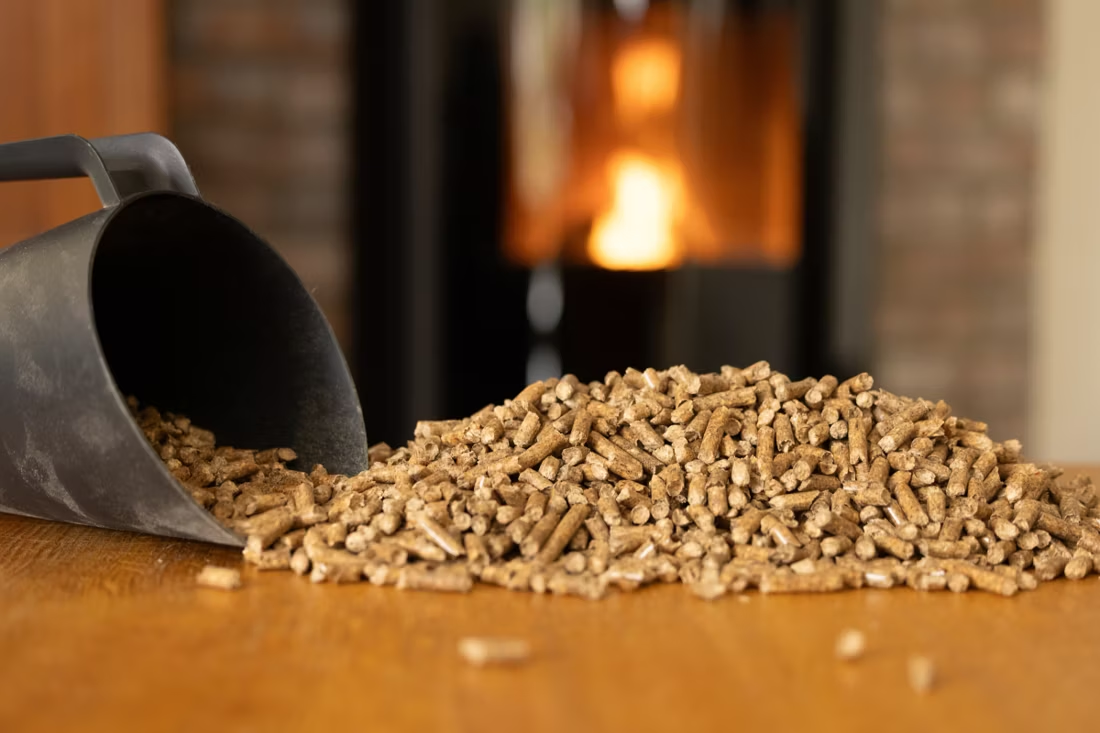
With no air quality non-attainment issues in the county, pellet stoves here are chosen less for regulatory reasons and more for convenience—homeowners in Clayton, Tiger, and the lake communities around Burton and Rabun like the idea of loading a hopper instead of splitting oak and hickory, and appreciate that pellet appliances burn cleaner with far less ash than a traditional wood stove. Regional bagged pellet brands including Lignetics, Hamer Pellet Fuel, and Greenway Renewable Energy are readily available in this part of northeast Georgia, so fuel supply isn't the constraint it can be in more remote counties. The right pellet insert or stove gives you consistent, thermostatically controlled heat for a cabin, a lake house, or a full-time residence without the labor of cutting and hauling wood.
Three steps. No salesperson until you're ready.
Tell us about your project
Your zip code, your situation, and the fuel you're leaning toward—or let the answers point you to one.
See what's actually available
The brands dealers within 100 miles genuinely carry—real options, never a catalog mirage.
Get your dealer & Project Guide
A trusted local dealer, plus the free Project Guide & Parts List that names every component of the job.
Frequently Asked Questions
How much does a pellet stove installation cost in Rabun County?
A typical pellet stove or insert installation in Rabun County runs in line with regional norms, generally $2,500 to $6,000 depending on whether it's a freestanding stove or an insert going into an existing masonry fireplace, and whether new venting needs to be run through an exterior wall. Cabins and lake homes around Burton and Rabun sometimes carry slightly higher costs if the install requires longer horizontal venting runs or work around vaulted ceilings common in mountain construction. A local dealer will give you a firm number after seeing the space in person.
Will a pellet stove keep up with winters in Rabun County?
For most homes here, yes. With average winter lows around 30 degrees and a winter heating load that's moderate for the region, Rabun County's winters are moderate compared to true cold-climate territory—this isn't Duluth or Bismarck. A properly sized pellet stove can comfortably serve as primary heat for a well-insulated cabin or main living area, or supplemental zone heat for a larger home. Homes at higher elevation near Black Rock Mountain or Dillard see a bit more sustained cold, so sizing up slightly and choosing a stove with a larger hopper capacity is worth discussing with your installer.
Where do I buy pellet fuel in Rabun County?
Bagged pellets from regional brands like Lignetics, Hamer Pellet Fuel, and Greenway Renewable Energy are commonly stocked at hearth retailers and farm supply stores throughout northeast Georgia, and most local dealers can point you toward the closest reliable source or set up a standing order before your first winter. Buying a season's supply early—typically 2 to 3 tons for a primary-heat home—is the usual approach, since pellet availability can tighten up once cold weather actually arrives.
What's the difference between a pellet stove and a pellet insert?
A pellet stove is a freestanding unit that sits on its own hearth pad and vents through a wall or existing chimney—it works well in a room without an existing fireplace, which describes a lot of newer construction and additions around Clayton and Tiger. A pellet insert is built to slide into an existing masonry fireplace opening, using a liner run through the existing chimney for venting. For Rabun County's older lake cabins and homes with a traditional wood fireplace already in place, an insert is often the simpler retrofit since it reuses the chimney you already have.
Do I need a permit to install a pellet stove in Rabun County?
Most jurisdictions in Georgia require a building permit for a new pellet stove installation, particularly when it involves new venting through a wall or roof, and Rabun County is no exception for construction outside city limits. Homes within Clayton city limits go through the city's permitting process instead. In practice, the local dealer handling your installation typically manages the permit application and inspection scheduling as part of the job, so it's rarely something a homeowner has to navigate solo.
Do pellet stoves work during a power outage?
No—this is the one real tradeoff with pellet stoves. Unlike a wood stove, a pellet stove relies on an electric auger to feed fuel and a blower to move heat, so it won't run without power. For Rabun County, where mountain terrain and ice storms can occasionally knock out power for a stretch, that's worth factoring in if you're choosing pellet as your sole heat source for a full-time residence. Some homeowners here pair a pellet stove for daily convenience with a small backup generator, or keep a wood-burning option in reserve at a cabin used seasonally.
How often does a pellet stove need cleaning and maintenance?
Pellet stoves need more frequent, lighter maintenance than wood stoves rather than a single annual sweep. Plan on cleaning the burn pot and ash removal every few days to weekly depending on use, a full interior cleaning every 1 to 2 tons of pellets burned, and an annual professional service to check the auger motor, exhaust blower, and venting for a full-season home in Rabun County. It's less physically demanding than wood but requires more regular attention than a lot of first-time buyers expect.
What size pellet stove do I need for my home?
Sizing depends on square footage, insulation, and whether the stove is meant as primary or supplemental heat. Smaller units suit a single room, den, or seasonal cabin under about 1,000 square feet—common for lake properties around Burton and Rabun. Mid-size units in the 1,500 to 2,200 square foot range cover most full-time homes in Clayton, Tiger, and Mountain City. Homes at higher elevation near Dillard or Black Rock Mountain often benefit from sizing up one tier given the slightly harsher exposure. A local dealer will size the unit correctly during an in-home visit rather than relying on square footage alone.
Pellet stove vs. wood stove—which is right for Rabun County?
Wood stoves work well here given the abundance of local oak, pine, and hickory, and cutting permits through the Nantahala-Pisgah National Forests run about $20 per cord during the May-to-October season—an appealing option for homeowners who don't mind splitting and stacking wood and want a heat source that works without electricity. Pellet stoves trade that self-sufficiency for convenience: load the hopper, set the thermostat, and let the stove modulate output automatically, with far less ash and no chimney creosote buildup to manage. For a full-time Rabun County home without much interest in wood handling, pellet is often the easier daily choice. For a cabin used through outages or for owners who value being fuel-independent, wood still has a strong case.
What's the difference between an insert and a zero-clearance fireplace?
An insert is a fireplace that slides into a pre-existing wood-burning fireplace—if you don't have one, there's nothing to insert it into. A zero-clearance fireplace is built into a framed wall, which makes it the answer for remodels and new construction. Simple test: existing masonry fireplace means insert; blank or framed wall means zero-clearance.
How often does a pellet stove need cleaning?
A clean pellet stove is a happy pellet stove. Plan on cleaning the burn pot about once a week when you're burning regularly—ash and clinkers gum up the air holes just like a pellet barbecue. Most pellet stove problems trace back to skipped cleaning that nobody explained up front. Some designs make it easy with a trapdoor burn pot: pull a lever and the gunk drops into the ash pan.
Does a fireplace add value to my home?
On average, a fireplace adds back to the home about the same amount you spent installing it. Add the monthly savings from heating the rooms you actually use instead of the whole house—often hundreds of dollars a year—and the value case is strong before you even count what a fire does for how your family uses the room.
How much should I budget for a fireplace?
For an average home—covering the fireplace, the vent pipe, and basic installation—a budget between $3,900 and $5,500 gives you a lot of options across wood, gas, and pellet. By the time you add finish work, gas line, and electrical, the average complete installation lands between $5,000 and $12,000 all-in. In a remodel or new build, a good rule is to put about 2.5% of the total project cost toward the fireplace.
Stove and Fireplace Dealers in Rabun County
Pellet Brands Stocked Around Rabun County
Manufacturers will point you to the nearest stocking dealer.
Get your Rabun County pellet stove Project Guide & Parts List.
Tell us about your home and we'll match you with a trusted local dealer serving Rabun County, plus a free Project Guide & Parts List with the exact vent kit and parts your pellet install needs.
Find Your Fireplace →