
Thermostat-controlled heat for Polk County's mild winters.
No wood splitting, no chimney sweep season—just a hopper of pellets and consistent heat for the cool months in Cedartown, Rockmart, and the rest of Polk County. I'll match you with a trusted local dealer who can size and install the right unit.
Every Project Starts From One of These Five Situations
Real heat, without the wood-splitting.
Polk County sits in the Ridge-and-Valley foothills of northwest Georgia, between Cedartown and Rockmart, with a winter that's genuinely mild by national standards—an average winter low around 32°F and about 2,921 heating degree days a year, roughly a third of what a place like Duluth, MN or Fargo, ND racks up. That means most Polk County homes don't need a whole-house heating overhaul; they need a reliable, controllable source of supplemental heat for the stretch from late November through early March, plus something to lean on if the power grid or gas line has a rough day.
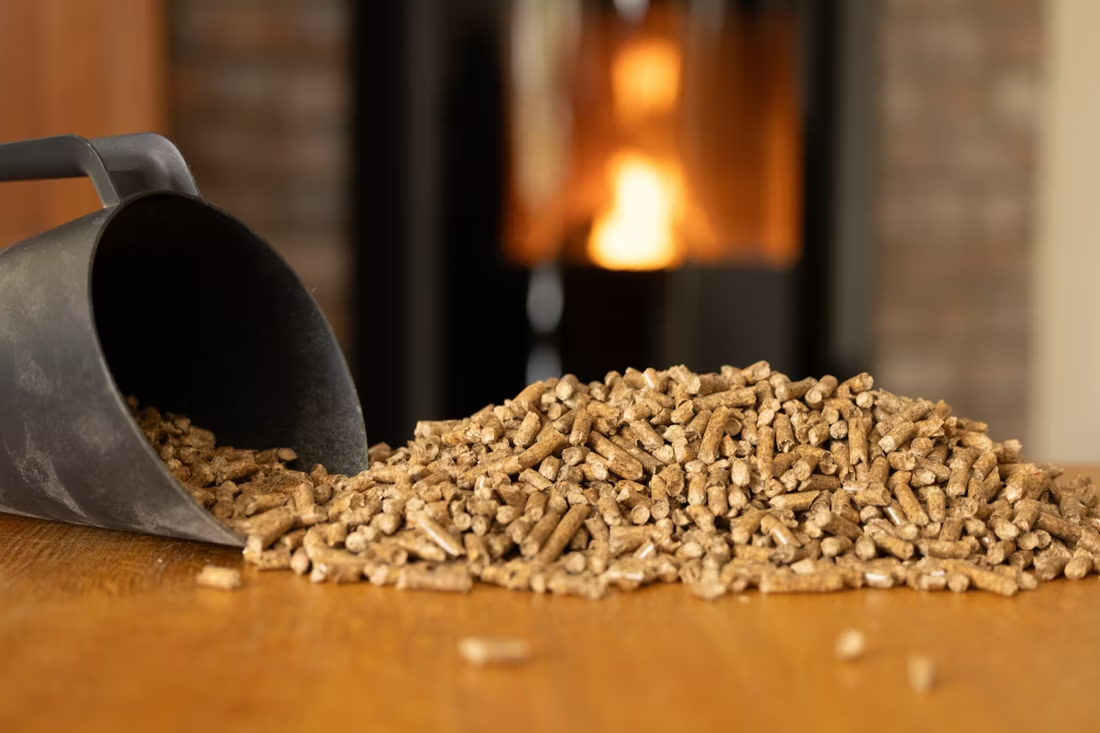
That's exactly where pellet stoves fit. Regional brands like Lignetics, Hamer Pellet Fuel, and Greenway Renewable Energy are sold through dealers across northwest Georgia, and a pellet stove's thermostat control and small-diameter PL venting make it a much easier retrofit than a wood-burning chimney in an older Polk County farmhouse or a newer build without a masonry hearth. Polk County has no air-quality non-attainment designations or winter burn restrictions like some Atlanta-metro counties do, so there's no curtailment schedule to plan around—just a consistent, clean-burning heat source for local oak, pine, and hickory country.
Three steps. No salesperson until you're ready.
Tell us about your project
Your zip code, your situation, and the fuel you're leaning toward—or let the answers point you to one.
See what's actually available
The brands dealers within 100 miles genuinely carry—real options, never a catalog mirage.
Get your dealer & Project Guide
A trusted local dealer, plus the free Project Guide & Parts List that names every component of the job.
Frequently Asked Questions
How much does a pellet stove installation cost in Polk County?
Most pellet stove installations in Polk County run in the $3,000 to $6,000 range, depending on the unit and whether you need new wall venting or electrical work for the hopper motor and igniter. Because pellet stoves vent through a small-diameter PL pipe rather than a full masonry chimney, installs are typically faster and less invasive than a wood stove install—often a single day for a straightforward exterior-wall vent run. Costs run higher if the stove is going into a new location without existing wiring nearby, or if a hearth pad is needed for clearance. A local dealer will give you a firm number after seeing your space.
What size pellet stove do I need for a Polk County home?
Given Polk County's mild winter lows—averaging around 32°F, well short of the deep-freeze conditions that drive homeowners toward oversized units—most homes here do fine with a small to mid-size pellet stove in the 40,000 to 50,000 BTU range for a single living area or open floor plan. Larger, poorly insulated older homes near Rockmart or Aragon with high ceilings may want to size up slightly, but few Polk County homes need the largest hopper-capacity units built for sustained sub-zero climates. A local dealer can size to your actual square footage and insulation rather than guessing from a chart.
Where can I buy pellet fuel in Polk County?
Regional brands like Lignetics, Hamer Pellet Fuel, and Greenway Renewable Energy are commonly stocked at hearth and farm-supply retailers throughout northwest Georgia, and many pellet stove dealers also sell fuel directly or can point you to the closest bulk supplier. Buying a season's worth of bags in late summer, before demand picks up in November, is the easiest way to avoid supply gaps during the coldest stretch of a Polk County winter.
What's the difference between a pellet stove and a pellet insert?
A pellet stove is a freestanding unit that sits on a hearth pad and vents through an exterior wall or existing chimney—it can go almost anywhere with a nearby outlet and a short vent run. A pellet insert is built to slide into an existing masonry fireplace opening, using the chimney as a vent chase while sealing off the old open-hearth airflow. For Polk County homes with an existing but rarely used wood fireplace, an insert is often the simpler upgrade; for homes without a fireplace at all, a freestanding stove is the more common choice.
Do I need a permit to install a pellet stove in Polk County?
Yes—a building permit through the Polk County building department is standard for a new hearth appliance installation, covering the venting path and any electrical work for the stove's igniter and auger motor. Most local dealers handle the permit paperwork as part of the install. Because Polk County has no air-quality non-attainment status and no wood-burning curtailment periods, there's no additional local air-quality permitting to worry about beyond the standard building permit.
What's the best pellet stove for Polk County's climate?
Because Polk County's winters are mild—2,921 heating degree days a year is a fraction of what cold-climate regions see—you generally don't need the largest, cold-climate-rated pellet stoves built for places like Minneapolis or Bismarck. A mid-size unit with a modulating or thermostat-controlled burn rate is usually the better fit here: it can run low and steady during the mild 40s-and-50s stretches that make up most of the season and step up output on the occasional colder night. Ask a local dealer about hopper size, too—a larger hopper means fewer refills if you're using the stove daily through the winter.
How often should my pellet stove be serviced?
Plan on an annual professional cleaning and inspection—covering the burn pot, exhaust venting, auger, and combustion blower—ideally scheduled in late summer before the heating season starts. Georgia's humidity is worth watching too: pellets stored in a damp garage or shed can absorb moisture and swell, which clogs the auger and reduces burn efficiency, so keep bags sealed and off concrete floors. Local dealers who sell pellet stoves in Polk County typically offer this service directly or can point you to a technician who does.
How much does pellet fuel cost per ton in Polk County?
Bagged pellets from brands like Lignetics and Hamer Pellet Fuel typically run in the neighborhood of $230 to $280 per ton in the northwest Georgia region when bought by the pallet (usually 50 forty-pound bags), though pricing shifts with demand and shipping distance from the mill. Given Polk County's mild heating season, a household using a pellet stove as supplemental heat might only burn one to two tons over a winter, versus three or more tons for a home relying on it as a primary heat source.
Pellet stove vs. wood stove—which is right for my Polk County home?
Wood stoves burn local oak, pine, and hickory, work without electricity, and suit homeowners who don't mind splitting and stacking firewood—a real option in a county with plenty of hardwood on hand. Pellet stoves trade that hands-on ritual for thermostat control, a cleaner burn, and easier venting, but they need electricity to run the auger and blower, so they're not a backup option during a power outage. In a mild climate like Polk County's, where the heating season is shorter and outages are the main risk rather than sustained extreme cold, that trade-off comes down mostly to convenience versus self-sufficiency—either fuel is well supported by local dealers.
How often does a pellet stove need cleaning?
A clean pellet stove is a happy pellet stove. Plan on cleaning the burn pot about once a week when you're burning regularly—ash and clinkers gum up the air holes just like a pellet barbecue. Most pellet stove problems trace back to skipped cleaning that nobody explained up front. Some designs make it easy with a trapdoor burn pot: pull a lever and the gunk drops into the ash pan.
What's the difference between an insert and a zero-clearance fireplace?
An insert is a fireplace that slides into a pre-existing wood-burning fireplace—if you don't have one, there's nothing to insert it into. A zero-clearance fireplace is built into a framed wall, which makes it the answer for remodels and new construction. Simple test: existing masonry fireplace means insert; blank or framed wall means zero-clearance.
Does a fireplace add value to my home?
On average, a fireplace adds back to the home about the same amount you spent installing it. Add the monthly savings from heating the rooms you actually use instead of the whole house—often hundreds of dollars a year—and the value case is strong before you even count what a fire does for how your family uses the room.
What is an in-home preview and do I need one?
It's a visit where a hearth professional measures your space, confirms the model you picked actually works in your home, and walks the specs—framing, gas line, venting, finish work—before anything is ordered. Some details you just can't know until you see the house. Never make a down payment without one; it's the single most-skipped step that burns buyers.
Pellet Brands Stocked Around Polk County
Manufacturers will point you to the nearest stocking dealer.
Find your pellet stove in Polk County.
Tell me a bit about your home and I'll put together a free Project Guide & Parts List—the right pellet stove or insert, the vent kit it needs, and a trusted local dealer in Polk County who can install it.
Find Your Fireplace →