
Reliable warmth for Milton's short but real heating season.
Milton's winters stay mild—nowhere near what you'd get up north—with lows averaging around 31°F, but enough chill for a fireplace that earns its keep. I'll match you with a trusted local dealer who knows what's actually installable on your lot.
Every Project Starts From One of These Five Situations
A mild climate with just enough winter to matter.
At 942 feet in climate zone 3A, Milton's winters are mild by any national standard—just a fraction of what a place like Duluth or Fargo deals with—but there's still enough real cold here to add up to genuine cool stretches from December through February where a fireplace gets used most evenings, not just for show. Oak, pine, and hickory grow all over North Fulton, and plenty of Milton's equestrian estates keep a woodpile for the aesthetic, but wood-burning appliances are genuinely rare as a primary or supplemental heat source here: HOA covenants in many newer communities restrict wood smoke, homeowners insurance carriers increasingly favor gas or electric units, and with no air-quality non-attainment designation driving anyone toward cordwood, gas has become the default choice for anyone wanting real flame and real heat on demand.
Georgia runs a deregulated natural gas market, so Atlanta Gas Light owns the pipeline infrastructure that reaches most of Milton's established neighborhoods—Crabapple, Birmingham Crossroads, and the areas around Highway 9—while homeowners pick their own gas marketer for supply. A lot of Milton's newer custom construction already has gas plumbed in for the kitchen range or tankless water heater, which makes adding a fireplace a straightforward tie-in. Out on the larger equestrian lots and newer estate subdivisions toward the county line, gas line reach gets thinner, and propane with a buried tank is the common workaround for homeowners who still want instant, no-mess flame instead of running electric baseboard or heat pump backup.
Three steps. No salesperson until you're ready.
Tell us about your project
Your zip code, your situation, and the fuel you're leaning toward—or let the answers point you to one.
See what's actually available
The brands dealers within 100 miles genuinely carry—real options, never a catalog mirage.
Get your dealer & Project Guide
A trusted local dealer, plus the free Project Guide & Parts List that names every component of the job.
Frequently Asked Questions
How much does a gas fireplace installation cost in Milton?
Most Milton installs land in the $4,000 to $10,000 range. A direct-vent insert going into an existing masonry firebox in one of the established neighborhoods off Crabapple Road, with a gas line already nearby, sits toward the low end. A new linear or see-through unit built into a great room during a renovation—common in Milton's larger custom homes—runs higher once you factor longer gas line runs across bigger floor plans and premium finish surrounds. Homes on acreage that need a propane tank set instead of a city gas tie-in should budget extra for the tank and line work.
Can I convert my existing wood fireplace to gas?
Yes, and it's a common upgrade in Milton's older sections near the historic downtown, where original masonry fireplaces were built decades ago for oak or hickory. A gas log set or a full direct-vent insert typically slides into the existing firebox with a liner run up the current chimney, generally costing less than a full new-construction install since the masonry shell and chase are already in place. It's also an easy way to sidestep HOA rules in some Milton communities that discourage wood smoke but have no issue with a gas appliance.
Do I need natural gas service, or should I plan on propane?
It depends on where in Milton you are. Atlanta Gas Light's distribution network covers the more established parts of the city, including areas around Crabapple and Birmingham Crossroads, so if your home already runs gas to the kitchen or water heater, adding a fireplace is a simple extension. Newer estate subdivisions and larger equestrian properties further from the core sometimes sit outside convenient gas line reach, and propane with a buried or above-ground tank is the standard fallback there. Most models a local dealer carries can be configured for either fuel.
Will a gas fireplace still work if the power goes out?
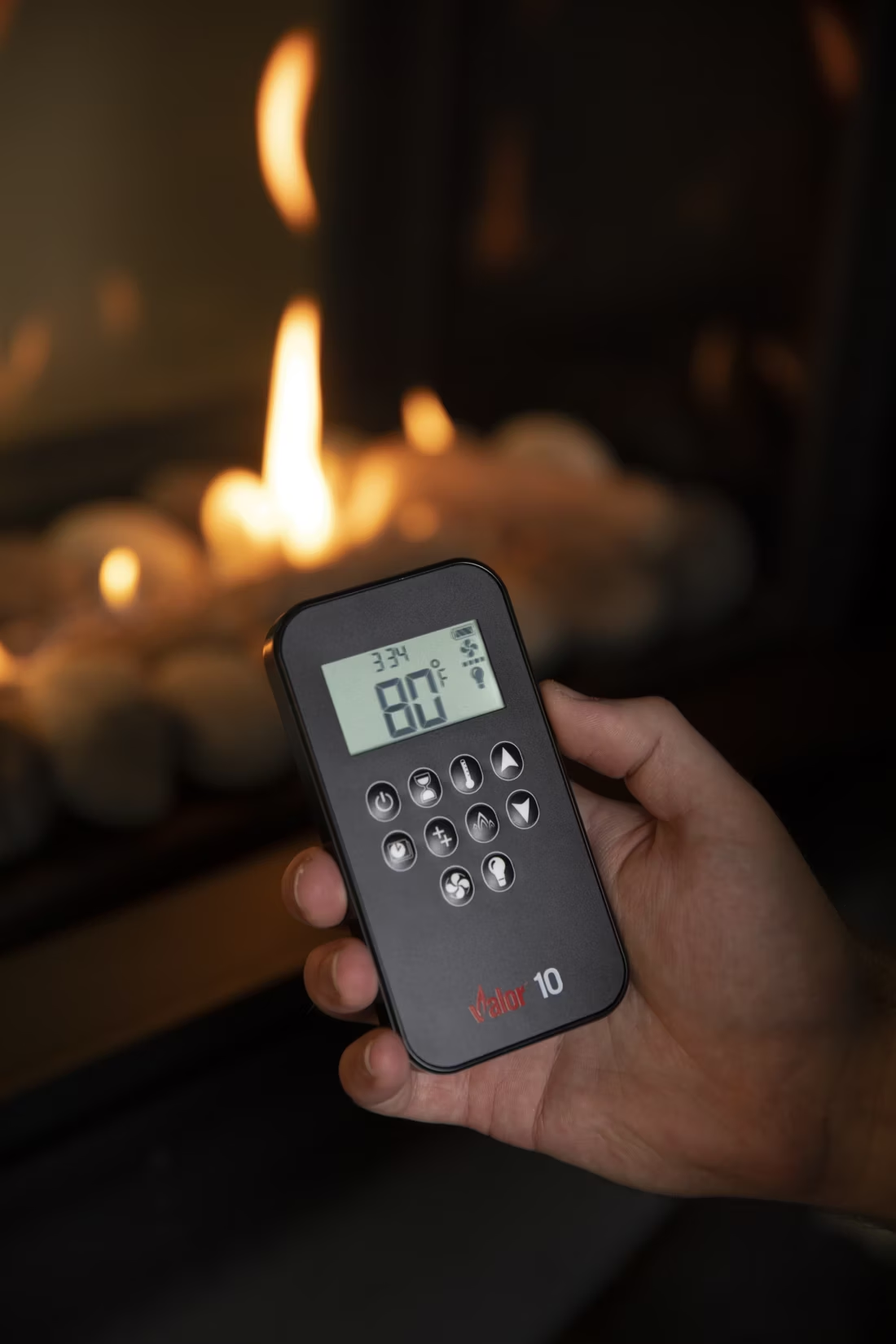
Most will, which is worth planning for given how Georgia's occasional ice storms and summer thunderstorm lines can knock out power across North Fulton for hours at a stretch. Units with intermittent pilot ignition (IPI) run their control board off AA battery backup, which kicks in automatically. Valor units go a step further and skip the battery altogether, since their pilot's thermocouple self-generates enough current to run the valve. If backup heat during an outage matters to you, ask your dealer which ignition system is built into the model you're considering.
What's the difference between a gas fireplace, insert, and stove?
A gas fireplace is a built-in unit framed into a wall, which fits naturally into Milton's newer custom construction and great-room layouts. A gas insert drops into an existing masonry firebox, the more common route in the older homes near downtown Milton that started out burning oak or pine. A gas stove is freestanding on a hearth pad, similar footprint to a wood stove but running off a gas line or propane tank—a less common choice here given how few Milton homes have a freestanding wood stove to replace in the first place.
Do I need a permit to install a gas fireplace in Milton?
Yes. You'll need a building permit through the City of Milton Community Development Department, plus a gas line permit tied to a licensed gas-fitter for any new or extended piping. Most hearth dealers who regularly install in Milton handle both the permit filing and the final inspection as part of the job, which is worth confirming up front since it saves you from coordinating the trades and inspections yourself.
Vented vs. vent-free gas fireplaces—what should I know in Milton?
Direct-vent units draw combustion air from outside and exhaust it back outside through sealed venting, and they're the safer, code-preferred choice for daily use in any home. Vent-free units burn into the room and are legal in Georgia within specific room-size limits, and they show up more often in Milton as supplemental units in finished basements or bonus rooms where running new venting is impractical. With no air-quality non-attainment issue in Fulton County pushing homeowners one way or the other, the choice here usually comes down to how the room is built rather than local emissions rules.
How often does a gas fireplace need to be serviced?
Plan on an annual check, ideally in early fall before the first cold snap rather than mid-winter when HVAC and hearth techs across North Fulton are booked solid. A technician checks the burner, pilot or ignition assembly, and gas connections, and cleans the glass—a much lighter lift than a wood chimney sweep, but skipping it is how a pilot or igniter failure shows up on the one or two genuinely cold nights Milton gets each winter. Expect roughly $150 to $250 for a standard visit.
Gas vs. wood vs. electric—which makes the most sense for a Milton home?
Wood-burning fireplaces are genuinely uncommon as a real heat source in Milton—plenty of oak and hickory grow locally, but mild winters, HOA smoke restrictions in many newer communities, and insurance considerations have pushed most homeowners toward gas or electric instead. Gas wins for anyone who wants real flame with instant on-demand heat and doesn't mind a gas line or propane tank. Electric fireplaces, run through Georgia Power or Sawnee EMC depending on your address, are the simplest option for a zero-clearance install in a basement or bonus room with no venting at all, though they function more as ambiance and light supplemental heat than a serious cold-weather source. For most Milton living rooms and great rooms, gas is the fuel that gets used the most.
What's the difference between an insert and a zero-clearance fireplace?
An insert is a fireplace that slides into a pre-existing wood-burning fireplace—if you don't have one, there's nothing to insert it into. A zero-clearance fireplace is built into a framed wall, which makes it the answer for remodels and new construction. Simple test: existing masonry fireplace means insert; blank or framed wall means zero-clearance.
Is my gas fireplace wasting gas?
If it was installed more than 15 years ago, probably. Older gas fireplaces keep a standing pilot light burning all the time, and that little flame can cost a couple hundred dollars a year. Newer models use pilot-on-demand ignition—the pilot lights only when you use the fireplace and goes out when you turn it off.
Can I install a fireplace myself?
If you're putting a fire in your house on purpose, it's best to work with an expert. Unless you're genuinely experienced in framing, gas line, vent pipe, and the national code on clearances to combustibles, have a professional do it—and ideally the same company that sells you the fireplace, so warranty, service, and liability all live under one roof.
Does a fireplace add value to my home?
On average, a fireplace adds back to the home about the same amount you spent installing it. Add the monthly savings from heating the rooms you actually use instead of the whole house—often hundreds of dollars a year—and the value case is strong before you even count what a fire does for how your family uses the room.
Nearby Dealers
Hearth shops serving Milton and the surrounding area. Every listing shows whether it is a WhyFire partner, a dealer we have verified as authorized for the brands we recommend, or a local business carrying hearth products. No manufacturer pays for placement. How we verify dealers →
North Atlanta Fireplace Grill & Patio
The Mad Hatter
EarthCore Industries
Fireplace Depot
Graves Fireplaces Inc.
Old Hat Chimney
Builder Specialties, Inc.
Bolton Fireplace
Tara Residential
Alley-Cassetty
The Man Cave Store
Alley-Cassetty
Construction Resources - Decatur
Authenteak
Cr Design Center - Westside
Atlanta Chimney Worx
Get your free Project Guide & Parts List for a Milton gas fireplace.
Tell me about your home and whether you're near an existing Atlanta Gas Light line or planning on propane, and I'll match you with a trusted local dealer and send a free Project Guide & Parts List with the exact vent kit and parts your project needs.
Find Your Fireplace →