
Cozy warmth for McIntosh County's mild coastal winters.
No chimney, no venting, no wood to split—just flip a switch. Find the right electric fireplace for your Darien, Townsend, or Sapelo Island home and connect with a trusted local dealer.
Every Project Starts From One of These Five Situations
Electric heat that fits the low country lifestyle.
McIntosh County sits on Georgia's marshy coast between the Altamaha and Sapelo rivers, in climate zone 2A—hot, humid summers and short, mild winters where nighttime lows rarely stay below freezing for long. With around 2,500 residents spread across Darien, Townsend, Eulonia, and the Gullah Geechee community of Hog Hammock on Sapelo Island, most homes here need heat for a handful of chilly weeks rather than months. That makes electric fireplaces a genuinely practical fit—not a compromise fuel, but the right tool for a climate where a wood-burning setup would sit unused most of the year.
An electric fireplace or insert plugs into a standard outlet, needs no chimney or Class A venting, and adds real ambiance to a living room, sunroom, or historic Darien cottage without touching the roofline. It's also a smart secondary heat source for the cooler months, letting homeowners zone-heat one room instead of running central air conditioning systems backward. The tradeoff worth knowing upfront: electric units depend on the grid, and McIntosh County's coastal position means hurricane-season outages happen. For year-round backup heat, some homeowners pair an electric fireplace with a wood stove or generator—a local dealer can walk through both options.
Three steps. No salesperson until you're ready.
Tell us about your project
Your zip code, your situation, and the fuel you're leaning toward—or let the answers point you to one.
See what's actually available
The brands dealers within 100 miles genuinely carry—real options, never a catalog mirage.
Get your dealer & Project Guide
A trusted local dealer, plus the free Project Guide & Parts List that names every component of the job.
Frequently Asked Questions
How much does an electric fireplace installation cost in McIntosh County?
Most electric fireplace projects in McIntosh County run $300 to $1,500. A plug-in wall unit or freestanding stove on the low end needs no electrical work at all. A built-in wall unit or insert that requires a dedicated 120V or 240V circuit—common for larger units in a Darien living room or a Townsend remodel—runs toward the higher end once an electrician is involved. Because there's no chimney, flue, or masonry work, electric installs are consistently the fastest and least expensive of the four fuel types in the county.
Do I need a permit for an electric fireplace in McIntosh County?
Usually not for a simple plug-in unit. If your installer adds a new dedicated circuit or does any panel work—which is common for larger built-in units—that electrical work does require a permit through the McIntosh County Building & Zoning Department, pulled by a licensed electrician. Most local dealers coordinate this as part of the install quote, so it's rarely something the homeowner has to manage directly.
What size electric fireplace do I need for my home?
Since McIntosh County winters are short and mild, sizing here is less about total BTU output and more about matching the unit to the room you want to warm and the look you're going for. A 26–40 inch insert or wall unit comfortably supplements heat in a single living room or sunroom—typical for a Darien bungalow or a newer home in Eulonia. Larger 50-inch-plus linear units are chosen more for visual impact in open-concept spaces than for heating a whole house, since central HVAC already handles the county's brief cold spells. A local dealer will look at your room dimensions and ceiling height before recommending wattage.
What's the difference between an electric fireplace, insert, and stove?
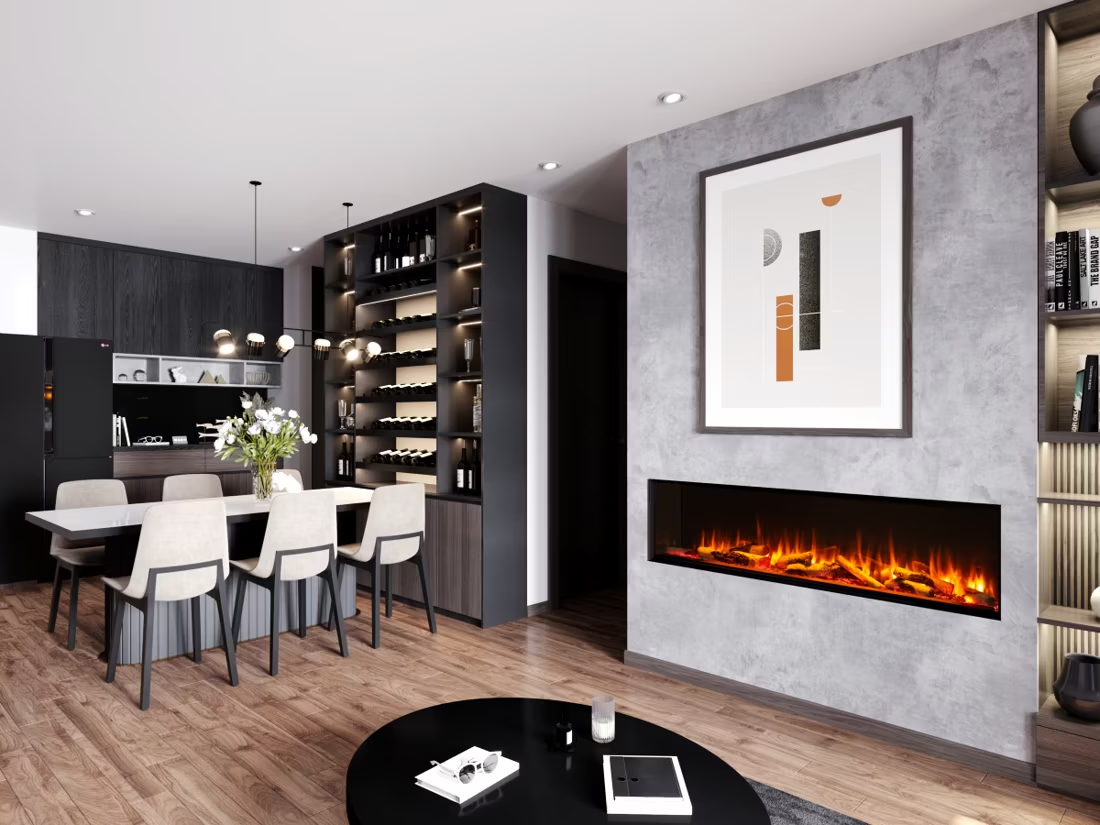
An electric fireplace is typically a wall-mounted or built-in unit designed to look like a modern linear fire feature. An electric insert is sized to slide into an existing wood-burning fireplace opening—a popular option for older Darien homes with an unused masonry firebox that homeowners want to convert without the cost of a full gas or wood retrofit. An electric stove is a freestanding cabinet-style unit that mimics a traditional wood stove's look. All three plug into standard household power (or a dedicated circuit for larger models) and none require venting.
Will my electric fireplace work during a power outage?
No—and this is worth planning around on the Georgia coast, where tropical storms and hurricane-season outages are a real seasonal risk in McIntosh County. Electric fireplaces have no battery backup option the way some gas units do; if the power drops, the fireplace stops, full stop. For homeowners who want ambiance most of the year but need a reliable backup heat source during storm season, pairing an electric unit with a small wood stove—using local oak, pine, or hickory—is a common approach here. It's a conversation worth having with a local dealer before you commit to electric as your only heat source.
What's the best electric fireplace for McIntosh County's coastal climate?
Salt air and humidity are the main considerations here, more than cold. Look for units with sealed electronics and corrosion-resistant housings—brands like Dimplex and Napoleon build models rated for coastal and high-humidity installs, which matters for homes in Darien, Sapelo Island, or anywhere close to the marsh. Beyond that, most homeowners choose based on flame realism and finish rather than heat output, since the heating element is genuinely secondary to the look in this climate. A local dealer can point you toward models that have held up well in other coastal Georgia installs.
How much does it cost to run an electric fireplace?
A typical 1,500-watt electric fireplace running on the heat setting costs roughly 15 to 25 cents per hour to operate, depending on your rate from Georgia Power or the local electric cooperative serving rural parts of the county. Running it on flame-only mode with the heater off costs only a few cents an hour, which is how most McIntosh County homeowners use it outside the coldest stretches—as ambiance rather than a heat source. Compared to running central heat for the same room, an electric fireplace is a genuinely cheap way to take the edge off a 40-degree evening.
Electric vs. wood—which is right for my McIntosh County home?
Wood heat has deep roots along this stretch of coast—oak, pine, and hickory are all common locally, and older homes in Darien and the Sapelo Island Gullah Geechee community have burned wood for generations. Wood also keeps working when the power doesn't, which matters during hurricane season. Electric wins on convenience: no ash, no wood storage, no chimney maintenance, and instant on-off operation for a climate where you might only want heat a few dozen nights a year. Most McIntosh County homeowners we hear from want electric for daily ambiance and ease, with wood reserved as backup or for those who value the ritual of a real fire.
Can an electric fireplace heat my whole house?
Not really, and in McIntosh County it usually doesn't need to. Electric fireplaces are zone heaters—they warm the room they're in, not the house. Given how mild winters are here, that's rarely a problem: most homeowners use the fireplace to supplement central HVAC in the room where they spend the most time, whether that's a Darien living room or a Sapelo Island sitting porch enclosed for cooler months, and let the existing heat pump or furnace handle the rest of the house on the handful of genuinely cold nights each winter.
Can I put a TV above my fireplace?
Yes—with an asterisk. Fireplaces are hot and TVs don't like heat. Either put a mantel between them to deflect rising warmth, or choose a fireplace with heat-management technology that creates a cool zone on the wall above—the wall stays around 125 degrees, barely warm, while the room still gets full heat. If you like clean lines and don't want a mantel, heat management is the answer.
How much does an electric fireplace cost to run?
With the heater on, a typical unit draws about 1,500 watts—at average electric rates that's roughly 20 cents an hour. Run the flame effect alone and it costs pennies; the flames are LED-driven and use about as much power as a light bulb. There's no pilot light, no fuel delivery, and essentially no maintenance.
Does a fireplace add value to my home?
On average, a fireplace adds back to the home about the same amount you spent installing it. Add the monthly savings from heating the rooms you actually use instead of the whole house—often hundreds of dollars a year—and the value case is strong before you even count what a fire does for how your family uses the room.
How much should I budget for a fireplace?
For an average home—covering the fireplace, the vent pipe, and basic installation—a budget between $3,900 and $5,500 gives you a lot of options across wood, gas, and pellet. By the time you add finish work, gas line, and electrical, the average complete installation lands between $5,000 and $12,000 all-in. In a remodel or new build, a good rule is to put about 2.5% of the total project cost toward the fireplace.
Find your electric fireplace in McIntosh County.
Tell us a bit about your home and we'll put together a free Project Guide & Parts List—the right electric fireplace or insert for your space, plus a trusted local dealer to install it.
Find Your Fireplace →