
Find the right fireplace for McIntosh County's mild coastal winters.
Wood, gas, pellet, and electric fireplace resources for Darien, Eulonia, Townsend, Ridgeville, and the Sapelo Island community—built for lowcountry Georgia, where the marsh stays green most of the year but a fireplace still earns its keep on damp December nights and during hurricane-season outages.
Every Project Starts From One of These Five Situations
Lowcountry heat needs in one of Georgia's smallest coastal counties.
McIntosh County sits on the Georgia coast between Savannah and Brunswick, wrapped around the Altamaha River delta and the marshes leading out to Sapelo Island. With roughly 2,473 residents spread across Darien and a handful of small communities, it's one of the least densely populated counties in the state. Climate zone 2A means hot, humid summers and short, mild winters—nothing like the eight-month heating seasons in Duluth or Burlington, Vermont. Most years bring only a handful of nights with lows near freezing, but coastal humidity and the occasional hard freeze still make a working fireplace worth having, especially when tropical-storm season knocks out power for days at a time.
What you'll find on this hub: hearth retailers, service technicians, and fuel suppliers covering the whole county—from Darien on US-17 down through Eulonia and Townsend along the Altamaha, out to the Sapelo Island ferry landing. Pick your fuel below to see local dealers, typical installation costs, and the units that make sense for a lowcountry Georgia home, whether you're heating a historic Darien cottage or a river house near Ridgeville.
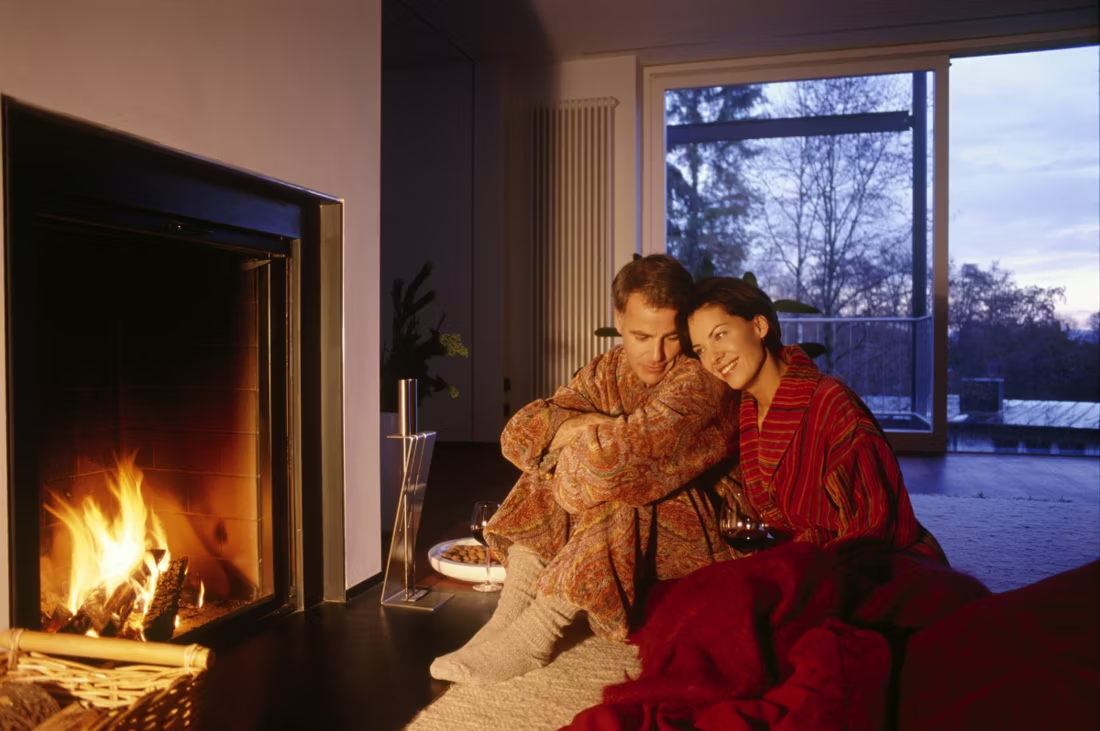
Four fuels. One honest answer for McIntosh County.
Three steps. No salesperson until you're ready.
Tell us about your project
Your zip code, your situation, and the fuel you're leaning toward—or let the answers point you to one.
See what's actually available
The brands dealers within 100 miles genuinely carry—real options, never a catalog mirage.
Get your dealer & Project Guide
A trusted local dealer, plus the free Project Guide & Parts List that names every component of the job.
Frequently Asked Questions
Which fuel works best in McIntosh County?
It depends on how you actually use heat here, since McIntosh County's climate zone 2A winters are short and mild compared to most of the country. Wood is still popular—oak and hickory from the local hardwood stands burn hot and slow, and a wood stove or fireplace insert doubles as backup heat when hurricane-season outages knock out power along the coast. Gas is convenient where propane delivery is available (natural gas lines are limited in most of the county outside Darien); it lights instantly with no wood storage needed. Pellet stoves work well for residents who want wood-style ambiance without splitting logs—Lignetics and Hamer Pellet Fuel bags are both available regionally. Electric fireplaces are a realistic primary choice here in a way they wouldn't be in a colder climate—with such a short heating season, many McIntosh County homeowners use electric units for supplemental warmth and ambiance rather than running a wood or gas system through a mild winter.
Do I need a permit to install a fireplace in McIntosh County?
In most cases, yes, though requirements are lighter than in colder states with strict emissions codes. New wood stoves, inserts, gas fireplaces, and pellet stoves typically require a building permit through the McIntosh County Building Department, and any gas line work needs a licensed propane technician or gas fitter. Georgia doesn't impose the kind of EPA-adjacent local wood-burning emissions rules you see in places like the Klamath Basin, but the state building code's clearance and venting requirements still apply. Electric fireplaces generally skip the permit process unless you're hardwiring a built-in unit into a new circuit. Most local retailers handle the paperwork as part of the installation, so it's rarely something a homeowner has to navigate alone.
Are there air quality restrictions on wood burning in McIntosh County?
No—McIntosh County has no burn bans, inversion advisories, or non-attainment designations. The bigger practical issue for wood burners here is humidity, not air quality. Coastal Georgia's damp climate makes it harder to season firewood properly; oak and hickory need six months to a year of covered, airflow-friendly storage before they're dry enough to burn clean, and pine—while plentiful locally—resins up flues faster if burned unseasoned. There's no regulatory reason to limit wood burning in this county, but a poorly seasoned load will smoke more and build creosote faster than the same species would in a drier inland climate.
Can one local retailer handle all four fuel types in McIntosh County?
Given the county's population of under 2,500, there isn't a large hearth retailer based in Darien or Eulonia itself—most homeowners work with multi-fuel dealers out of Brunswick or Savannah who service the whole McIntosh County coastline, including Sapelo Island by arrangement. These regional retailers typically carry wood, gas, pellet, and electric lines and can walk you through trade-offs for a lowcountry home specifically, including how a unit handles the humidity and how it holds up as backup heat during storm season.
How does fireplace service work in a small county like McIntosh?
Because there's no dense population center outside Darien, expect service technicians to travel in from Brunswick, Savannah, or occasionally further inland, with a modest trip fee for outlying areas like Townsend, Ridgeville, or the Sapelo Island ferry corridor. Scheduling ahead of hurricane season (spring, before the June–November window) is smart if you're relying on a wood or gas unit as storm backup—appointment availability tightens once tropical weather starts tracking toward the coast. Keep basic supplies on hand year-round: seasoned oak or hickory if you're running wood, and a spare propane tank if your gas unit isn't on a fixed line, since power and fuel-delivery disruptions are the more likely challenge here than winter cold.
What's the typical cost range for fireplace installation across all fuel types in McIntosh County?
Costs run in line with regional coastal Georgia pricing, adjusted for the added travel most dealers factor in for this rural county. Wood stove or insert installation: roughly $4,000–$8,500 for typical setups. Gas fireplace, insert, or stove: about $4,000–$10,000, with propane-line work usually landing on the higher end since most of the county isn't on natural gas service. Pellet stove or insert: around $4,000–$7,000. Electric fireplace: $200–$3,000 for the unit itself, plus $300–$1,000 in labor for anything beyond a simple plug-in installation. For McIntosh County specifically, ask any quoted retailer whether their price already includes the trip from Brunswick or Savannah, since travel time is often built into rural service calls.
Can I install a fireplace myself?
If you're putting a fire in your house on purpose, it's best to work with an expert. Unless you're genuinely experienced in framing, gas line, vent pipe, and the national code on clearances to combustibles, have a professional do it—and ideally the same company that sells you the fireplace, so warranty, service, and liability all live under one roof.
Wood, gas, pellet, or electric—how do I choose?
Match the fuel to your life, not the other way around. Wood: lowest fuel cost and total power-outage independence, but you're hauling and stacking. Gas: press a button, set a thermostat, no maintenance to speak of. Pellet: wood economics with automatic feeding, in exchange for weekly cleaning and a need for electricity. Electric: plugs in anywhere with honest supplemental heat. Nobody regrets the fuel that fits how they actually live.
Does a fireplace add value to my home?
On average, a fireplace adds back to the home about the same amount you spent installing it. Add the monthly savings from heating the rooms you actually use instead of the whole house—often hundreds of dollars a year—and the value case is strong before you even count what a fire does for how your family uses the room.
Can a fireplace actually lower my heating bill?
Yes—by creating a comfort zone. A furnace heats every square foot of the house just to warm the one room you're in; a gas fireplace on low burns roughly a sixth of the gas a typical furnace does. Set the furnace around 55–60 degrees as a baseline, then heat the rooms your family actually uses. Families who heat this way commonly save $20–$60 a month.
Stove and Fireplace Dealers in McIntosh County
Listings include WhyFire partner dealers, dealers we have verified as authorized for the brands we recommend, and established local businesses that carry hearth products. Every listing shows which one it is. The ones marked Preferred run on WhyFire's software, so they can show you real pricing and book your appointment right here. No manufacturer pays for placement. How we verify dealers →
Kash Gas Co
Arco Hardware
Liberty Propane
Find your fireplace in McIntosh County.
Tell us about your home and we'll match you with a trusted local dealer and send a free Project Guide & Parts List—the exact parts, including the vent kit, and the right dealer for your McIntosh County project.
Find Your Fireplace →