
Steady, clean heat for McDuffie County homes.
McDuffie County winters are mild, but a pellet stove still earns its keep on the cold snaps, power blips, and everyday evenings in Thomson and the surrounding county. Find the right unit and connect with a trusted local dealer.
Every Project Starts From One of These Five Situations
The clean, low-fuss choice for a short heating season.
McDuffie County sits in the CSRA region of east-central Georgia, with Thomson as the county seat. Winters here are gentle by national standards—average lows around 35°F and a fairly short, mild heating season, a fraction of what a cold-climate market like Duluth, MN or Fargo, ND logs in a single winter. Most homes lean on central heat pumps for day-to-day comfort, which means a pellet stove in McDuffie County is rarely a survival appliance. It's a supplemental one: something that takes over the living room on a 25-degree night, cuts the electric bill during a cold stretch, and keeps a room warm without the wood-splitting and chimney upkeep a full wood stove requires.
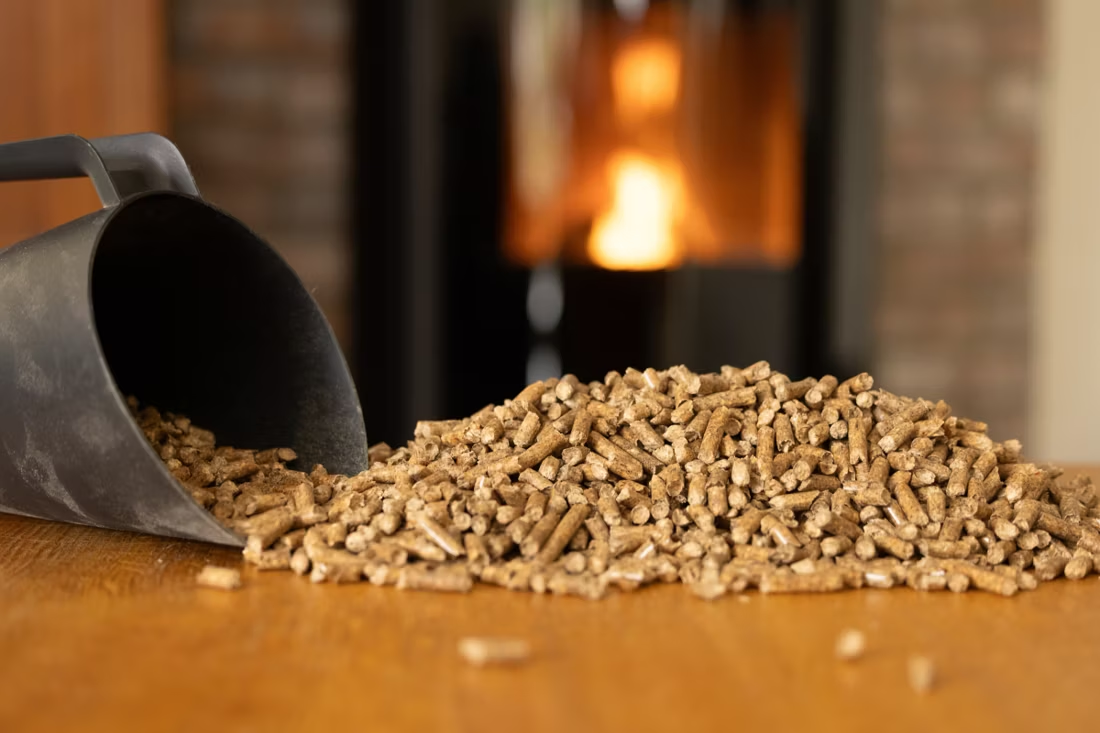
McDuffie County has no listed air quality non-attainment status and no winter burn curtailment periods, so unlike homeowners in parts of the West, nobody here is checking an advisory before lighting a stove. Pellet fuel itself is well-supported regionally—Lignetics, Hamer Pellet Fuel, and Greenway Renewable Energy all serve the area, and Hamer in particular sources hardwood pellets from Georgia mills using the same oak, pine, and hickory that fuel traditional wood stoves across the county. That local supply chain, combined with the simpler venting a pellet stove requires compared to a masonry chimney, is a big part of why pellet units have found a real foothold here even without a harsh climate pushing the decision.
Three steps. No salesperson until you're ready.
Tell us about your project
Your zip code, your situation, and the fuel you're leaning toward—or let the answers point you to one.
See what's actually available
The brands dealers within 100 miles genuinely carry—real options, never a catalog mirage.
Get your dealer & Project Guide
A trusted local dealer, plus the free Project Guide & Parts List that names every component of the job.
Frequently Asked Questions
How much does a pellet stove installation cost in McDuffie County?
Most pellet stove installations in McDuffie County run in the $3,000 to $6,000 range, depending on the unit, the length of the vent run, and whether a hearth pad or floor protection is needed for code. Because pellet stoves vent horizontally through a small PL-rated pipe rather than requiring a full masonry chimney, installs here tend to land toward the lower end compared to wood stove projects—most living rooms in Thomson and the surrounding county already have a workable exterior wall nearby. A McDuffie County Building Department permit is required for the install, and local dealers typically handle that paperwork as part of the job.
What size pellet stove do I need for my home?
Because McDuffie County's winters are mild—average lows near 35°F and a much shorter, lighter heating season, well below a colder market like Bozeman, MT—most homes here don't need the large, high-output pellet stoves that cold-climate homes run around the clock all winter. A small to mid-size unit is usually plenty to heat a main living area or take the edge off a cold snap while the heat pump handles the rest of the house. Square footage, ceiling height, and how open your floor plan is still matter, and any local dealer can size your space correctly during an in-home visit before you buy.
Where can I find certified pellet stove installers near me?
Look for installers with NFI (National Fireplace Institute) certification, which covers proper venting, clearances, and appliance setup for pellet-burning units. McDuffie County is a smaller market—around 7,500 residents—so some homeowners in Thomson end up working with dealers who also cover neighboring parts of the CSRA and may add a modest travel charge for installs farther out in the county. The McDuffie County Building Department still requires a permit for the install regardless of who does the work, so confirm your installer pulls it as part of the job.
What's the difference between a pellet stove and a pellet insert?
A pellet stove is a freestanding unit that sits on a hearth pad and vents through a wall or existing chimney—it can go almost anywhere with the right clearances. A pellet insert is built to slide into an existing masonry fireplace, which is a common upgrade for some of the older homes around Thomson's historic downtown that already have a traditional fireplace but want cleaner, thermostat-controlled heat instead of an open wood fire. If you have an existing fireplace you rarely use, an insert is usually the more cost-effective route since it reuses the opening you already have.
Do I need a permit to install a pellet stove in McDuffie County?
Yes—new pellet stove installations require a building permit through the McDuffie County Building Department, and most local dealers include the permitting as part of the installation. Once it's installed, there's no ongoing restriction on when you can run it: McDuffie County has no listed air quality non-attainment issues and no winter curtailment periods, so unlike some Western markets, there's no advisory system to check before you fire it up on a cold evening.
What's the best pellet stove for McDuffie County's climate?
Since McDuffie County winters are mild rather than severe, most homeowners here prioritize efficiency, quiet operation, and thermostatic control over the maximum-BTU, 24-hour-burn units built for places with brutal cold. Mid-size units from mainstream pellet stove manufacturers pair well with the regional pellet supply—Lignetics, Hamer Pellet Fuel, and Greenway Renewable Energy all serve the area, with hardwood pellet pricing across the Southeast typically running in the $250 to $300 per ton range. Hamer's Georgia-sourced pellets, often blended from local oak and pine, are a popular choice simply because they're produced close to home. A local dealer can walk you through which brand's pellets are easiest to source consistently near Thomson.
How often does a pellet stove need to be cleaned and serviced?
Pellet stoves need more frequent attention than a gas unit but far less than a wood stove chimney. Plan on emptying the ash pot every few days during regular use, a deeper cleaning of the burn pot and exhaust fan every few weeks, and a full annual service—checking the auger, gaskets, and venting—ideally before the start of the cool season each fall. Given how few truly cold months McDuffie County sees, many owners only run their stove steadily for a couple of months a year, which keeps overall wear and cleaning frequency lower than in colder climates.
Where can I buy pellet fuel in McDuffie County?
Regional brands including Lignetics, Hamer Pellet Fuel, and Greenway Renewable Energy supply the area, and local hearth dealers typically stock bags or can point you to nearby suppliers. Hamer Pellet Fuel, produced in Georgia from local hardwood including oak and pine, is a common choice simply for the shorter supply chain. Buying a season's worth in the fall before demand picks up is generally the easiest way to make sure you're not scrambling to find bags during a cold stretch.
Pellet stove vs. wood stove—which is right for my McDuffie County home?
Wood is the traditional choice locally—oak, pine, and hickory are all common and easy to source in McDuffie County, and a wood stove keeps working during a power outage since it doesn't rely on electricity. A pellet stove trades that off for real convenience: no splitting or stacking, a thermostat instead of constant tending, and a cleaner burn, but the auger and blower need electricity to run, so it won't provide heat during an outage unless paired with a battery backup. Given how mild winters are here, that outage tradeoff matters less than it would in a colder climate—most McDuffie County homeowners choose based on how much hands-on fire-tending they actually want, not on backup heat necessity.
Why is my open fireplace making my house colder?
Open fireplaces suck—literally. As the fire burns, it consumes air your furnace already paid to heat and pulls it out through the chimney, so the house is actually colder after the fire goes out than before you lit it. An insert fixes this: it seals the chimney, puts fixed glass across the front, and turns that hole in your house into a real heat source.
What's the difference between an insert and a zero-clearance fireplace?
An insert is a fireplace that slides into a pre-existing wood-burning fireplace—if you don't have one, there's nothing to insert it into. A zero-clearance fireplace is built into a framed wall, which makes it the answer for remodels and new construction. Simple test: existing masonry fireplace means insert; blank or framed wall means zero-clearance.
How much should I budget for a fireplace?
For an average home—covering the fireplace, the vent pipe, and basic installation—a budget between $3,900 and $5,500 gives you a lot of options across wood, gas, and pellet. By the time you add finish work, gas line, and electrical, the average complete installation lands between $5,000 and $12,000 all-in. In a remodel or new build, a good rule is to put about 2.5% of the total project cost toward the fireplace.
What is an in-home preview and do I need one?
It's a visit where a hearth professional measures your space, confirms the model you picked actually works in your home, and walks the specs—framing, gas line, venting, finish work—before anything is ordered. Some details you just can't know until you see the house. Never make a down payment without one; it's the single most-skipped step that burns buyers.
Stove and Fireplace Dealers in McDuffie County
Pellet Brands Stocked Around McDuffie County
Manufacturers will point you to the nearest stocking dealer.
Find your pellet stove in McDuffie County.
Tell us a bit about your home in McDuffie County and we'll match you with a trusted local dealer and send over a free Project Guide & Parts List—the right pellet stove or insert, sized correctly, with the vent kit and parts you'll actually need.
Find Your Fireplace →