
Real Flame, Real Convenience, No Chimney Required.
Direct-vent gas heat built for Henry County's mild winters—instant ambiance most nights, real backup warmth on the rare hard freeze. Find the right unit and connect with a trusted local dealer.
Every Project Starts From One of These Five Situations
Built for ambiance, ready for the occasional cold snap.
McDonough sits in climate zone 3A, the mixed-humid belt south of Atlanta, where winter lows average around 32°F and the county sees a mild, short heating season each year. That's a fraction of what a place like Duluth, MN deals with (a long, brutal winter season), so nobody in Henry County is sizing a heating system to survive a polar vortex. What that mild climate does mean is that a gas fireplace here spends most of its life as a design centerpiece—the visual and emotional draw of a fire, on demand, with a flip of a switch—and steps into real duty during the handful of nights each winter when temperatures actually dip toward freezing.
Henry County has grown fast over the past two decades, and a lot of McDonough's newer subdivisions were built without masonry chimneys at all, which is exactly the gap a direct-vent gas fireplace fills—no chimney, no structural retrofit, just a sealed vent run through an exterior wall. Atlanta Gas Light delivers the pipeline gas across most of the incorporated city and surrounding unincorporated areas, with several retail marketers competing for the actual billing under Georgia's deregulated gas market. Electric service is split between Georgia Power and Snapping Shoals EMC depending on which part of the county you're in, which matters for anything with an electronic ignition or blower—something worth asking your installer about if you're picking between ignition systems.
Three steps. No salesperson until you're ready.
Tell us about your project
Your zip code, your situation, and the fuel you're leaning toward—or let the answers point you to one.
See what's actually available
The brands dealers within 100 miles genuinely carry—real options, never a catalog mirage.
Get your dealer & Project Guide
A trusted local dealer, plus the free Project Guide & Parts List that names every component of the job.
Frequently Asked Questions
How much does a gas fireplace installation cost in McDonough?
Most gas fireplace projects in the McDonough area run somewhere between $3,500 and $9,500. A direct-vent insert going into an existing masonry fireplace with a gas line already run to the room sits toward the lower end. A new built-in gas fireplace in one of Henry County's newer subdivision homes—where framing, venting through an exterior wall, and a fresh gas line from the meter are all part of the job—lands in the middle to upper end. If your home isn't yet on a gas line at all, trenching from the meter adds cost on top of the unit and labor. A local dealer will give you a firm number after seeing the room.
Can I convert my existing wood-burning fireplace to gas?
Yes, and it's a common project in McDonough's older neighborhoods near the downtown square, where many homes still have the original masonry fireplace. A gas insert slides into that opening and vents through the existing chimney using a stainless liner, so you keep the look of the fireplace while gaining instant on-demand heat and losing the ash and creosote upkeep. Typical cost for this kind of conversion runs $4,000 to $8,500 depending on the insert and whether the chimney needs relining work first.
Do I need natural gas, or is propane more realistic for my address?
It depends on where in Henry County you are. Atlanta Gas Light's distribution network covers most of the city of McDonough and the denser subdivisions around it, so if you already have a gas water heater or range, adding a fireplace is usually a straightforward tap. Homes further out in unincorporated Henry County—particularly newer construction on larger lots without nearby gas mains—often run on propane instead, with a tank supplied by a local propane provider. Nearly every gas fireplace on the market can be configured for either fuel; your installer sets the orifice and regulator to match.
Will my gas fireplace still work if the power goes out?
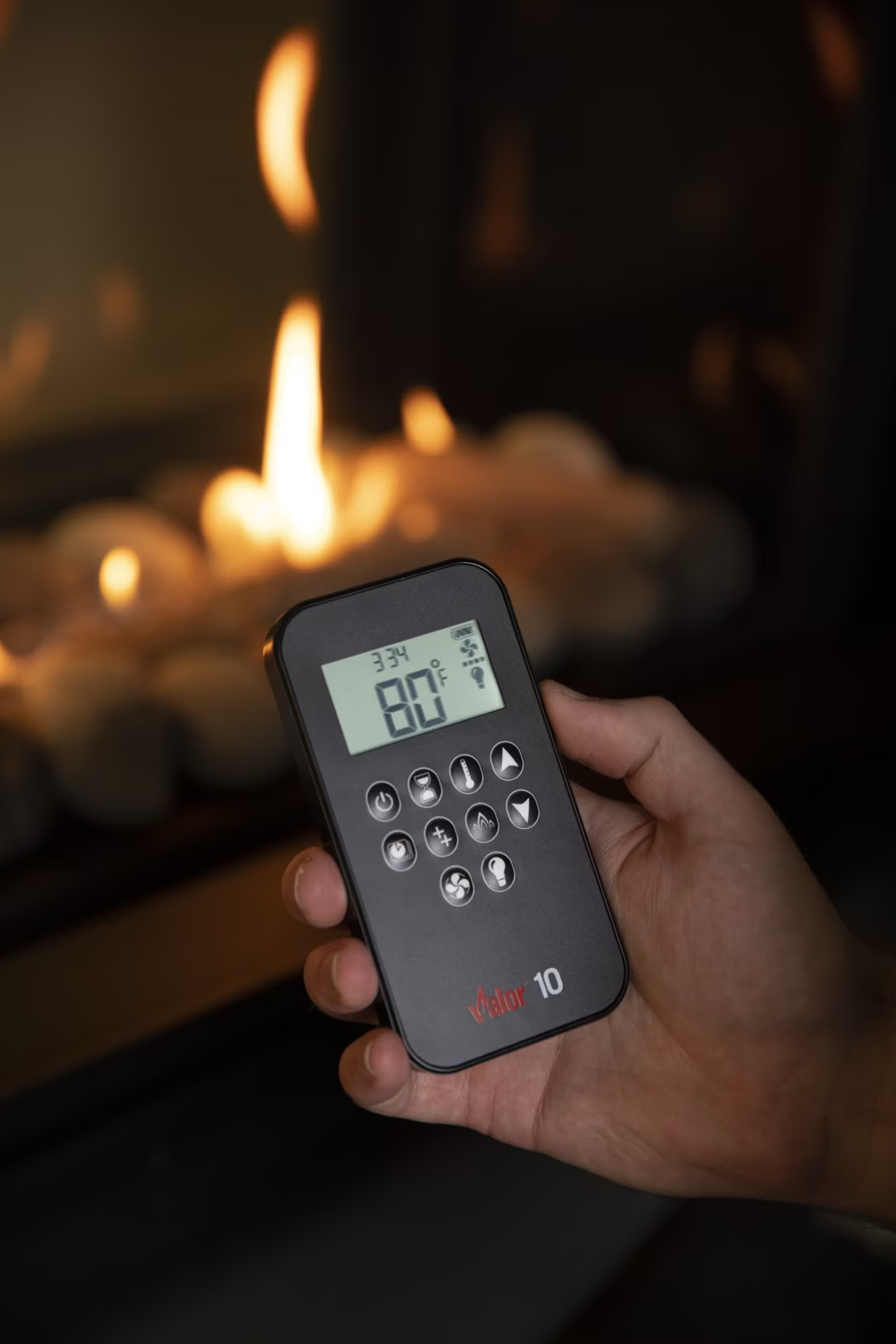
For most models, yes. Georgia summers bring thunderstorms and the occasional ice event that can knock out power for Georgia Power or Snapping Shoals EMC customers, and a gas fireplace with IPI (intermittent pilot ignition) keeps working through it—the unit runs on a small battery backup that kicks in the moment the power drops, so it lights and operates just like normal. The one thing to stay on top of is replacing those batteries before you actually need them. Valor fireplaces skip the battery question entirely: their pilot generates its own electricity through the thermocouple, so the unit never depends on household power at all. Ask your dealer which ignition system a given model uses.
What's the difference between a gas fireplace, gas insert, and gas stove?
A gas fireplace is a fully built-in unit framed into a wall—the standard choice for the newer subdivision homes going up around McDonough that don't have an existing chimney. A gas insert is made to slide into an existing masonry opening, which fits a lot of the older homes near downtown. A gas stove is a freestanding cabinet-style unit that sits on the floor and vents through a wall or existing chimney, a good fit for a den, sunroom, or finished basement where a full fireplace isn't practical. Which one makes sense usually comes down to whether you're starting with an opening or building from scratch.
Do I need a permit to install a gas fireplace in McDonough?
Yes. Depending on your address, you'll pull permits through either the City of McDonough Building Department or Henry County's Development Services, and the job requires both a building permit and a gas permit, since the gas line work has to be done by a licensed gas-fitter. Most established hearth dealers in the area handle the permitting and inspection scheduling as part of the installation, which is one of the real advantages of going through a dealer instead of a handyman install.
Vented vs. vent-free gas fireplaces—what actually applies in Georgia?
Vented (direct-vent) units draw combustion air from outside and exhaust it back outside through a sealed pipe—they're the cleanest option and the one most dealers in the McDonough area recommend by default. Vent-free gas fireplaces burn directly into the room and are legal in Georgia, but they come with strict room-size minimums and require an oxygen depletion sensor, since there's no venting to carry off combustion byproducts. Given McDonough's already humid summers, some homeowners prefer to avoid adding a vent-free unit's moisture output into the house. Direct-vent remains the more common and more universally recommended choice locally, but a dealer can walk you through both if you're weighing a smaller secondary room.
How often does a gas fireplace need to be serviced?
Plan on an annual inspection, ideally in early fall before the unit sees regular use. A technician checks the burner, pilot assembly, venting, and gas connections, and cleans the glass and interior—a much lighter lift than chimney sweeping for a wood-burning unit, but still important since a dirty pilot or degraded gasket is the most common cause of a fireplace that won't light reliably. Local service techs in the Henry County area typically charge $125 to $225 for this visit.
Gas vs. electric fireplace—which makes more sense for a McDonough home?
Wood-burning fireplaces are genuinely uncommon in McDonough's newer subdivisions—HOA restrictions, mild winters, and the lack of any local wood-permit culture mean most homeowners here are choosing between gas and electric, not gas and wood. Gas gives you real flame, real radiant heat, and enough output to take the chill off a room during a cold snap, but it needs a gas line or propane tank and professional venting. Electric fireplaces plug into a standard outlet, cost far less to install (often under $1,000), and run on either Georgia Power or Snapping Shoals EMC service at roughly 12 to 15 cents per kWh—but they produce supplemental heat only, with no real flame. For a primary living space where you want genuine warmth and ambiance, gas is usually the better investment; for a bedroom, office, or rental property, electric is often the simpler call.
Can I put a TV above my fireplace?
Yes—with an asterisk. Fireplaces are hot and TVs don't like heat. Either put a mantel between them to deflect rising warmth, or choose a fireplace with heat-management technology that creates a cool zone on the wall above—the wall stays around 125 degrees, barely warm, while the room still gets full heat. If you like clean lines and don't want a mantel, heat management is the answer.
Why is a fireplace insert so efficient?
An insert does two things: it seals the chimney completely, so you stop losing air you already paid to heat, and it radiates warmth into the room through the firebox and glass. Most add a heat-exchange fan that pulls cool room air underneath, wraps it around the hot firebox, and pushes it back out warm. Your home is more efficient before you've even lit the first fire.
What is an in-home preview and do I need one?
It's a visit where a hearth professional measures your space, confirms the model you picked actually works in your home, and walks the specs—framing, gas line, venting, finish work—before anything is ordered. Some details you just can't know until you see the house. Never make a down payment without one; it's the single most-skipped step that burns buyers.
Does a fireplace add value to my home?
On average, a fireplace adds back to the home about the same amount you spent installing it. Add the monthly savings from heating the rooms you actually use instead of the whole house—often hundreds of dollars a year—and the value case is strong before you even count what a fire does for how your family uses the room.
Nearby Dealers
Hearth shops serving McDonough and the surrounding area.
Find your gas fireplace in McDonough.
Tell us about your home and we'll match you with a trusted local dealer and send over a free Project Guide & Parts List—the exact parts, vent kit, and installer recommendation for your McDonough gas fireplace project.
Find Your Fireplace →