
Warm, reliable heat for Henry County's mild winters and sudden cold snaps.
From McDonough to Stockbridge, Locust Grove to Hampton—gas fireplaces deliver instant, controllable heat for Henry County homes. Find the right unit and connect with a trusted local dealer.
Every Project Starts From One of These Five Situations
Mild winters, but heat that still needs to work.
Henry County sits in climate zone 3A, where winters are short and generally mild—average lows hover around 32°F and the county has a short, mild heating season, a fraction of what colder states see. That mild profile is exactly why wood stoves and pellet stoves rarely make sense here: most homes don't need supplemental heat for months at a stretch, and hauling, stacking, and tending cordwood is a hard sell when the furnace only runs hard a handful of weeks a year. Gas is a different story.
Henry County's growth corridor—McDonough, Stockbridge, Locust Grove, Hampton, and the unincorporated areas along I-75—is served primarily by Atlanta Gas Light for natural gas, with propane filling in for homes outside the service footprint. When an ice storm or an Arctic blast pushes through (the kind that has knocked out power across metro Atlanta more than once in recent winters), a direct-vent gas fireplace with battery-backed ignition keeps running heat in the room that matters most, without smoke, ash, or a chimney to maintain. For most Henry County homeowners, that combination—real heat, low maintenance, and instant on-off control—is why gas has become the default choice for a new or upgraded fireplace.
Three steps. No salesperson until you're ready.
Tell us about your project
Your zip code, your situation, and the fuel you're leaning toward—or let the answers point you to one.
See what's actually available
The brands dealers within 100 miles genuinely carry—real options, never a catalog mirage.
Get your dealer & Project Guide
A trusted local dealer, plus the free Project Guide & Parts List that names every component of the job.
Frequently Asked Questions
How much does a gas fireplace installation cost in Henry County?
Most gas fireplace installations in Henry County run $3,500 to $9,000, depending on the unit and how much venting and gas line work is involved. Converting an existing masonry fireplace to a direct-vent gas insert with a gas line already nearby sits toward the lower end. A new built-in gas fireplace in a remodel or new-construction room—with framing, a fresh gas line run from the meter, and venting through an exterior wall—lands in the middle to upper end. Homes relying on propane, or those needing a longer gas line extension across a larger lot (common in the newer subdivisions around Locust Grove and Hampton), can run higher. A local dealer will give you a firm number after seeing the room.
Can I convert my old wood-burning fireplace to gas?
Yes, and it's one of the more common calls we get from Henry County homeowners in older neighborhoods with a masonry fireplace that rarely gets used. Wood heat has never been a big draw here—with lows averaging around 32°F and a short, mild heating season, most Henry County homes never needed a wood stove or insert the way colder states do, even with oak, pine, and hickory readily available locally. A gas insert uses your existing chimney as the vent path (typically with a stainless liner) and turns an unused fireplace into a real, push-button heat source. Expect $3,500 to $7,500 for a typical insert conversion, depending on whether the home already has natural gas or needs a propane setup.
Is natural gas available throughout Henry County, or will I need propane?
It depends on where you are. Natural gas service through Atlanta Gas Light covers most of the incorporated cities and denser subdivisions—McDonough, Stockbridge, Hampton, and much of Locust Grove—as well as many unincorporated areas along the I-75 corridor. Farther out, in more rural pockets of the county, propane is the standard fallback, supplied by regional propane companies with either a buried or above-ground tank. Almost every gas fireplace on the market can be configured for either fuel; your installer sets the correct orifice and regulator for whichever you have.
Will a gas fireplace still work if the power goes out?
Most will, which is a real selling point in Henry County—ice storms and the occasional deep-freeze snap have knocked out power across metro Atlanta more than once in recent winters. Gas fireplaces with IPI (intermittent pilot ignition) run on a battery backup that kicks in automatically when the power drops, so the unit lights and heats normally. Valor units go a step further: their pilot assembly generates its own electricity through the thermocouple, so there are no batteries to remember at all. If backup heat during outages matters to you, ask your local dealer about the ignition system before you buy.
What's the difference between a gas fireplace, insert, and stove?
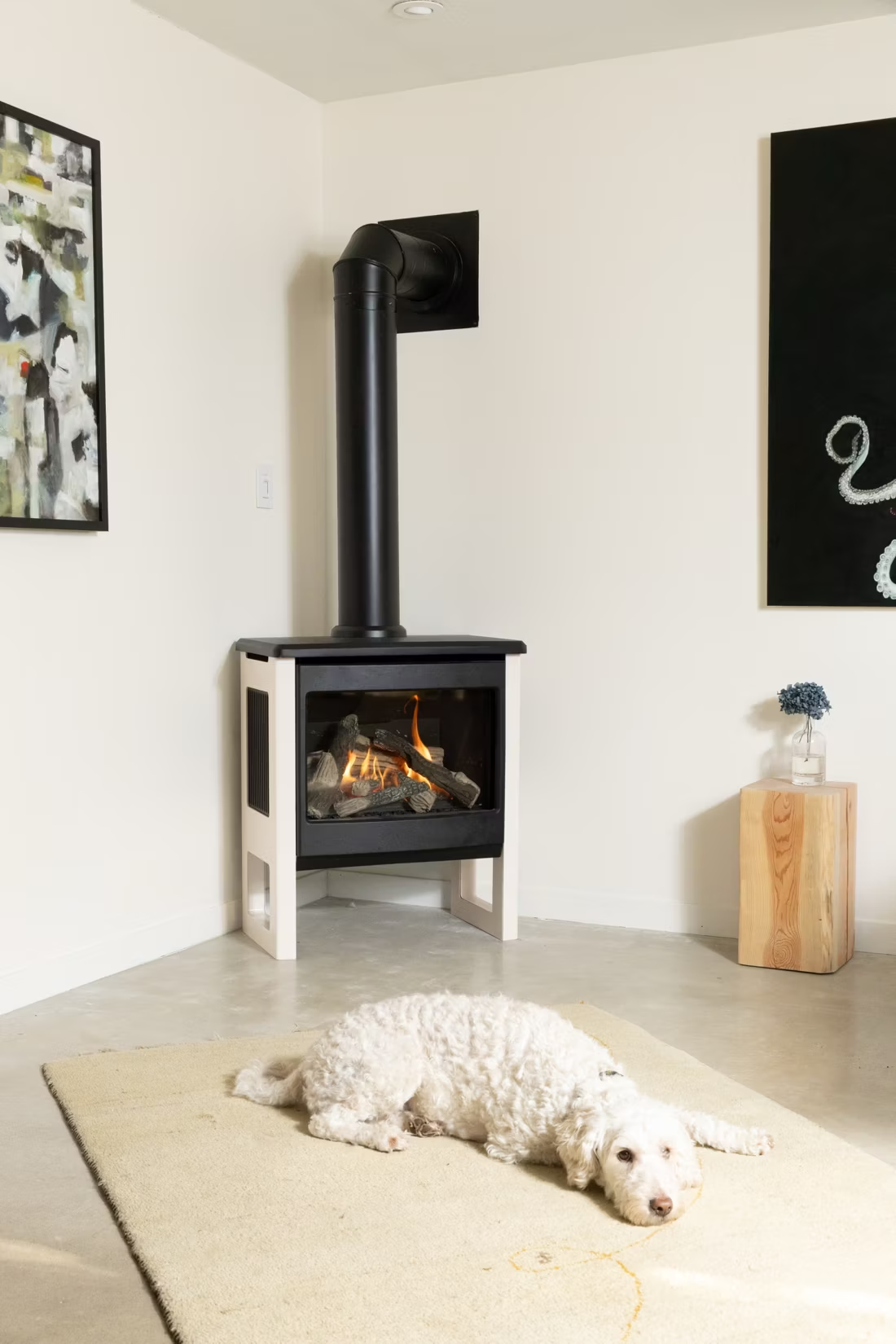
A gas fireplace is a fully built-in unit framed into a wall—the right choice for new construction or a major remodel, which describes a lot of the new-build activity happening around Locust Grove and Hampton. A gas insert drops into an existing masonry fireplace opening and uses the existing chimney as the vent, which is the more common project in Henry County's older McDonough and Stockbridge neighborhoods. A gas stove is a freestanding cabinet-style unit that sits on the floor like a wood stove but burns gas—a good fit for a room without any existing fireplace opening. Most Henry County homeowners upgrading an existing hearth end up with an insert; new rooms usually call for a built-in.
Do I need a permit to install a gas fireplace in Henry County?
Yes. Gas fireplace installations require both a building permit and a gas permit, and the gas line work has to be done by a licensed gas-fitter. If you're inside McDonough, Stockbridge, Locust Grove, or Hampton city limits, permits are pulled through that city's building department; in unincorporated Henry County, permits go through Henry County Development Services. A reputable local hearth dealer coordinates all of this as part of the install—the gas line, the venting, and the inspection sign-off—so you're not left managing separate trades yourself.
Should I get a vented or vent-free gas fireplace?
Vented (direct-vent) fireplaces pull combustion air from outside and exhaust it back outside through a sealed pipe—they're the cleanest, safest, and most universally code-compliant option, and they're what most Henry County dealers install by default. Vent-free units burn without any external venting and release some combustion byproducts into the room; they're legal in Georgia under strict room-sizing and ventilation rules, but several states restrict them outright. For Henry County's tightly-built newer homes, direct-vent is almost always the better call—you get real heat output without trading away indoor air quality.
How often does a gas fireplace need to be serviced?
Plan on an annual inspection, ideally in early fall before you're relying on it during Henry County's coldest stretches. A technician checks the burner, pilot assembly, venting, and gas connections, and cleans the glass and interior. It's a quick visit—most local service providers charge $150 to $250—but skipping it is how pilot and ignition problems go unnoticed until the first genuinely cold night of the year.
Gas or electric fireplace—which makes more sense for my Henry County home?
Gas delivers real heat output—enough to actually warm a room during a January cold snap—plus the option of running on battery backup during a power outage. Electric fireplaces plug into a standard outlet, need no gas line or venting at all, and install almost anywhere in minutes, but they're producing ambiance and modest supplemental warmth rather than serious heat. For a primary living space where you want the fireplace to actually contribute to comfort during Henry County's cold snaps, gas is the stronger choice. For a bedroom, basement, or condo without gas service or chimney access, electric is often the practical answer. Local dealers carry both and can walk you through the tradeoff for your specific room.
Why is my open fireplace making my house colder?
Open fireplaces suck—literally. As the fire burns, it consumes air your furnace already paid to heat and pulls it out through the chimney, so the house is actually colder after the fire goes out than before you lit it. An insert fixes this: it seals the chimney, puts fixed glass across the front, and turns that hole in your house into a real heat source.
Why is a fireplace insert so efficient?
An insert does two things: it seals the chimney completely, so you stop losing air you already paid to heat, and it radiates warmth into the room through the firebox and glass. Most add a heat-exchange fan that pulls cool room air underneath, wraps it around the hot firebox, and pushes it back out warm. Your home is more efficient before you've even lit the first fire.
How much should I budget for a fireplace?
For an average home—covering the fireplace, the vent pipe, and basic installation—a budget between $3,900 and $5,500 gives you a lot of options across wood, gas, and pellet. By the time you add finish work, gas line, and electrical, the average complete installation lands between $5,000 and $12,000 all-in. In a remodel or new build, a good rule is to put about 2.5% of the total project cost toward the fireplace.
What is an in-home preview and do I need one?
It's a visit where a hearth professional measures your space, confirms the model you picked actually works in your home, and walks the specs—framing, gas line, venting, finish work—before anything is ordered. Some details you just can't know until you see the house. Never make a down payment without one; it's the single most-skipped step that burns buyers.
Stove and Fireplace Dealers in Henry County
Find your gas fireplace in Henry County.
Tell us a bit about your home and we'll match you with the right gas fireplace, insert, or stove—plus a free Project Guide & Parts List and a trusted local dealer to install it.
Find Your Fireplace →