
Steady heat for Lincoln County's ice storms and cold snaps.
From Lincolnton to the shores of Clarks Hill Lake, pellet stoves give Lincoln County homes clean, controllable heat for the mild Piedmont winter—and a reliable backup when an ice storm takes down the power lines. Find the right unit and get matched with a trusted local dealer.
Every Project Starts From One of These Five Situations
Convenient heat for a mild Piedmont winter.
Lincoln County is small—about 1,876 people spread across a rural Piedmont county bordered almost entirely by Clarks Hill Lake (Lake Strom Thurmond). With a climate zone of 3A and a mild, short heating season, winters here are mild by national standards; the average winter low sits around 33°F, and long stretches of hard freeze are uncommon. That mild profile means pellet stoves in Lincoln County are less often the sole heat source for a home and more often a supplemental system—steady, even warmth in the den or great room, and a practical backup for the ice storms that periodically roll through the Georgia Piedmont and knock out grid power for days at a time.
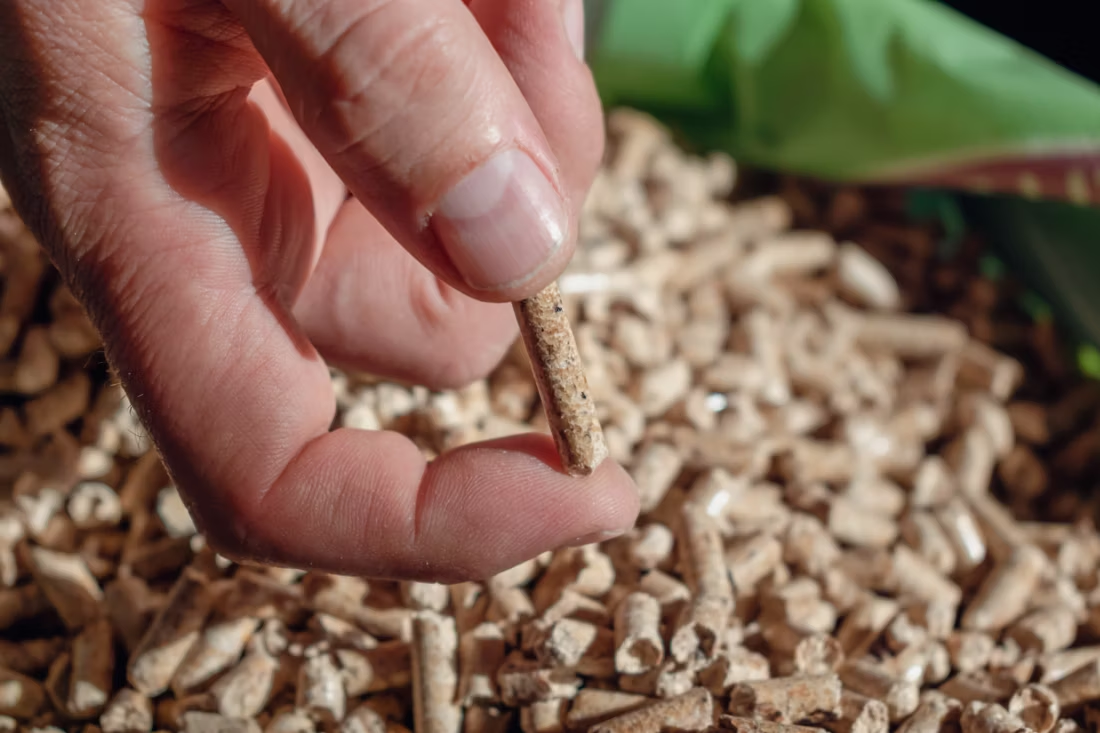
There's no non-attainment designation or winter inversion issue here the way you'd see in a mountain basin, so burning restrictions aren't a factor for Lincoln County homeowners. What matters more locally is fuel availability and reliability: regional brands like Lignetics, Hamer Pellet Fuel, and Greenway Renewable Energy supply pellets to dealers across this part of Georgia, and a hopper full of hardwood pellets burns cleaner and needs less tending than the oak, pine, and hickory cordwood that's abundant in the county's own woodlots. For the lake houses and weekend cabins scattered around Clarks Hill, that convenience is often the deciding factor over splitting and stacking firewood for a place you're not at every day.
Three steps. No salesperson until you're ready.
Tell us about your project
Your zip code, your situation, and the fuel you're leaning toward—or let the answers point you to one.
See what's actually available
The brands dealers within 100 miles genuinely carry—real options, never a catalog mirage.
Get your dealer & Project Guide
A trusted local dealer, plus the free Project Guide & Parts List that names every component of the job.
Frequently Asked Questions
How much does a pellet stove installation cost in Lincoln County?
Most pellet stove and insert installations in this part of Georgia run in the $3,000 to $6,000 range, depending on whether you're installing a freestanding stove, converting an existing masonry fireplace with a pellet insert, and how much venting work is involved. Homes without an existing chimney or hearth pad—common in newer construction around Lincolnton and the lake—will sit toward the higher end once venting through an exterior wall and hearth clearances are factored in. A local dealer can give you a firm number after walking the install location, but expect the venting run and any electrical work for the auger and blower to be the biggest cost variables.
What size pellet stove do I need for a home in Lincoln County?
Because Lincoln County's winters are mild—average lows around 33°F and a mild, short heating season—most homes here don't need a large-capacity unit sized for sustained sub-zero cold. A small to mid-size pellet stove (rated for 1,000 to 1,800 square feet) is enough to comfortably heat a main living area or an entire modest home, and it's the more common choice for the lake cabins and weekend places around Clarks Hill. Larger, full-house units make more sense for year-round residences with open floor plans or vaulted ceilings. A local retailer will size the unit to your square footage and insulation rather than just the county's climate averages.
Where can I find a certified pellet stove installer near Lincoln County?
Given the county's small population, most dealers serving Lincoln County also cover a wider radius that reaches into neighboring counties and the Augusta area. Look for an installer familiar with NFI (National Fireplace Institute) pellet-appliance certification, and confirm they'll handle both the venting and the hearth clearance work, not just drop off the stove. For homes out toward the lake or in more remote parts of the county, factor in a small travel charge—it's standard practice for installers covering rural Piedmont territory.
What's the difference between a pellet stove and a pellet insert?
A pellet stove is a freestanding appliance that sits on a hearth pad and vents through a wall or existing chimney—it can go almost anywhere in a room with the right clearances. A pellet insert is built to slide into an existing masonry fireplace opening, which is common in older Lincoln County farmhouses and lake homes that already have a wood-burning fireplace. For a house with an existing fireplace you rarely use, an insert is usually the more efficient upgrade since it reuses the chimney chase. For new construction or a room without a fireplace, a freestanding stove is the more flexible option.
Do I need a permit to install a pellet stove in Lincoln County?
Yes—new pellet stove and insert installations typically require a building permit through the Lincoln County Building Department, covering the venting path and hearth clearances. Most dealers who sell and install pellet stoves in this area handle the permit paperwork as part of the job, so it's rarely something the homeowner has to manage directly. Unlike some Western states, Lincoln County has no seasonal burn curtailment periods or air-quality restrictions to work around, since the county isn't in a non-attainment area.
What's the best pellet stove for Lincoln County's climate?
Since Lincoln County winters are mild compared to the rest of the country, you don't need an oversized, cold-climate-rated unit here—a mid-size stove from a mainstream brand like Harman, Englander, or Quadra-Fire is typically plenty, and most run efficiently on the hardwood pellets supplied regionally by Lignetics and Greenway Renewable Energy. For lake homes or cabins that sit empty for stretches at a time, look for a model with a large hopper capacity so it can run longer between refills, and ask your dealer about battery-backup options for the auger and blower—useful given how often ice storms interrupt power in this part of the Piedmont.
How often does a pellet stove need to be cleaned and serviced?
Pellet stoves need more frequent light cleaning than wood stoves but far less heavy chimney work. Plan on emptying and vacuuming the ash pot every few days during regular use, a deeper cleaning of the burn pot and heat exchanger tubes every few weeks, and a full professional service—including the exhaust venting and auger mechanism—once a year, usually before the fall heating season starts. Local dealers in this area typically offer that annual service alongside their installation work.
Where can I buy pellets in or near Lincoln County?
Regional brands including Lignetics, Hamer Pellet Fuel, and Greenway Renewable Energy supply hardwood pellet fuel to dealers throughout this part of Georgia, and most hearth retailers that sell and install pellet stoves also stock or special-order bagged pellets by the ton. Pricing regionally tends to run somewhere in the $250 to $300 per ton range, though it's worth confirming with a local dealer since availability can tighten during peak winter demand. Buying a season's supply early—before the first cold snap—is common practice among Lincoln County pellet stove owners.
Pellet stove vs. wood stove—which makes more sense in Lincoln County?
Wood is genuinely abundant here—oak, pine, and hickory cover much of the county, and a wood stove can run without any electricity at all, which matters during the ice storms that periodically take down power lines across this part of the Piedmont. Pellet stoves trade that off-grid resilience for convenience: no splitting or stacking, a thermostat-controlled burn, and less ash—but they need electricity to run the auger and blower, so a battery backup or generator plan matters if you're relying on one during an outage. For full-time residences with someone home to feed a wood stove, wood often wins on cost and independence. For lake houses, weekend places, and homeowners who want set-it-and-forget-it heat, pellet is usually the better fit.
What do I measure to size a fireplace insert?
Four numbers tell you what fits: the front width, the front height, the back width, and the overall depth of your existing fireplace opening. Grab a tape measure, jot those down, and snap a photo of the wall—those two things do more to move your project forward than anything else you can do today.
Why is my open fireplace making my house colder?
Open fireplaces suck—literally. As the fire burns, it consumes air your furnace already paid to heat and pulls it out through the chimney, so the house is actually colder after the fire goes out than before you lit it. An insert fixes this: it seals the chimney, puts fixed glass across the front, and turns that hole in your house into a real heat source.
Can a fireplace actually lower my heating bill?
Yes—by creating a comfort zone. A furnace heats every square foot of the house just to warm the one room you're in; a gas fireplace on low burns roughly a sixth of the gas a typical furnace does. Set the furnace around 55–60 degrees as a baseline, then heat the rooms your family actually uses. Families who heat this way commonly save $20–$60 a month.
How much should I budget for a fireplace?
For an average home—covering the fireplace, the vent pipe, and basic installation—a budget between $3,900 and $5,500 gives you a lot of options across wood, gas, and pellet. By the time you add finish work, gas line, and electrical, the average complete installation lands between $5,000 and $12,000 all-in. In a remodel or new build, a good rule is to put about 2.5% of the total project cost toward the fireplace.
Stove and Fireplace Dealers in Lincoln County
Pellet Brands Stocked Around Lincoln County
Manufacturers will point you to the nearest stocking dealer.
Find your pellet stove in Lincoln County.
Tell us a bit about your home and we'll match you with the right pellet stove or insert for Lincoln County's mild winters and ice-storm reality—plus a free Project Guide & Parts List with the exact parts, including the vent kit, and our recommended local dealer.
Find Your Fireplace →